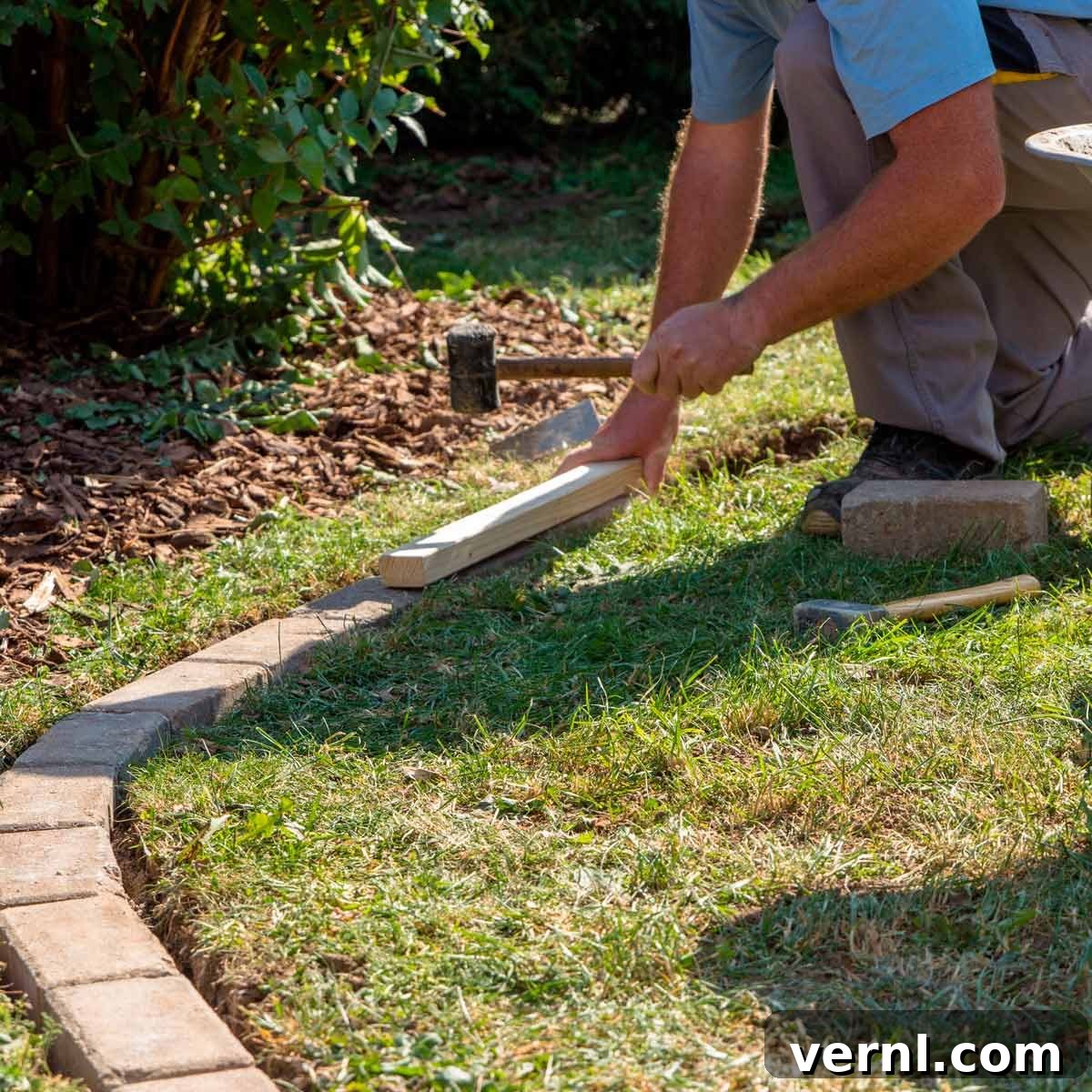
Edging is more than just a decorative touch for your garden beds; it’s a fundamental element that brings a professional, crisp, and beautifully finished look to any landscape. Beyond its aesthetic appeal, effective flower bed edging serves several crucial practical purposes. It acts as a clear visual boundary, defining the space where your vibrant flowers and lush foliage thrive, separating them distinctly from your manicured lawn or pathways. This intentional separation elevates the overall curb appeal of your home, creating a sense of order and meticulous care.
Functionally, high-quality edging is a formidable barrier. It prevents the persistent encroachment of lawn grass into your carefully cultivated flower beds, saving you countless hours of weeding and manual trimming. Simultaneously, it works to keep precious mulch and soil contained within the bed, ensuring these vital components nourish your plants rather than scattering onto adjacent areas. Furthermore, certain edging styles offer a wide, stable surface, ingeniously designed to allow your lawnmower wheels to glide over them. This feature enables an exceptionally close cut to your lawn’s edge, effectively eliminating the need for string trimming and significantly streamlining your yard maintenance routine. Among the various options available, concrete flower bed edging stands out as a particularly durable and aesthetically versatile choice, promising longevity and a sophisticated finish.
Understanding the Various Types of Flower Bed Edging
There are many kinds of garden bed edging materials available on the market, each with its unique characteristics, benefits, and drawbacks. Understanding these differences is key to selecting the perfect solution that aligns with your garden’s aesthetic, your budget, and your desired level of maintenance. Common options include plastic, wood, metal, and natural stone, but concrete consistently emerges as a top contender due to its unparalleled durability and design flexibility. Let’s delve into a brief overview of the popular choices before focusing on the advantages of concrete.
- Plastic Edging: Often the most budget-friendly and easiest to install, plastic edging comes in various forms, from flexible rolls to rigid sections. While it offers a quick solution for basic bed definition, it typically lacks the aesthetic appeal and long-term durability of other materials. It can become brittle over time, crack under UV exposure, and may shift out of place.
- Wood Edging: Offering a natural and rustic charm, wood edging can be created from treated lumber, logs, or railroad ties. It blends seamlessly with natural landscapes but requires regular maintenance to prevent rot, insect infestation, and weathering. Its lifespan is generally shorter compared to more robust materials.
- Metal Edging: Available in steel, aluminum, or copper, metal edging provides a sleek, modern, and understated look. It’s highly durable, effectively contains grass, and can be bent to create curves. However, installation can be more challenging, and some types of metal may rust or develop sharp edges over time.
- Natural Stone or Paver Edging: For a truly organic and timeless appeal, natural stones or pavers can be dry-laid or mortared into place. This option offers immense beauty and durability but can be significantly more expensive and labor-intensive to install due to the weight and varied shapes of the materials.
Many homeowners, however, consistently gravitate towards concrete for their flower bed edging because it offers an exceptional balance of durability, aesthetic appeal, and minimal maintenance. Unlike other materials that may degrade, rust, or rot, concrete provides a permanent solution that can withstand the test of time and weather, eliminating the need for frequent replacement. If you’re considering installing concrete flower bed edging, you essentially have two primary options, each catering to different preferences regarding customization, effort, and cost.
Poured Concrete Flower Bed Edging: Customization and Professional Finish
The first option is to pour the edging directly on-site. This method allows for ultimate customization, enabling you to create seamless, flowing lines or sharp, geometric angles of any desired width and height. Poured concrete offers a truly bespoke and professional finish that can significantly enhance your home’s curb appeal. The process, however, is considerably more labor-intensive and requires a good degree of skill and specialized tools.
The installation of poured concrete edging typically involves several steps: extensive trenching to prepare a stable foundation, constructing precise forms to hold the wet concrete in your desired shape, carefully staking these forms in place to prevent movement, mixing and pouring the concrete, and finally, meticulous smoothing and finishing the surface before allowing it to cure properly. While the result is a stunning, durable, and fully integrated edging that looks fantastic and offers unparalleled strength, it is a demanding project often best left to experienced DIYers or professional landscapers due to its complexity and the commitment involved.
Precast Concrete Edging Stones: An Accessible and Versatile Alternative
An easier, less-expensive, and highly popular alternative to poured concrete is the use of precast concrete edging stones. These ready-made units are available in a vast range of styles, sizes, and colors, providing homeowners with a convenient and attractive solution. Precast edgers eliminate the need for complex formwork and concrete mixing, making the installation process much more accessible for the average DIY enthusiast.
You can readily find these versatile concrete edgers at most big-box home improvement stores, often at a very affordable price point, sometimes for less than a dollar apiece, especially for basic designs. The selection typically includes several standard colors, primarily gray and various shades of tan, and sometimes brick red, allowing you to choose an option that complements your existing hardscaping and garden design. One practical consideration when purchasing a large quantity of these stones is transportation; if you don’t own a truck, many big-box stores offer convenient rental services to help you get your new edging stones home. Here are the best ways to prevent weeds on flower beds.
Exploring Popular Concrete Flower Bed Edging Styles
The variety of precast concrete edgers available means there’s a style to suit nearly any garden aesthetic, from traditional to contemporary. The design of your edging plays a significant role in the overall character and visual flow of your landscape. Choosing the right style can either blend seamlessly with your existing features or create a striking contrast that defines specific garden zones.
The Classic Scalloped Edger and Modern Interpretations
One of the most common and historically popular precast concrete edgers sold is the scalloped edger. Characterized by its distinctive wave-like or curved top edge, it’s often available in both straight and gently curved designs to accommodate various bed shapes. Frankly, while timeless for some, the traditional scalloped design can sometimes be perceived as somewhat dated looking by those aiming for a more modern or minimalist garden aesthetic. However, there’s a clever trick to rectify this perception and give it a contemporary twist: you can install the edging upside down. By burying the scalloped portion below ground, you expose a flat, straight top edge that offers a much cleaner, more streamlined look, effectively transforming its appearance without buying new materials.
Beyond Scallops: Interlocking Blocks and Faux Materials
Beyond the scalloped design, the market offers a rich array of other styles to cater to diverse tastes and functional needs. These include:
- Interlocking Blocks: These edgers are designed with specific grooves or protrusions that allow them to lock together, creating a more stable and cohesive barrier. They often come in rectangular, square, or irregular shapes that mimic natural stones, providing a robust and enduring edge that is less prone to shifting over time. The interlocking feature also simplifies installation by guiding proper alignment.
- Faux Brick or Stone Edging: For those who love the classic charm of brick or the rugged beauty of natural stone but prefer the convenience and cost-effectiveness of concrete, faux brick or stone edgers are an excellent choice. These units are molded and colored to realistically mimic the texture and appearance of their natural counterparts, offering a sophisticated look without the weight, fragility, or higher price tag associated with genuine materials. They provide a sturdy, defined edge that enhances the garden’s character with a touch of traditional elegance or rustic appeal.
- Straight or Plain Edgers: For a truly minimalist and modern approach, simple, straight-edged concrete blocks or strips are available. These provide clean lines and a contemporary feel, perfect for formal gardens or architectural landscapes. They are easy to install and create an unobtrusive boundary that lets the plants take center stage.
These are our best tips for a low-maintenance flower bed.
Step-by-Step Guide: How to Install Precast Concrete Flower Bed Edging
Installing precast concrete flower bed edging stones is a rewarding DIY project that can dramatically enhance the appearance and functionality of your garden. With the right planning and execution, you can achieve a professional-looking result that lasts for years. Follow these detailed steps to successfully install your concrete edging.
Step 1: Planning and Layout
Before you start digging, it’s crucial to visualize and plan the exact shape of your flower bed. This initial step is vital for a symmetrical and appealing outcome. Use a flexible garden hose or a length of rope to lay out the desired outline of your bed. Walk around it, adjust the curves and straight sections until you are completely satisfied with the shape. Once finalized, use marking paint or a line of sand to clearly delineate the path for your trench. This will serve as your guide and ensure precision in the following steps. Consider the overall scale of your garden and how the new bed will integrate with existing features.
Step 2: Digging the Trench
Once your layout is marked, it’s time to dig the trench. This is where a good quality flat-blade spade or a trenching shovel comes in handy. Begin by cutting into the ground along one side of your marked line, pushing the spade down to the depth of your edging stone plus about 1 to 2 inches for the sand base. Then, face the opposite direction and slice along the other side of your marked line, creating two parallel cuts. The width of your trench should be slightly wider than the base of your concrete edger to allow for easy placement and backfilling. Carefully excavate the soil between these two cuts, ensuring the bottom of the trench is as level as possible. Remove any rocks, roots, or other debris that could interfere with the stability of your edging. Learn how to dig a trench for flower bed edging more effectively.
Step 3: Preparing the Base Layer
A stable and level base is critical for preventing your concrete edgers from shifting or sinking over time. After excavating the trench, line the bottom with approximately one inch of coarse sand or fine gravel. This sand layer serves multiple purposes: it provides an easily adjustable surface for leveling the stones, improves drainage, and creates a cushion that can absorb minor ground movements. Spread the sand evenly and lightly compact it using a hand tamper or even your foot. Ensure the sand base is consistent in depth and as level as possible along the entire length of the trench. You can use a long piece of wood and a level to check for evenness.
Step 4: Installing the Edging Stones
Now comes the satisfying part: installing the concrete edging stones one by one. Start at a prominent point, such as a corner or the beginning of a straight run. Carefully place the first stone onto the prepared sand base, ensuring it sits firmly. As you place subsequent stones, push them tightly together to minimize gaps. The key to a professional finish is maintaining a consistent height and level. Use a long spirit level to check the level of each stone individually and in relation to its neighbors. If a stone is too high, gently tamp it down with a rubber mallet until it reaches the desired level. If it’s too low, lift it, add a small amount of sand underneath, and re-tamp until it’s perfectly aligned. Continue this process, working your way around the entire perimeter of your flower bed, making minor adjustments as you go. For curves, you might need to use shorter edgers or make slight gaps on the inside of the curve, which will be filled during backfilling.
Step 5: Backfilling and Finishing Touches
Once all the concrete edging stones are installed and perfectly level, it’s time to backfill the trench. Carefully push the excavated soil back into the trench on both sides of the concrete edging. Use your hands or a spade to gently compact the soil around the base of the edgers, ensuring they are firmly held in place. This step is crucial for stability. Smooth the soil surface, ensuring it slopes slightly away from the edging to encourage proper water runoff. You can also add a layer of mulch inside the bed at this stage, which will further help to stabilize the edging and complete the look. Water the area gently after backfilling to help settle the soil around the newly installed edging. Stand back and admire your newly defined, crisp, and beautifully edged flower bed!
These are three gardening tools every homeowner needs for tasks like this: a quality spade, a rubber mallet, and a spirit level.
Maintaining Your Concrete Flower Bed Edging
One of the most appealing aspects of concrete flower bed edging is its inherently low maintenance once properly installed. Unlike wood that rots or plastic that degrades, concrete is incredibly durable and designed to last for decades with minimal attention. However, a few simple practices can ensure your edging remains pristine and functional for an even longer period.
Occasionally, you might notice dirt, mud, or algae accumulating on the surface of your concrete edgers. A quick cleaning with a stiff brush and water, or a gentle power washing, can easily restore their fresh appearance. For stubborn stains, a mild concrete cleaner can be used, following the manufacturer’s instructions carefully. It’s also a good idea to periodically check for any minor shifts in the stones, especially after heavy rains or significant ground freezing and thawing cycles. While proper installation on a compacted sand base minimizes this, a stone might occasionally settle slightly. Such issues are typically easy to remedy by simply lifting the affected stone, adding a bit more sand, and re-tamping it back to level.
Beyond cleaning and occasional re-leveling, the most consistent “maintenance” you’ll likely perform is simply admiring your clean, well-defined garden beds. The durability and resilience of concrete free you from the constant upkeep associated with other edging materials, allowing you more time to enjoy your beautiful garden.
Conclusion: Elevate Your Garden with Concrete Edging
Investing in concrete flower bed edging is more than just a functional upgrade; it’s a transformative decision for your entire landscape. From providing a clear, crisp aesthetic boundary that elevates your home’s curb appeal to offering practical benefits like superior weed control, mulch retention, and effortless lawn mowing, concrete edging delivers on multiple fronts. Whether you opt for the bespoke elegance of poured concrete or the accessible versatility of precast stones, you’re choosing a solution known for its exceptional durability, longevity, and remarkably low maintenance requirements.
The journey to a beautifully defined garden bed, complete with robust concrete edging, is a rewarding one. It promises a garden that not only looks impeccably tidy and professionally designed but also simplifies your ongoing yard work. By implementing concrete edging, you’re creating a permanent, attractive, and highly effective barrier that enhances both the beauty and the efficiency of your outdoor space. Embrace this project, and enjoy the lasting beauty and effortless upkeep that concrete flower bed edging brings to your home.