
In Family Handyman‘s acclaimed series DIY Diaries, we delve into the inspiring journeys of dedicated DIYers who fearlessly tackle ambitious projects. These individuals candidly share their entire experience, from the initial spark of an idea and meticulous planning to confronting frustrating setbacks and ultimately reveling in their proudest achievements. Their authentic narratives offer invaluable insights into the realities of do-it-yourself endeavors, providing practical tips and fostering the confidence you need to embark on your next home improvement adventure.
For many prospective homebuyers, touring a recently “flipped” property often elicits a mix of reactions, sometimes leading to the thought, “I would have made entirely different choices.” This sentiment can either deter a buyer or, as in the case of Dana and Colin from Atlanta, Georgia, serve as a powerful catalyst for a new project. Several years ago, this couple embarked on a quest to find a mid-century modern home that still preserved its original character and architectural integrity. However, their search proved challenging; “nearly everything on the market had been flipped or heavily renovated,” often stripping these unique homes of their inherent charm.
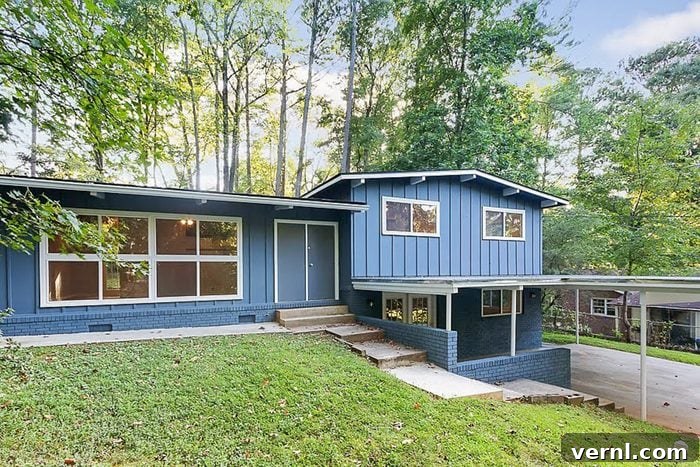
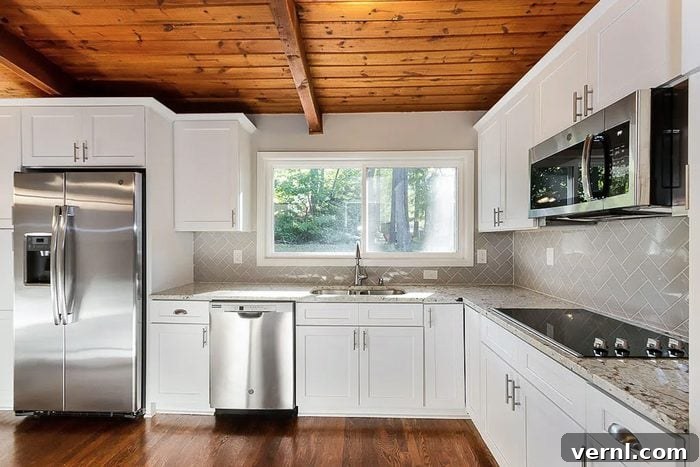
The home they eventually purchased was indeed a mid-century gem, yet the previous flippers had infused it with a decidedly “millennial” aesthetic. Despite these alterations, Dana and Colin possessed a discerning eye, immediately recognizing “elements that made it stand apart” from the myriad of properties they had viewed. They saw beyond the superficial changes, envisioning the true potential locked within its walls – a potential to restore its authentic mid-century modern identity.
While Dana and Colin were relatively new to the world of hands-on DIY, they always harbored aspirations of personalizing and improving their future home. Initially, they hadn’t planned on undertaking a comprehensive “unflipping” project. However, their burgeoning “curiosity and hands-on learning” gradually guided them towards a full-fledged DIY journey. This endeavor became singularly focused on restoring the home’s original mid-century modern identity, rather than simply applying contemporary updates. Their design choices were rigorously informed by what homes of this era, specifically in 1966, truly looked like, moving far beyond generic “mid-century modern” search results to embrace authentic historical accuracy.
The Mid-Century Modern Restoration Journey: Project Stages and Insights
How Long Does It Take to Unflip a House? The Long Game of Restoration
Dana and Colin are now six years deep into the intricate process of unflipping their entire house. This extensive timeline, far from being a deterrent, has proven to be a significant advantage. Taking their time has yielded substantial dividends, allowing them to meticulously plan each phase. The couple emphasizes that this extended duration “has allowed us to spread out the costs and plan each project thoughtfully, rather than rushing decisions or compromising on design and quality.” This measured approach ensures that every detail aligns with their vision for a period-accurate and high-quality restoration.
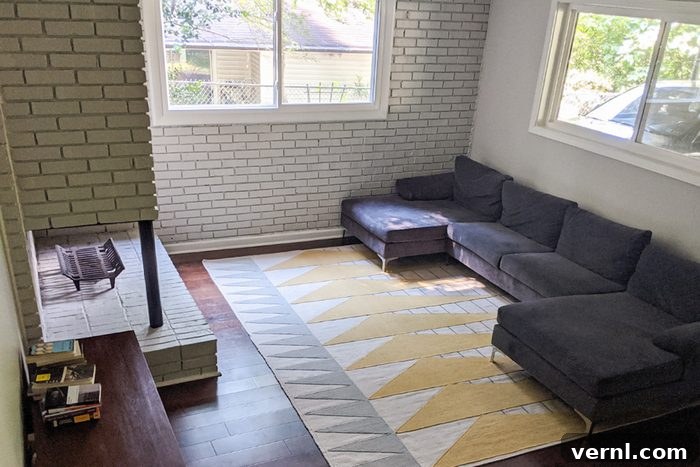
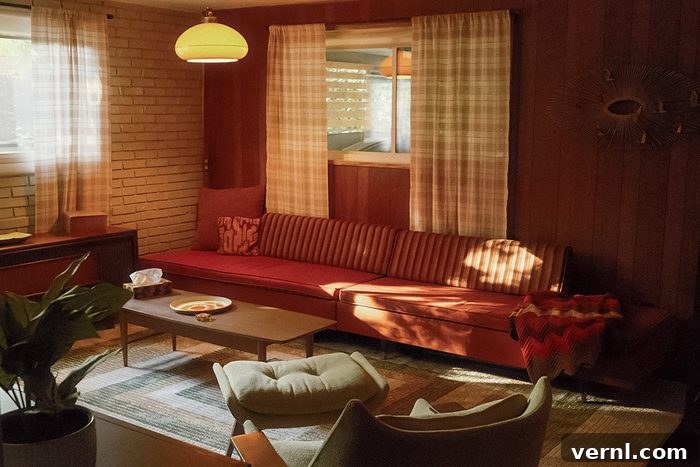
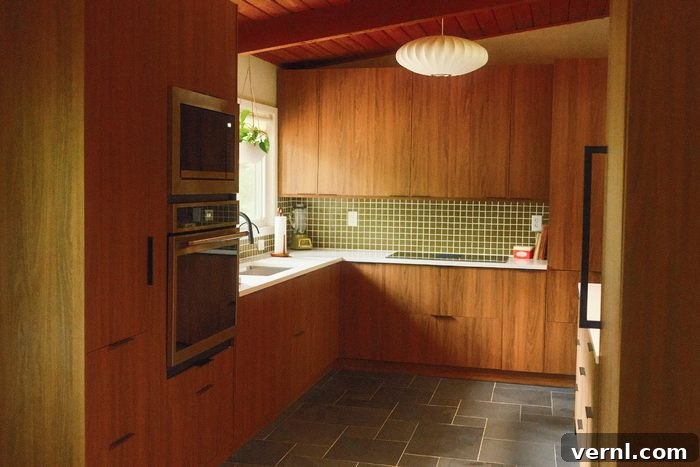
To date, their impressive list of completed projects includes a full exterior restoration, stripping layers of paint from the interior brickwork, transforming the basement into a “groovy” retro hangout complete with authentic wood paneling and a bar, and meticulously bringing the kitchen back to its vibrant green and brown glory, true to its 1966 origins. Each step has been a testament to their dedication to historical accuracy and personal craftsmanship.
Overcoming Obstacles: The Unforeseen Challenges of Unflipping
Even modest DIY projects encounter their share of hurdles, so it comes as no surprise that Dana and Colin have navigated numerous setbacks at virtually every stage of their ambitious restoration. A common source of frustration, they note, has been “uncovering issues left behind by the flippers.” Their experience suggests a pervasive pattern: “Nearly every project reveals shortcuts or poor workmanship from them.” Specific examples of these flipper-induced problems include a vanity detaching from the wall, improperly installed doors that refused to close, and cracks meticulously concealed with caulking—all avoidable issues that added significant complexity to their work.
Despite these disheartening discoveries, the couple has steadfastly refused to be discouraged. Instead, they view these challenges as invaluable learning opportunities. Each obstacle has not only reinforced the critical importance of careful and thoughtful workmanship but also “taught us something new that we’ve been able to apply to future work.” This resilience and adaptability are crucial for any large-scale home restoration, transforming frustrations into growth experiences.
Conquering Intimidation: Taking the Plunge into Challenging Tasks
Embarking on a project of this magnitude naturally comes with numerous intimidating aspects. For Dana and Colin, one of the most daunting tasks was stripping the paint off the brickwork. “We worried about damaging the brick or not being able to remove all of the paint and ending up with a worse result,” they explain. This fear of irreversible damage or an unsatisfactory outcome is common among DIYers. However, they soon realized that with such a task, the only true path forward was to commit and begin. Once they made the decision to try, “the overthinking faded, and the project became much more manageable.” This mindset shift highlights a critical lesson for aspiring DIYers: often, the biggest barrier is the mental one, and actively starting can demystify the process.
Smart Strategies for DIY Budgeting: Making Restoration Financially Feasible
The six-year timeline for their unflipping project has played a pivotal role in their budgeting strategy. “It gives us the ability to save for each project over the course of a year or two,” they share. This phased financial planning allows them to avoid accumulating debt and ensures they can invest in quality materials and tools. However, a long timeline isn’t their only budgeting hack. Dana and Colin are firm believers in maximizing their own labor: they “try to take on as much of the work ourselves as possible, only hiring professionals when a task is beyond our comfort level or requires specialized expertise.”
They underscore that labor costs frequently outweigh material expenses. While acknowledging that certain specialized tasks genuinely require professional intervention, they contend that “people are often surprised by how much they can accomplish on their own once they’re willing to learn and give it a try.” This ethos of self-reliance and continuous learning has been instrumental in making their extensive mid-century modern home restoration project financially attainable, empowering them to transform their home without breaking the bank.
Moments of Pride: Witnessing the Vision Come to Life
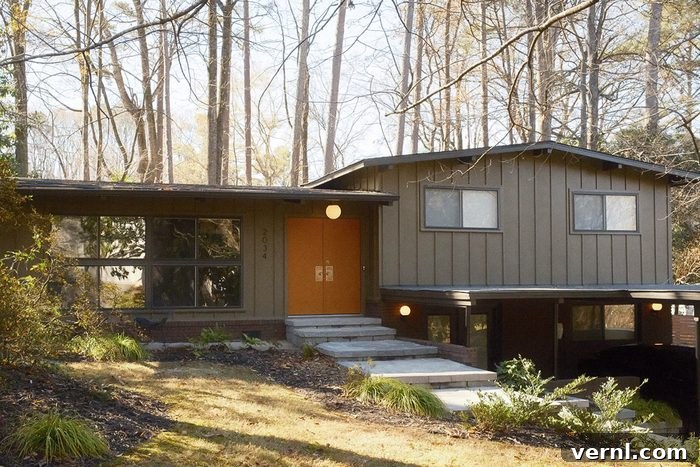
Among the many rewarding aspects of their home restoration, a particular highlight for Dana and Colin was observing how meticulous details transformed their house. Repainting the siding in “Superior Bronze,” a color that “closely reflects the tones commonly used when these homes were built [in the 1960s],” was a significant step. They also diligently sourced and installed period-accurate globe light fixtures, a signature element of mid-century design, which instantly transported the home back to its original era.
However, one of their most cherished accomplishments was the restoration of the front door. They found and installed “a bold orange color-blocked door with vintage escutcheons, door knobs and a deadbolt, all true to mid-century design.” This particular detail, a focal point of the home’s exterior, brought an immense sense of satisfaction. “Once everything was finished, it felt like all the years of work had finally come together, and the house finally looked and felt the way it was meant to,” the couple beams, reflecting on the profound sense of achievement derived from seeing their vision materialize.
Learning from Experience: The Value of a Do-Over
Perhaps their absolute proudest moment to date paradoxically stemmed from a portion of the home they had to redo entirely: the exterior. The flippers who originally owned the house had painted it blue and white, a choice that “clashed heavily with the home’s architecture and felt completely out of place.” When Dana and Colin first moved in, they made an initial attempt at updating it, opting for a contemporary gray with a darker gray accent, and adding “a wood feature around the carport for privacy that tied into the front door.”
However, as their understanding of mid-century design deepened and their renovation journey progressed, they realized this initial update “no longer aligned with how we understood and appreciated the home.” They recognized they had “overcorrected,” which was why “it never felt quite right.” After several years of reflection and gained expertise, they decided on a second pass at the exterior. During this interim, they acquired “a deeper understanding of the home’s architecture and how to properly honor it.” When finally ready to try again, they sandblasted the exterior, meticulously working to “restore it to its original natural finish,” a testament to their commitment to authenticity and the iterative nature of true restoration.
Advice for Aspiring DIYers: Embracing the Journey of Home Restoration
Finding Inspiration: The History of Your Home as a Guide
Over the past six years, Dana and Colin have tackled a diverse array of DIY projects across their home. They reveal, “Much of our inspiration comes directly from the history of the house itself.” Their approach is rooted in comprehensive research, compiling extensive resources and references to ensure their renovations are as period-accurate as possible. This commitment to historical integrity is a cornerstone of their unflipping philosophy.
Their home, originally sold by P&H Realty Company in the 1960s, came with a hidden treasure: marketing brochures from the era “showcasing several homes they were building at the time.” Fortuitously, owners of similar homes had preserved “a significant amount of [that] documentation.” Dana and Colin leveraged this as a primary source of inspiration, allowing them to recreate authentic details. They also drew heavily from “Usonian design principles and untouched, period-accurate homes” to “guide our design decisions and keep our projects grounded in the home’s original intent.” This deep dive into historical context ensures their restoration efforts are not just aesthetically pleasing, but also genuinely reflective of the era.
The Most Essential Advice: Just Start and Learn as You Go
Taking on a large-scale renovation project can be incredibly intimidating, a feeling Dana and Colin know well. Their most crucial piece of advice for aspiring DIYers is disarmingly simple: “the best place to start is simply by trying.” They candidly admit that they began with absolutely no prior experience and still occasionally feel under-prepared. However, they emphasize that “the only way to move past that is to start researching and actually doing the work.” This active engagement is vital for building both skill and confidence.
Perfection, they stress, is an unrealistic and counterproductive goal. “You won’t learn without making a few mistakes along the way, and that’s okay,” Dana and Colin explain, reassuringly. “Failure is part of the process, and almost everything can be corrected. What matters most is being willing to start and learn as you go.” This philosophy encourages experimentation, resilience, and a realistic understanding that mistakes are not endpoints, but rather stepping stones in the learning process of DIY home restoration.
What’s Up Next? The Main Bathroom Transformation
While Dana and Colin have achieved tremendous progress over the past six years, their “unflipping” journey is far from over. Their next ambitious project involves the main bathroom. “We’ve spent a great deal of time carefully planning how to execute it, especially since the house has a very tight footprint and reworking the layout is always a challenge,” they explain, highlighting the complexities of transforming compact spaces.
By dedicating ample time to thoughtful design and strategic planning, they “were able to nearly double the square footage” of the bathroom, a remarkable feat in a tight space. When completed, the main bathroom will boast an array of custom elements, including “custom mosaic tile and glass, a curated collection of vintage accessories, and extensive custom built-ins.” The couple anticipates this will be their “largest and most intentionally designed project to date,” reflecting their unwavering commitment to historical accuracy and personalized craftsmanship.
You can follow Dana and Colin’s inspiring mid-century modern unflipping adventures on Instagram at @un.flipping or delve deeper into their detailed journey on their official website.