We were halfway across the country when our van’s check engine light illuminated, casting a shadow of uncertainty over our journey. Our immediate instinct was to take it to a dealership, a decision that quickly led to a bill amounting to thousands of dollars for parts and labor. Frustratingly, these expensive repairs failed to address the root cause of the problem.
It was this frustrating experience that prompted us to invest in our very first car diagnostic scanner. Within a mere hour of connecting the device to our vehicle, we identified the actual issue: a relatively inexpensive part costing around $150, which took less than an hour to replace. The relief and satisfaction of resolving the problem ourselves, after being misled by professional services, was immeasurable.
Our story is far from unique. We’ve since heard countless similar complaints from other vehicle owners who have faced escalating repair costs and misdiagnoses. Much of this challenge stems from the increasing complexity of modern vehicles, with their intricate electrical systems, sophisticated emission controls, and myriad sensors. However, with a foundational understanding of vehicle mechanics and the right tools, you don’t have to be completely at the mercy of expensive repair shops.
“Having your own quality scanner for vehicle maintenance purposes becomes essential if you intend to maintain your vehicle throughout its life,” explains renowned car expert Alan Gelfand. He emphasizes, “A personal scanner provides you with complete vehicle health information and saves you from multiple code check trips to a mechanic, offering unparalleled peace of mind and financial savings.”
Understanding what a car diagnostic scanner can do for you can transform how you approach automotive maintenance, turning those annoying dashboard warning lights from sources of anxiety into actionable insights.
What Is a Car Diagnostic Scanner?
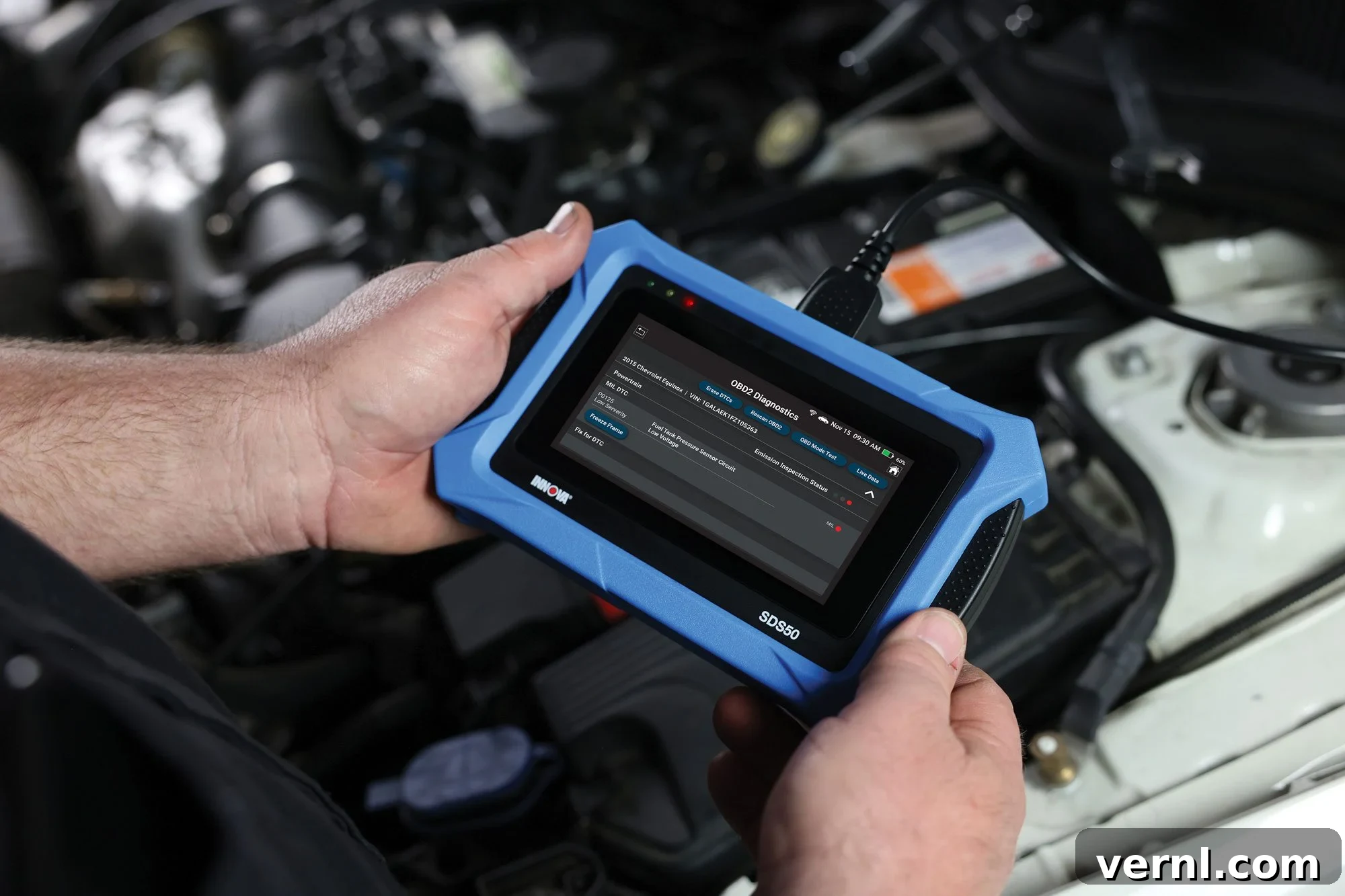
A car diagnostic scanner, often referred to as an on-board diagnostics scanner or an OBD2 code reader, is a sophisticated electronic device designed to communicate directly with your vehicle’s intricate computer system. Its primary function is to retrieve vital information about the car’s performance, health, and any potential malfunctions.
The implementation of these systems dates back to 1996, when a federal mandate in North America required every new car, light truck, SUV, minivan, and hybrid to incorporate an On-Board Diagnostic System, specifically the second generation, known as OBD-II. “This standardized system monitors a vehicle’s crucial systems that trigger the check engine light and alerts drivers about issues related to emissions, fuel economy, and drivability,” states Keith Andreasen, an Automotive Service Excellence (ASE) certified master technician and tool product manager at Innova Electronics.
The OBD-II standard ensures that regardless of the make or model, vehicles can be diagnosed using a universal port and communication protocols. This technological advancement empowered both professional mechanics and DIY enthusiasts by standardizing the process of identifying and troubleshooting vehicle problems, making automotive diagnostics more accessible than ever before.
What Can a Car Diagnostic Scanner Do?
A car diagnostic scanner serves as an indispensable tool, bridging the knowledge gap between complex vehicle systems and the need for accurate repairs. It significantly assists both seasoned automotive technicians and enthusiastic DIYers in pinpointing exactly what might be amiss with a vehicle.
While some basic scanners are limited to merely reading fault codes, more advanced units offer extensive capabilities, including monitoring real-time data streams and performing active tests. Regardless of its complexity, every OBD device connects to a standardized 16-pin port, typically found under the steering wheel on the driver’s side.
The core function of all OBD devices is to read Diagnostic Trouble Codes (DTCs) generated by the vehicle’s onboard computer. “The scanner can display these codes in a human-readable format, helping users identify the problem area within the vehicle’s systems,” explains Andreasen. These DTCs are classified into different types, such as:
- P-codes (Powertrain): Related to the engine, transmission, fuel system, ignition, and emissions. These are the most common codes you’ll encounter.
- B-codes (Body): Pertaining to body functions like airbags, central locking, power windows, and seats.
- C-codes (Chassis): Associated with chassis systems such as ABS (Anti-lock Braking System), traction control, and steering.
- U-codes (Network Communication): Indicating communication errors between different control modules within the vehicle.
Beyond simply reading codes, the capabilities of modern car diagnostic scanners can be quite extensive:
- Clearing Trouble Codes and Resetting Lights: Once a vehicle has been repaired, the scanner can clear the stored trouble codes, which in turn will deactivate the check engine light, the tire pressure monitoring system (TPMS) light, airbag warning, and other warning signals on the dashboard. It’s crucial, however, to ensure the underlying problem is fixed before clearing codes, as they will reappear if the fault persists.
- Monitoring Real-Time Data: This powerful feature allows users to observe live sensor readings and system parameters as the engine runs. Data points like engine RPM, vehicle speed, coolant temperature, oxygen sensor readings, fuel trim, and mass airflow sensor data can be monitored simultaneously. This is invaluable for diagnosing intermittent issues or verifying sensor functionality. For example, inconsistent oxygen sensor readings might indicate a faulty sensor or an exhaust leak, while abnormal coolant temperatures could point to a thermostat issue.
- Retrieving Freeze-Frame Data: When a diagnostic trouble code is triggered, the vehicle’s computer records a “snapshot” of various sensor values and operating conditions at that exact moment. This freeze-frame data provides crucial context, showing parameters like engine speed, load, fuel system status, and coolant temperature, which can help recreate the conditions under which the fault occurred.
- Viewing Live Data Streams: This goes beyond basic real-time data by allowing users to view continuous streams of information from multiple sensors simultaneously. This is especially useful for diagnosing complex issues that involve interactions between different systems, such as diagnosing misfires under specific engine loads or observing how fuel pressure changes under acceleration.
- Checking Emissions Readiness: The scanner can inform you whether your vehicle’s various emission monitoring systems have completed their self-tests. This is vital for determining if your vehicle will pass an emissions test, saving you time and potential retest fees.
- Retrieving Vehicle Information: Scanners can access basic vehicle information such as the Vehicle Identification Number (VIN), calibration IDs, and calibration verification numbers. This information is often necessary for ordering parts, checking for recalls, or performing software updates.
- Performing Active Tests (Bi-Directional Controls): More advanced scanners offer bi-directional control, enabling you to send commands to the vehicle’s systems and components. This means you can actively test components like fuel pumps, cooling fans, solenoids, and relays directly from the scanner. For instance, you could command the engine fan to turn on to check its functionality or cycle the ABS pump to bleed the brakes. This capability significantly streamlines the diagnostic process by allowing component testing without requiring full disassembly.
- Installing Software Updates: While primarily a feature of professional-grade tools, some advanced diagnostic scanners can assist with installing firmware or software updates for various vehicle modules. This ensures your vehicle’s systems are running the latest versions, which can improve performance, fix bugs, or add new functionalities.
What Can’t a Car Diagnostic Scanner Do?
While car diagnostic scanners are incredibly powerful tools, it’s important to understand their limitations. Their capabilities vary significantly depending on their price point and manufacturer, but generally, they cannot:
- Repair Your Car For You: A scanner is a diagnostic tool, not a repair tool. It tells you what might be wrong, but it won’t physically fix the problem. You still need mechanical skills, tools, and replacement parts to perform the actual repair.
- Predict Future Failures: While some advanced databases, apps, and solutions, when used in conjunction with a scanner, can offer insights based on common failure patterns, the scanner itself doesn’t have a crystal ball. It reacts to existing problems or conditions that have already triggered a fault code. It cannot foretell when a wear-and-tear item like a clutch or water pump will fail.
- Diagnose Non-Electrical or Mechanical Issues: Scanners are primarily designed to interact with the vehicle’s electronic control units and sensors. They cannot diagnose purely mechanical problems such as low tire tread, a failing water pump (unless its failure triggers a related sensor code, e.g., overheating), a broken suspension component, worn brake pads, or poor fuel quality that hasn’t yet caused a sensor-detectable issue.
- Override Vehicle Safety Systems and Manufacturer Settings: For obvious safety and liability reasons, scanners are designed to read and sometimes modify certain parameters within predefined limits, but they cannot override fundamental safety systems or tamper with critical manufacturer settings that ensure the vehicle operates safely and within legal specifications.
- Replace Proper Maintenance: A diagnostic scanner is an enhancement to, not a replacement for, routine vehicle maintenance. Essential tasks like regular oil changes, fluid checks and replacements, tire rotations, and brake inspections still need to be performed proactively. A scanner helps you address issues *between* these maintenance intervals or identify problems that maintenance might not catch.
- Provide Detailed Mechanical Diagnosis: “While scanners can point out areas of concern, they might not provide detailed explanations for the root cause of a problem,” says Andreasen. For instance, a scanner might display a code for “Catalyst System Efficiency Below Threshold (P0420),” indicating a problem with the catalytic converter’s efficiency. However, this code doesn’t definitively mean the catalytic converter itself is faulty. It could also be caused by a failing oxygen sensor, an exhaust leak, or an engine misfire that’s damaging the converter. A skilled mechanic’s expertise is still essential for further investigation, thorough testing, and pinpointing the exact component responsible for the fault.
Who Needs a Car Diagnostic Scanner?
A car diagnostic scanner is a truly valuable tool for a broad spectrum of individuals, extending far beyond professional mechanics. It empowers anyone who wishes to take a more active role in their vehicle’s health, offering the ability to problem-solve and understand repairs without immediately incurring the expense of an auto mechanic’s diagnostic fees.
“A consumer with even limited automotive repair experience can effectively use a diagnostic scanner to check a vehicle for road trip readiness, ascertain if their car is prepared to pass an emissions test, or simply better understand why the check engine light has illuminated,” explains Andreasen. This direct insight can save significant money by avoiding unnecessary mechanic visits or confirming a diagnosed issue before authorizing costly repairs.
Here are specific groups who can greatly benefit from owning a car diagnostic scanner:
- DIY Enthusiasts: For those who enjoy working on their cars, a scanner is indispensable. It allows for accurate troubleshooting, enabling precise identification of issues and ensuring that parts are replaced correctly the first time.
- Cost-Conscious Car Owners: With rising repair costs, a scanner offers a powerful way to save money. By diagnosing issues yourself, you can avoid diagnostic fees and potentially perform minor repairs, or at least go to a mechanic armed with information, making you less susceptible to overcharging or unnecessary repairs.
- Used Car Buyers: Before purchasing a used vehicle, connecting a scanner can reveal hidden or pending trouble codes that might indicate underlying problems not immediately apparent during a visual inspection or test drive. This can be a critical step in making an informed purchase decision.
- Proactive Maintainers: For owners who prefer a proactive approach to maintenance, a scanner can provide early warnings of potential issues before they escalate into major problems, contributing to the longevity and reliability of their vehicle.
- Individuals in Emissions Test Regions: Knowing your car’s emissions readiness status before going for the official test can prevent failed inspections and the associated hassle and costs of retesting.
- Anyone Concerned About Their Car’s Health: Even if you don’t plan to do the repairs yourself, understanding what your check engine light means can alleviate anxiety and help you have more informed conversations with your mechanic.
If you’re not quite ready to purchase a scanner but your check engine light has just come on, remember that most major auto parts stores offer a free service to read basic diagnostic trouble codes on the spot. While this won’t offer the comprehensive features of a personal scanner, it can provide initial guidance.
FAQs About Car Diagnostic Scanners
Where can I find a car diagnostic scanner?
“Mechanics and regular car owners can easily acquire car diagnostic scanners through major auto parts retailers, specialized tool supply stores, and various online marketplaces,” advises Alan Gelfand. The market offers a wide spectrum of options, broadly categorized into consumer-friendly units and professional-grade diagnostics:
- Consumer-Friendly Units: Brands like Autel, Foxwell, and iCarsoft typically offer scanners with intuitive interfaces, focusing on common engine and emissions-related codes. Many also include live data viewing, battery checks, and some support for ABS and airbag systems. These are excellent for basic troubleshooting and proactive maintenance.
- Professional-Grade Diagnostics: Brands such as Snap-On, Bosch, Launch, and Autel’s professional lines provide advanced capabilities. These tools often feature deeper system access (e.g., transmission, body control modules), bi-directional controls, coding and programming functions, manufacturer-specific diagnostics, and extensive vehicle coverage. They are built for rigorous daily use in a workshop environment and come with a significantly higher price tag.
Can I rent a car diagnostic scanner?
Yes, renting a car diagnostic scanner is an option, often available at tool rental shops associated with major auto parts or big-box stores. However, it’s crucial to understand the limitations of rented units. “The generic OBD-II codes provided by rental scanners help users identify problems, yet they often lack the detailed manufacturer-specific information required to diagnose modern vehicles precisely,” Gelfand points out.
While a rented scanner can give you a basic DTC, it usually won’t provide real-time data, freeze-frame data, or the specific manufacturer-enhanced codes that are often essential for pinpointing complex or intermittent issues. For a deeper understanding of your vehicle’s health, owning your scanner is generally more beneficial.
How much do car diagnostic scanners cost?
The price of a car diagnostic scanner can vary dramatically based on its features, brand, and intended use:
- Basic Code Readers ($20 – $100): These simple devices read and clear generic engine trouble codes (P-codes). They are ideal for quick checks and turning off the check engine light after a repair.
- Mid-Range DIY Scanners ($100 – $300): These offer more features, including live data streams, freeze-frame data, and often cover ABS and SRS (airbag) systems in addition to engine diagnostics. They provide a good balance of functionality and affordability for the average car owner.
- Advanced DIY / Entry-Level Professional Scanners ($300 – $800): These tools expand on mid-range features with more comprehensive vehicle coverage, some bi-directional controls, service reset functions (like oil light resets, electronic parking brake deactivation), and often manufacturer-enhanced codes for various systems.
- Professional-Grade Diagnostic Tools ($800 – Several Thousand Dollars): These are comprehensive systems designed for auto repair shops, offering extensive bi-directional controls, module coding, programming capabilities, advanced graphing, and multi-brand support, often with subscription-based updates.
Are smartphone apps with Bluetooth dongles good enough?
Smartphone apps paired with a Bluetooth or Wi-Fi OBD-II dongle have become a popular and convenient option. They offer several advantages:
- Pros: Highly portable, cost-effective (dongles are often $15-$50), leverage your phone’s screen for a rich interface, and many offer basic code reading and live data.
- Cons: Reliance on phone’s battery and processing power, variable reliability and security risks with cheap dongles, limited advanced features (e.g., bi-directional controls, manufacturer-specific codes often require paid app upgrades or are unavailable), and potential connectivity issues. For serious diagnostics, a dedicated scanner typically offers more robustness and deeper functionality.
How do I choose the right car diagnostic scanner for my needs?
Selecting the ideal car diagnostic scanner requires considering several factors:
- Vehicle Compatibility: Ensure the scanner supports your car’s make, model, and year, especially if you have a non-OBD-II compliant older vehicle or a European/Asian brand that might require specific protocols.
- Required Features: Do you just need to read basic engine codes, or do you require live data, ABS/airbag diagnostics, bi-directional controls, or service resets? Match the scanner’s capabilities to your diagnostic needs.
- Budget: Determine how much you are willing to spend, keeping in mind that more features generally mean a higher price.
- Ease of Use: Look for a scanner with an intuitive interface, clear display, and easy navigation if you are a DIY user.
- Software Updates and Support: Check if the manufacturer provides free or paid software updates to ensure compatibility with newer vehicles and access to the latest diagnostic features. Good customer support can also be invaluable.
- Reviews and Recommendations: Read reviews from other users and consult automotive forums or experts for recommendations on reliable and effective models.
About the Expert
- Alan Gelfand has been the owner of German Car Depot for more than 30 years. His business is an independent automotive service center in Hollywood, Florida, specializing in the service and repair of German vehicles, bringing decades of hands-on experience and insight into the automotive diagnostic field.
- Keith Andreasen is an Automotive Service Excellence (ASE) certified master technician and a tool product manager at Innova Electronics, a leading provider of automotive diagnostic tools. His expertise ensures valuable insights into the technical aspects and practical applications of diagnostic scanners.
In conclusion, arming yourself with a quality car diagnostic scanner is more than just buying another tool; it’s an investment in understanding, maintaining, and ultimately controlling your vehicle’s health. In an era where vehicle technology is increasingly complex and repair costs are steadily rising, a personal diagnostic scanner stands out as an indispensable tool, offering both financial savings and the invaluable peace of mind that comes with being an informed and empowered car owner.