
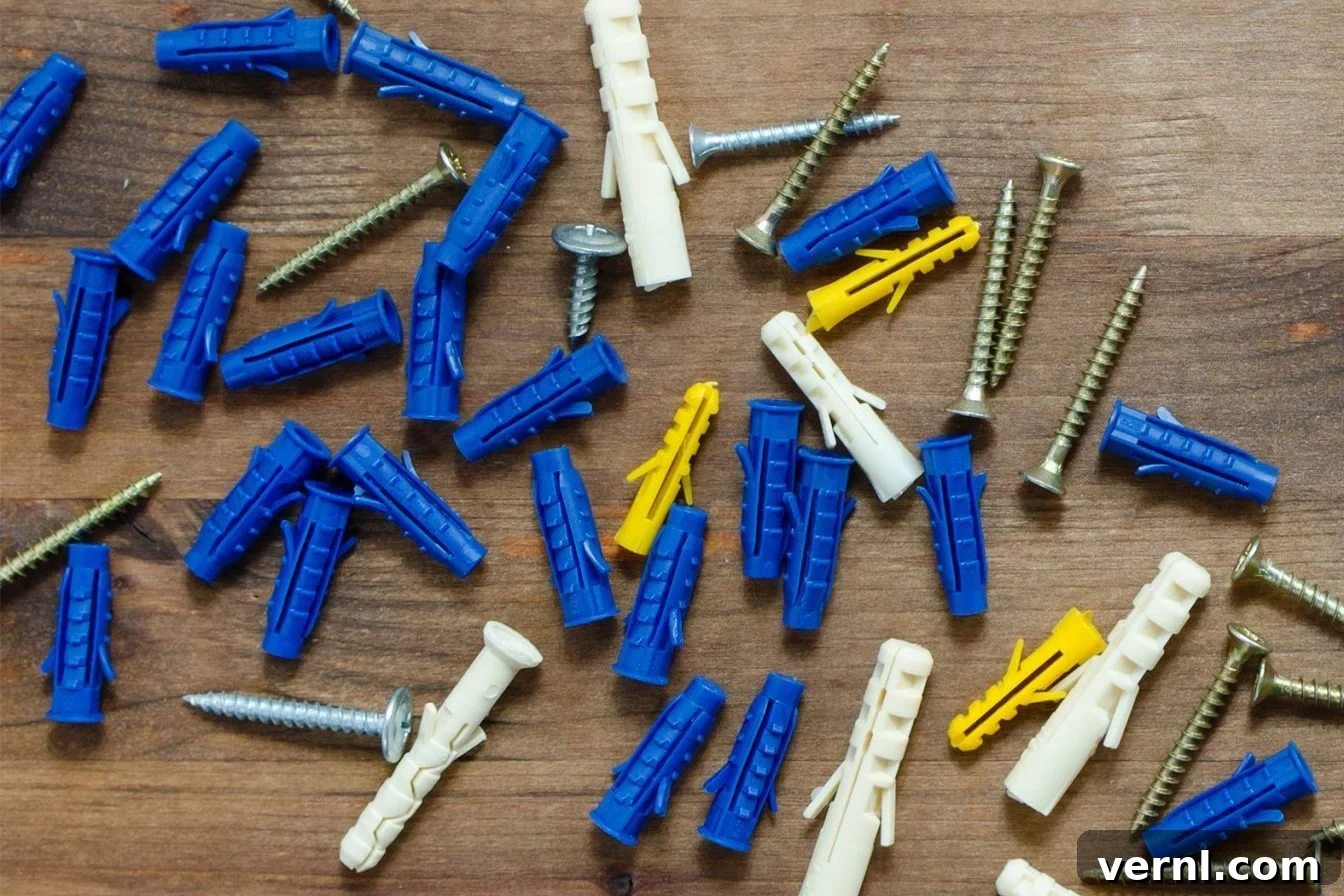
Drywall dramatically transformed residential construction in the mid-20th century, particularly throughout the 1940s and 1950s. These versatile gypsum panels offered a straightforward, cost-effective solution for wall coverings, significantly outpacing the labor-intensive traditional lath and plaster methods. This innovation led to substantial reductions in both labor and material expenses, consequently lowering housing costs and making homeownership more accessible. Millions of post-war families appreciated the solid, durable surface that drywall provided for their new homes.
However, despite its numerous advantages, drywall presents a unique challenge: its limited capacity for fastener retention. Unlike solid wood studs or masonry, the dry, crumbly gypsum material simply doesn’t offer enough structural integrity for a standard nail or screw to securely grip. Attempting to install a nail or screw directly into drywall without proper support typically results in a weak hold, often capable of supporting only a few pounds before easily pulling straight out. This limitation becomes immediately apparent when attempting to hang anything beyond a lightweight wall calendar.
For heavier or more valuable items, a simple fastener into drywall isn’t sufficient. While you can certainly drive a fastener through the drywall and into a wall stud, this isn’t always a practical solution. The placement of your desired item, whether it’s a cherished family heirloom, a flat-screen television, or a robust shelf, rarely aligns perfectly with the underlying structural studs. This common dilemma highlights the critical need for a more reliable method to secure objects to drywall surfaces.
This is precisely where the innovative drywall anchor becomes indispensable.
What Exactly Are Drywall Anchors?
A drywall anchor is a specialized fastening device designed to provide a secure mounting point in materials that lack sufficient inherent strength to hold a screw or nail on their own. This principle applies not only to drywall but also to other common construction materials like brick, concrete, and hollow walls, all of which benefit from the use of anchors to ensure stability and load-bearing capacity.
Drywall anchors, often referred to simply as wall anchors, are engineered in various designs, yet they all operate on a fundamental principle: they create an expanded, stable point of contact within or behind the drywall. This mechanism allows them to firmly hold a screw or nail, but more importantly, they distribute the weight-load of the hung item across a significantly wider area of the drywall. This load distribution is crucial, effectively mitigating the concentrated stress that would otherwise cause a direct fastener to pull through. Think of it like walking on thin ice; spreading your weight over a larger surface area reduces the pressure at any single point, making it less likely to break through.
The modern drywall anchor, as we know it today, owes its widespread use to German inventor Artur Fischer, who patented his groundbreaking design in 1958. Fischer’s ingenious expanding nylon plug revolutionized how DIYers and professionals alike could securely hang virtually anything from their walls, opening up a world of possibilities for interior design and functional organization without being restricted by stud locations.
Understanding the Diverse Types of Drywall Anchors
The market offers a wide array of drywall anchor types, each boasting distinct characteristics, installation methods, and crucially, different weight ratings. Selecting the appropriate anchor for your specific project is paramount for safety and longevity.
1. Expansion Anchors (Plastic Wall Plugs)
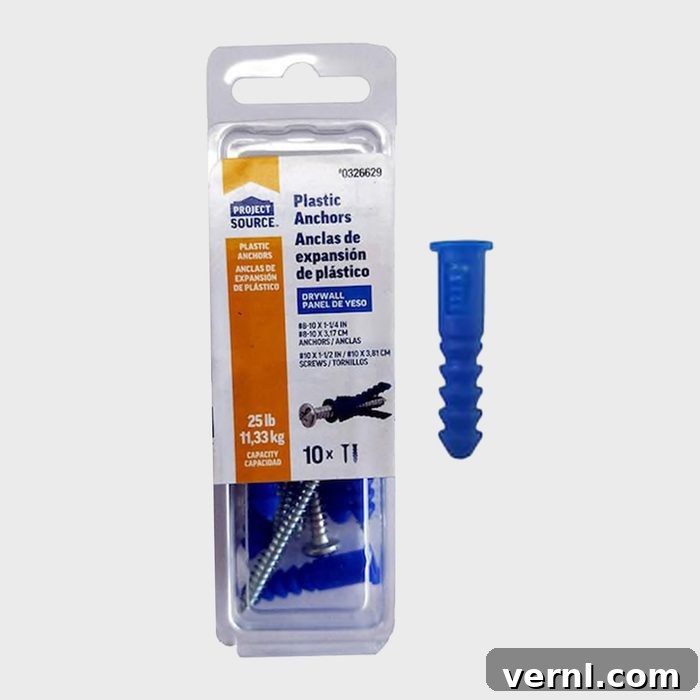
These are perhaps the most common and recognizable type, often included free with lightweight fixtures such as towel rods, toilet paper holders, and small picture frames. Expansion anchors are essentially thin plastic sleeves designed to be inserted into a pre-drilled drywall hole. When a screw is driven into the anchor, the plastic sleeve expands slightly, pressing outwards against the sides of the hole. This outward pressure creates friction, holding the anchor firmly in place.
Extremely affordable and simple to install, expansion anchors are ideal for light-duty applications. However, their holding power is generally lower compared to other anchor types, making them unsuitable for heavy or frequently used items. They rely primarily on the integrity of the drywall itself, which can degrade over time with repeated stress or if the anchor is overtightened.
2. Toggle-Bolts
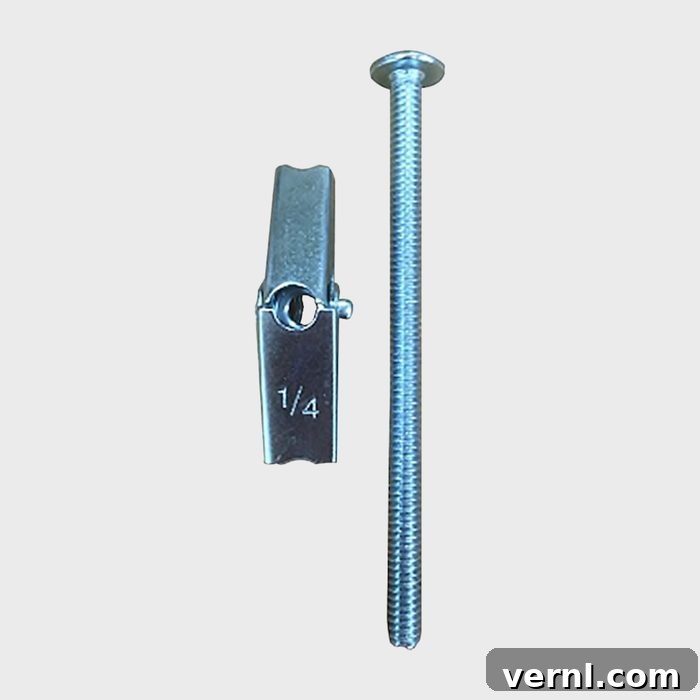
Toggle-bolts are renowned for their superior strength and ability to support significant weight. They consist of a long machine screw attached to a winged toggle mechanism. The toggle wings are designed to fold flat for insertion through a drilled hole in the wall. Once past the drywall, a spring mechanism causes the wings to pop open, creating a wide, secure brace against the backside of the drywall panel. This large surface area behind the wall effectively distributes the load, providing exceptional holding power.
A notable characteristic of toggle-bolts is their requirement for a larger pre-drilled hole compared to most other anchors, primarily due to the size of the spring-loaded toggle section. While incredibly strong, a downside is that if the bolt needs to be removed, the toggle piece is typically lost and falls behind the wall, making it a single-use anchor in most cases. An excellent example is this set from Blue Hawk, which often specifies a three-quarter-inch hole and can boast a hanging capacity of 70 lbs or more, making them ideal for mounting heavy items like televisions, large mirrors, or shelving units.
3. Pull-Toggle Anchors (Strap Toggles)
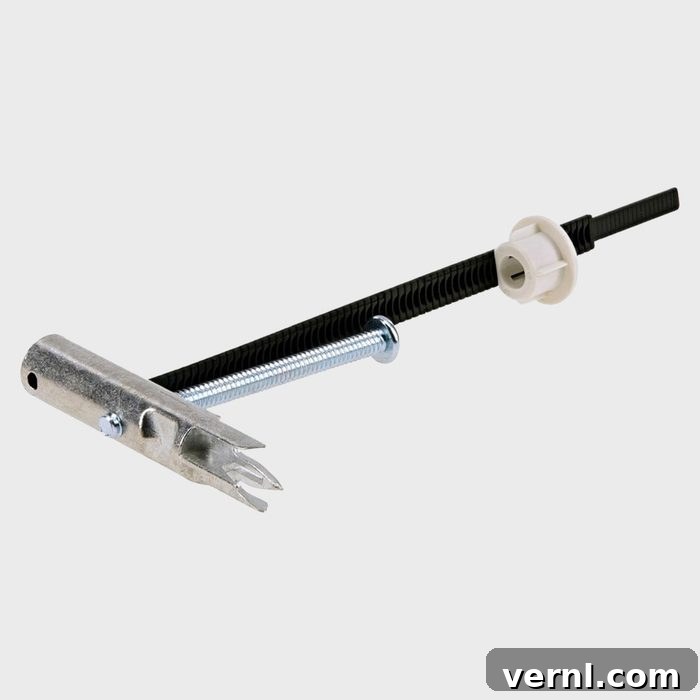
Relatively newer to the market, pull-toggle anchors represent a clever evolution, merging the robust strength of traditional toggle-bolts with the user-friendliness of plastic anchors. These anchors feature a metal toggle similar to a toggle-bolt, which is inserted through a pre-drilled hole. However, instead of a spring-loaded bolt, a plastic strap (reminiscent of a zip-tie) is used to pull the toggle tight against the interior surface of the drywall, connecting it to a threaded plastic retainer that sits flush with the wall face.
This innovative installation method allows for a single-piece toggle design that often provides a stronger, more consistent hold than traditional toggle-bolts, while requiring a smaller entry hole in the drywall. Furthermore, many pull-toggle designs allow for the screw to be removed and reinserted, offering reusability that plastic anchors provide, but with the load-bearing capacity closer to that of a toggle-bolt. For instance, this Hillman pull-toggle only needs a one-half-inch entry hole and can support an impressive 120 lbs, making it a versatile choice for a wide range of medium to heavy-duty applications.
4. Metal Anchors (Molly Bolts)
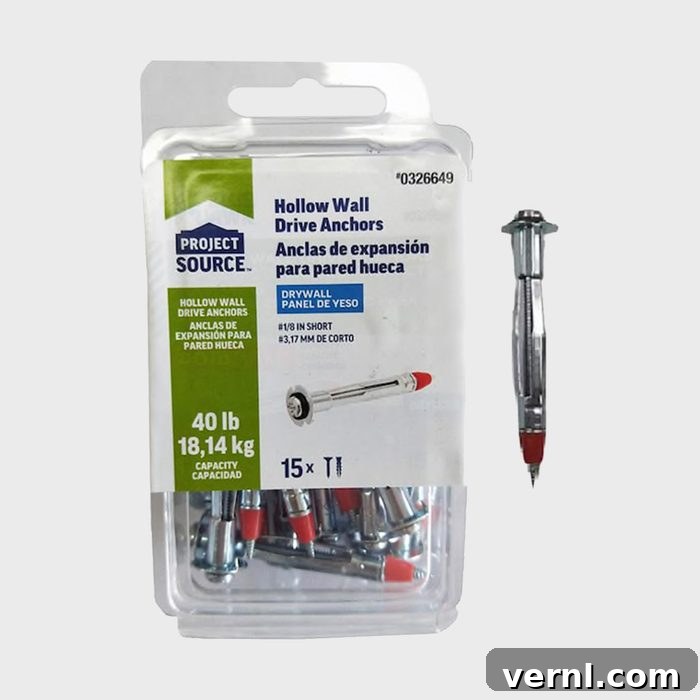
Molly bolts, a design that has proven its efficacy for nearly a century, are essentially metal counterparts to expansion anchors. Distinguished by their all-metal construction, they function by flaring out the anchor barrel behind the wall as a screw is tightened, creating a robust, mushroom-shaped expansion that securely clamps onto the backside of the drywall. Unlike plastic expansion anchors that primarily rely on friction against the side of the hole, Molly bolts create a much wider and more secure hold pattern.
Originally a proprietary brand name, “Molly Bolt” has become a generic term for any metal drywall anchors of this style, such as these anchors from Blue Hawk. While smaller Molly bolts are typically rated for light-duty applications (around 20 lbs), larger and more robust versions are capable of supporting substantially heavier loads. Their metal construction offers enhanced durability and resistance to wear, making them an excellent choice for items that may experience occasional impact or need a very permanent fixture.
5. Self-Drilling Anchors
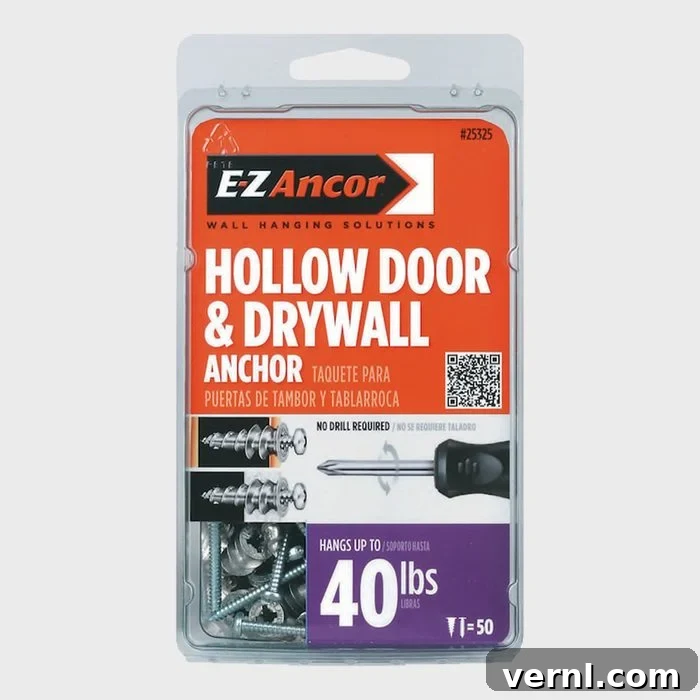
As their name suggests, self-drilling anchors are designed for unparalleled ease of installation. They feature a sharp, auger-like drill tip at the end, allowing them to be screwed directly into the drywall using only a standard screwdriver – no pre-drilling required. Behind the drill tip, these anchors are equipped with wide, aggressive screw fins that cut into and grip the drywall material firmly as they are installed, creating a strong threaded connection.
Self-drilling anchors are available in both plastic and metal (typically steel or zinc) variants. Plastic versions are more economical, while metal self-drilling anchors offer increased strength and versatility, capable of gripping not only hollow walls but also finding purchase in a wood stud if encountered, providing an even more secure attachment. Both types are remarkably easy to install and, if necessary, quite simple to remove without causing excessive damage. While they create a slightly larger hole than slim expansion anchors and generally don’t match the ultimate holding power of toggle bolts, they provide an excellent intermediate solution for medium-weight items where speed and simplicity of installation are key. A good example is this 50-pack from E-Z Anchor, which typically has a three-eighths inch diameter and a 40 lb. holding capacity, making them suitable for pictures, small shelving, or curtain rods.
Choosing the Right Anchor: Always Read the Packaging
Understanding the weight restrictions and installation guidelines printed on drywall anchor packaging is crucial for safe and secure mounting. The stated weight ratings are typically based on a specific drywall thickness, usually one-half-inch, which is standard for most walls. If you’re unsure of your wall’s thickness, it’s safest to assume it’s one-half-inch and choose an anchor rated accordingly or opt for a more robust anchor type.
Crucially, never use any drywall anchor in a ceiling application unless it is explicitly rated for such use. The forces exerted on a ceiling anchor are fundamentally different from those on a wall anchor. Wall-mounted anchors benefit from the downward pull against the bottom lip of the drilled hole, contributing to their support. Ceiling mounts, however, rely solely on their ability to distribute weight and resist direct pull-out (tensile strength), which is a far more demanding requirement. Consequently, basic expansion anchors have virtually no reliable holding power in a ceiling.
Some heavy-duty anchors, particularly pull-toggles, are often rated for ceiling applications due to their superior tensile strength, but careful scrutiny of the packaging is still essential. Furthermore, while most residential walls use one-half-inch drywall, many residential ceilings might utilize lighter one-quarter-inch drywall, which possesses a significantly lower load tolerance. Always err on the side of extreme caution when hanging anything from the ceiling, as a failure can result in serious injury or damage.
How To Effectively Use Drywall Anchors
Installing a drywall anchor is generally a straightforward process, but proper execution ensures maximum holding power and safety. Here are the steps:
- Prepare the Hole:
- For self-drilling anchors, simply position the anchor where desired and drive it in with a Phillips head screwdriver until it sits flush with the wall surface.
- For all other anchor types, you will need to pre-drill a hole. Refer to the anchor packaging for the precise drill bit size recommendation. Using the correct bit size is critical; too small and the anchor won’t fit, too large and it won’t grip properly. Drill slowly and steadily to avoid tearing the drywall paper.
- Set the Anchor:
- Expansion Anchors: Gently tap the anchor into the pre-drilled hole with a hammer until its flange is flush with the wall.
- Toggle-Bolts: Fold the toggle wings back and push the bolt (with the toggle attached) through the hole until the wings spring open behind the wall. Pull back gently on the bolt to ensure the wings have fully engaged. Note: For toggle-bolts, the item you intend to hang must be threaded onto the bolt before inserting the toggle into the wall.
- Pull-Toggle Anchors: Insert the toggle through the hole. Once through, pull the plastic strap firmly until the toggle pulls snug against the back of the drywall. The plastic retainer then snaps into place, holding the toggle securely.
- Molly Bolts: Insert the molly bolt into the pre-drilled hole and tap it gently until its flange is flush. Then, use a screwdriver to turn the screw, which will cause the barrel to flare out behind the wall. Continue tightening until you feel significant resistance.
- Set the Screw/Fastener:
- With the anchor securely set in the wall, you are now ready to insert your screw or fastener into the anchor. Tighten the screw until it feels snug and the item you are hanging is firm. Avoid overtightening, especially with plastic anchors, as this can strip the anchor or damage the drywall. For toggle-bolts, you’ve already threaded your item; now just tighten the bolt to secure it. Always test the stability of your hung item before fully releasing it.
Drywall Anchors: Purchasing and Cost Considerations
Drywall anchors are widely available through various retailers, with costs varying based on type, quantity, and brand. Understanding your options can help you find the best value for your project.
- Online Retailers:
- Selection: Online platforms offer an unparalleled selection, ensuring you can find almost any type, size, or brand of drywall anchor imaginable, including specialized options.
- Cost: Mid-range to high. While you can find competitive bulk pricing, smaller packs might incur a premium. Consider ordering online for convenience and picking up at a local store to waive shipping costs.
- Local Hardware Stores:
- Selection: Neighborhood hardware stores typically stock a reliable selection of common anchor types suitable for most household needs. Their staff can often provide valuable advice.
- Cost: Affordable. These stores often purchase fasteners and anchors in bulk, allowing them to offer competitive pricing that rivals larger retailers, sometimes even providing individual anchors by weight.
- Big Box Stores (e.g., Lowe’s, The Home Depot):
- Selection: National chains boast an extensive inventory of drywall anchors, including various brands, sizes, and styles. They frequently offer assorted kits that provide a convenient selection of different anchors, perfect for new homeowners or those building up their DIY tool and material collections.
- Cost: Affordable. Thanks to their purchasing power, big box stores often provide excellent prices on hardware, making them a cost-effective option for both small and large quantities.
- General Household Stores (e.g., Grocery Stores, Drugstores):
- Selection: These outlets usually carry a very limited range of basic drywall anchors, typically small packs of plastic expansion anchors. They are designed for quick, immediate needs rather than specialized projects.
- Cost: High. While convenient for grabbing anchors during a routine shopping trip, the per-unit cost is generally higher than at hardware or big box stores.
- Included with Fixtures and Products:
- Selection: Many new items, ranging from towel racks to television mounts, come pre-packaged with a variety of screws and anchors. Manufacturers often include options suitable for mounting on drywall, into studs, or even masonry to ensure their product can be installed in diverse environments.
- Cost: Free! Since you won’t use all the included hardware for every installation, it’s wise to save the leftover anchors. Over time, building up this collection can provide you with a handy assortment for future projects, saving you trips to the store and unexpected expenses.