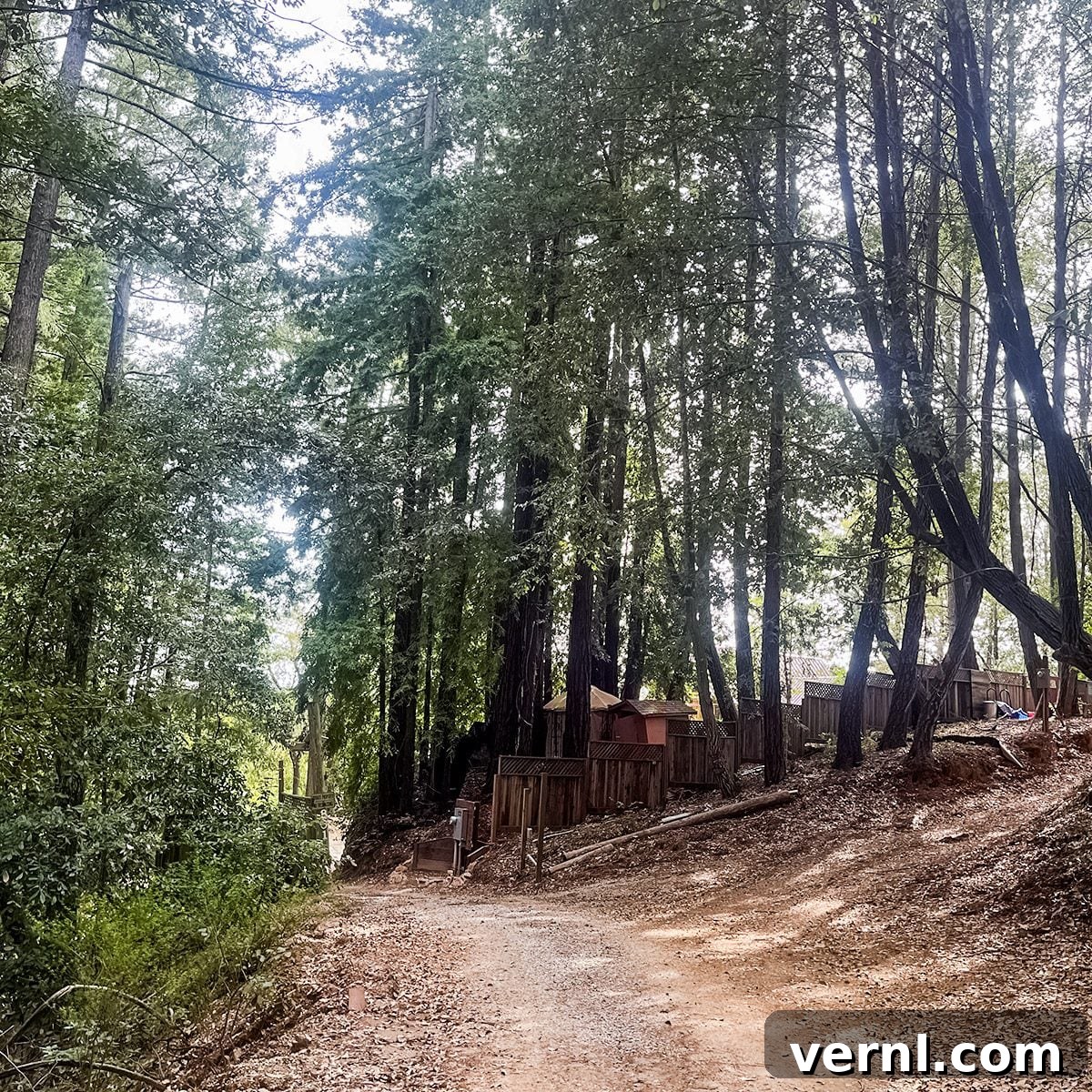
For a kid from slushy Southern Ontario, sunny California felt like a promised land. When I finally arrived in 1985, it delivered: palm trees along the freeways, the vast blue Pacific, and, most memorably, the ancient redwoods that cloak the mountains of Santa Cruz County. In all my childhood daydreams I never pictured myself living in a forest dominated by these giants, yet that’s where I ended up—and I’ve now lived among redwoods for a little over twenty years.
Redwoods must be enormous and resilient to survive the variable coastal mountain climate, which is prone to windstorms, wildfires, heavy rains, lightning, and even earthquakes. During my time here I’ve witnessed significant property damage from many of those forces, and the trees themselves often seem to shrug them off.
At their best, redwood groves form natural cathedrals—frequently growing in clumps around a central, older tree, sometimes called a “fairy circle”—but their scale brings danger as well as beauty. Here are the practical lessons I’ve learned from living among these towering trees.
Watch Out Below!
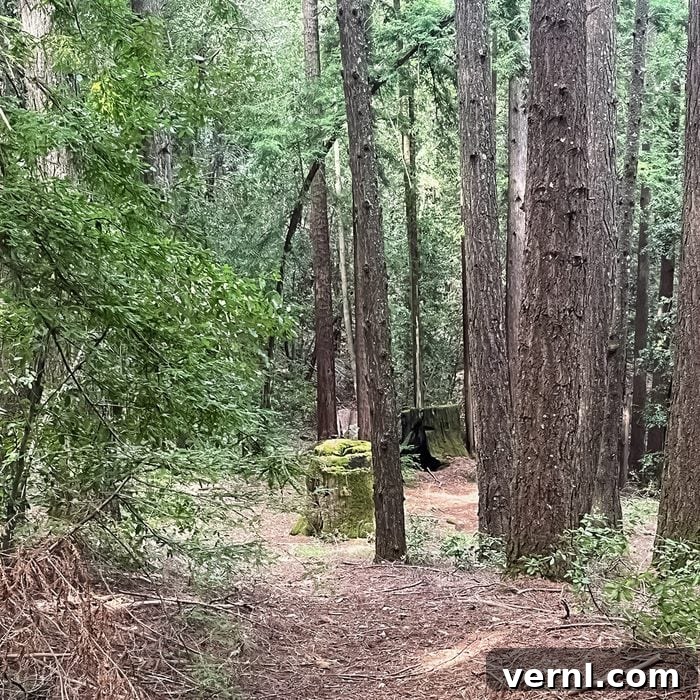
Redwoods develop massive trunks and proportionally large branches as they reach heights of several hundred feet. Those large branches do break off. When a limb falls from a tree more than 100 feet tall it can easily be fatal if it strikes a person—locals refer to these dangerous hanging limbs as “widowmakers.”
Treetops can also shear off in high winds. In one storm a treetop felled a power line, snapped a pole in half and sent it across our driveway, leaving us without power and isolated for days. Consider the damage a full tree could cause if it fell onto a house: severe structural destruction and risk of injury or worse. During a string of storms a few years ago, a fallen redwood punched through a neighbor’s roof and into the living room while the homeowner fortunately slept in another part of the house.
Because of these risks we take precautions on our property. Vehicles are parked in open, safer areas rather than under heavy canopy. People stay indoors during high-wind events. We even built a roof over the well pump to protect it from falling limbs—without that protection a single heavy branch could cut off our water supply.
Redwoods Are Protected
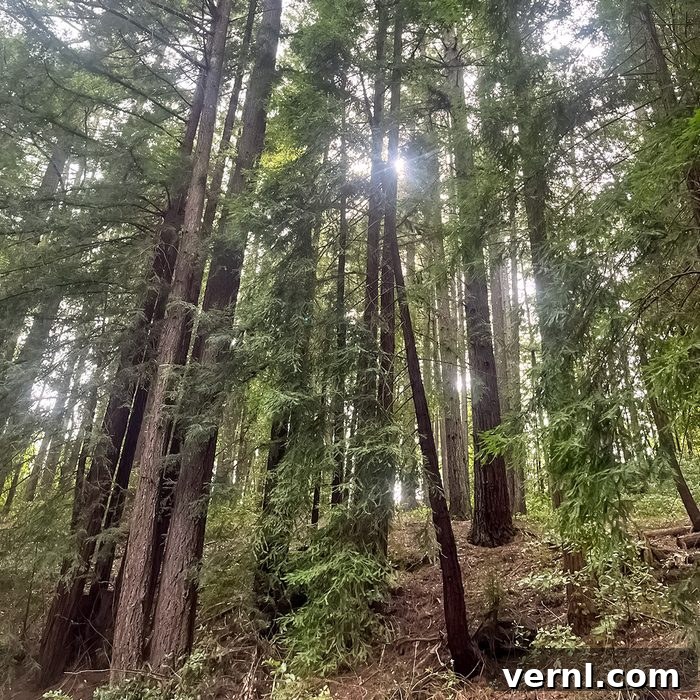
Protections for these trees are generally a positive for conservation: regulations that prohibit the removal of old-growth redwoods and require permits to remove younger trees help preserve the forest for future generations. Those rules, however, limit a property owner’s ability to manage trees on their land. When a county forest official inspected our property and recommended thinning crowded clumps to promote healthier growth, the reality of doing so became clear.
In Santa Cruz County, coastal redwoods (Sequoia sempervirens) are considered heritage trees; removing one triggers an involved permitting process with arborist assessments, strict conditions and public notice. The cost, time and complexity discourage many property owners, and even when a permit is obtained, removing a large redwood is a major undertaking. As a result, many groves remain dense, with trees crowding one another and dropping branches that must be gathered and burned during regulated burn seasons.
The Redwood Environment
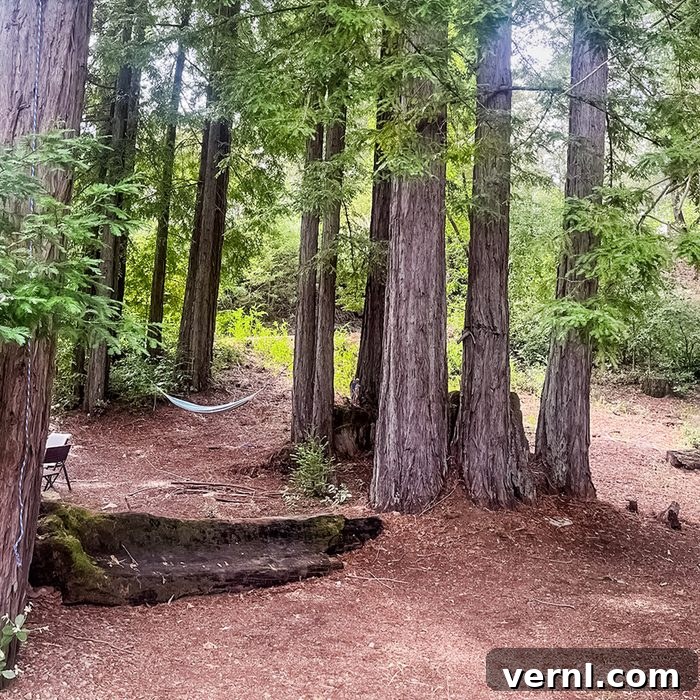
The tall redwood canopy casts deep shade over the forest floor, which has mixed advantages. In summer the shade keeps the understory cool and sheltered; in winter it makes the area noticeably colder and allows moisture to linger, creating mold challenges and slowing drying after rain.
A haven for wildlife
Wildlife thrives in the sheltered environment of the redwood forest. Our land hosts owls, jays and woodpeckers along with deer, bobcats, foxes, coyotes and countless small mammals. We trap mice humanely and release them three miles away in the state park. Mountain lions visit occasionally; they prey on house cats, so domestic pets face real risk. Over the years nine cats have lived here; only one proved savvy enough to survive long-term.
I once had a tense encounter with a large cougar at about 20 feet. It snarled, but I was near the door and got inside safely. The cat lingered and later had to be driven off; spraying it with a garden hose by a resourceful neighbor was surprisingly effective at encouraging it to leave the area.
Resistance to wildfires
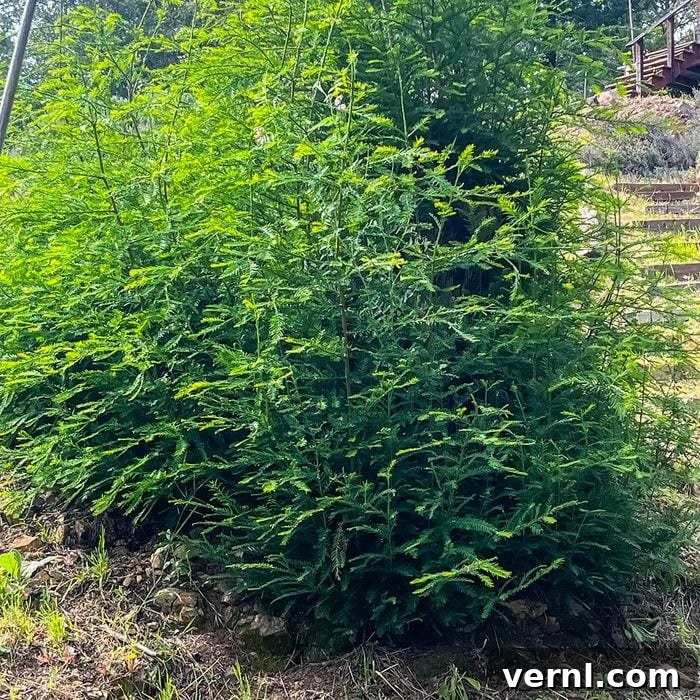
The devastating wildfire that swept through our mountain community in 2020 mostly raced through tan oaks, underbrush and small trees in the clearings. Redwoods did burn, but many of those darkened trunks survived and later sprouted new growth. Fire can even stimulate reproduction: cones and reproduction processes respond differently after heat exposure, and research and observation show that much new growth often arises as sprouts from the bases of surviving trees.
Sprouts, once established, grow quickly. I cut down a young tree a few years ago because it blocked a view; though it was below the threshold for heritage protection, the stump resprouted into a large bush and within three years another shoot had grown to about ten feet before we removed it as well. The cycle of sprouting and regrowth is vigorous and continual.
What I’ve Learned
If you’re drawn to the romance and solitude of redwood country, you should consider living here—it’s a unique and rare landscape. Just be prepared: respect the scale of the trees, protect key infrastructure from falling limbs, plan for wildlife encounters, follow local rules for tree removal, and stay inside or in safe locations when winds are strong. With common-sense precautions, the rewards of living among these ancient giants are well worth it.