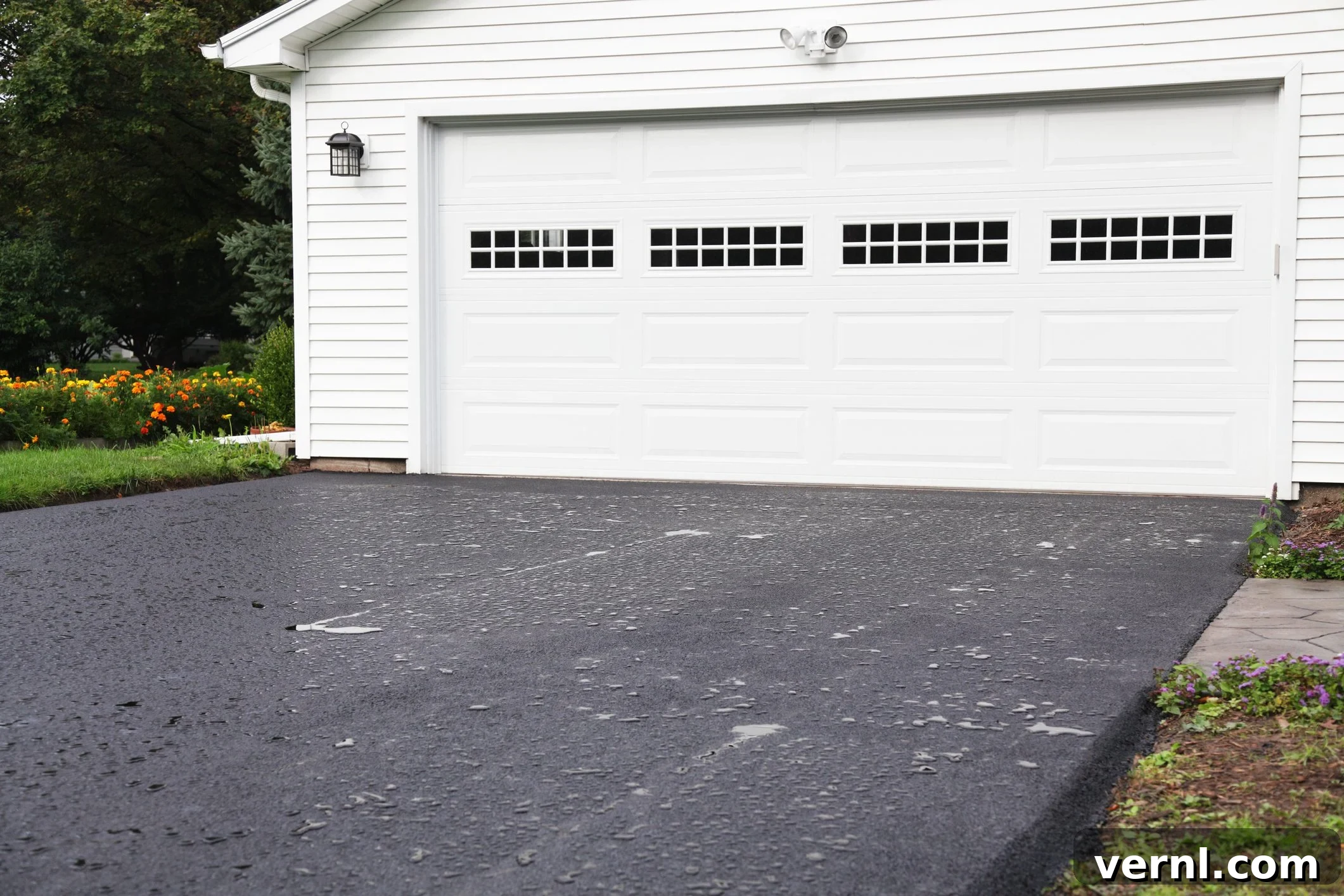
Embarking on a driveway replacement or installation project is a significant investment in your home’s curb appeal and functionality. The journey begins long before the first shovel breaks ground: it starts with selecting the right professional. The residential asphalt industry, unfortunately, has its share of less-than-reputable operators. Our foremost advice is to diligently seek out a contractor with a proven track record, backed by verifiable references from homeowners who remain thoroughly satisfied with their driveways a decade or more after installation. Once you successfully secure a qualified and reliable contractor, many of the subsequent steps will naturally fall into place, leading to a successful outcome.
The core principles and techniques for constructing a high-quality, durable asphalt driveway are straightforward and fundamental. It is crucial to engage in an in-depth discussion with your prospective contractor about these specific materials and methodologies *before* committing by signing any contracts. Furthermore, we strongly recommend that you remain present during the actual installation process. This allows you to observe the work firsthand, ensuring that the project adheres to the agreed-upon standards and that you receive the exact quality and specifications you are investing in. This active oversight is key to safeguarding your investment and achieving a driveway that truly stands the test of time.
The Essential Blueprint for a Driveway That Lasts Decades
A driveway is more than just a paved surface; it’s an integral part of your property’s infrastructure, designed to withstand daily traffic, diverse weather conditions, and the relentless march of time. Achieving a truly long-lasting asphalt driveway isn’t a matter of luck but rather the result of meticulous planning, quality materials, and expert execution of several critical elements. Understanding these fundamental ‘secrets’ will empower you to make informed decisions and ensure your contractor delivers a superior product.
Precision in Pitch: The Proper Slope for Optimal Drainage
One of the most paramount design objectives for any durable asphalt driveway is establishing and maintaining an adequate slope. This seemingly simple factor is, in fact, the first line of defense against premature deterioration. The primary purpose of this incline is to efficiently channel water — whether from rain, melting snow, or general runoff — off the driveway surface and direct it away from the foundation of your home and the driveway’s edges. Water is the arch-nemesis of any paved surface, and its proper management is non-negotiable.
It is absolutely critical that water never be allowed to pond or accumulate on the surface of the driveway. Stagnant water, even in shallow depressions, will eventually infiltrate the asphalt’s microscopic pores and seep into the underlying base layers. Similarly, water allowed to collect adjacent to the driveway’s edges will find its way underneath. This subterranean moisture poses a significant threat. Firstly, it will relentlessly weaken the foundational soil and granular base, reducing their load-bearing capacity and leading to differential settling, which manifests as cracks and depressions on the surface. Secondly, in colder climates, this trapped water is highly susceptible to freezing. As water transforms into ice, it expands with immense force, a phenomenon known as frost heaving. This expansion can lift, crack, and utterly disrupt the asphalt surface, creating unsightly and damaging fissures that compromise the driveway’s integrity. A well-designed slope, typically between 1-2% (meaning a 1 to 2-foot drop over a 100-foot length), ensures that water quickly and efficiently drains away, preserving the structural health and aesthetic appeal of your driveway for years to come.
The Unseen Strength: A Robust, Well-Compacted Granular Base
While the smooth, black asphalt surface is what you see, the true backbone of a long-lasting driveway lies hidden beneath: the underlying granular base. This foundational layer is arguably the most critical component, directly influencing the driveway’s stability, durability, and resistance to settling and cracking. Its effectiveness hinges on two key attributes: the correct thickness and an optimal composition of materials.
The specific base materials employed can vary significantly depending on regional availability and geological conditions. Common choices include virgin crushed stone, which is highly effective, or “conbit” – an environmentally friendly and cost-effective alternative derived from recycled concrete and asphalt. This material is crushed, processed, and then reused, offering excellent performance characteristics. What makes these crushed coarse materials so effective is their inherent structure: they possess jagged, angular surfaces. Unlike smooth, rounded river stones that can shift, these irregular fragments interlock tightly when compacted, creating an exceptionally tough, dense, and settle-resistant matrix. This interlock provides superior load distribution and prevents the base from shifting or consolidating unevenly over time.
In some instances, especially when enhanced binding is required, a supplementary agent like cement dust or other stabilizing additives may be incorporated into the base mix. This binder helps to further solidify the granular material, increasing its strength and cohesion. Beyond structural support, coarse base materials play another vital role: they facilitate efficient drainage. Their porous nature allows any incidental moisture that penetrates the asphalt layer to percolate through and drain away. This prevents water from accumulating directly beneath the asphalt surface, significantly reducing the risk of ice formation and the subsequent damage caused by frost heaving. Investing in a properly prepared and robust granular base is not an area to cut corners, as it directly translates to the longevity and performance of your entire driveway.
The Right Topcoat: Ensuring Proper Asphalt Thickness
Once your existing driveway has been meticulously torn out and removed, the exposed subgrade and existing base offer a crucial opportunity for assessment. At this stage, you and your chosen contractor should conduct a thorough examination of the underlying structure. This involves carefully digging into the exposed base to determine its type, composition, and most importantly, its current thickness. This step is non-negotiable, as the integrity of the new asphalt surface is directly dependent on the quality and robustness of what lies beneath.
Recommended base thicknesses are not arbitrary; they are determined by engineering principles and depend heavily on the underlying soil conditions. For instance, an 8-inch granular base is typically recommended over expansive clay soils, which are prone to swelling and shrinking with moisture fluctuations. Conversely, a 4-inch base may suffice over well-drained sandy soils that offer better natural stability. If your existing base is found to be inadequate—either too thin, poorly compacted, or composed of unsuitable materials—it is absolutely imperative that it be upgraded. This might involve excavating and removing unsatisfactory material, importing new aggregate, and compacting it to the specified thickness. This critical foundational work often represents a significant portion of the total project cost. Therefore, it’s a vital consideration when evaluating bids. Be wary of unusually low bids, as they may signal that a contractor intends to skimp on base preparation, which will inevitably compromise the long-term durability of your driveway. Always insist on detailed specifications regarding base materials and thickness from your contractor before signing any agreement, and understand that upgrading an inadequate base is an investment that pays dividends in longevity and avoids costly future repairs.
The Foundation of Durability: Impeccable Asphalt Compaction
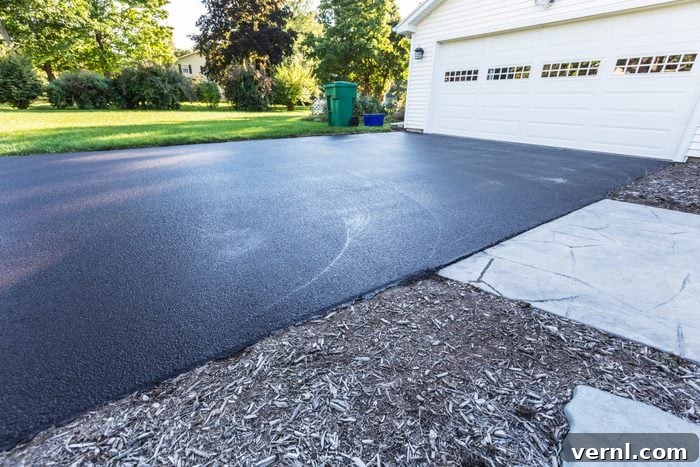
The process of mechanical compaction is unequivocally crucial for achieving a truly long-lasting and resilient driveway. This intensive process applies not only to the final asphalt surface but also, and equally importantly, to the underlying base and subbase layers. Proper compaction increases the density of these materials, reduces voids, enhances load-bearing capacity, and minimizes future settling. For optimal results, it is ideal for the granular base to be laid and then allowed to sit for approximately one week. This period enables natural settling to occur, augmenting the mechanical compaction achieved by equipment and creating an even more stable foundation.
During the compaction of the subbase and base layers, experienced contractors will deploy heavy-duty equipment. For expansive areas, large vibratory rollers are employed, or in some cases, the tires of earth-moving equipment themselves can be effectively utilized to achieve initial compaction. For smaller or more confined areas, vibratory plate compactors are used to ensure uniform density. However, when it comes to rolling out and compacting the asphalt itself, specialized and sufficiently heavy equipment is absolutely essential. We highly recommend selecting a contractor who possesses and uses 1- to 3-ton vibratory rollers specifically designed for asphalt compaction. These heavier rollers ensure maximum density is achieved in the hot asphalt mix, which is critical for its strength and resistance to cracking and rutting. Precision is also key at the edges of the driveway; these areas are typically raked and formed to a uniform 45-degree angle, then meticulously packed with a hand tamper to create a clean, durable, and well-supported perimeter.
Across most regions of the country, homeowners generally have two primary options for the asphalt mix itself, with the distinguishing factor being the size of the aggregate (gravel filler) incorporated. The most common mix specified for residential driveways utilizes finer aggregate, typically 1/2 inch or smaller. This results in a smoother, more aesthetically pleasing surface texture that homeowners often prefer. Conversely, coarser aggregate mixes, usually featuring 3/4 inch or smaller stone, offer superior structural strength and increased resistance to heavy loads and wear, though they yield a slightly rougher finish. While parking lots and major roads almost exclusively use a coarser mix due to the constant heavy traffic, this stronger option is also highly recommended for residential driveways that experience frequent heavy traffic, such as those accommodating RVs, large trucks, or agricultural tractors. Interestingly, the cost difference between these two aggregate mixes is often negligible, making the choice primarily one of durability versus desired surface aesthetics. It’s always beneficial to discuss these options with your contractor to determine the best fit for your specific needs and expected traffic volume.
In most geographic areas, the asphalt layer applied over a meticulously prepared and properly compacted aggregate base should be between 2 to 3 inches thick. This thickness provides the necessary durability and structural integrity for residential use. Should you opt for the maximum 3-inch thick surface, a highly effective and robust layering strategy can be employed: utilizing a 2-inch thick bottom layer of the coarser asphalt mix. This provides exceptional strength and load-bearing capacity where it’s most needed. This foundational layer is then capped with a 1-inch thick layer of the finer asphalt mix, which delivers the desired smoother finish and superior appearance for the top surface. This two-layer approach combines the best of both worlds – the unyielding strength of coarse aggregate underneath with the refined look of fine aggregate on top – ensuring a driveway that is both exceptionally durable and visually appealing for many years to come.