
Mastering Early Spring Weed Prevention for a Flawless Lawn and Garden
After enduring the long, often dreary days of winter, the arrival of spring brings a renewed sense of energy and the promise of lush, vibrant outdoor spaces. For many homeowners and gardening enthusiasts, this season sparks an eagerness to get outdoors and kickstart lawn and garden care. While the urge to plant and beautify is strong, early spring offers a critical window of opportunity to implement proactive measures that will keep stubborn weeds at bay throughout the entire growing season. By taking strategic steps before consistently warm temperatures truly set in, you can save yourself countless hours of frustrating, reactive weed removal later on.
Although they may not be visible above ground just yet, a multitude of weed seeds lie dormant, patiently waiting for the optimal conditions to sprout and unleash havoc upon your carefully cultivated lawn and garden beds. Imagine a season where your efforts are focused on nurturing beautiful plants and a pristine lawn, rather than constantly battling unwelcome invaders. This guide will walk you through essential early spring weed prevention techniques, empowering you to create a robust defense system against weeds before they even have a chance to emerge.
Why Early Spring Matters for Effective Weed Control
Early spring is not just a season; it’s a strategic advantage in the ongoing battle against weeds. During this transitional period, temperatures are often still cool, and nights can remain quite cold, depending on your specific local climate. These conditions are pivotal because they mean most weed seeds have not yet germinated. Weed seeds require a consistent period of warmth in the soil to initiate their growth cycle. This brief window, before the soil warms sufficiently for widespread germination, is your golden opportunity to minimize their presence significantly for the entirety of the growing season.
Understanding the life cycle of common weeds is key. Many annual weeds, such as crabgrass, lamb’s quarter, and chickweed, germinate in the spring when soil temperatures reach specific thresholds. Perennial weeds, while often having established root systems, also send up new shoots and spread vigorously as temperatures rise. By intercepting these weeds before they become visible, you prevent them from establishing strong root systems, consuming valuable nutrients and water intended for your desirable plants, and most importantly, producing thousands of new seeds that perpetuate the problem for years to come. Proactive early spring weed control is fundamentally about prevention rather than cure, setting the stage for a healthier, more beautiful landscape.
Essential Winter Clean-Up for a Fresh Start
Leverage the milder, yet still cool, temperatures of early spring to tackle essential heavy-duty lawn and garden work, beginning with a thorough winter clean-up. This foundational step is crucial for preparing your landscape for the growing season and removing potential havens for pests and diseases, in addition to weeds. Key tasks include systematically removing accumulated leaf piles, fallen branches, and various other debris from both your lawn and garden beds. Furthermore, it’s the ideal time to trim back any dead or damaged leaves and stems from perennial plants and shrubs that have withered over the winter months. This not only improves aesthetics but also promotes new, healthy growth.
While raking is an integral part of this clean-up process, it’s important to approach it with care. Rob Palmer, President of Lawn Squad, offers a crucial word of caution regarding aggressive raking in the spring. “Do not aggressively rake your lawn in the spring,” he advises. “Raking can damage the softer turf tissue that is just beginning to recover from winter and can also disturb the soil. When the soil is overly disturbed, it creates an ideal, loose seedbed where dormant weed seeds can easily germinate and establish themselves.” Instead, opt for a gentler approach, using a leaf rake to carefully remove debris without tearing at the turf or churning up the soil. Focus on clearing the surface, leaving the soil structure as intact as possible to avoid inadvertently inviting new weed infestations.
The Power of Pre-Emergent Herbicides
One of the most effective and proactive defenses against annual weeds is the strategic application of pre-emergent herbicides. These specialized products work by forming a protective barrier in the top layers of the soil, inhibiting the germination of weed seeds. Their effectiveness hinges entirely on timing: they must be applied before weed seeds sprout and begin to grow. This makes early spring the singular and most critical period during which these products will yield their desired results, offering season-long weed prevention.
The precise timing for application is often dictated by soil temperature, not ambient air temperature. A good rule of thumb is to wait for soil temperatures to consistently reach around 50 degrees Fahrenheit (approximately 10 degrees Celsius) for several consecutive days. You can monitor this with a soil thermometer, or by paying attention to natural cues, such as when forsythia bushes are blooming. Once conditions are right, use a broadcast or drop spreader to evenly apply granular products to a dry lawn. After application, it is crucial to water the lawn within a day or two. This watering activates the herbicide, moving it into the uppermost layers of the soil where it can form its protective barrier. As Rob Palmer explains, “As the weed first germinates and emerges from the seed, the new plant roots begin to take up the pre-emergent product in this barrier layer, effectively killing the plant before it can grow any larger.” This interceptive action is a fundamental step for achieving season-long weed prevention, particularly against common annual nuisances like crabgrass.
Mulch Refresh: Your Natural Weed Suppressor
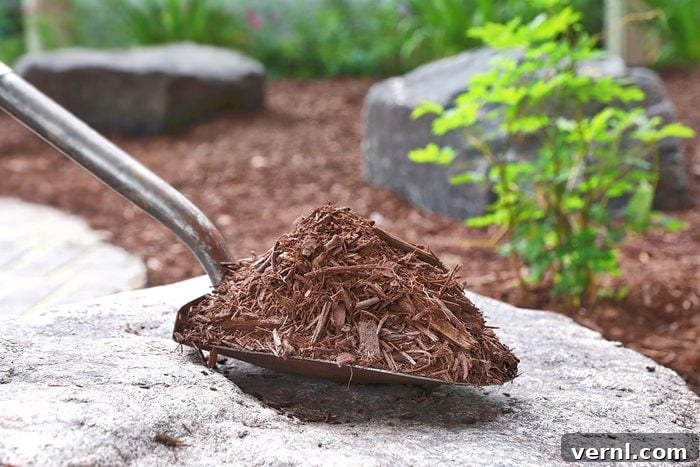
For garden beds, a fresh layer of mulch stands out as the most effective and eco-friendly natural solution for keeping weeds at bay. Mulch works on multiple fronts: primarily, it physically blocks sunlight from reaching dormant weed seeds, preventing them from germinating. For any nascent seedlings that might attempt to push through, a proper layer of mulch effectively smothers them, cutting off light and air. Beyond weed suppression, mulch offers a plethora of benefits for your garden environment.
When applying mulch, aim for a consistent layer of 2 to 3 inches for optimal results. This specific depth is ideal because it creates an impenetrable barrier for most weeds, while simultaneously helping to maintain stable soil temperatures, insulating roots from sudden fluctuations. Crucially, mulch significantly aids in retaining soil moisture, reducing the need for frequent watering and providing a more consistent water supply to your desirable plants. Furthermore, as organic mulches decompose over time, they enrich the soil with valuable organic matter, improving soil structure and fertility.
While the benefits of mulch are undeniable, application depth is critical. Mulch that is applied in an excessively thick layer (more than 4 inches) can lead to several detrimental issues. An overly thick layer can restrict air circulation, creating an environment conducive to mold and fungal growth. It can also lead to persistently soggy soil conditions, which can starve plant roots of oxygen and promote rot, ultimately harming rather than helping your healthy plantings. Conversely, too thin a layer will not provide adequate weed suppression or moisture retention. Therefore, striking the right balance with a 2 to 3-inch layer is paramount for maximizing its benefits and ensuring a thriving, weed-free garden bed.
Overseeding Your Lawn for Density and Resilience
A thick, dense lawn is one of nature’s best weed deterrents. By applying grass seed with a broadcast or drop spreader, you can effectively fill in any bare spots and encourage robust, healthy turf growth that naturally crowds out weeds. A dense lawn prevents sunlight from reaching dormant weed seeds in the soil, effectively inhibiting their germination. Moreover, strong grass competes vigorously for essential nutrients and water, starving out any weeds that manage to sprout. Overseeding not only enhances the aesthetic appeal of your lawn but significantly bolsters its natural resistance to weed invasions, making it a cornerstone of integrated weed management.
However, the timing of overseeding in spring can be a bit tricky, especially if you also plan to apply a pre-emergent herbicide. As Rob Palmer cautions, “Pre-emergent herbicides, while excellent at controlling many different weed species like crabgrass and broadleaf annuals, are designed to limit the successful germination of any seeds, both weed and grass.” This means applying pre-emergent and grass seed simultaneously in the same area will likely lead to poor germination rates for your new grass, wasting both time and resources.
The standard recommendation is to wait approximately 12 to 16 weeks after applying pre-emergents before planting new grass seed in that treated area. This extensive waiting period allows the pre-emergent barrier to dissipate sufficiently, ensuring that new grass seeds can germinate successfully. This timeline works particularly well for warm-season grasses (like Bermuda or Zoysia) which are typically seeded in late spring or early summer. However, for cool-season grasses (such as Fescue, Rye, and Kentucky Bluegrass), waiting until after a spring pre-emergent application means pushing seeding into the heat of summer, which is not ideal for their establishment. Cool-season grasses establish best in the cooler temperatures of early fall, making fall the preferred season for overseeding if spring pre-emergent application is a priority. Alternatively, if you have specific bare spots and wish to seed in spring, consider spot-treating those areas with a pre-emergent that explicitly states it allows for simultaneous seeding, or manually remove weeds in those patches, reserving broadcast pre-emergent for the healthier parts of your lawn.
Cultivating Optimal Soil Health for a Thriving Landscape
Healthy soil is the undisputed foundation for a vigorous, weed-resistant lawn and garden. Just as a strong building needs a solid foundation, a thriving landscape depends on nutrient-rich, well-structured soil. Therefore, dedicating attention to improving your soil health in early spring is an investment that pays dividends throughout the entire year. One crucial practice is aeration, which involves creating small holes in the soil to alleviate compaction. Compacted soil restricts air, water, and nutrient movement to grass roots, weakening the turf and making it more susceptible to weeds. Aeration enhances root growth, improves water infiltration, and fosters a healthier microbial environment.
Following aeration, or as a standalone treatment, consider applying soil amendments like compost or other organic materials. Top-dressing your lawn with a thin layer of compost significantly boosts soil organic matter, improving its structure, drainage, and water-holding capacity. Compost also introduces beneficial microorganisms that enhance nutrient cycling and suppress plant diseases. For garden beds, working compost into the top few inches of soil provides a slow-release source of nutrients that nourishes plants naturally.
As Rob Palmer emphasizes, “Healthy soil is the foundation for a thriving lawn, providing essential nutrients and helping grass grow stronger and more resilient. Neglecting soil health can lead to poor grass growth, increased weed infestations, and chronic nutrient deficiencies.” Consider a soil test in early spring to understand your soil’s specific needs regarding pH balance and nutrient levels. Adjusting pH with lime or sulfur, if necessary, ensures that nutrients are readily available to your plants. Properly balanced and nutrient-rich soil allows desirable plants to flourish, developing deep, robust root systems that outcompete weeds for resources, effectively turning your soil into a powerful ally in weed prevention.
Vigilance: Early Detection and Removal of Sprouting Weeds
Despite your best preventative efforts, some stubborn weeds may inevitably manage to sprout in your yard. When this happens, early detection and prompt removal in early spring are absolutely critical. Weeds are notorious for their rapid growth and prodigious seed production; many can go from sprout to seed-producer in a remarkably short time. Being proactive about their removal is well worth the effort to keep growth under control throughout the entire season. A single dandelion can produce hundreds of seeds, and a single crabgrass plant thousands, perpetuating the problem exponentially if left unchecked.
Young weeds are considerably easier to pull from the typically damp, forgiving spring soil compared to hardened summer ground. Their root systems are less established, allowing for simpler manual extraction with minimal soil disturbance. Removing them promptly ensures that vital nutrients, precious light, and essential water are directed towards your desired grass seeds and other beneficial plants, rather than being siphoned off by unwanted invaders. For annual weeds, ensure you remove the entire plant, especially before it has a chance to set seed. For perennial weeds with deep taproots, like dandelions or thistles, a weeding tool specifically designed to extract the full taproot will prevent regrowth. For larger infestations or areas where hand-pulling isn’t practical, consider spot-treating individual weeds with a targeted post-emergent herbicide, following all label directions carefully. Regular scouting of your lawn and garden beds, even a quick walk-through once a week, can make a significant difference in catching and eliminating weeds before they become a widespread issue.
Frequently Asked Questions About Spring Weed Control
Can I apply pre-emergent herbicide and grass seed at the same time?
As Rob Palmer clarifies, “Pre-emergent herbicides are very good at doing one thing, which is preventing seeds from growing. For this reason, it is strongly recommended to avoid using pre-emergent products when or where you are planting new seed to avoid significantly reduced growth or complete failure of the new desirable grass seed.” The primary function of a pre-emergent is to inhibit germination, and it does not differentiate between weed seeds and grass seeds. If you must seed in spring, consider using a pre-emergent formulated specifically for new lawns (often containing a different active ingredient that allows for seeding), or focus on applying pre-emergent to established areas and manually addressing weeds in spots you plan to seed.
What are the most common weeds that appear in early spring?
In early spring, as temperatures begin to climb, some of the most common weeds to emerge are cool-season annuals and early-sprouting perennials. Dandelions, with their distinctive yellow flowers and deep taproots, are often among the first to appear. Clover flowers, particularly white clover, also start to spread. Other common early spring culprits include chickweed, henbit, annual bluegrass (Poa annua), and wild garlic. Vigilance in early spring allows you to target these common invaders before they can take over your landscape.
How can I accurately measure soil temperature for pre-emergent application?
Measuring soil temperature accurately is crucial for effective pre-emergent application. You can purchase an inexpensive soil thermometer from most garden centers or online retailers. To get a reliable reading, insert the thermometer about 2-3 inches deep into the soil. Take readings in various spots across your lawn, especially in both sunny and shaded areas, as temperatures can vary. It’s best to take readings in the morning, around 9-10 AM, for a consistent measurement. Monitor the temperature for several consecutive days, and once it consistently stays above 50 degrees Fahrenheit, it’s the ideal time for your pre-emergent application.
About the Experts
- Rob Palmer is President of Lawn Squad, a full-service lawn care provider dedicated to creating healthy, vibrant outdoor spaces for homeowners.
RELATED: Cultivate a More Resilient Landscape
- 7 Reasons Why Your Houseplants Might Stink
- 8 Must-Know Tips to Drought-Proof Your Lawn
- Tired of Raking Leaves? Plant These Trees Instead