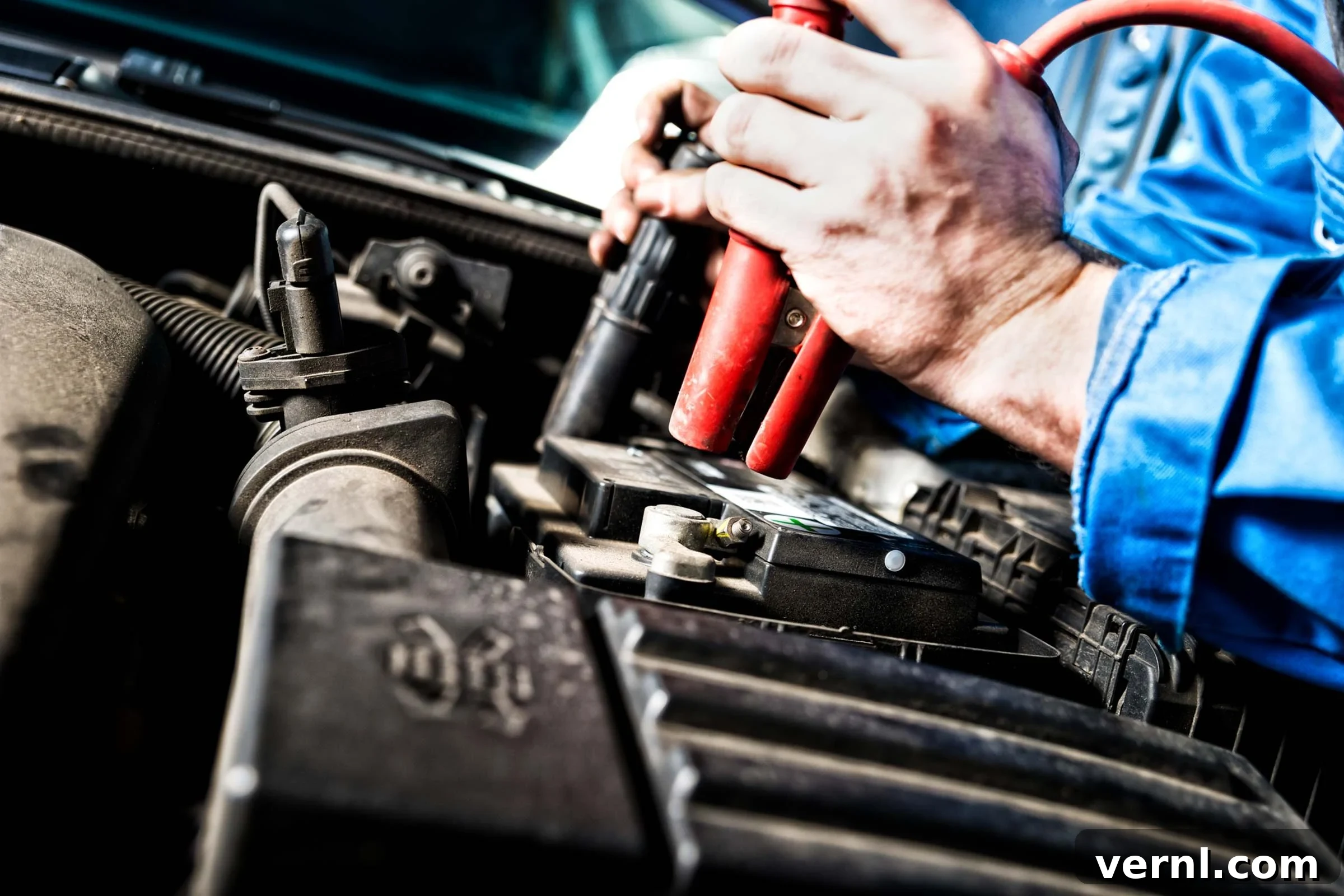
There’s nothing quite as frustrating as heading out to your vehicle, especially on a chilly morning, only to discover your car won’t start. While various issues can lead to this predicament, a dead battery stands out as one of the most frequent culprits. Of course, you can always jump-start your car when your battery fails, but who truly wants to deal with jumper cables in freezing temperatures or inclement weather? A proactive approach through proper car battery maintenance is undoubtedly a superior strategy.
Even with the most diligent care, car batteries are consumables with a finite lifespan; eventually, you will need to replace it. However, by elevating car battery maintenance to a top priority, you can significantly extend its service life. This commitment not only translates into considerable savings but also grants you invaluable peace of mind, ensuring you’re not left stranded in a dark, cold parking lot with a vehicle that refuses to cooperate.
So, what’s the realistic expectation for your car battery’s longevity? And what essential steps can you take to maximize its potential? We’ve gathered insights from Garrett Tortelli, a Senior Merchandise Manager at Batteries Plus, to guide you through effective battery care and help you understand the factors influencing its durability.
Understanding Car Battery Lifespan: How Long Can You Expect?
Under optimal conditions, most car batteries are designed to last between four to six years. However, this timeframe is not absolute and can be significantly influenced by several key factors. Variables such as prevailing weather conditions, the specific type of vehicle (whether it’s a standard car or an RV battery), and even your individual driving habits can either shorten or extend its life. Garrett Tortelli advises a pragmatic approach: “If a battery is more than three to five years old, isn’t holding a charge consistently, or exhibits visible signs of damage like bulging, cracking, or excessive corrosion around the terminals, it’s a strong indicator that it’s time for a replacement.” Recognizing these signs early can prevent unexpected breakdowns and save you from inconvenient situations.
Driving Habits: The Link Between Your Commute and Battery Health
Your car’s alternator plays a crucial role in maintaining battery health by constantly recharging it while the engine is running. However, the nature of your journeys significantly impacts this recharging process. According to the Motor Trade Association, frequent short trips, particularly those that involve stopping and starting the engine multiple times without allowing it to run for extended periods, can paradoxically contribute to a shorter lifespan for car batteries. The reason is simple: car batteries require longer distances and sustained engine operation to receive a full, complete charge, typically needing several hours of use to reach their peak capacity. During shorter trips, the alternator doesn’t have ample time to fully replenish the energy expended during startup and operation.
When a battery isn’t consistently receiving a full charge, it can lead to the formation of strong crystalline deposits, known as sulfation, on its negative plates. This sulfation acts as an insulating layer, severely hindering the battery’s ability to receive and hold a proper charge over time. While it’s impractical for most people to drive their car for eight hours daily, it’s essential to be mindful of your usage of electric auxiliary controls within the car during short trips or when the engine is off. Components like the car’s lights, heater fan, air conditioning, and radio all draw power from the battery. Operating these features extensively without the motor running can rapidly drain the battery, especially if it’s not given sufficient time to recharge afterwards. For optimal battery longevity, consider consolidating your short trips or occasionally taking longer drives to ensure your battery gets the full charge it needs.
Temperature Extremes: A Silent Killer for Car Batteries
While car batteries are designed to operate across a range of temperatures, they are particularly vulnerable to extreme heat and extreme cold, both of which can significantly shorten their lifespan. High temperatures are particularly detrimental as they accelerate the evaporation of battery fluid, which is primarily an electrolyte mixture of sulfuric acid and distilled water. This evaporation can lead to an imbalance in the electrolyte concentration and, ironically, cause problems associated with overcharging. When the fluid levels drop, the remaining electrolyte becomes more concentrated, increasing the risk of plate corrosion and internal damage, thereby decreasing the battery’s overall lifespan and performance.
Conversely, colder temperatures pose a different set of challenges. Extreme cold causes the battery to experience a higher rate of self-discharge, meaning it loses charge more quickly even when idle. Moreover, the battery’s electrolytes can actually freeze, particularly if the battery is already partially discharged or old. When the electrolyte freezes, it expands, which can cause severe internal and external damage to the battery’s case, plates, and separators, often rendering the battery irreparable. If your car is going to be idle for extended periods during colder winter months, it is highly advisable to store it in a space with a neutral or moderate temperature, such as a garage, to protect the battery. For additional protection, explore our comprehensive guide to battery insulation, which can provide an extra layer of defense against temperature fluctuations.
The Smart Investment: A Car Battery Maintainer
Are you preparing to store a vehicle, perhaps a classic car, an RV, or even a boat, for the colder months? Or do you have a vehicle that isn’t driven daily? Idle batteries can lose their charge surprisingly quickly, leading to a dead battery when you finally need it. To ensure your battery remains healthy and ready for use, it should ideally be charged every six weeks. However, simply leaving a battery connected to a standard charger for extended periods can be detrimental, potentially shortening its life by overcharging it. This is where a battery maintainer becomes an indispensable tool.
Unlike a regular charger, a battery maintainer is specifically designed to monitor the battery’s voltage and automatically adjust its charging output. It provides a gentle, trickle charge that prevents both undercharging and harmful overcharging, keeping the battery at its optimal voltage without damaging it. A maintainer effectively keeps the battery “alive” during periods of inactivity, preventing sulfation and ensuring it holds a full charge. This intelligent device is a small investment that offers significant returns in terms of battery longevity and convenience, ensuring your vehicle or equipment is ready to go whenever you are.
The Importance of a Clean Car Battery
Regular visual inspection and cleaning of your car battery are crucial steps in its maintenance routine. One of the most common issues to look for is corrosion. This typically appears as a white, powdery substance accumulating around the battery’s terminals (nodes) or clamps. Corrosion is not just an aesthetic problem; it impedes the flow of electricity, reducing the battery’s efficiency and making it harder for your car to start. When you spot this white powder, it’s a clear sign that attention is needed.
You can effectively clean the battery terminals and clamps using a simple mixture of baking soda and water, applied with a non-metallic brush to avoid any short circuits. It’s particularly vital to engage in this cleaning routine regularly, even before severe corrosion sets in. While cleaning can extend the life of a moderately corroded battery, extensive corrosion often indicates that the battery has been under significant stress and may be nearing the end of its service life, making it probably time for a new battery. However, by consistently keeping your battery clean and free of corrosion, you can significantly enhance its longevity, performance, and reliability.
Decoding Car Batteries: Maintainable vs. Maintenance-Free
The world of car batteries generally divides into two main categories: maintainable and maintenance-free. Understanding the differences between these types is key to proper care and knowing when a simple charge might suffice versus when a replacement is truly necessary.
Maintainable Batteries (Wet Cell Batteries)
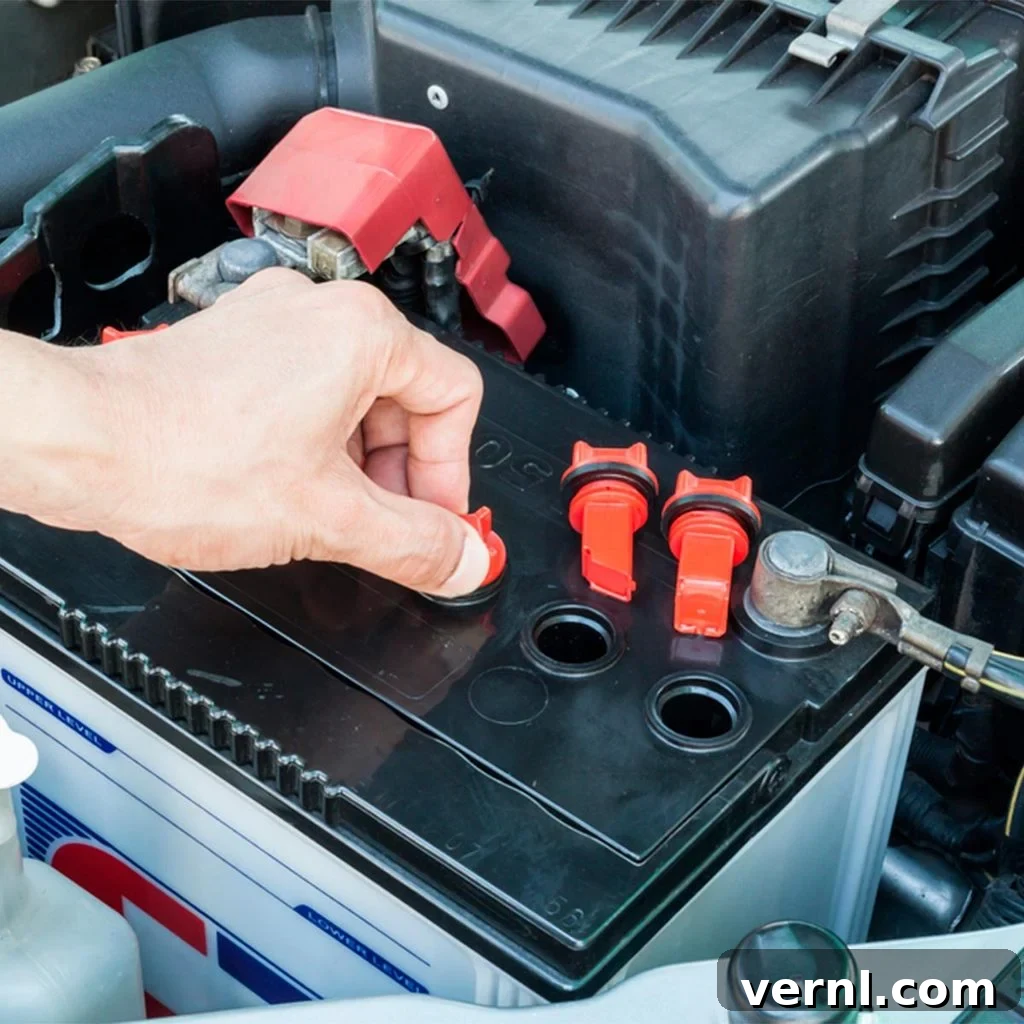
Maintainable batteries, also known as non-maintenance-free or wet cell batteries, are traditionally the most common type. They are identifiable by their removable filler caps located on the top surface. The “wet cell” designation comes from the fact that these batteries contain a liquid electrolyte solution, typically a mixture of sulfuric acid and distilled water. As a maintainable battery undergoes discharge and recharge cycles, a natural chemical reaction occurs where the battery fluid converts into a gas and evaporates. This means that, over time, the fluid levels in these batteries will drop, requiring periodic refilling with distilled water to top off the electrolyte. This need for manual fluid checks and refills is particularly exacerbated by summer heat, which accelerates evaporation. While still found in many applications, these types of batteries are now more commonly seen in specific roles such as on boats, golf carts, and some utility vehicles, where their ability to be serviced manually is an advantage.
Maintenance-Free Batteries
As their name suggests, maintenance-free batteries are designed to maintain optimal fluid levels internally, eliminating the need for manual checks and refills. They typically feature a completely sealed design, meaning they do not have removable covers or filler caps. This sealed construction prevents the evaporation of electrolyte fluid, so you never have to worry about topping off the fluid within. Garrett Tortelli highlights their advantages, stating, “Maintenance-free batteries generally offer superior performance characteristics. They boast much better vibration tolerance, which makes them ideal for modern vehicles and varied driving conditions, and a significantly lower rate of self-discharge, meaning they hold their charge longer when idle. Furthermore, the added benefit of being completely sealed makes them spill-proof, enhancing safety and cleanliness.”
Regardless of the type, it’s crucial to remember that both maintainable and maintenance-free batteries contain a highly corrosive electrolytic mixture of sulfuric acid and distilled water. Therefore, they should always be handled with extreme care, using appropriate safety gear such as gloves and eye protection, to prevent accidental spills or contact with skin and clothing.
How to Accurately Test Your Car Battery Voltage
Knowing how to accurately test your car’s battery voltage is a fundamental skill for any car owner. The easiest and most recommended method, as advised by Garrett Tortelli, is to use a multimeter. Alternatively, a dedicated car battery tester or a voltmeter can also be used. When using a multimeter, Tortelli suggests setting it to measure DC voltage and selecting the 20V range for accurate readings.
Follow these steps for a precise voltage test:
- Preparation: Begin by opening the hood of your vehicle to access the battery. You may need to remove any protective plastic covers from the battery terminals.
- Connect the Multimeter: Carefully connect the multimeter’s positive (red) lead to the positive terminal on the battery. Then, connect the negative (black) lead to the negative terminal. Ensure a firm, secure connection.
- Measure Resting Voltage: With the multimeter connected, turn it on and switch it to voltage mode. A fully charged battery, when resting (engine off, no accessories running), should ideally read 12.6 volts. A reading anywhere between 12.2 and 12.6 volts is generally considered an acceptable range for a healthy, resting battery. If your reading falls lower than 12.2 volts, it’s a strong indication that your battery needs to be charged soon. “If the reading consistently registers under 12.0V, replacement may be necessary as it signifies a severely discharged or failing battery,” advises Tortelli.
- Test During Crank Cycle: The next crucial step is to test the battery’s performance during the car’s crank cycle. With the multimeter still connected, ask a helper to start the car (or do it yourself if safe). Observe the voltage reading on the multimeter while the engine is cranking. During this brief moment, the voltage will naturally drop as the starter motor draws a significant amount of power. However, it should not fall below 10 volts. If the voltage drops below this threshold, it signifies a weak battery that is struggling to deliver the necessary power to crank the engine, indicating it likely needs to be charged or potentially replaced.
- Check Running Voltage: Finally, once the car is running, observe the voltage level on the multimeter. At this point, the alternator should be actively charging the battery. The voltage meter should show a reading in the range of 14 to 14.5 volts. This range confirms that your alternator is functioning correctly and is effectively recharging the battery. If the reading is significantly lower (e.g., below 13.5V), it could indicate a problem with your alternator, while a reading significantly higher (e.g., above 15V) could suggest an overcharging issue.
Testing a Maintainable Battery: The Hydrometer Method
If your vehicle is equipped with a non-maintenance-free (maintainable) battery, you have an additional diagnostic tool at your disposal: testing the specific gravity of the electrolyte in each cell using a battery hydrometer. This provides a more in-depth look at the individual health of each cell.
Here’s how to perform the test:
- Preparation: First, ensure the engine is off and the battery has had some time to cool. Carefully open the filler caps for each of the six cells located on the top of the battery.
- Draw the Solution: Take your battery hydrometer. Insert the end of the hydrometer into one of the cells and gently squeeze the rubber ball to draw the electrolyte solution into the tester until the float is suspended.
- Read and Record: Carefully hold the tester level at eye level and read the specific gravity indicated by the float. It’s crucial to record this reading for each cell. After each reading, carefully squirt the solution back into the same cell from which it was drawn. Repeat this process for all six cells.
- Temperature Compensation: Battery hydrometers are typically calibrated assuming an electrolyte temperature of 80 degrees Fahrenheit (approximately 27 degrees Celsius). If your battery’s temperature deviates from this, you’ll need to adjust your readings. For every 10 degrees above 80°F, add 0.004 to your reading. For every 10 degrees below 80°F, subtract 0.004 from your reading.
- Interpret the Results:
- Cell Discrepancy: If you find a cell reading that differs from the others by 0.05 or more, it’s a strong indicator of an internal cell failure, and the battery should be replaced.
- Fully Charged Battery: A healthy, fully charged battery should have a specific gravity reading of 1.265 or higher for each cell (after temperature compensation).
- Low but Consistent: If all the readings consistently show fair or low values (e.g., 1.200 is considered low), but there are no significant discrepancies between cells, it generally means the battery is discharged and needs to be recharged.
In addition to hydrometer tests, some maintainable batteries are equipped with a built-in indicator on the top. This indicator usually glows green if the water level is adequate and the battery is fully charged. If the indicator goes dark, it typically suggests that the battery needs fluid replenishment or is deeply discharged. A yellow indicator often means the battery fluid level is low, or the battery itself may be defective. Always consult your battery’s manufacturer guidelines for specific interpretations of these indicators.
About the Expert
- Garrett Tortelli is the Senior Merchandise Manager at Batteries Plus, a leading retailer of batteries, light bulbs, phone repair, and key fobs.