In the world of electrical wiring, making secure and reliable connections is paramount. For years, the ubiquitous twist-on wire nuts have been the go-to solution for countless electricians and DIY enthusiasts. While they have served their purpose, a growing number of professionals and homeowners are questioning their long-term reliability and ease of use. Indeed, the wiring in many homes, including my own, is filled with these inexpensive connectors. However, the prevalence of traditional wire nuts doesn’t mean they are the best or only option available for future electrical projects and crucial wiring add-ons, such as installing new ceiling fans or replacing light fixtures. Often, the wire nuts included with these projects feel flimsy and provide little assurance of a lasting connection.
This is where Wago lever nuts step in as a vastly superior alternative. My personal journey to discovering these innovative connectors marked a turning point in how I approach electrical work. After experiencing their efficiency and reliability firsthand, I promptly discarded my collection of color-coded traditional wire nut connectors. From now on, Wago lever nuts will be my exclusive choice for all future electrical splicing needs. They represent not just an upgrade, but a fundamental improvement in electrical connection technology, offering peace of mind that traditional methods simply cannot match.
Understanding the Limitations of Traditional Wire Nuts
Before delving deeper into the advantages of Wago lever nuts, it’s essential to understand why many seasoned professionals and meticulous DIYers are seeking alternatives to conventional twist-on wire nuts. While inexpensive and widely available, their design presents several inherent challenges and potential pitfalls:
- Reliability Issues: The security of a twist-on wire nut connection heavily relies on proper installation technique, specifically the amount of torque applied. Insufficient twisting can lead to loose connections, resulting in intermittent power, arcing, or even fire hazards. Overtightening can damage the wire strands.
- Difficulty and Inconsistency: Achieving a consistently good connection with traditional wire nuts can be challenging, especially for beginners. It often requires twisting multiple wires together perfectly before applying the nut, a task that becomes particularly cumbersome with more than two wires or in tight spaces.
- Wire Type Sensitivity: Twist-on connectors are generally optimized for solid-core wires. While they can be used with stranded wires, the connection may be less secure or require additional preparation (like pre-twisting or tinning), which adds complexity and potential for error.
- Space Constraints: Traditional wire nuts can be bulky, making them difficult to fit neatly into small junction boxes, device boxes, or electrical enclosures. This often leads to cramped wires, which can put undue stress on connections.
- Lack of Reusability/Flexibility: Once twisted on, removing and reusing wire nuts, or modifying connections, can degrade the wires and the nut itself, often necessitating new wires or connectors for even minor changes.
- Visual Inspection Challenges: The opaque nature of most traditional wire nuts makes it impossible to visually inspect the quality of the connection once the nut is in place, leaving doubt about whether the wires are fully engaged.
These limitations highlight a clear need for a more robust, user-friendly, and consistently reliable electrical connector solution. The demand for enhanced safety and efficiency in electrical installations has driven innovation, leading to products like Wago Lever Nuts that address these traditional shortcomings head-on.
What Are Wago Lever Nuts? A Revolutionary Approach to Wire Splicing
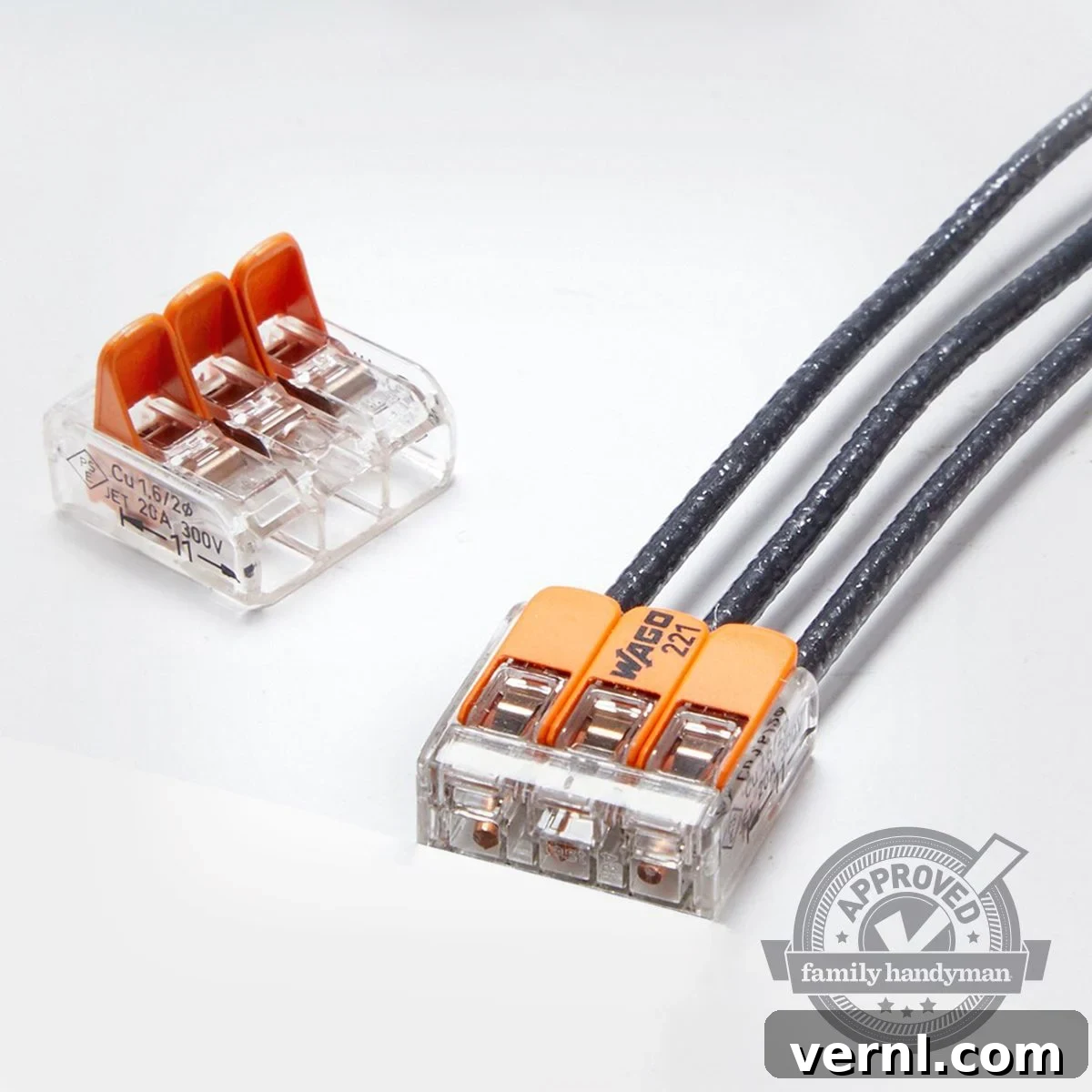
Wago Lever Nuts represent a significant leap forward in electrical connection technology, offering a robust, intuitive, and highly reliable method for splicing wires. Unlike their twist-on counterparts, these connectors eliminate the need for twisting wires, providing a consistent and secure connection every time. The core of their ingenious design lies in a simple yet highly effective lever mechanism.
Operating a Wago lever nut is remarkably straightforward: you simply flip open an orange lever, insert a properly stripped wire end into the designated port, and then close the lever firmly. The closing action engages an internal spring clamp, creating a powerful, vibration-proof connection that securely grips the wire. This process is repeated for each wire you need to join, whether it’s two, three, or even five conductors. After closing the levers, a gentle tug on each wire provides instant verification that it is securely locked in place, offering immediate peace of mind.
Versatility and Engineering Excellence
One of the standout features of Wago lever nuts is their impressive versatility. They are engineered to work seamlessly with a wide array of wire types, including solid, stranded, and even fine-stranded conductors. This broad compatibility makes them an ideal choice for nearly any residential, commercial, or industrial electrical application. Furthermore, these connectors are available for various wire gauges, ensuring you can find the perfect fit for your specific wiring needs, and come in two-, three-, and five-wire configurations to accommodate different splicing requirements.
The manufacturing excellence behind Wago lever nuts is equally noteworthy. These connectors are meticulously crafted in Germany by Wago Kontakttechnik GmbH, a globally recognized manufacturing company with a vast portfolio in electrical interconnection and automation technology. With extensive experience in designing sophisticated electrical connection solutions for demanding environments, Wago’s commitment to quality is palpable in these tiny connectors. The stereotypical German quality ethic is evident in the precision, durability, and satisfying tactile feedback of each lever, reassuring users of their superior performance and longevity.
Why Wago Lever Nuts Are a Game-Changer: Key Advantages and Benefits
My own experience, particularly during a recent garage renovation project, cemented my trust in Wago lever nuts. I was adding several surface-mounted electrical outlets, and the compact size of the outlet boxes made using traditional wire nuts for the extensive pigtailing incredibly difficult and frustrating. During one of my many trips to the hardware store for the project, I decided to invest in a box of Wago lever nuts — specifically the three-wire model 221. This decision proved invaluable. I needed a reliable and compact method to manage numerous pigtail connections in those small boxes as I was adding seven new boxes and connections throughout my garage. The Wagos performed flawlessly, transforming what could have been a tedious and risky task into a smooth, efficient process. This practical application underscored a multitude of benefits:
1. Unparalleled Ease of Use and Speed
- Simple Operation: The “flip, insert, close” mechanism is incredibly intuitive, making electrical connections accessible even to those with limited experience. There’s no twisting, pre-twisting, or guessing involved.
- Reduced Installation Time: For projects involving multiple connections, the speed at which Wago lever nuts can be installed significantly cuts down on overall project time, enhancing productivity for both professionals and DIYers.
- Less Hand Fatigue: Eliminating the need for repetitive twisting actions reduces strain on hands and wrists, a welcome relief for extensive wiring jobs.
2. Enhanced Safety and Reliability
- Secure, Consistent Connection: The internal spring clamp ensures a robust, vibration-proof connection that won’t loosen over time, mitigating risks of arcing and electrical fires. Each connection is consistently reliable, independent of installer skill.
- Visual Verification: The mostly clear plastic housing allows for immediate visual inspection, confirming that the wire is fully inserted and stripped to the correct length. A small gauge integrated into the side of the device even helps you strip the right amount of insulation from each wire.
- Elimination of Human Error: By standardizing the connection process, Wago lever nuts drastically reduce the potential for improper installation, a common cause of electrical failures with traditional connectors.
3. Unmatched Versatility and Reusability
- Broad Wire Compatibility: As mentioned, they work with solid, stranded, and fine-stranded wires, making them incredibly versatile for various applications and different electrical systems.
- Reusability: Unlike traditional wire nuts which often degrade with removal, Wago lever nuts can be easily opened and reused multiple times without compromising connection integrity. This is invaluable for testing, troubleshooting, or modifying existing circuits.
- Adaptability to Different Configurations: Available in 2-, 3-, and 5-wire models, they simplify complex splicing scenarios, ensuring a tidy and organized junction box.
4. Space-Saving Design
- Compact Footprint: Their slim and compact design makes Wago lever nuts ideal for fitting into tight spaces, such as shallow junction boxes, outlet boxes (like those in my garage project), and crowded electrical panels. This was a critical factor in my garage project, where I easily fit three Wago 221s — one each for the neutral, hot, and ground wires — in my small outlet boxes without issue.
- Neater Installations: Their structured form factor helps maintain a more organized wiring setup within enclosures, improving aesthetics and making future access or modifications simpler.
5. Superior Performance Feedback
The engineering quality of Wago connectors provides tactile and auditory feedback that reassures the user. It takes a deliberate amount of force to open each lever, and they close with a very noticeable, satisfying snap. This isn’t merely a push-connect fitting; the lever closure actively engages and secures the connection, and you can truly feel the mechanism doing its work. This immediate feedback helps instill confidence in the integrity of your electrical work.
6. Durability and Long-Term Value
While the initial cost of Wago lever nuts might be slightly higher than a traditional wire nut, their durability, reusability, and the peace of mind they offer represent significant long-term value. The German engineering ensures these connectors are built to last, providing reliable connections for decades.
Where to Buy Wago Lever Nuts and Final Thoughts
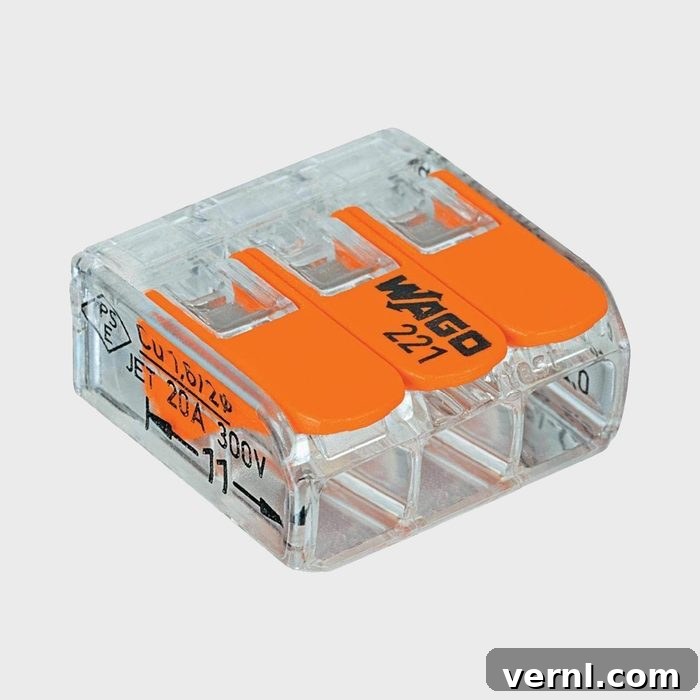
At approximately $18 for a 50-count box (for models like the Wago 221-413), Wago lever nuts are indeed more expensive than regular twist-on wire nuts. However, this higher upfront cost is an investment that pays dividends in terms of safety, reliability, time savings, and overall project quality. This is precisely why they’ve earned a strong endorsement, being “Family Handyman Approved.”
Wago lever nuts are widely available and can be purchased at most reputable hardware stores, home improvement centers, and online retailers. Their increasing popularity means they are becoming a standard offering for anyone serious about electrical work.
Shop Now: WAGO 221-413 LEVER-NUTS 3 Conductor Compact Splicing Connectors Qty 50
In conclusion, for any electrical project, whether it’s a minor repair or a complete home renovation, the choice of connectors can significantly impact the safety, efficiency, and longevity of your wiring. Wago Lever Nuts stand out as a modern, reliable, and user-friendly solution that outperforms traditional wire nuts in virtually every aspect. Their ease of use, superior safety features, versatility across various wire types and gauges, and compact design make them an indispensable tool for anyone undertaking electrical work. Embracing Wago Lever Nuts is not just an upgrade to your toolbox; it’s an investment in the future reliability and safety of your electrical installations.
Glenn Hansen, Deputy Editor, is a magazine editor and writer by trade. Glenn gained experience in home repair when he bought his first old home while working side jobs in construction to supplement his starving-writer salary. He has built several furniture projects from the pages of Family Handyman magazine and worked through countless fix-it-up projects at home to save a few bucks.