Unveiling the Solstice: A Celestial Dance of Light and Seasons
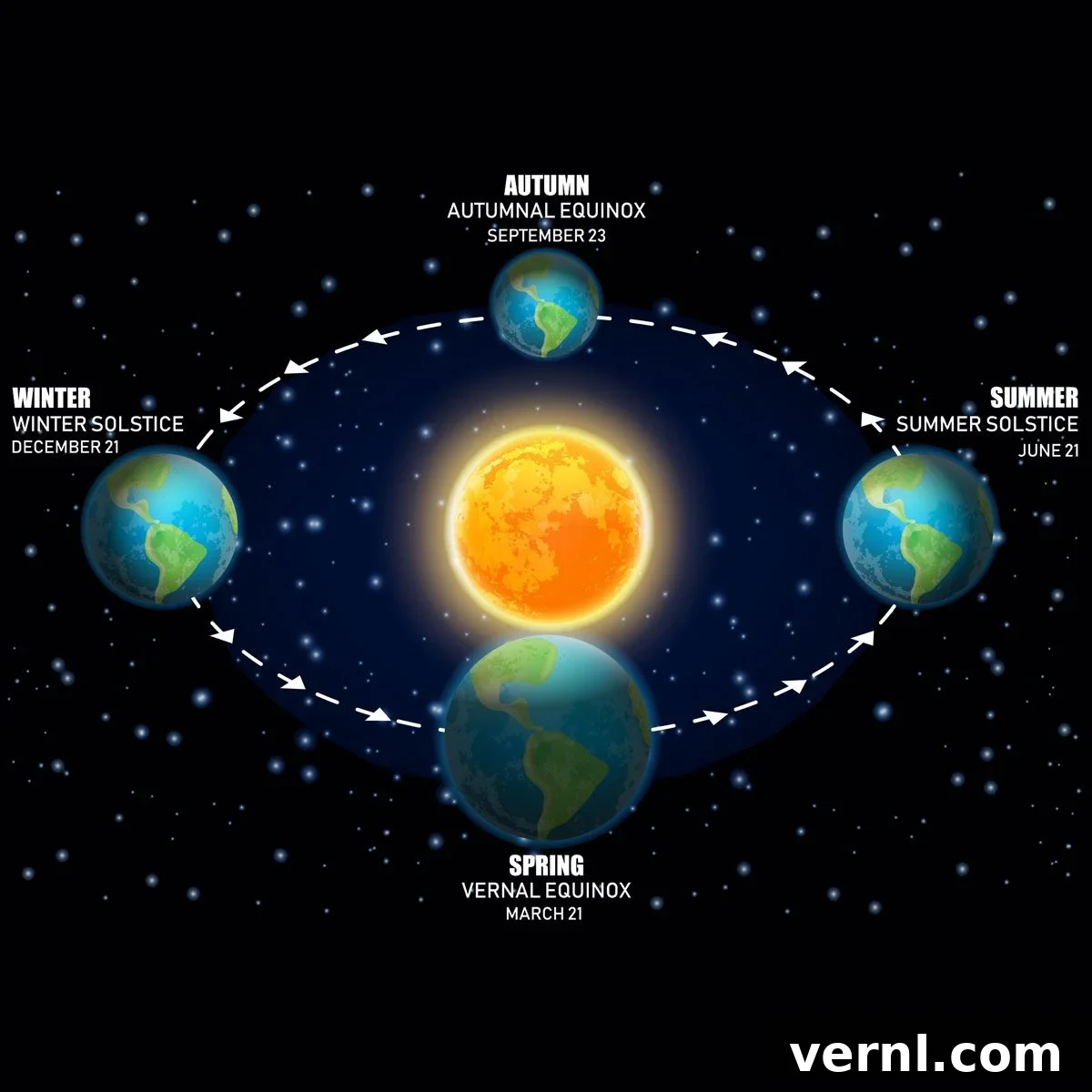
As our incredible planet, Earth, embarks on its annual journey around the sun, we experience a captivating phenomenon that fundamentally shapes our daily lives: the changing length of our days and the shifting of the seasons. This celestial ballet is primarily governed by the Earth’s axial tilt. Our home planet is not perfectly upright in its orbit; instead, it leans at a consistent angle of approximately 23.5 degrees. This tilt is the fundamental reason why we have seasons and why the solstices are such significant events.
The tilt dictates where the sun’s most direct and potent rays strike the Earth’s surface. At different points in our orbit, these powerful rays illuminate either the Tropic of Cancer in the Northern Hemisphere or the Tropic of Capricorn in the Southern Hemisphere. This variation in direct sunlight profoundly influences temperature and the duration of daylight hours across the globe. Consequently, the winter solstice marks the day with the least amount of sunlight, resulting in the shortest day and longest night of the year in a particular hemisphere, while the summer solstice brings the most sunlight, ushering in the longest day.
When Does the Winter Solstice Grace Us with Its Presence?
The timing of the winter solstice is remarkably consistent, although it can vary slightly from year to year. For those residing in the Northern Hemisphere, this pivotal astronomical event typically occurs on December 21st or 22nd. For instance, in 2020, the winter solstice fell on December 21st. The precise moment of the solstice is when the sun reaches its southernmost point in the sky as observed from Earth, marking the astronomical commencement of winter.
These minor variations in date are influenced by the complexities of the Gregorian calendar and the Earth’s elliptical orbit around the sun. While we often refer to the entire day as the solstice, the astronomical event is instantaneous, occurring at a specific second. Regardless of the exact minute, the winter solstice represents a profound turning point, a pause before the gradual return of longer days and the promise of spring, holding deep cultural and historical significance for civilizations across millennia.
The Distinctive Dance: Summer vs. Winter Solstice
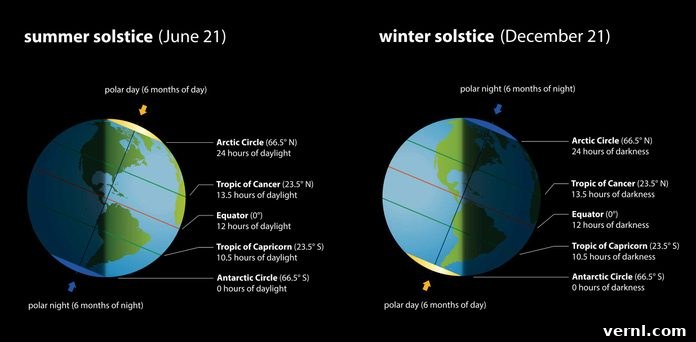
The fundamental distinction between the summer and winter solstices hinges entirely on your geographical location relative to the Earth’s hemispheres. In the Northern Hemisphere, the December solstice is famously known as the winter solstice. This term signifies the moment when the sun reaches its lowest apparent position in the sky, aligning directly with the Tropic of Capricorn, situated 23.5 degrees south of the equator. At this point, the Northern Hemisphere is tilted farthest away from the sun, leading to fewer hours of daylight and colder temperatures.
Conversely, the June solstice, which we in the Northern Hemisphere celebrate as the summer solstice, occurs when the Earth’s axial tilt causes the sun to shine directly upon the Tropic of Cancer, located at 23.5 degrees north of the equator. During this period, the Northern Hemisphere is tilted maximally towards the sun, receiving the most direct solar energy, resulting in the longest day and the official start of summer. This inverse relationship between the hemispheres is why seasons are always opposite: when it’s winter in the Northern Hemisphere, it’s summer in the Southern Hemisphere, and vice versa. This constant interplay of tilt and orbit creates the dynamic seasonal shifts that define life on Earth.
Is the Winter Solstice Truly the Shortest Day of the Year?
Absolutely. For anyone residing in the Northern Hemisphere, the winter solstice undeniably marks the shortest day and, consequently, the longest night of the entire year. This phenomenon is a direct consequence of the Earth’s axial tilt. On this specific day, the Northern Hemisphere is tilted at its maximum angle away from the sun. This orientation causes the sun to follow its lowest and shortest arc across the sky, remaining closer to the horizon throughout the day.
As the sun’s path is so low, its rays strike the Earth at a more oblique angle, providing less direct sunlight and warmth. This reduced exposure to solar radiation contributes to the colder temperatures associated with winter. The effect of the shortest day becomes even more pronounced the farther north one travels. For instance, communities near or within the Arctic Circle experience extreme conditions, ranging from merely a few hours of twilight to complete polar night, where the sun never rises above the horizon for an extended period. Simultaneously, in the Southern Hemisphere, the exact same date signifies their summer solstice, bringing their longest day and the start of their summer season.
Understanding the Equinox: A Balance of Day and Night
While often discussed alongside solstices, an equinox represents a different, yet equally significant, celestial event. The term “equinox” literally translates from Latin to “equal night,” signifying a day when both hemispheres of the Earth experience roughly equal amounts of daylight and nighttime. These events occur twice a year, typically around March 20th (the vernal or spring equinox) and September 22nd (the autumnal equinox).
During an equinox, the Earth’s tilt is neither leaning towards nor away from the sun. Instead, the sun’s rays shine directly on the equator. This alignment ensures that both the Northern and Southern Hemispheres receive an almost identical share of solar illumination. The equinoxes serve as crucial transitional periods, marking the astronomical beginning of spring and autumn. They symbolize a momentary balance in the celestial calendar before the Earth’s tilt once again asserts its influence, shifting the balance of light and darkness towards either the summer or winter solstice.
The Enduring Historical Significance of the Winter Solstice
The winter solstice has held profound historical and cultural significance for human civilizations throughout history, long before modern astronomy provided a scientific explanation. For ancient peoples, whose lives were intimately connected to natural cycles, the shortest day of the year was a moment of deep apprehension and, eventually, profound celebration. It represented the ultimate triumph of darkness, a period of scarcity and cold, but also the promise of renewal and the return of light.
Many ancient winter solstice traditions, though their original meanings may have faded, continue to influence modern holiday customs. The enduring appeal of evergreens, such as holly, ivy, and mistletoe, stems from their ability to retain their vibrant green leaves amidst the bleakness of winter. They were seen as powerful symbols of life, rebirth, and resilience, reminding people that warmth and growth would eventually return. The burning of Yule logs, a common practice in Germanic and Nordic cultures, was a ritualistic act to symbolically “feed” the sun and encourage its return, driving away the encroaching darkness. Similarly, practices like decorating trees with natural elements like mushrooms, popcorn, or cranberries harken back to ancient offerings and symbolic representations of fertility and abundance, designed to appease deities or celebrate the resilience of nature. These traditions speak to humanity’s universal need to find hope and meaning in the rhythm of the cosmos.
Global Celebrations: Honoring the Return of Light
The winter solstice, as a fundamental turning point in the year, has inspired a myriad of celebrations across diverse cultures, many of which continue to be observed today. It’s no coincidence that several major modern holidays, including Christmas, Hanukkah, and Kwanzaa, often fall around the time of the December solstice. While their origins are distinct, they share common themes of light, hope, family, and community during the darkest part of the year.
Beyond these widely recognized holidays, numerous other traditions around the world specifically honor the winter solstice. In East Asia, the Dongzhi Festival is a time for families to gather, eat traditional foods like tangyuan (glutinous rice balls), and reinforce familial bonds, symbolizing unity and prosperity for the coming year. In Iran, Shab-e Yalda, “Yalda Night,” is celebrated as the longest night of the year, where families stay up late, read poetry, and enjoy fruits like watermelons and pomegranates, symbolizing the victory of light over darkness. The Hopi people of Arizona observe Soyal, a deeply spiritual ceremony focused on purification, renewal, and prayers for the sun’s return, ensuring a successful harvest. Similarly, the ancient Hawaiian Makahiki festival, though spanning several months, includes periods around the winter solstice dedicated to peace, feasting, and honoring the god Lono. These diverse celebrations, whether ancient or modern, often feature customary foods, shared meals, lighting fires or candles, gift-giving, and communal rituals, all aimed at welcoming the gradual return of daylight and anticipating the fertility of the new year.
Stonehenge: An Ancient Celestial Observatory
Perhaps one of the most compelling testaments to humanity’s long-standing fascination with the solstice is the enigmatic monument of Stonehenge in Wiltshire, England. This prehistoric megalithic structure, built thousands of years ago, is widely regarded as an ancient astronomical observatory, meticulously designed to track the movements of the sun and moon.
The ingenuity of its builders is truly astonishing. The massive sarsen stones and bluestones were erected with precise alignments that mark both the summer and winter solstices. During the summer solstice, observers standing at the center of the monument witness the sunrise directly over the Heel Stone, a solitary stone positioned outside the main circle. Conversely, during the winter solstice, the monument’s central axis perfectly frames the sunset. This intricate alignment suggests that Stonehenge was not merely a ceremonial site but also a sophisticated calendar, providing its creators with a vital tool for understanding seasonal changes, agricultural cycles, and perhaps even for religious or spiritual rituals tied to the celestial dance. Today, thousands of tourists and modern-day pagans flock to Stonehenge during the solstices to witness this incredible spectacle, connecting with the awe and wonder that our ancestors must have felt in the face of such powerful cosmic events.