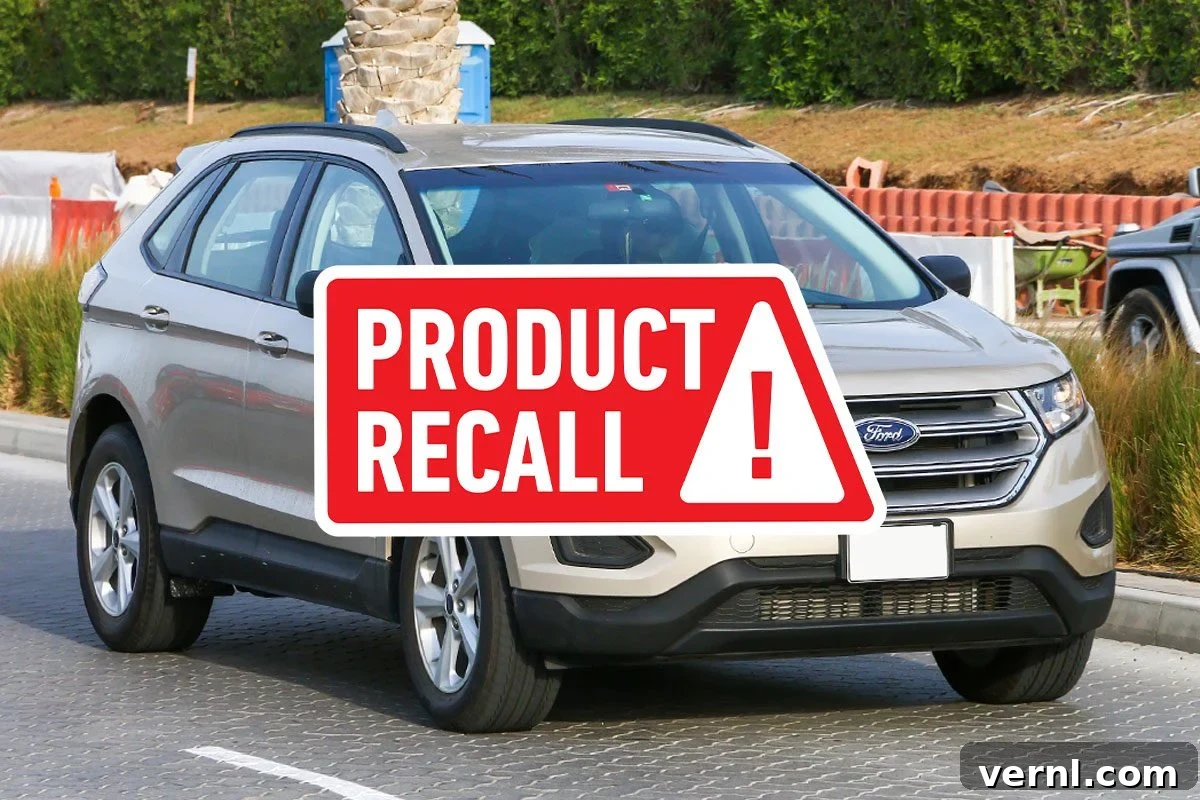
Ford Issues Massive Recall: Over 1.2 Million Vehicles Affected in Five Separate Actions
On August 22, 2025, the automotive world witnessed a significant announcement from Ford Motor Company: five distinct recalls were issued, collectively impacting well over 1.2 million vehicles. While large-scale recalls are not unprecedented for Ford, this particular event stands out due to its multi-faceted nature. Unlike previous occasions where a single, clear defect led to a broad recall, this time, the affected vehicles are divided across a series of separate campaigns, each addressing different safety concerns. The National Highway Traffic Safety Administration (NHTSA) has released detailed briefs for all five recalls, making it imperative for Ford owners to understand if their vehicle is among those with identified safety issues. This comprehensive guide will delve into the specifics of each recall, outlining the affected models, the underlying safety concerns, and the steps owners should take to ensure their vehicle’s safety and compliance.
Which Ford and Lincoln Models Are Impacted by These Safety Recalls?
With a staggering 1.2 million Ford and Lincoln vehicles presenting potential safety hazards, the probability of your car being on this extensive list is significant. Staying informed is crucial for your safety and the safety of others on the road. If you own any of the vehicles mentioned below, we urge you to pay close attention to official communications from Ford, typically via an owner letter mailed to your registered address, which will provide precise instructions and further insights.
Lincoln MKX and Ford Edge Recall
The first of these five recalls targets nearly 500,000 vehicles, focusing on popular SUV models. Owners of the following vehicles should be aware:
- 2016 Lincoln MKX
- 2017 Lincoln MKX
- 2018 Lincoln MKX
- 2015 Ford Edge
- 2016 Ford Edge
- 2017 Ford Edge
- 2018 Ford Edge
These mid-size crossover SUVs are widely used by families and daily commuters, making this a particularly impactful recall affecting a broad segment of Ford’s customer base.
Ford F-Series (F-150, F-250 SD, F-350 SD, F-450 SD, F-550 SD) Recall
Ford’s second recall campaign is substantial, encompassing over 355,000 vehicles from its highly popular and robust F-Series lineup. This recall affects some of the toughest workhorses on the road, including future model years that may already be in early production or pre-delivery stages:
- 2025 Ford F-550 SD
- 2026 Ford F-550 SD
- 2025 Ford F-450 SD
- 2026 Ford F-450 SD
- 2025 Ford F-350 SD
- 2026 Ford F-350 SD
- 2025 Ford F-250 SD
- 2026 Ford F-250 SD
- 2025 Ford F-150
The F-Series trucks are a cornerstone of Ford’s sales and are known for their reliability and capability. This recall underscores the importance of even the most robust vehicles adhering to strict safety standards.
Ford Explorer and Lincoln Aviator Recall
In their third recall announcement, Ford identified safety concerns with over 200,000 vehicles, specifically targeting two premium SUV models. Both the Ford Explorer and Lincoln Aviator are popular choices for families seeking comfort and performance:
- 2025 Ford Explorer
- 2025 Lincoln Aviator
These models are key players in the competitive SUV market, and addressing these issues promptly is vital for owner confidence.
Ford Mustang Recall
The fourth recall brings attention to over 100,000 units of an iconic American muscle car. Owners of recent model year Mustangs should take note:
- 2024 Ford Mustang
- 2025 Ford Mustang
The Mustang is celebrated for its performance and distinctive style, making this recall a significant concern for a passionate segment of Ford enthusiasts.
Ford Ranger Recall
The final recall in this series addresses safety issues affecting over 100,000 Ford Ranger pickup trucks, a popular choice for both work and adventure:
- 2024 Ford Ranger
- 2025 Ford Ranger
- 2026 Ford Ranger
As a versatile mid-size truck, the Ranger serves a wide range of customers, and ensuring its safety systems are fully functional is paramount.
Unpacking the Defects: Why Ford Is Recalling So Many Vehicles
These five distinct recalls stem from a variety of safety hazards, each posing a unique risk to drivers and passengers. Understanding the specific nature of these defects is the first step toward appreciating the urgency and necessity of these recall actions.
Lincoln MKX and Ford Edge: A Critical Brake System Issue
For the affected Lincoln MKX and Ford Edge vehicles, the core problem lies within the braking system. According to the NHTSA, there is a risk that “the rear brake jounce hose may rupture and leak brake fluid.” This is a severe defect with direct implications for vehicle safety. A brake fluid leak dramatically compromises the hydraulic pressure essential for effective braking. The critical consequence, as highlighted by the NHTSA, is that it “can extend the distance required to stop the vehicle, increasing the risk of a crash.” This extended stopping distance can be catastrophic, especially during emergency braking situations where every foot counts. Vehicle owners might notice a spongy brake pedal or a warning light indicating low brake fluid. This issue violates fundamental safety expectations for any vehicle.
Ford F-Series: Instrument Panel Electrical Failure
The F-Series vehicles are facing an electrical issue centered around the Instrument Panel Cluster (IPC). The NHTSA reports that “the Instrument Panel Cluster (IPC) may fail at startup.” The instrument panel is far more than just a decorative feature; it’s the primary interface for critical vehicle information. A failure here means that crucial data, such as “warning lights or vehicle speed,” may not be displayed. Without these vital indicators, drivers are left unaware of potential mechanical problems, dangerously high speeds, or other warnings that could prevent an accident. Such a loss of critical information significantly “increases the risk of a crash,” as drivers cannot react appropriately to vehicle status or road conditions. This defect directly impacts a driver’s ability to operate the vehicle safely and within legal limits.
Ford Explorer and Lincoln Aviator: Trailer Lighting Malfunction
The recall for the Explorer and Aviator models addresses a specific lighting problem, particularly when towing. The NHTSA brief details that “when towing a trailer, the tail lights on the trailer may fail to illuminate due to an improperly manufactured body control module.” This is not merely an inconvenience but a significant safety hazard that directly contravenes Federal Motor Vehicle Safety Standard (FMVSS) number 108, which governs ‘Lamps, Reflective Devices, and Associated Equipment.’ Trailer tail lights are essential for communicating a vehicle’s presence and actions (braking, turning) to other drivers, especially at night or in adverse weather conditions. “Trailer tail lights that do not illuminate as intended can reduce visibility to other drivers, increasing the risk of a crash,” making it extremely dangerous for the towing vehicle and those around it.
Ford Mustang: Exterior Lighting Failure Due to Water Intrusion
Similarly, the recalled Ford Mustangs are affected by a lighting problem, but with a different root cause. The NHTSA explains that “water may enter the body control module and cause a loss of communication with the exterior lighting, including the license plate light, side marker, and tail lights.” This issue also means these vehicles “fail to comply with the requirements of Federal Motor Vehicle Safety Standard number 108, ‘Lamps, Reflective Devices, and Associated Equipment.'” The loss of any exterior lighting, whether it’s tail lights, side markers, or the license plate light, severely compromises the vehicle’s visibility to other drivers. This reduced visibility, especially during nighttime driving or in low-light conditions, significantly “increases the risk of a crash.” The body control module (BCM) is a central hub for many electronic functions, and water intrusion can lead to a cascade of electrical failures.
Ford Ranger: Air Bag Deployment Issues
Finally, the Ford Ranger recall addresses a critical safety concern related to the vehicle’s air bag system. According to the NHTSA brief, “the side curtain air bags may contact the B-Pillar inner reinforcements and tear during deployment.” This defect means the affected Rangers “fail to comply with the requirements of Federal Motor Vehicle Safety Standard number 226, ‘Ejection Mitigation.'” Airbags are a crucial passive safety feature designed to protect occupants during a collision. If an airbag tears during deployment, its ability to cushion and protect occupants is compromised, making it less effective or even ineffective. The NHTSA warns that “air bags that deploy improperly during a crash increase the risk of injury,” turning a vital safety device into a potential source of harm or failing to provide the intended protection.
Addressing the Concerns: What Ford Owners Should Do and How Remedies Are Being Implemented
Ford is actively developing and implementing remedies for these identified safety issues. For affected owners, understanding the repair process and timelines is crucial. All authorized repairs under these recalls will be performed free of charge.
Lincoln MKX and Ford Edge Brake Recall Remedy
For the critical brake issues affecting the Lincoln MKX and Ford Edge, Ford is currently developing a comprehensive remedy. Initial owner notification letters detailing the safety risk are scheduled to be mailed out in early September 2025. A follow-up letter, providing specific information about the approved remedy and instructions for scheduling the repair, is anticipated in April 2026. Owners should await these communications and be prepared to act once the remedy is available.
Ford F-Series Electrical Recall Remedy
The repair for the F-Series instrument panel electrical issue has already been developed and is ready for implementation. The NHTSA brief confirms that “the instrument panel cluster software will be updated by a dealer or through an over-the-air (OTA) update, free of charge.” This offers convenient options for owners to get their vehicles rectified. Ford plans to mail out owner letters in early September 2025, providing details on how to proceed with the software update.
Ford Explorer and Lincoln Aviator Trailer Lighting Recall Remedy
The Explorer and Aviator recall also has a clear and defined fix. The NHTSA states that “dealers will replace the body control module C on vehicles with less than 9,000 miles.” For vehicles that have accumulated over 9,000 miles, “dealers will perform a functional check on the body control module C and replace it as necessary.” All these repairs will be performed free of charge. Ford will send out initial owner letters in mid-October 2025, followed by final letters with detailed instructions for scheduling repairs in April 2026.
Ford Mustang Exterior Lighting Recall Remedy
For the Mustang recall, the NHTSA brief outlines a two-pronged approach: “dealers will inspect and seal the body seams as necessary” to prevent water intrusion. Furthermore, “dealers will also inspect the body control module for corrosion and replace it, if necessary.” These repairs will also be completed free of charge to the owners. Ford is implementing a two-round notification system for this recall, with initial letters expected to be mailed out in early September 2025. Remedy letters, containing detailed instructions and scheduling information, are “anticipated first quarter 2026.”
Ford Ranger Air Bag Recall Remedy
Finally, the Ranger recall addressing air bag deployment issues has a straightforward solution. The NHTSA reports that “dealers will install protective shields, free of charge.” This preventative measure aims to prevent the side curtain airbags from tearing during deployment. Ford’s initial round of owner letters for this recall is scheduled to go out in early September 2025, with remedy letters expected to be dispatched in December 2025.
How to Verify Your Vehicle’s Recall Status and Contact Ford
Given the extensive nature of these recalls, it is essential for all Ford and Lincoln owners to proactively verify if their vehicle is affected. The most reliable way to do this is by using your Vehicle Identification Number (VIN).
You can easily check for open recalls on your specific vehicle by visiting the official NHTSA website at www.nhtsa.gov/recalls and entering your 17-digit VIN. This database is regularly updated and provides the most current information directly from the regulatory body.
For any further questions regarding these recalls, or to discuss your specific vehicle’s situation, you can reach Ford customer service directly at 1-866-436-7332. When contacting Ford or a dealership, it’s helpful to have the specific recall numbers ready for the issue affecting your vehicle:
- Lincoln MKX & Edge Brake Issue: Ford Recall Number 25S87, NHTSA Recall Number 25V544000
- F-Series Electrical Issue: Ford Recall Number 25S88, NHTSA Recall Number 25V540000
- Explorer & Aviator Lighting Issue: Ford Recall Number 25C42, NHTSA Recall Number 25V543000
- Mustang Lighting Issue: Ford Recall Number 25C43, NHTSA Recall Number 25V546000
- Ranger Air Bag Issue: Ford Recall Number 25C41, NHTSA Recall Number 25V541000
It is highly recommended that owners keep their vehicle registration information updated with Ford to ensure they receive all official recall notifications promptly via mail.
The Broader Impact of Large-Scale Automotive Recalls
Massive recalls like these, affecting over a million vehicles, underscore the stringent safety standards and the continuous commitment to vehicle integrity within the automotive industry. While inconvenient for owners and costly for manufacturers, such actions demonstrate a dedication to public safety and regulatory compliance. The NHTSA plays a critical role in overseeing these processes, ensuring that manufacturers identify, report, and rectify defects that could pose risks to consumers. These recalls are not just about fixing individual vehicles; they reinforce the importance of meticulous engineering, quality control, and the ongoing vigilance required to maintain trust in automotive brands. For Ford, managing five simultaneous recalls presents a significant logistical and reputational challenge, but addressing these issues transparently and efficiently is paramount to upholding its brand promise and ensuring the safety of its customers.
Conclusion
Ford’s announcement of five separate recalls, impacting over 1.2 million vehicles across a range of popular models from the Lincoln MKX and Ford Edge to the F-Series trucks, Explorer, Aviator, Mustang, and Ranger, is a significant event for vehicle owners. From critical brake system failures and electrical malfunctions to lighting defects and airbag deployment issues, each recall addresses a serious safety concern that could increase the risk of accidents or injury.
As an owner of an affected vehicle, your prompt attention to these notices is vital. Ensure your contact information with Ford is up-to-date, monitor your mailbox for official recall letters, and utilize the NHTSA website with your VIN to check for any open recalls. Remember, all repairs related to these recalls will be performed free of charge by authorized Ford and Lincoln dealerships. By staying informed and taking the necessary steps, you contribute to your own safety and the safety of everyone on the road.
Sources
- Rear Brake Hose May Rupture, National Highway Traffic Safety Administration, 2025.
- Instrument Panel Display Failure, National Highway Traffic Safety Administration, 2025.
- Inoperative Trailer Tail Lights/FMVSS 108, National Highway Traffic Safety Administration, 2025.
- Exterior Lighting Failure/FMVSS 108, National Highway Traffic Safety Administration, 2025.
- Air Bags May Tear/FMVSS 226, National Highway Traffic Safety Administration, 2025.