Discovering tiny invaders like fleas and ticks in your home or on your beloved pets can be an unsettling experience. These persistent pests are more than just an annoyance; they pose significant health risks to both animals and humans. While often grouped together due to their blood-feeding habits and disease-transmitting capabilities, fleas and ticks are distinctly different creatures with unique characteristics, behaviors, and health implications.
Understanding these differences is crucial for effective prevention, identification, and eradication. This comprehensive guide delves into the distinct worlds of fleas and ticks, offering insights into their appearance, habitats, life cycles, the tell-tale signs of their presence, and the potential health hazards they carry. By the end, you’ll be equipped with the knowledge to protect your home, family, and pets from these common, yet formidable, pests.
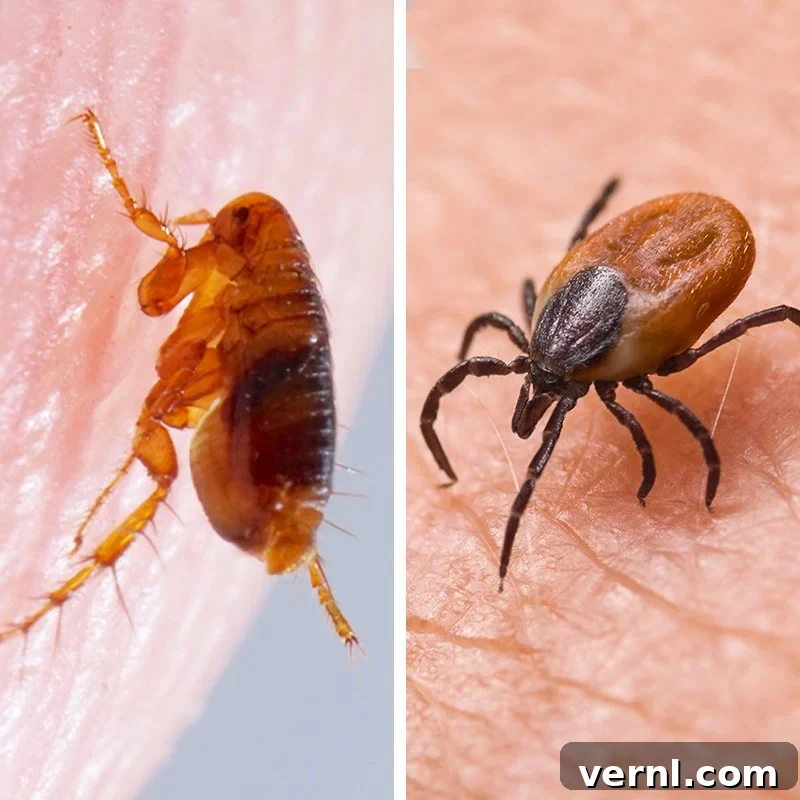
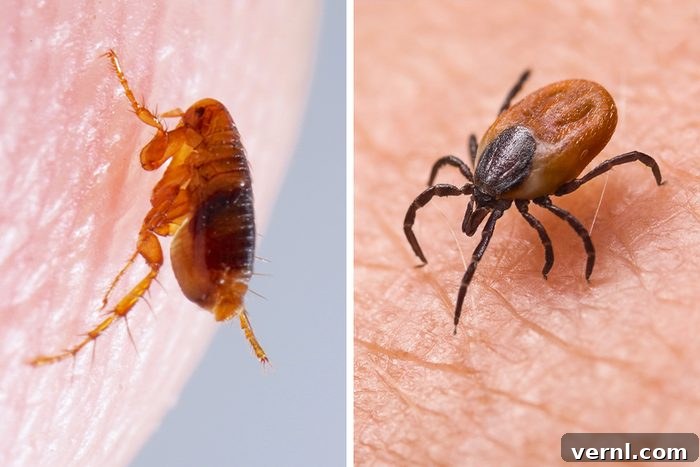
Fleas, depicted in the photo on the left, are minuscule, highly adaptable insects known for their incredible agility. These blood-sucking parasites primarily infest wild animals such as raccoons and rodents, but are equally comfortable targeting domestic companions like dogs and cats. Their lifecycle is remarkably efficient; fleas reproduce at an astonishing rate and, once latched onto a host, tend to remain there for their entire adult lifespan, feeding and laying eggs.
“Fleas are truly exceptional jumpers,” explains Katelyn A. Kesheimer, Ph.D., an assistant professor and extension specialist at the Alabama Cooperative Extension System, Auburn University. Their powerful hind legs are biomechanical marvels, allowing them to leap more than six inches vertically. For an insect measuring barely an eighth of an inch, this is an extraordinary feat, enabling them to easily transfer from pets to carpets, furniture, or even human legs.
Ticks, on the other hand, are slightly larger than fleas but still remarkably adept at remaining hidden. Unlike fleas, ticks are not insects but members of the arachnid family, making them relatives of spiders and mites. These eight-legged hitchhikers are notorious for their patient approach; they often wait in vegetation, ambushing unsuspecting hosts. Once they find a suitable host, they latch on firmly, burying their barbed mouthparts deep into the skin to feed. A key distinction from fleas is their nomadic nature; ticks typically feed for a period and then detach, often moving between different hosts throughout their lifespan.
Should you discover one of these blood-feeding invaders on your pet or even yourself, prompt identification and appropriate action are essential. Recognizing the specific characteristics and symptoms associated with each pest will guide you in effectively managing the situation and mitigating potential health risks.
Distinguishing Fleas from Ticks: What Do They Look Like?
While both fleas and ticks are small and can be challenging to spot, they possess distinct physical attributes that allow for differentiation. Knowing what to look for is the first step in effective pest management.
The Appearance of Fleas
Fleas typically present as dark reddish-brown to black, with flat, wingless bodies that are incredibly narrow from side to side. This compressed body shape allows them to move swiftly and easily through dense fur or hair. Their mouthparts are needle-like, designed specifically for piercing skin and sucking blood. An adult flea usually measures about 1/8-inch long and possesses three pairs of legs, with the powerful hind legs being disproportionately large to facilitate their impressive jumps. When they bite, it often results in itchy, red, and sometimes swollen welts.
Identifying a flea infestation on a pet can be tricky because of their rapid movement. Jim Fredericks, Ph.D., an entomology and wildlife ecology specialist and senior vice president of public affairs for the National Pest Management Association, notes, “Fleas can be hard to spot with the naked eye because they move so fast along the animal’s body.” He recommends using specialized tools for effective inspection. “Flea combs and wetting an animal’s hair can help you grasp them for a visual inspection,” he advises. Another key indicator is “flea dirt” – tiny black specks resembling ground pepper, which are actually flea feces composed of digested blood. When wet, flea dirt will turn a reddish-brown color.
The Appearance of Ticks
The United States is home to nearly 100 different tick species, exhibiting a wide range of colors including brown, black, gray, red, and yellow. Common types found in North America include the blacklegged (deer) tick, American dog tick, brown dog tick, lone star tick, and Rocky Mountain wood tick. Their appearance can vary significantly based on species and life stage.
Ticks range in size from a mere 1/8-inch, comparable to a sesame seed, up to as much as 1/2-inch when fully engorged. They are typically flat and oval-shaped before feeding, but they become rounded and significantly larger as they fill with blood. Nymph and adult ticks possess four pairs of legs, totaling eight, a characteristic shared with other arachnids. However, in their larval stage, they only have three pairs of legs. Their strong, barbed mouthparts allow them to firmly anchor themselves to their host for several days while feeding.
Did you know? A recent survey revealed that a striking 63% of Americans have personally encountered or removed a tick from themselves, another person, or a pet. This statistic underscores the pervasive nature of ticks and the importance of vigilance.
Where Do Fleas and Ticks Live? Understanding Their Habitats
Knowing the preferred environments of fleas and ticks is instrumental in preventing infestations and protecting your living spaces.
Flea Habitats
For most homeowners, “almost all indoor flea infestations are because of a pet (or other animal),” confirms Dr. Kesheimer. While fleas can survive outdoors in shady, humid areas for a period, their ultimate goal is to find a warm-blooded host and shelter. Once they catch a ride into a home, they readily abandon the outdoor life for the consistent warmth and abundant food source indoors.
Fleas are creatures of comfort and efficiency. They are generally content to spend their entire adult lives on the same hairy dog or furry cat, continually feeding, mating, and reproducing. Female fleas lay their eggs directly on the host, but these smooth, pearl-like eggs are not sticky and quickly fall off into the surrounding environment. This is where the infestation truly begins to spread within a home. These fallen eggs hatch into tiny, worm-like larvae that burrow deep into carpets, cracks in flooring, pet bedding, and upholstery, feeding on organic debris and flea dirt. After passing through a pupal stage, they emerge as adult fleas, ready to jump back onto a host, thus perpetuating their relentless life cycle.
Did you know? A single female flea is an incredibly prolific breeder, capable of producing an astounding 400 to 500 offspring in her lifetime, highlighting how rapidly an infestation can escalate.
Tick Habitats
Ticks are outdoor enthusiasts, thriving in warm, humid climates and preferring to lurk in specific types of vegetation. Their ideal hiding spots include tall grasses, dense scrubs, wooded areas, and piles of leaf litter. Importantly, ticks are not confined to wild, forested, or rural areas; they can be found even in urban centers, suburban gardens, and coastal locations where suitable vegetation exists.
Ticks employ a strategy known as “questing” to find a host. “Ticks usually contact a host by crawling up on the tips of low-growing vegetation and waiting for a host to pass by and brush the vegetation,” explains Fredericks. They extend their front legs, equipped with sensory organs, to detect carbon dioxide, body heat, and vibrations, signaling the presence of a potential host. Ticks are incredibly patient predators, often waiting for weeks or even months for their next host to come along. This patience, combined with their ability to blend into the environment, makes them a persistent threat.
Handy tick locator: To ascertain which specific types of ticks are prevalent in your region, consult the interactive Tick Surveillance map provided by the Centers for Disease Control and Prevention (CDC). This resource can help you understand the specific risks in your area.
Signs of Fleas vs. Ticks: Identifying an Infestation
Early detection is vital for both fleas and ticks. Recognizing the signs of their presence can help you act quickly to protect your family and pets.
Signs of Fleas
For pet owners, a flea infestation often becomes apparent through changes in their animal’s behavior and physical condition:
- Excessive Scratching, Licking, or Biting: This is perhaps the most common and immediate sign. Pets will relentlessly scratch, lick, or bite at irritated spots, often around the neck, ears, base of the tail, and inner thighs, attempting to alleviate the intense itching caused by flea saliva.
- Hair or Fur Loss: Chronic scratching and biting can lead to localized hair loss (alopecia), often accompanied by skin redness, scabbing, or secondary skin infections. In severe cases, particularly in animals sensitive to flea saliva, this can develop into Flea Allergy Dermatitis (FAD).
- “Flea Dirt” (Flea Feces): These tiny black specks, resembling ground pepper or coffee grounds, are digested blood excreted by fleas. You’ll often find them embedded in your pet’s fur, especially around the base of the tail or on their belly, as well as on pet beds, carpets, or linens where your pet rests. If you collect some of these specks and place them on a damp paper towel, they will dissolve into reddish-brown streaks.
- Visible Fleas: In more significant infestations, you may actually see adult fleas scurrying quickly through your pet’s fur, especially when you part their hair or after bathing.
For humans, flea bites typically appear as small, itchy, red bumps, often clustered together. These bites are commonly found around the feet, ankles, and lower legs. “This is an easy jump for a flea to make from a dog to your leg,” notes Dr. Kesheimer, emphasizing their jumping prowess. While generally just irritating, scratching can lead to secondary skin infections.
Signs of Ticks
Indications that your pet or you may have been bitten by a tick, or that ticks are present in your environment, include:
- Sighting of an Actual Tick: The most definitive sign is physically seeing a tick attached to you or your pet’s body. Ticks can range from tiny, almost imperceptible nymphs to larger, engorged adults. Always perform a thorough tick check after spending time outdoors.
- Finding Ticks or Their Eggs in the Environment: You might discover ticks crawling on clothing, furniture, or curtains indoors. Outdoors, look for them in potted plants, garden beds, or grassy areas. Tick eggs, often resembling small, dark, jelly-like masses, can sometimes be found in sheltered outdoor locations.
- Systemic Symptoms in Pets or Humans: If a tick has transmitted a disease, your pet (or you) may exhibit symptoms such as lethargy, muscle weakness, joint pain, loss of appetite, changes in gait, trouble breathing, fever, or vomiting. These symptoms warrant immediate veterinary or medical attention.
- Inflammation or Irritation at the Bite Site: Even without disease transmission, a tick bite can cause a localized red bump, swelling, or irritation where the tick was attached.
Health Risks of Fleas vs. Ticks: A Critical Distinction
When considering the health implications, it’s crucial to understand that the risks associated with fleas and ticks differ significantly, especially regarding disease transmission.
Health Risks from Fleas
For common fleas, Dr. Kesheimer offers a reassuring perspective: “Not really,” when asked about serious health concerns. For the most part, flea bites are primarily characterized by their itchiness and irritating nature. However, certain conditions can arise:
- Flea Allergy Dermatitis (FAD): This is the most common allergic reaction in pets, triggered by the proteins in flea saliva. Even a few bites can cause intense itching, skin inflammation, hair loss, and secondary bacterial infections.
- Anemia: In severe infestations, especially in puppies, kittens, or debilitated animals, the continuous blood loss from numerous feeding fleas can lead to anemia, a serious condition characterized by weakness, pale gums, and in extreme cases, can be fatal.
- Tapeworm Transmission: Fleas can act as intermediate hosts for a specific type of tapeworm (Dipylidium caninum). If a pet accidentally ingests an infected flea (e.g., while grooming), they can develop tapeworms. While not usually life-threatening, it requires deworming treatment.
While fleas can be vectors for certain diseases in rare circumstances (like murine typhus), they are generally not considered major vectors for serious diseases in humans in the way ticks are.
Health Risks from Ticks
Ticks are an entirely different story. In the U.S., Dr. Kesheimer emphasizes that “ticks are responsible for most vector-borne illnesses.” They are notorious carriers of a wide array of pathogens (bacteria, viruses, and protozoa) that can cause significant diseases in both animals and humans. The most common and widely recognized tick-borne diseases include:
- Lyme Disease: Transmitted by blacklegged (deer) ticks, Lyme disease can cause fever, headache, fatigue, and a characteristic skin rash called erythema migrans (often described as a “bullseye”). If left untreated, it can lead to severe joint pain, neurological problems, and heart issues.
- Rocky Mountain Spotted Fever (RMSF): Carried by American dog ticks, Rocky Mountain wood ticks, and brown dog ticks, RMSF is a serious bacterial illness that can cause fever, headache, rash, and muscle pain. It can be fatal if not treated promptly with antibiotics.
- Anaplasmosis and Ehrlichiosis: These bacterial infections, transmitted by various tick species (including blacklegged ticks and lone star ticks), can cause fever, joint pain, lethargy, and gastrointestinal issues in both pets and humans.
- Babesiosis: A parasitic infection transmitted by blacklegged ticks, Babesiosis affects red blood cells and can cause hemolytic anemia, fever, and fatigue.
- Powassan Virus Disease: A rarer but serious viral disease transmitted by blacklegged ticks, Powassan can cause encephalitis (inflammation of the brain) or meningitis, with no specific treatment available.
Because tick-borne diseases can easily go undiagnosed, mimic other illnesses, and bring long-lasting consequences if not treated, it’s absolutely critical to seek medical attention immediately if you suspect you’ve been bitten by a tick and subsequently feel unwell or experience strange symptoms. Different species of ticks pose different threats to your health, so proper identification (if possible) is helpful for medical professionals.
Fortunately, most bacterial tick-borne illnesses can be effectively treated with antibiotics, especially when diagnosed and managed early.
How To Get Rid of Fleas vs. Ticks: Effective Management Strategies
Eradicating fleas and ticks requires distinct approaches, often involving a multi-faceted strategy that combines immediate treatment with ongoing prevention. Dr. Kesheimer remarks, “It’s complicated,” especially for fleas, because “since fleas are very small, you might not see them with your naked eye until there are a lot of them.” In the case of an established infestation, she notes you’ll likely notice tiny black specks jumping all around, confirming a significant presence.
Getting Rid of Fleas
A successful flea eradication plan must target not only the adult fleas on your pet but also the eggs, larvae, and pupae in the environment. To get rid of fleas completely and effectively, follow these steps:
- Treat All Pets Simultaneously: It’s paramount to treat every pet in the household for fleas at the same time you begin treating the home environment. Consult your veterinarian for the most appropriate and effective flea treatments for your pets, which may include topical spot-ons, oral medications, or flea collars. Consistent year-round prevention is key.
- Thorough and Frequent Vacuuming: Vacuum all carpets, rugs, upholstered furniture, and cracks in flooring daily or every other day. The vibration and suction can stimulate pupae to emerge, making them vulnerable to treatment, and remove eggs, larvae, and adult fleas. Immediately after vacuuming, seal the vacuum bag in a plastic bag and dispose of it outdoors to prevent fleas from escaping.
- Hot Water Laundry: Wash all pet bedding, blankets, human bed linens, slipcovers, and plush toys in hot water and dry them on the highest heat setting possible. This kills all life stages of fleas. Repeat this frequently during an active infestation.
- Seal Entry Points: Fleas can also enter your home by catching rides on rodents. Seal any cracks, crevices, or holes around the perimeter of your home and ensure screens are intact to prevent other wildlife from entering.
- Environmental Treatments: For indoor environments, look for flea larvae hiding in dark, undisturbed areas. You may use indoor insecticides specifically designed to target fleas, or consider natural remedies such as diatomaceous earth (food-grade) or essential oil-based sprays in conjunction with other methods. Always read and follow product instructions carefully.
- Professional Pest Control: For severe or persistent infestations, professional pest control services may be necessary to ensure complete eradication.
Reducing and Removing Ticks
Effective tick management focuses on reducing tick populations in your yard and preventing them from attaching to hosts. The best way to reduce the number of ticks and protect against their bites involves:
- Daily Tick Checks: Make it a routine to check yourself, your children, and your pets thoroughly for ticks every time you come indoors after being in tick-prone areas. Pay close attention to warm, hidden spots like armpits, behind ears, in hair, in the groin area, and behind knees. For pets, meticulously check their entire body, including between toes and under collars.
- Yard Maintenance: Create a “tick-safe zone” around your home. Keep grasses and vegetation in your yard mowed short, trim shrubs and tree branches, and clear away leaf litter, brush, and tall weeds. This reduces prime tick habitat.
- Chemical or Natural Repellents for Your Yard: Consider spraying your yard with an outdoor insecticide specifically labeled for tick control, or explore natural repellents containing ingredients like cedar oil or permethrin (for yard use, not directly on pets unless specifically formulated). Always follow product instructions carefully.
- Prompt Tick Removal: If you find a tick attached, remove it immediately and correctly. Use fine-tipped tweezers to grasp the tick as close to the skin’s surface as possible and pull upward with steady, even pressure. Avoid twisting or jerking. Do not use folk remedies like burning the tick or applying petroleum jelly, as these can make the tick regurgitate harmful pathogens. After removal, clean the bite area and your hands with rubbing alcohol or soap and water. Keep the tick for potential identification if you develop symptoms. For detailed instructions, refer to guides on how to safely remove ticks.
- Personal Protection: When in tick-prone areas, wear long sleeves and pants, and use EPA-registered insect repellents on exposed skin and clothing.
- Veterinary Preventatives: Discuss with your vet the best tick prevention products for your pets, such as oral medications, topical treatments, or collars, which offer continuous protection.
- Professional Pest Control: For large-scale tick problems or areas with high tick populations, consulting a pest control professional who specializes in outdoor tick management can be highly effective.
For both fleas and ticks, maintaining ongoing communication with your veterinarian is crucial. They can advise on the most effective treatments and preventative options tailored to your specific pets and local pest risks, ensuring the health and safety of your animal companions.