Mastering Spray Foam: Essential Tips & 15 Ingenious Uses for Your Home
Spray foam insulation is an incredibly versatile product, a true unsung hero in many DIY and home improvement projects. From sealing drafts and insulating your home to crafting unique decorations and tackling tricky repairs, its expanding properties and adhesive strength make it invaluable. However, one common frustration almost every user encounters is the dried-up, clogged nozzle after just one use. The good news? You no longer have to toss a half-empty can!
Extend the Life of Your Spray Foam Can: The Clever Tube Cleaning Trick
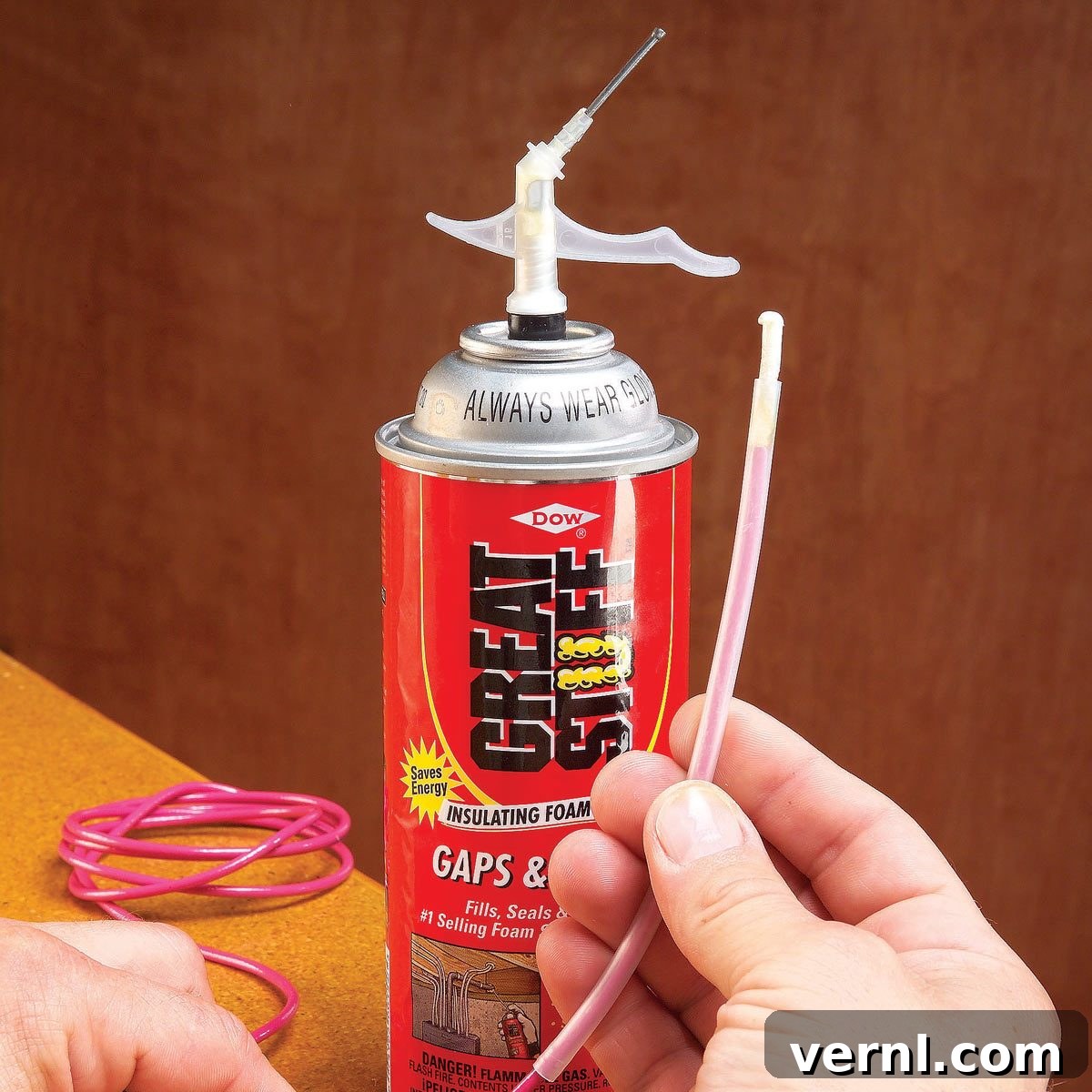
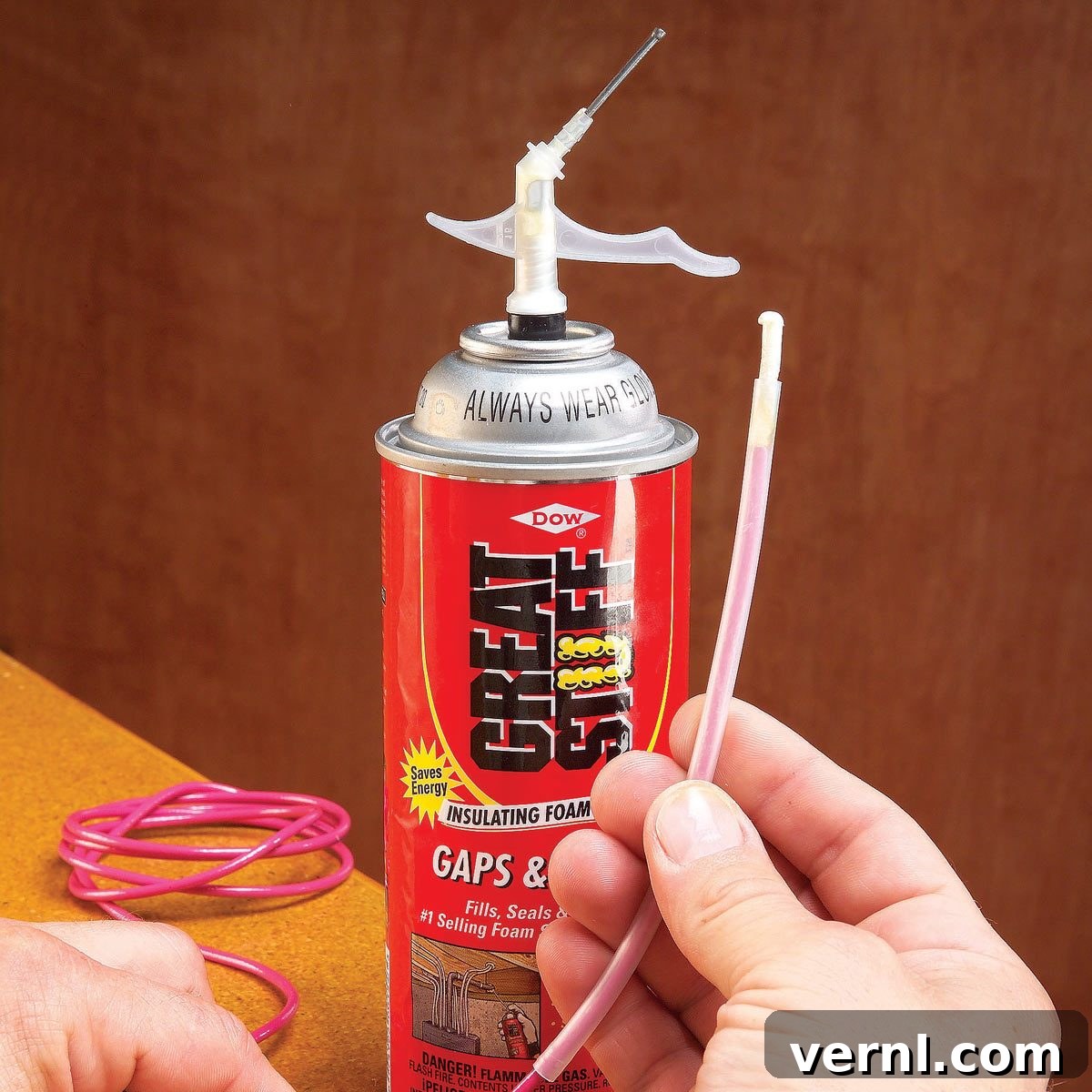
It’s a familiar scenario: you finish a small task with spray foam, forget to clean the applicator tube, and a month later, when you need to seal another gap, the tube is hopelessly clogged. Instead of making an extra trip to the hardware store for a new can, try this ingenious and highly effective cleaning trick shared by Michael Mata, which can save you time and money.
Step-by-Step Guide to Reusing Your Spray Foam Tube:
- Assess the Clog: After your initial use, if the foam has dried completely within the plastic applicator tube, it will likely be a solid, rigid plug.
- Prepare Your Tool: Find a sturdy piece of 12-gauge wire. This gauge is typically robust enough to handle the task without bending excessively. A coat hanger wire can often work in a pinch if straightened properly.
- Push Through the Tube: Carefully insert one end of the 12-gauge wire into the clogged plastic tube. Apply steady, firm pressure. The goal is to push the entire dried foam plug out in one piece. You’ll be surprised at how effectively it works!
- Clean the Nozzle: Once the tube is clear, turn your attention to the spray nozzle attached to the can. This part can also get clogged. Use a toothpick, a small finishing nail, or even a fine piece of wire to carefully clear out any hardened foam from the nozzle opening. Be gentle to avoid damaging the nozzle mechanism.
- Test and Reuse: After clearing both the tube and nozzle, attach the clean tube back to the can. Point it away from yourself and test a small spray to ensure it’s functioning correctly. Your leftover foam is now ready for its next mission!
This simple trick ensures you get the maximum value out of every spray foam can, reducing waste and making your DIY life a little easier. Keeping a can on hand with a ready-to-use applicator means you’re always prepared for those unexpected gaps and cracks.
A video demonstrating this spray foam tube cleaning trick, along with other helpful tips, would typically be embedded here, offering a visual guide to effortlessly maintain your tools and optimize your DIY projects.
Beyond extending the life of your tools, spray foam offers an astonishing array of applications around the house and garden. From improving home comfort and energy efficiency to creative crafts and structural fixes, its versatility truly knows no bounds. Let’s explore 15 brilliant uses for spray foam that will undoubtedly transform your approach to home maintenance and improvement.
Quiet Noisy Pipes
Water supply lines can create an irritating racket when in use, often caused by vibrations that are amplified through the wall and floor framing. This persistent noise can disrupt the peace of your home. To effectively resolve this issue, use expanding spray foam to isolate the pipes from the surrounding wall and floor framing. If the offending area is accessible, directly spray foam between the wood and the pipes, ensuring a snug fit. For inaccessible or sealed areas, you can carefully drill a small hole into the drywall and inject a controlled amount of expanding spray foam. Be cautious not to overdo it, as excessive foam expansion could potentially bow out your drywall. Once the foam has set, patch up the hole and touch it up with a little paint. This not only dampens the noise but also provides a degree of thermal insulation for your pipes.
Secure Landscaping Rocks for Water Features
If you’re dreaming of a serene backyard oasis, complete with a beautiful waterfall and stream, spray foam can be your secret weapon. Achieving a natural and continuous flow of water requires careful placement and sealing of decorative rocks. Waterproof spray foam is excellent for securing these landscaping rocks, preventing them from shifting over time due to water pressure or environmental factors. It also effectively fills any gaps between rocks, directing water precisely where you want it to flow and preventing it from seeping out, which could lead to water loss or erosion. This application ensures your water feature remains stunning and functional for years to come.
Demonstration: Advanced Spray Foam Techniques
Discover the full potential of spray foam by watching expert demonstrations on various application techniques. This video showcases advanced methods and practical tips that can help you achieve professional results in your home improvement projects. From precise application for delicate tasks to maximizing coverage for larger areas, learn how to handle spray foam like a pro and unlock its diverse capabilities.
Firm Up a Wobbly Showerhead and Loose Pipes
A loose or wobbly showerhead can be a daily annoyance, but spray foam offers a remarkably simple and effective solution. Over time, the shower arm can come loose from the wall, creating an unstable fixture. To fix this, squirt a small amount of expanding foam around the base of the loose shower arm where it enters the wall. Allow the foam to expand and set until it’s stiff and completely solid. Once dry, carefully trim off any excess foam around the fixture. Slide the decorative cover plate tight against the wall, and the foam will be completely concealed, providing a rock-solid foundation that will make your showerhead feel brand new. This same trick can be applied to firm up any other loose or wobbly pipes and fixtures around your home, such as faucet handles or toilet paper holders, providing stability and peace of mind.
Seal and Fill Gaps for Enhanced Home Efficiency
One of the most common and beneficial uses for versatile spray foam is insulating and sealing unwanted gaps and cracks throughout your home. These hidden openings, found in walls, crevices, and around windows and doors, are major culprits for energy loss, allowing drafts to enter and conditioned air to escape. By expertly applying spray foam, you create an airtight seal that drastically improves your home’s energy efficiency, leading to lower heating and cooling costs. It also acts as an effective barrier against moisture, preventing potential mold growth, and deters pests from finding their way inside. Choose a minimally expanding foam for windows and doors to avoid warping frames, and a more robust expanding foam for larger, structural gaps.
Unleash Creativity: Carve Spray Foam into Unique Shapes
There’s an endless supply of creative potential for spray foam, and carving it into various shapes is just one of its many artistic applications. Like the toy airplane pictured, you can craft intricate props, unique costume accessories, decorative elements, and even miniature landscapes with a bit of patience and ingenuity. Once cured, spray foam is surprisingly easy to cut, sand, and paint, allowing you to bring almost any imaginative design to life. It’s an excellent medium for school projects, cosplay, or creating bespoke home decor. Remember to work in a well-ventilated area and wear appropriate safety gear when carving and painting your foam creations.
Custom Packing Material for Fragile Items
Whether you’re sending something fragile through the mail or keeping valuables safe during a move, secure packing is absolutely essential to prevent damage. To create a custom protective cushion for a delicate item, simply fill a spare plastic shopping bag (or a sturdy garbage bag for larger items) approximately halfway full with spray insulation foam. Place this bag at the bottom of a shipping box. Gently press the fragile item into the expanding foam in the bag as it hardens, allowing the foam to mold perfectly around its contours. Once the bottom cushion is set, repeat the process for the top of the item, creating a second custom foam mold. This DIY custom packaging solution provides superior protection, handling the rigors of delivery and ensuring your valuables arrive intact.
Create Unique Picture Frames and Art
Picture frames are a popular DIY project for both beginner and advanced woodworkers, but if you’re looking for a truly unique and artistic take, consider making one with spray foam. This one-of-a-kind craft requires only a few materials: a piece of cardboard for the frame base, expanding spray foam, and your choice of spray paint. Apply the foam to the edges of your cardboard base, letting it expand and cure. Once dry, you can carve or shape the foam to create intricate textures or designs. Finish by spray painting it in any color or metallic finish to match your decor. Use another piece of cardboard as a picture backing, securing it with finishing nails or strong adhesive, and you’ll have an instant, custom piece of art that stands out.
Shore Up a Flexible Bathtub for Stability
If you have a bathtub, especially a fiberglass or acrylic model, that flexes or feels unstable underfoot, spray foam can provide the necessary reinforcement. The key is to first fill the tub with water, which weighs it down and simulates its maximum load. This ensures that the foam cures in the tub’s most expanded position, preventing future flexing. Then, gain access to the space underneath the tub. Many stand-alone tubs have removable access panels that make this easy. If not, a small, strategically drilled hole in the surrounding drywall can do the trick, requiring only minor patching to repair afterward. Carefully fill the void beneath the tub with expanding spray foam, allowing it to fully cure and provide solid, silent support. This will eliminate the annoying creaks and wobbles, making your bathing experience much more enjoyable.
Effective Pest Control and Prevention
Even the smallest crack or opening can serve as an interstate highway for pests to enter your home. From tiny insects to persistent rodents, these unwanted guests often exploit foundation cracks, utility penetrations, and gaps around pipes. To create an impenetrable barrier, combine the power of copper mesh with expanding spray foam. For larger openings, especially those where rodents might chew through foam, first stuff the gap with copper mesh, using a screwdriver to push it in securely. Copper mesh is difficult for rodents to chew through. Then, fill any remaining voids and seal the area completely with expanding foam. This dual approach offers robust protection against a wide array of pests, ensuring your home remains secure and free from unwelcome visitors. Expanding foam can also be effectively used for setting fence posts, providing a stable and pest-resistant base.
Prevent Mold Growth in Exterior Wall Corners
Mold remediation is a significant and often costly job, making prevention a top priority for any homeowner. Due to certain framing practices, corners of exterior walls can be particularly susceptible to mold growth. This happens because pockets of uninsulated space within these corners allow cooler air to pool, leading to condensation and creating a perfect environment for mold to thrive. By strategically injecting expanding spray foam into these uninsulated voids, you eliminate these cold spots and create a continuous thermal barrier. This prevents condensation from forming, effectively shutting down mold’s ability to grow. It’s a proactive step that significantly improves indoor air quality and protects the structural integrity of your home.
Insulate and Soundproof Your Sink
An aluminum or stainless steel sink can often be quite noisy, echoing with the clatter of dishes or the rush of water. You can dramatically improve your sink’s performance by insulating and soundproofing it with spray foam. Simply spray the underside of the sink with expanding foam, paying particular attention to the gap between double sinks if applicable. This creates a dense, sound-absorbing layer that significantly reduces noise. Additionally, the foam provides insulation, which can help maintain water temperature slightly longer and prevent condensation from forming on the sink’s underside, protecting your cabinet contents from moisture. If you perform this task while the sink is installed, ensure you are wearing safety equipment like gloves and eye protection, and prepare the area beneath the sink with drop cloths to catch any drips.
Shore Up Concrete Problems with Specialized Foam
While standard spray foam is a magical tool for household insulation, specialized expanding foam technologies are proving equally useful outdoors, particularly for fixing concrete and pavement issues. Companies like Demilec, based in Texas, have pioneered insulation foams specifically designed for this purpose. Their product, Geolift, can help correct cracks and uneven pavement problems by lifting existing concrete surfaces with significantly less labor than traditional methods like mudjacking or full slab replacement. Geolift works by injecting the expanding foam underneath the concrete slab, which then expands to fill voids and lift the slab back to an even level. This innovative solution is effective for a wide range of problem areas around your house, including driveways, sidewalks, patios, garage floors, and even pool decks. Yes, it’s a foam, just like your beloved spray foam, but engineered for heavy-duty structural applications!
Superior Whole-House Insulation
When it comes to insulating your entire house, fiberglass has traditionally been the most common form. However, when comparing fiberglass and spray foam insulation, you might be surprised to learn that spray foam often significantly outperforms fiberglass in several key areas. Spray foam is a type of insulation that, as its name suggests, expands after application. This expansion allows it to fill every nook and cranny, creating an incredibly tight and effective air seal that fiberglass simply cannot match. This superior seal deters moisture infiltration, which is crucial for preventing mold growth, and also acts as a formidable barrier against pests. It protects the structural lining of your house and plays a pivotal role in maintaining consistent indoor temperatures, significantly assisting in the heating and cooling of your house during those unbearably cold or hot days, leading to substantial energy savings and enhanced home comfort.
Stabilize Holiday and Seasonal Decor
Porch urns, large ceramic vases, and decorative planters are an excellent way to add seasonal curbside flair to your home, welcoming guests with festive touches. However, tall decorative items such as twigs, birch stems, artificial flowers, or even pumpkins can sway dramatically in the breeze, making a mess of your carefully planned display or, worse, potentially breaking your valuable urn. To prevent these items from shifting, blowing over, or suffering damage, simply place your decor items into the container and then spray expanding foam around their bases. The foam will expand to create a custom, rigid “nest” that securely holds everything in place. Once cured, you can cover the hardened foam with a layer of moss, hay, decorative stones, or greenery to finish the look, ensuring your outdoor decor remains picture-perfect through any weather.
Get Crafty with Spray Foam: Model Making and More
Beyond its practical applications in home repair and insulation, expanding spray foam is a fantastic medium for creative projects and hobbies. It can be used to build impressive miniature landscapes, which is perfect for school projects, dioramas, or enhancing scenery for miniature train sets. Imagine crafting realistic mountains for a volcano model or creating textured backdrops for a dollhouse. The foam’s ability to expand and then be carved, painted, and textured makes it incredibly versatile for artists and hobbyists of all ages. Just ensure proper ventilation and safety precautions are taken, especially when involving children in these fun and imaginative crafting sessions.
There’s truly so much you can achieve with spray foam. From essential home maintenance like insulating and sealing to imaginative crafts and robust structural fixes, its utility is unmatched. Keeping a couple of cans of quality spray foam in your DIY tool kit ensures you’re always prepared for both the unexpected and the creative projects that arise. Explore the possibilities and let spray foam simplify your next home improvement endeavor!
Ready to tackle your next project with spray foam? Shop Now for your spray foam supplies on Amazon!