
Maximizing Your Garage Space: Understanding Roof Truss Weight Capacity for Safe Overhead Storage
As seasons change and outdoor gear migrates indoors, many homeowners face a common challenge: garage storage space becomes a precious commodity. The temptation to utilize every available inch, especially the often-overlooked overhead space, is strong. For many, this means eyeing the roof rafters or trusses as an ideal, out-of-the-way spot for seasonal items, tools, or overflow. But before you start stacking boxes high, a critical question arises: how much weight can my garage roof trusses truly handle?
This article delves into the structural realities of garage roof trusses, offering guidance on their weight bearing capabilities and providing safe, practical solutions for overhead garage storage. Understanding these limits is not just about maximizing space; it’s about ensuring the structural integrity of your home and the safety of everyone beneath your garage ceiling.
How Much Weight Can Standard Garage Trusses Safely Hold?
When it comes to the official stance from structural engineers and building codes, the answer is often unequivocal: unless your garage is specifically equipped with “storage trusses” or “attic trusses” engineered for live loads, you should generally not store anything substantial directly on your roof trusses. Standard roof trusses are meticulously designed to support the weight of your roof, including roofing materials, snow, wind loads, and sometimes a minimal ceiling finish. They are simply not intended to bear the additional, often concentrated, weight of stored items. Overloading them can lead to structural damage, sagging, and in severe cases, catastrophic failure.
The Engineer’s Perspective: A Nuanced Approach for Minimal Storage
While the official guideline cautions against using standard trusses for storage, many engineers acknowledge a practical reality in residential garages. The horizontal bottom chords of most common garage trusses are designed to carry a certain amount of dead load. This typically includes the weight of a finished ceiling, such as drywall or plaster, along with insulation. Therefore, if your garage ceiling is unfinished, or if it only has lightweight insulation without a heavy drywall layer, there might be some *excess carrying capacity* available.
A safe and widely accepted estimate for this unused capacity on standard bottom chords is approximately 5 pounds per square foot (5 lbs/sq ft). This figure accounts for the intended dead load of ceiling finishes that might not be present, offering a very modest margin for light storage. It’s crucial to understand that this is a conservative estimate and applies to evenly distributed weight, not concentrated loads.
Practical Application: Estimating Safe Load for Light Items
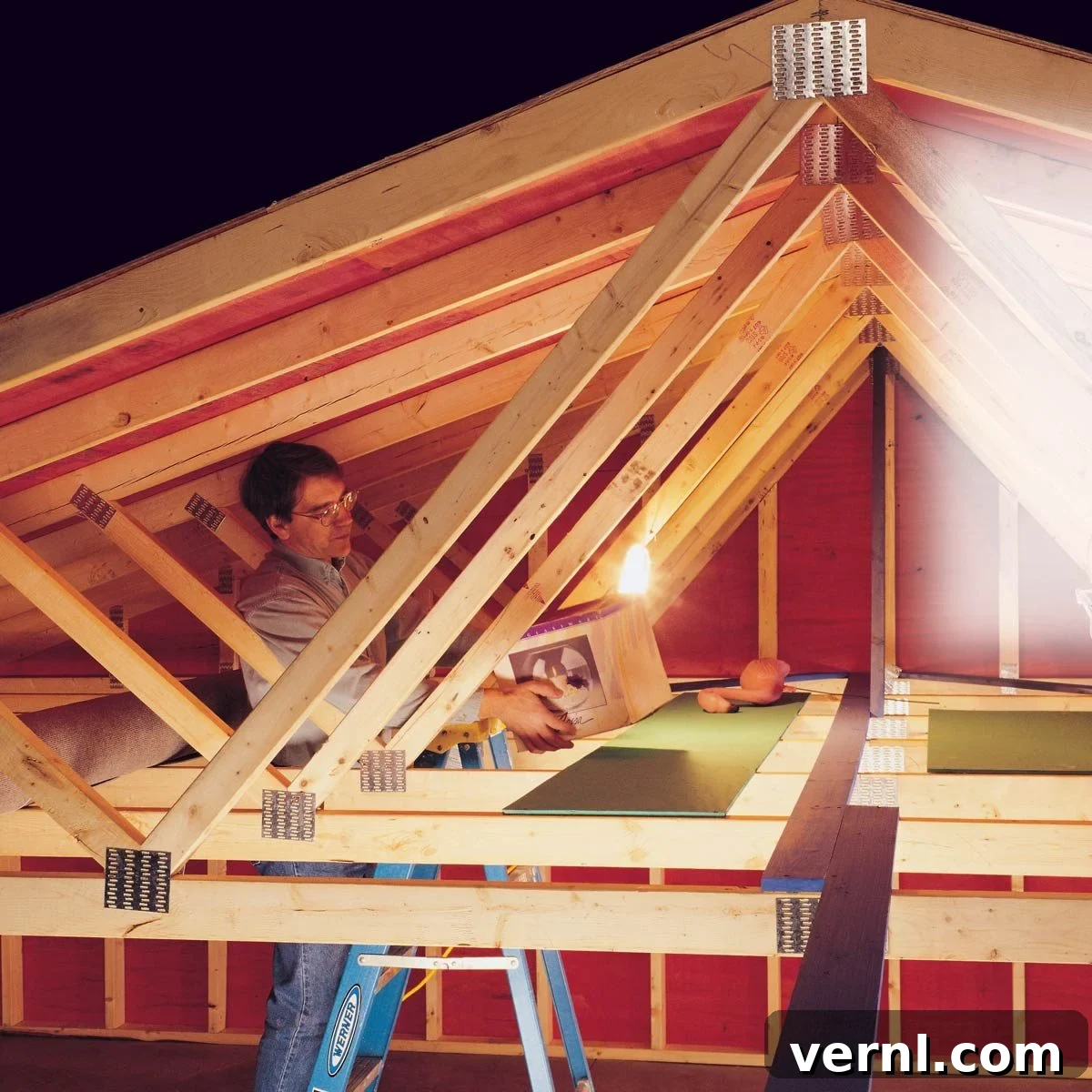
To put the 5 lbs/sq ft into perspective, consider laying a scrap of plywood or a similar rigid platform across the bottom chords of your trusses. For instance, a 2 x 4-foot piece of plywood covers 8 square feet. Using the 5 lbs/sq ft guideline, this small area could theoretically support about 40 pounds (8 sq ft * 5 lbs/sq ft). This capacity is strictly for lightweight, infrequently accessed items. It’s essential to:
- Distribute Weight Evenly: Avoid placing all the weight in one spot. Spread items out so the load is distributed over multiple truss chords.
- Use Platforms: Never place items directly on individual truss members, as this creates dangerous point loads. Always use a platform (like plywood) to bridge multiple chords.
- Keep Items Light: Think holiday decorations, empty coolers, or very light plastic storage bins. Heavy tools, paint cans, or boxes of books are definite no-gos.
Understanding Different Types of Roof Framing
The advice above primarily applies to manufactured roof trusses. These are pre-fabricated structural components assembled in a factory using wood members connected by metal “gusset plates.” They are engineered for specific spans and loads, and their structural integrity is highly dependent on their designed configuration. Any alteration or excessive loading can compromise their performance.
If your garage features traditional site-built roof framing, which consists of individual rafters and ceiling joists constructed on-site, your storage capacity might differ. Older homes, or those with custom designs, often utilize solid lumber for joists that may have been designed with a slightly higher inherent strength. However, this does not automatically mean they are suitable for heavy storage. The actual load-bearing capacity depends heavily on the size and spacing of the joists, the span they cover, and the overall design of the framing. In such cases, a professional assessment by a structural engineer is highly recommended before placing any significant weight overhead.
For those considering more substantial overhead storage, investigate whether your garage features “storage trusses” or “attic trusses.” These are specifically engineered with a larger bottom chord and often an open web configuration in the center, designed to create usable space (like a small attic) and support significant live loads. If you have these, they offer a much safer and more robust option for overhead storage, but they are generally less common in standard residential garages.
Safety First: Essential Considerations for Overhead Storage
Regardless of the type of framing you have, safety must always be the paramount concern when considering overhead storage. Beyond structural capacity, several factors can turn a seemingly harmless storage solution into a dangerous hazard:
1. Securely Fasten All Stored Items
This cannot be stressed enough. Items placed loosely on platforms or directly on truss members are prone to shifting. Vibrations from a garage door opener, passing vehicles, or even strong winds can cause items to shimmy, move, and eventually fall. A personal anecdote often cited by homeowners (and sometimes learned the hard way, like a dent in a pickup’s hood) highlights this risk. Use sturdy bins with secure lids, tie-down straps, or even built-in rails on platforms to ensure everything stays firmly in place. Imagine the potential damage to your car—or worse, injury to a person—if a heavy object comes crashing down.
2. Mind the Weight Distribution
As mentioned, concentrating weight in one small area can severely stress individual truss members or joists, leading to bowing, cracking, or even failure. Always spread the load over the largest possible area, ideally bridging multiple structural components with a robust platform. Never create “point loads” with heavy items directly on a single truss chord.
3. Choose the Right Items for Overhead Storage
Not everything is suitable for overhead storage. Prioritize lightweight, bulky, seasonal, or infrequently accessed items. Examples include:
- Holiday decorations
- Camping gear (empty tents, sleeping bags)
- Light plastic storage bins (not filled with heavy contents)
- Children’s toys (less frequently used)
- Empty luggage
Avoid storing heavy liquids, paint cans, hazardous materials, fragile items, or anything that could cause significant damage or injury if it fell. Also, consider the temperature fluctuations in a garage; some items might not be suitable for extreme heat or cold.
4. Ensure Safe Accessibility
If you’re storing items overhead, you’ll eventually need to retrieve them. Ensure you have a sturdy, reliable ladder and safe access to your storage area. Avoid precarious balancing acts or using unstable chairs. Consider how frequently you’ll need access; highly-used items should be stored at eye-level or on wall-mounted shelves for convenience and safety.
5. Regular Inspections
Periodically inspect your overhead storage area. Look for any signs of stress on the trusses or joists, such as sagging, bowing, cracks, or visible movement in the connections (gusset plates). If you notice anything concerning, immediately remove the stored items and consult a structural professional.
Safer and More Efficient Overhead Garage Storage Solutions
Given the strict limitations of standard roof trusses, many homeowners opt for purpose-built overhead garage storage solutions that are designed to safely utilize ceiling space without compromising structural integrity. These systems typically attach to the stronger ceiling joists or directly into structural blocking, distributing weight safely and effectively.
1. Dedicated Overhead Garage Storage Racks
These are perhaps the most popular and safest alternative. Overhead storage racks are heavy-duty metal shelving units that bolt securely into multiple ceiling joists. They are engineered to hold significant weight capacities, often ranging from 250 lbs to 600 lbs or more, depending on the size and design. They provide a stable, contained platform for boxes and bins, keeping items off the floor and out of the way. Ensure professional installation or follow manufacturer instructions meticulously for DIY setup to guarantee safety.
2. Wall-Mounted Shelving Systems
While not strictly “overhead,” robust wall-mounted shelving can free up floor space and reduce the temptation to store items on trusses. Heavy-duty steel or wood shelving units, securely anchored into wall studs, can bear substantial weight and keep items within easy reach.
3. Vertical Storage Solutions
Utilize the vertical space along walls with pegboards, slatwall systems, or specialized hooks for tools, bikes, and sports equipment. These systems keep items organized and off the floor, indirectly reducing the need for precarious overhead storage.
4. Cabinets and Lockers
For a clean, enclosed look, garage cabinets can store a wide array of items. Floor-standing or wall-mounted cabinets keep clutter out of sight and protect contents from dust and damage.
Conclusion: Prioritize Safety, Organize Smart
While the allure of using every available inch in your garage, including the overhead space, is understandable, it’s crucial to approach garage storage with a strong emphasis on safety and structural awareness. Standard roof trusses are not engineered for substantial storage loads, and overloading them can lead to serious consequences. The limited capacity of 5 lbs/sq ft on bottom chords is a very conservative guideline for only the lightest, most evenly distributed items in unfinished ceilings, and should be approached with extreme caution.
For homeowners serious about maximizing garage space while maintaining safety, investing in purpose-built overhead garage storage racks or robust wall-mounted systems is the smartest and most reliable solution. These products are designed to handle significant weight and integrate safely into your garage’s structure. Always consult a structural engineer if you have any doubts about your garage’s load-bearing capacity, especially for older homes or if you plan extensive modifications.
By understanding the limitations of your garage’s structure and opting for appropriate storage solutions, you can create an organized, efficient, and most importantly, safe garage environment for your tools, gear, and vehicles. Your garage deserves a smart storage strategy that protects both your belongings and your home’s integrity.