
Ghost Ants: Understanding, Identifying, and Eliminating These Elusive Pests
The name “ghost ant” might conjure images of something terrifying, but this intriguing insect earns its moniker from its almost translucent appearance, making it notoriously difficult to spot. Their light coloration, particularly of their legs and abdomen, allows them to seemingly vanish against certain backgrounds, giving them an almost ethereal quality.
These tiny pests are drawn to warmth and thrive in humid, tropical, and subtropical climates. While they are well-established outdoors in warmer regions, their remarkable adaptability allows them to infiltrate heated indoor environments even in colder parts of the world. Colonies of ghost ants have been documented thriving in diverse settings such as multi-story apartment buildings, commercial establishments, and even greenhouses as far north as Winnipeg, Manitoba, demonstrating their incredible resilience and ability to establish secondary nests away from their primary colonies.
In regions where ghost ants can comfortably survive outdoors, you’ll frequently find them congregating beneath leaves and other vegetation. This preference stems from their primary diet: honeydew. Aphids, mealybugs, and other sap-sucking insects excrete this sweet, sticky substance, which ghost ants avidly collect. Like many other ant species that covet honeydew, ghost ants engage in a fascinating symbiotic relationship with these insects, actively protecting them from predators in exchange for a consistent and reliable food source. This mutualistic behavior is key to understanding their foraging patterns and where to look for them.
What Exactly Are Ghost Ants?
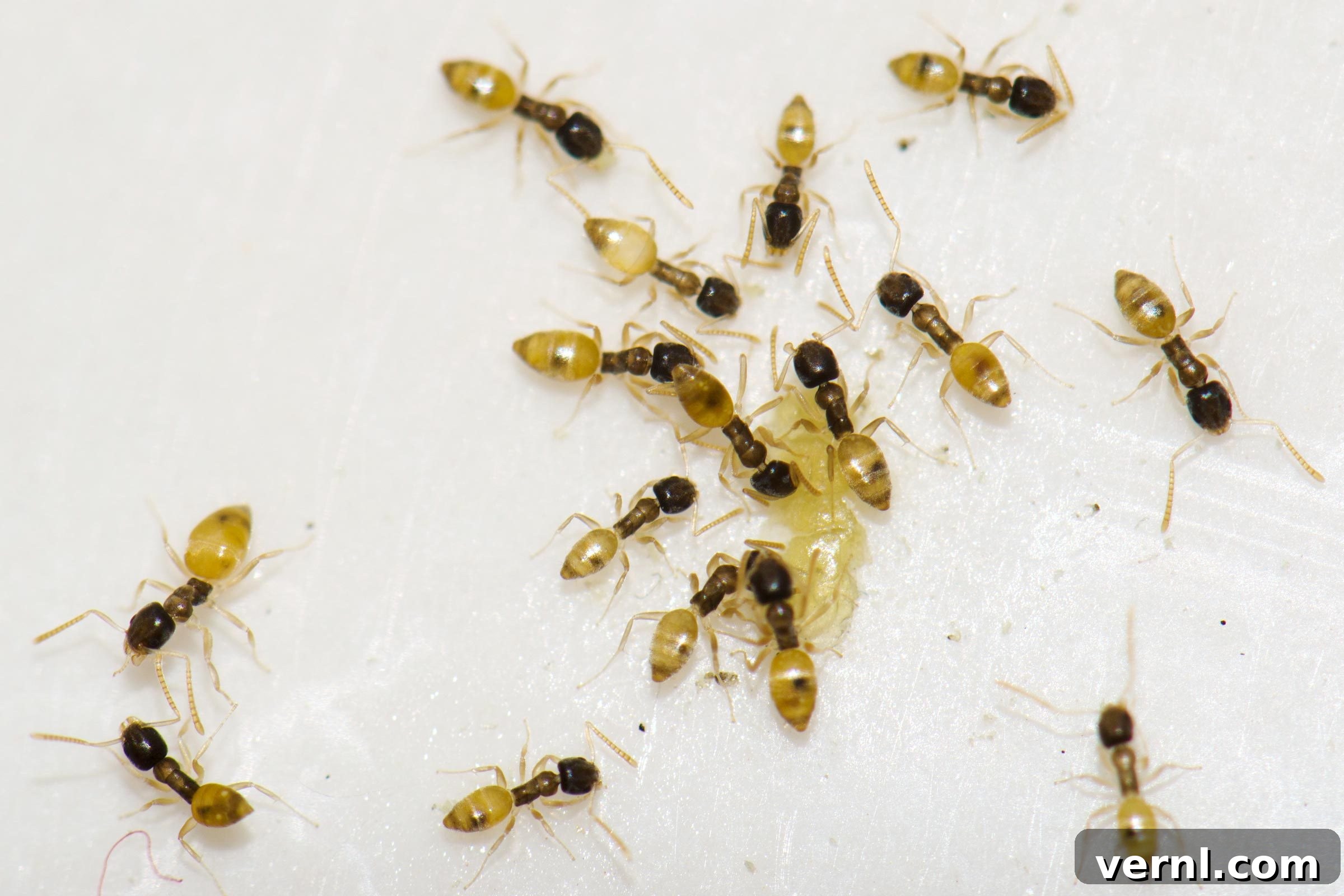
Ghost ants, scientifically known as Tapinoma melanocephalum, are among the smallest and most elusive ant species you might encounter. They are often referred to as “black-headed ants” due to their distinctive coloration. Typically, they measure less than one-sixteenth of an inch in length, making them incredibly inconspicuous. Their anatomy is striking: the head and thorax are a dark brown or black, providing a stark contrast to their gaster (the bulbous hind part of the body), legs, and antennae, which are an almost translucent milky white or pale yellow. This unique pigmentation is the source of their common name.
When observed on a light-colored surface, the pale gaster and legs become virtually invisible, giving the impression of a tiny, disembodied dark head scurrying about. Conversely, against a dark background, their dark head seems to disappear, leaving only a faint, moving white segment visible. This camouflage makes them particularly challenging to detect with the naked eye until an infestation becomes significant.
In North America, ghost ants have a strong foothold in warm, humid states like Florida and Hawaii, where outdoor colonies flourish year-round. They are also actively expanding their territory into other southern regions, including southern Texas. In these favorable climates, outdoor ghost ant colonies can be found in a variety of protected, moist locations: under rocks, logs, or other objects resting on the ground; beneath loose bark on trees; within dense clumps of damp grass; or even inside potted plants. A distinctive characteristic of ghost ant colonies is their multi-nesting (polydomous) nature. A single larger colony often fragments into multiple sub-colonies, each capable of supporting its own queen and functioning independently, yet remaining interconnected. This budding behavior makes eradication particularly challenging.
In colder northern climates where outdoor survival is not feasible for ghost ants, they become exclusively indoor pests. They seek out and establish nests in dark, protected, and consistently warm environments within structures. Common indoor nesting sites include wall voids, behind baseboards, beneath flooring, inside cabinetry, around electrical outlets, and within insulation. Their small size allows them to exploit even the tiniest cracks and crevices to gain entry and establish these hidden nests.
What Do Ghost Ants Eat? Their Diverse Diet Explained
While ghost ants are primarily known for their insatiable craving for honeydew, their diet is remarkably diverse, making them opportunistic foragers both indoors and outdoors. Outdoors, their preference for the sweet, sugary excretions of aphids and other sap-sucking insects drives their close association with plant life. This symbiotic relationship not only provides them with a vital food source but also helps sustain the populations of these plant pests. Ghost ants are diligent in guarding their “livestock,” actively warding off potential predators to ensure a steady supply of honeydew.
When foraging indoors, ghost ants will readily feast on virtually any sweet substance they can find. This includes spilled sugary drinks, crumbs from pastries, fruit juices, syrups, honey, and even pet food left exposed. Their small size allows them to easily access and contaminate open food containers and uncovered dishes left on countertops or tables. Beyond sweets, ghost ants also require protein in their diet, especially to support their queens and developing larvae. They will actively forage for and feed on both living and dead insects, including spiders, flies, and other small arthropods. This protein-rich diet, perhaps more in tune with their “creepy” name, underscores their scavenger nature and adaptability.
Signs of a Ghost Ant Infestation: What to Look For
Given their minute size and translucent appearance, a single ghost ant can be incredibly difficult to spot. However, when an infestation takes hold, their collective presence becomes far more obvious. Recognizing the early signs of a ghost ant infestation is crucial for timely intervention and effective control.
The most common and visible sign of an infestation is the presence of foraging trails. Ghost ants, like many other ant species, lay down pheromone trails to guide their nestmates to food sources. You will typically see these thin, often meandering lines of ants in areas where food is readily available, such as your kitchen countertops, pantry shelves, dining table, or even around pet food bowls. These trails might appear suddenly and can lead to tiny cracks or crevices in walls, floors, or cabinetry, indicating their hidden nest locations.
Another telltale sign, unique to ghost ants and a few other ant species, is a distinctive odor emitted when the ants are crushed. If you accidentally (or intentionally) crush one or several ghost ants, you may notice a faint but recognizable smell resembling rotten coconuts or a pungent, sickly-sweet scent. This peculiar aroma is a key diagnostic characteristic that can help confirm the presence of ghost ants, distinguishing them from other common household ants.
Beyond active trails, you might also find ghost ants exploring potted plants, bathroom sinks, or even around windows and door frames, especially if they are seeking moisture. Their activity tends to increase during warmer months or when indoor heating is in use, as they prefer consistently warm temperatures.
Are Ghost Ants Harmful? Assessing the Risks
While ghost ants are not known to transmit serious diseases to humans, their presence poses several health and sanitation concerns within a home. The primary harm associated with ghost ants stems from their ability to contaminate food.
As these ants forage for food and water, they can travel across various unsanitary surfaces. They might crawl out from hidden nests within wall voids, traverse areas beneath sinks or behind appliances, or even walk over surfaces contaminated with decaying organic matter, bacteria, or mold. If they then proceed to crawl over your open food items – a bowl of fruit, a plate of cookies, or uncovered leftovers – they can easily transfer these contaminants. Therefore, any food found swarming with ghost ants should be immediately discarded to prevent potential illness. Their foraging paths are unknown, and their tiny bodies can pick up microscopic pathogens from incredibly diverse and unsanitary environments.
A common concern with any ant species is whether they bite or sting. Ghost ants do not possess stingers. While they can deliver a very mild bite if they feel threatened or are handled carelessly, their mandibles are too small and weak to cause any significant pain or irritation to humans. Most people would likely not even notice a ghost ant bite, as it feels more like a tiny, fleeting pinch, if anything at all. Their primary defense mechanism is their elusive nature and ability to quickly retreat to their hidden nests.
How To Effectively Get Rid of Ghost Ants
Eliminating a ghost ant infestation can be particularly challenging due to their small size, multi-colony structure, and ability to nest in inaccessible areas. Their persistent foraging nature means they can find nourishment even in seemingly clean environments. A comprehensive approach combining baits, direct treatment, and sanitation is often required for successful eradication.
1. Baiting is Key: Store-bought ant baits containing a slow-acting insecticide, such as boric acid or fipronil, mixed into a sugary solution are highly effective against ghost ants. Products like Terro liquid ant baits are designed to be appealing to their sweet tooth. Worker ants will forage for the bait, consume it, and carry it back to their nests to share with the queen and other colony members. This delayed action allows the poison to spread throughout the colony, eventually eliminating the queen and preventing future reproduction. Be patient, as it may take several days or even weeks to see a significant reduction in ant activity, especially with multiple sub-colonies.
2. Direct Treatment for Immediate Relief: For immediate relief from active ant trails, an oil-based pest control product can be used. Sprays like Orange Guard, derived from citrus extracts, kill ants on contact by disrupting their respiratory systems. These types of sprays can also act as repellents, discouraging ants from returning to treated areas. Always choose products that are labeled safe for use around food preparation areas, especially if you’re spraying in the kitchen.
3. Dusting Hidden Nests: If you can identify the entry point of an ant trail leading into a wall void, behind a baseboard, or under a cabinet, targeted dusting can be very effective. Drill a small, discreet hole (if appropriate and safe) and apply insecticidal dusts like boric acid or diatomaceous earth. Boric acid is a stomach poison, while diatomaceous earth works by abrading the ant’s exoskeleton, causing dehydration. These dusts can spread through hidden galleries, reaching ants that baits might not. Always follow product instructions carefully when using dusts.
4. Physical Removal: For visible ants on surfaces, a quick and non-toxic solution is to use a vacuum cleaner equipped with a crevice tool. Simply vacuum up the ants and immediately dispose of the vacuum bag or empty the canister contents into a sealed outdoor trash can to prevent them from crawling back out.
How To Keep Ghost Ants Away: Long-Term Prevention
Preventing ghost ants from returning requires a multi-faceted approach focused on sanitation, sealing entry points, and natural repellents. Consistency is key to long-term success:
Natural Repellents for Ghost Ant Prevention:
Many safe, non-toxic household items can deter ghost ants. Create a simple spray by mixing one of the following ingredients with water in a spray bottle:
- Peppermint Oil: Ants intensely dislike the strong scent of peppermint. Mix 10-20 drops of peppermint essential oil per cup of water.
- White Vinegar: A solution of equal parts white vinegar and water can erase ant pheromone trails and repel new ants.
- Lemon Juice: The acidity of lemon juice disrupts ant trails and acts as a repellent. Use concentrated lemon juice mixed with water.
- Cinnamon: Ground cinnamon or cinnamon essential oil can be effective. Sprinkle ground cinnamon directly in ant pathways or make a spray with cinnamon essential oil.
- Cayenne or Black Pepper: Strong spices like cayenne or black pepper can irritate ants and deter them from crossing treated areas. Sprinkle directly or make a diluted spray.
Spray these solutions frequently around areas where you’ve observed active ant trails, potential entry points, and along baseboards. Reapply regularly, especially after cleaning, as the scent will dissipate over time.
Sanitation and Habitat Modification:
- Eliminate Food Sources: Keep your kitchen meticulously clean. Wipe up spills immediately, store food in airtight containers, and regularly empty trash cans. Don’t leave pet food out overnight.
- Control Moisture: Ghost ants are attracted to moisture. Fix leaky pipes, faucets, and ensure proper ventilation in bathrooms and basements. Dry up standing water immediately.
- Trim Vegetation: Regularly trim shrubs, trees, and other vegetation around the perimeter of your house. These can serve as bridges for ants to access your home or provide outdoor nesting sites. Ensure branches are not touching the siding or roof.
- Inspect Indoor Plants: Check indoor potted plants for signs of ant activity or the presence of aphids and mealybugs, which produce honeydew. Treat infested plants or consider moving them outdoors temporarily.
Sealing Entry Points:
Ghost ants are tiny and can enter through minuscule openings. Inspect your home thoroughly and seal any gaps or cracks you find:
- Caulking: Use caulk to seal gaps between baseboards and walls, around window and door frames, and where pipes enter walls.
- Weather Stripping: Ensure doors and windows have tight seals and good weather stripping.
- Screen Repair: Repair any tears or holes in window and door screens.
- Foundation Cracks: Seal cracks in your home’s foundation or exterior walls.
When to Call a Professional:
If despite all your efforts, the ghost ant infestation persists or is particularly widespread, it may be time to consult a professional pest control service. Licensed exterminators have access to more potent and specialized insecticidal baits and sprays that are not available to homeowners. They can also accurately identify the species of ant, locate hidden nests more effectively, and implement an integrated pest management plan tailored to your specific situation, ensuring a more thorough and long-lasting solution to your ghost ant problem.