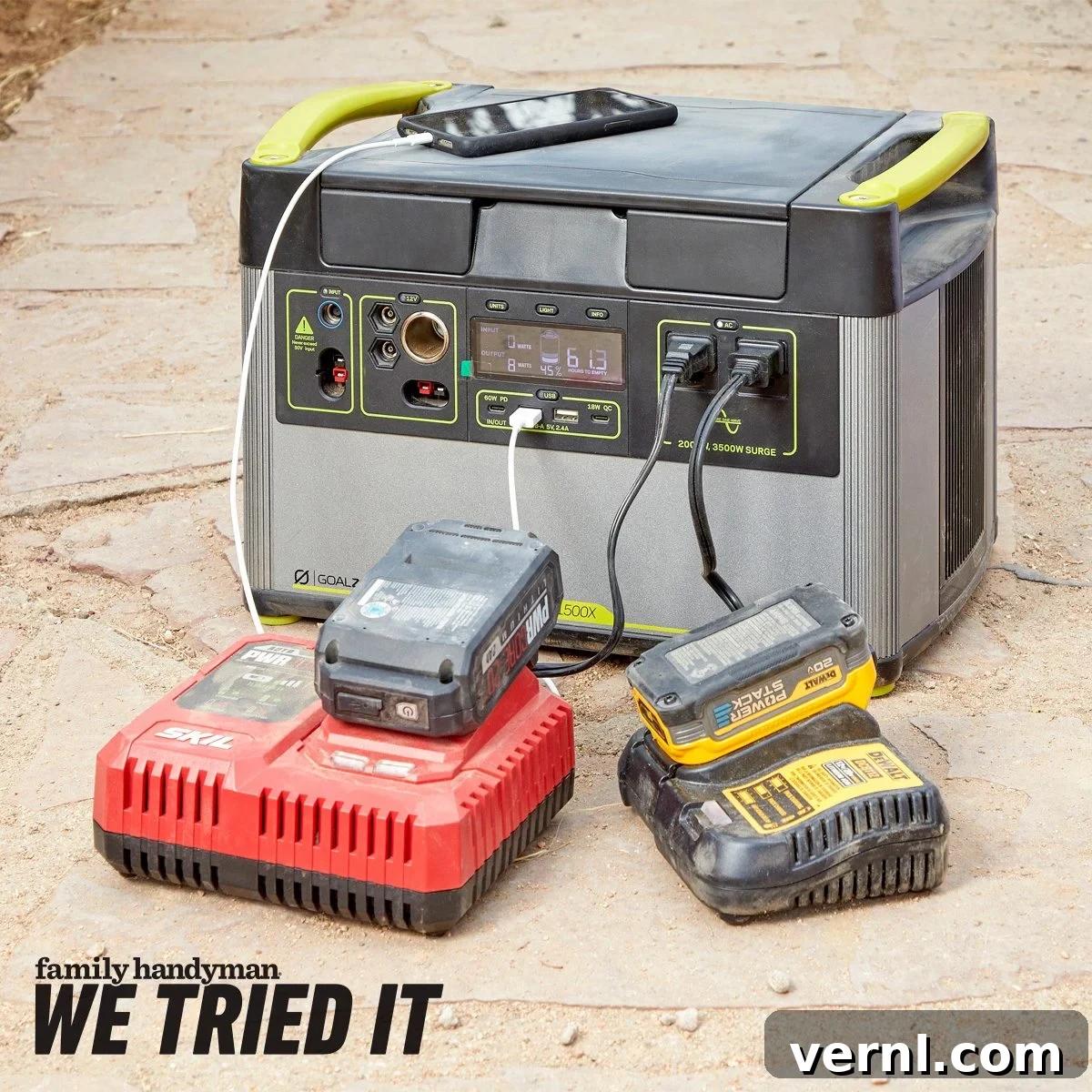
In an increasingly connected world, reliable power is no longer a luxury but a necessity. Whether you’re tackling a demanding jobsite project, embarking on an off-grid camping adventure, or preparing for unexpected home power outages, the need for a dependable energy source is paramount. Traditional gas generators, while powerful, often come with significant drawbacks like noise, fumes, and ongoing fuel costs. This has paved the way for a silent revolution in portable power: the rise of advanced battery-powered stations.
This comprehensive guide dives deep into the world of portable power solutions, helping you understand their capabilities, applications, and crucial features to consider before making a purchase. We’ll explore the distinctions between conventional generators and modern power stations, and put one of the market’s leading contenders, the GoalZero Yeti 1500X Portable Power Station, through a rigorous real-world test to assess its performance and value. From powering heavy-duty tools to keeping your essential devices charged, we’ll uncover what these innovative units can truly accomplish.
Understanding Portable Power Stations: Generators vs. Battery Banks
Before delving into our hands-on experience, it’s essential to clarify the terminology often used interchangeably in the power supply market. The terms “generator” and “power station” are frequently used, but they refer to fundamentally different technologies.
What is a Traditional Generator?
A traditional generator typically relies on an internal combustion engine, fueled by gasoline, diesel, or propane, to produce electricity. These machines are designed to generate power on demand. While highly effective for heavy-duty applications and extended runtimes, they are often characterized by significant noise output, exhaust fumes, and the need for regular maintenance and fuel replenishment. They are excellent for large construction sites or prolonged power outages where noise and emissions are less of a concern, but less suitable for quiet environments or enclosed spaces.
What is a Portable Power Station?
In contrast, a portable power station, often referred to as a “solar generator” (even without solar panels included), or simply a power inverter with a battery, doesn’t generate power in the traditional sense. Instead, it acts as a large, sophisticated battery bank. These devices primarily convert stored direct current (DC) power from integrated lithium-ion batteries into usable alternating current (AC) power, much like a standard wall outlet. They are characterized by:
- Silent Operation: As there’s no engine, they produce no noise or vibrations, making them perfect for indoor use, camping, or quiet jobsites.
- Zero Emissions: Running purely on stored electricity, they emit no harmful fumes, ensuring an environmentally friendly and safe operation in enclosed spaces.
- Versatile Recharging: Portable power stations offer multiple recharging options, including standard wall outlets, vehicle DC outlets, and, crucially, solar panels, providing robust off-grid capabilities.
- Clean Power Output: Many high-quality power stations, including the GoalZero Yeti 1500X, feature pure sine wave inverters. This technology produces a clean, stable power output that is safe for sensitive electronics such as laptops, medical devices (e.g., CPAP machines), and high-fidelity audio equipment, preventing damage that can occur from irregular power surges.
The GoalZero Yeti 1500X falls squarely into this category, representing the cutting edge of portable, battery-powered energy storage solutions designed for modern demands.
Meet the GoalZero Yeti 1500X Portable Power Station
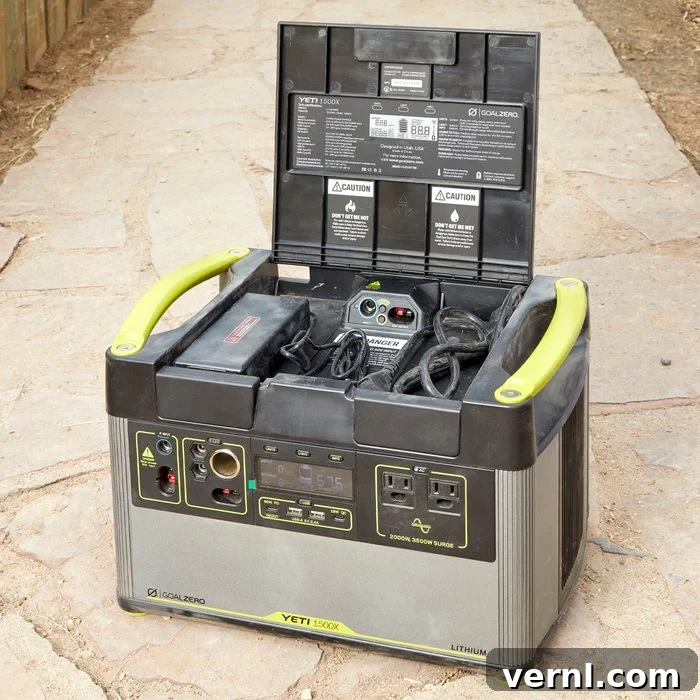
The GoalZero Yeti 1500X is engineered to deliver robust and reliable power wherever you need it, bridging the gap between convenience and formidable output. At its core, this unit is powered by advanced lithium-ion batteries, boasting an impressive 1,516 watt-hours (Wh) capacity. This substantial capacity translates into extended runtimes for a wide array of devices and tools, from small personal electronics to demanding construction equipment. The unit is equipped with a comprehensive suite of output ports, ensuring unmatched versatility: several 120V AC outlets for standard appliances, both USB-A and advanced USB-C Power Delivery (PD) ports for fast-charging modern devices, and a 12V car port for automotive accessories.
According to the manufacturer’s specifications, when plugged into a standard 120V outdoor wall outlet, the Yeti 1500X can achieve a full charge in approximately 14 hours. This efficient overnight charging capability ensures that the unit is ready to tackle a full day’s work or adventure by morning. The true strength of the Yeti 1500X, however, extends beyond its capacity; it lies in its intelligent power management system, durable construction, and user-centric design, all built to withstand the rigors of demanding environments and provide consistent performance.
Real-World Performance: Testing the Yeti 1500X on a New Mexico Jobsite
To truly gauge the capabilities of the GoalZero Yeti 1500X, we subjected it to a rigorous, hands-on evaluation during a challenging two-week backyard construction project. Located in the arid and often unpredictable high-desert environment of New Mexico, this jobsite presented a common yet critical power dilemma: severely limited access to electricity. We had only a single wall outlet available, an insufficient source for the multiple power-hungry operations required.
Our daily power demands were as diverse as they were significant. We constantly needed to recharge numerous battery packs for cordless power tools, operate essential plug-in equipment such as table saws and miter saws, run lighting equipment for early mornings and late evenings, and keep personal communication devices like cell phones and laptops powered. This single wall outlet simply could not handle the concurrent load and varying power requirements, instantly making the Yeti 1500X an indispensable asset for maintaining productivity.
Powering Heavy-Duty Tools with Confidence
One of the most impressive demonstrations of the Yeti 1500X’s prowess came when we needed to power a DeWalt 10-inch jobsite table saw. This particular saw draws a substantial 1,800 watts, a figure that initially led one experienced builder to express significant skepticism, declaring, “No way.” However, to his genuine surprise and the team’s collective relief, the GoalZero Yeti 1500X powered the saw flawlessly, allowing us to rip through several sheets of oriented strand board (OSB) without a single hiccup. This real-world test unequivocally proved that the 1500X isn’t merely for small electronics; it’s a legitimate and reliable power source for professional-grade, high-draw tools, making it an invaluable companion for any contractor or serious DIY enthusiast working remotely or in areas with compromised grid access.
Supporting Sensitive Electronics and Essential Devices
Beyond the brute force required for power tools, the Yeti 1500X also excelled at powering more sensitive and delicate equipment. Our on-site photographer, for instance, required consistent and ample power for a photography strobe power pack. Despite its variable output and high initial draw characteristic of professional lighting gear, the GoalZero delivered steadfast energy, ensuring flawless operation of his strobes and flash throughout the shoot. This capability highlights the unit’s pure sine wave inverter, which provides clean power output, crucial for protecting delicate and expensive electronics from potential damage. Of course, the convenience of charging personal devices cannot be overstated. With multiple USB outlets, keeping our cell phones charged and laptops running was effortless, even if it didn’t push the unit to its power limits. This often-overlooked feature significantly enhances productivity, communication, and safety on remote sites by ensuring vital devices remain operational.
Durability in Demanding Conditions
The New Mexico jobsite was far from a pristine laboratory environment. For two solid weeks, the GoalZero Yeti 1500X endured constant exposure to harsh elements: pervasive dust, accumulating dirt, and even unexpected snowfall, subjecting it to the typical bumps and knocks that are part and parcel of a busy construction environment. Yet, through it all, its performance never wavered. This remarkable resilience speaks volumes about GoalZero’s unwavering commitment to building rugged, reliable products capable of withstanding extreme conditions. It instills confidence, positioning the Yeti 1500X as a trustworthy investment for outdoor professionals, emergency preparedness, and intrepid adventurers alike.
Efficient Power Management for Sustained Operation
During our 14-day project, we commenced each day with the Yeti 1500X at a full charge. On days characterized by particularly heavy tool usage and continuous operation, the unit’s capacity would typically drop to around 30 percent by evening. We then consistently plugged it in overnight – a routine we sometimes admittedly forgot, though the unit’s remaining charge often surprised us, demonstrating its impressive hold. When recharged, it would consistently reach near 100 percent capacity, primed and ready for the next day’s strenuous demands. This reliable cycle of heavy use followed by efficient recharging demonstrated its practical utility for sustained operations, minimizing downtime and maximizing productivity on challenging projects.
The GoalZero Yeti 1500X: Features, Verdict, and Long-Term Value
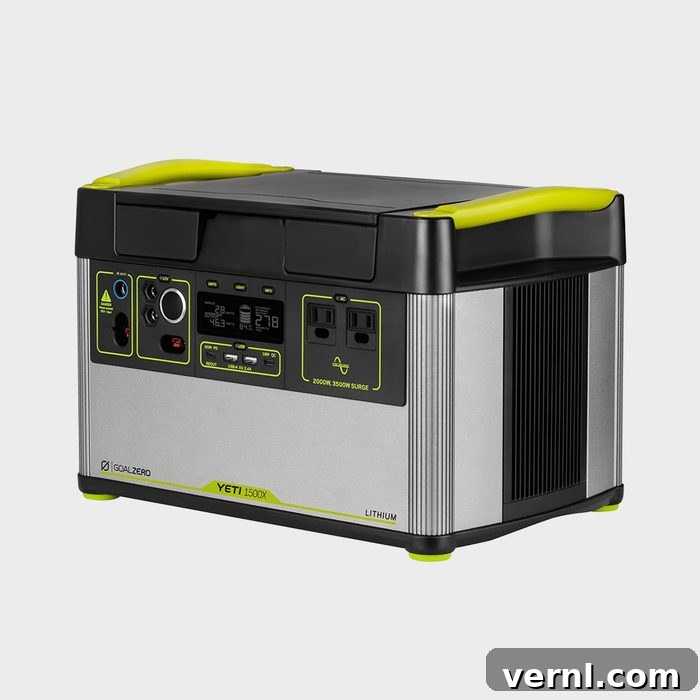
Beyond its impressive raw power delivery and robust construction, the GoalZero Yeti 1500X offers a suite of intelligent features designed to significantly enhance user experience and control. The integrated LED screen provides a wealth of real-time data at a glance, including precise input and output wattage, remaining battery capacity, and estimated run-time for connected devices. This detailed information empowers users to monitor their power consumption accurately and manage their energy resources efficiently. Furthermore, the unit can be seamlessly paired with a dedicated cell phone app, offering remote monitoring capabilities and individual outlet control – a significant convenience for managing power from a distance, optimizing energy usage, or simply checking status without being physically next to the unit.
Weighing approximately 45 lbs. and retailing for around $2,000, the GoalZero Yeti 1500X is undeniably a heavyweight contender in its category, both literally in terms of its solid build and figuratively in its performance capabilities. However, after extensive, real-world use on a demanding jobsite, its consistent performance, unwavering reliability, and sheer versatility unequivocally proved its worth. It’s an investment that pays significant dividends in enhanced productivity, invaluable peace of mind during critical situations, and unparalleled access to clean, quiet power wherever you need it most. For those who demand the best in portable energy, the Yeti 1500X justifies its price point through its robust capabilities and enduring quality.
Versatile Applications: Powering Life Beyond the Jobsite
While our detailed test focused on a rigorous construction environment, the applications for a high-capacity portable power station like the GoalZero Yeti 1500X extend far beyond professional worksites. Its exceptional capabilities make it an ideal and highly adaptable solution for a multitude of scenarios, providing critical power when and where it’s needed:
- Emergency Home Backup: During unexpected power outages caused by severe weather or grid failures, a portable power station can keep essential home appliances running. Imagine your refrigerator preserving perishable food, your internet modem keeping you connected to vital information, and lights illuminating your home for hours. This provides crucial safety, comfort, and a sense of preparedness when the unexpected happens, turning potential crises into manageable inconveniences.
- Outdoor Adventures & Camping: For passionate campers, RV enthusiasts, overlanders, or even those enjoying simple backyard glamping, the Yeti 1500X transforms the outdoor experience. It can effortlessly power portable refrigerators to keep food fresh, lights to brighten your campsite, fans for comfort, stereos for entertainment, and even crucial medical devices like CPAP machines. With the optional solar charging capability, you can virtually stay powered indefinitely, enabling true off-grid freedom and extended adventures.
- DIY Projects & Remote Work: Are you tackling a shed build in the backyard where no grid outlet exists? Or perhaps you’re working remotely from a secluded cabin, a park, or a mobile office? The Yeti 1500X provides the indispensable freedom to operate power tools, charge laptops, run monitors, and power other essential equipment wherever your projects or work takes you, without being tethered to a wall socket.
- Tailgating & Outdoor Events: Elevate your game day party, outdoor festival, or family gathering. Power up your electric grill, blender for refreshing drinks, portable speakers for music, and even entertainment systems for the ultimate outdoor event without the intrusive noise, fumes, or constant refueling required by gas generators.
Choosing the Right Portable Power Station: A Comprehensive Buying Guide
Selecting the perfect portable power station requires a careful evaluation of your specific power needs and a thorough understanding of key technical specifications. Here’s a detailed breakdown of what you should consider to make an informed decision:
1. Power Output (Watts – W) and Battery Capacity (Watt-Hours – Wh)
These are perhaps the most critical metrics when assessing any portable power solution. The power output, typically measured in watts (W), indicates how much power the station can deliver to devices at any given moment. This rating is frequently integrated into the unit’s name or model number, such as the “1500” in GoalZero Yeti 1500X.
- Continuous Watts: This figure represents the sustained power output the station can handle over an extended period. For instance, if a power station is rated at 1,500 continuous watts, it can reliably power devices with a combined wattage of up to 1,500W simultaneously.
- Surge (Peak) Watts: Many electric motors, commonly found in appliances like refrigerators, microwaves, pumps, and power tools, draw significantly more power at startup (known as surge power) than they do during continuous operation (running power). For example, a refrigerator might have a running wattage of 800W but require a starting (surge) wattage of 2,500W. It is crucial to ensure that your chosen power station has a surge wattage capacity that meets or exceeds the highest startup requirement of your intended devices to prevent tripping or damage.
It’s always a good practice to understand watts, meticulously calculate the total anticipated power draw of all devices you plan to connect, and then add a buffer. It’s highly advisable to purchase a power station with a slightly higher rating than you initially think you need. Some units may only provide power at about 85% of their stated total rating under sustained, heavy load, so this extra capacity provides a crucial safety margin and ensures optimal performance.
Battery Capacity (Watt-Hours – Wh): This metric defines precisely how much energy the battery can store and directly correlates to how long a device can run. A 1,516 Wh capacity means the unit can theoretically deliver 1516 watts for one hour, or 151.6 watts for ten hours, and so on. Understanding your devices’ average wattage and estimating their expected usage time will enable you to determine the necessary Wh capacity for your specific applications, ensuring your power lasts as long as you need it.
2. Output Port Options for Maximum Compatibility
The versatility of a power station is significantly enhanced by its array of output ports, allowing it to connect to a wide range of devices. Carefully consider what devices you plan to power:
- AC Outlets (120V): Essential for powering standard household appliances, power tools, and any device that typically plugs into a wall socket. Check the number of outlets and if they are grounded (3-prong).
- USB Ports: Crucial for modern electronics. Look for both traditional USB-A ports and, importantly, USB-C ports with Power Delivery (PD) capability, which offers faster and more efficient charging for laptops, tablets, and contemporary smartphones.
- DC Outlets (12V): Often provided in the form of a car cigarette lighter socket, these are incredibly useful for running car refrigerators, portable air compressors, or other 12V automotive accessories.
- Specialized Ports: Some advanced units may offer Anderson Powerpole or other high-current DC outputs for specific applications like HAM radios or direct solar panel connections.
3. Input/Recharging Options for Uninterrupted Power
How you recharge your portable power station is just as important as how it discharges, influencing its overall utility and readiness. Look for multiple input options to maximize flexibility:
- AC Wall Charging: This is the most common, convenient, and often fastest way to recharge your power station from any standard wall outlet. Check the charging speed and the type of charger included.
- Solar Charging: A game-changer for off-grid use and sustainable power. Ensure the power station is compatible with a range of solar panels (often sold separately) and has an efficient built-in charge controller (MPPT is preferred). This allows for continuous, renewable power generation wherever sunlight is available.
- Vehicle Charging (12V Car Port): Provides a highly convenient method for recharging the unit while you’re driving between locations, ensuring it’s topped up on the go.
4. Battery Chemistry: Performance and Longevity
Most modern portable power stations utilize advanced lithium-ion batteries due to their high energy density and relatively lightweight nature. While the GoalZero Yeti 1500X uses a specific high-performance Li-ion variant, some newer models are increasingly incorporating Lithium Iron Phosphate (LiFePO4) batteries. LiFePO4 offers a significantly longer cycle life (meaning more recharges over its lifespan) and enhanced safety features, though they might come at a slightly higher cost or be slightly larger for a given energy capacity.
5. Portability, Durability, and Thoughtful Design
Consider the physical attributes of the power station based on your primary intended use case:
- Size and Weight: If you primarily need a generator for emergency home backup, extreme portability might be less of a concern, allowing you to opt for a larger, more powerful unit. However, for job sites, camping, tailgating, or frequent travel, a crucial balance of size, weight, and power capacity is paramount. Look for robust, ergonomic handles and a compact design that fits your storage and transport needs.
- Ruggedness: For outdoor or jobsite use, robust construction, impact resistance, and potentially some level of ingress protection (IP rating for dust/water resistance) are vital. A durable exterior can significantly extend the life of your investment.
- Display & App: A clear, intuitive, and informative display, coupled with a functional companion app (like the one available for the Yeti 1500X), can significantly improve the overall user experience by providing easy monitoring and control.
6. Safety Features & Brand Reputation
Prioritize safety above all else. Reputable brands rigorously integrate multiple protection mechanisms into their power stations. These include safeguards against overcharge, over-discharge, over-current, short circuits, and extreme temperatures. A strong warranty and responsive customer support are also crucial indicators of a reliable product and a trustworthy brand, providing peace of mind for your investment.
Where to Buy the GoalZero Yeti 1500X
The GoalZero Yeti 1500X Portable Power Station, a benchmark in reliable and versatile portable energy, is readily available through several reputable channels, ensuring you can easily acquire this powerful unit. You can find it on major online retail platforms such as Amazon, offering convenient delivery options directly to your doorstep. Additionally, it can be purchased directly from the official GoalZero website, where you might also discover a full range of complementary accessories, including various solar panels and protective carrying cases. Some specialized home improvement stores or outdoor equipment retailers may also stock the unit, providing the opportunity for in-person viewing and expert advice from sales associates.
Shop Now on Amazon