
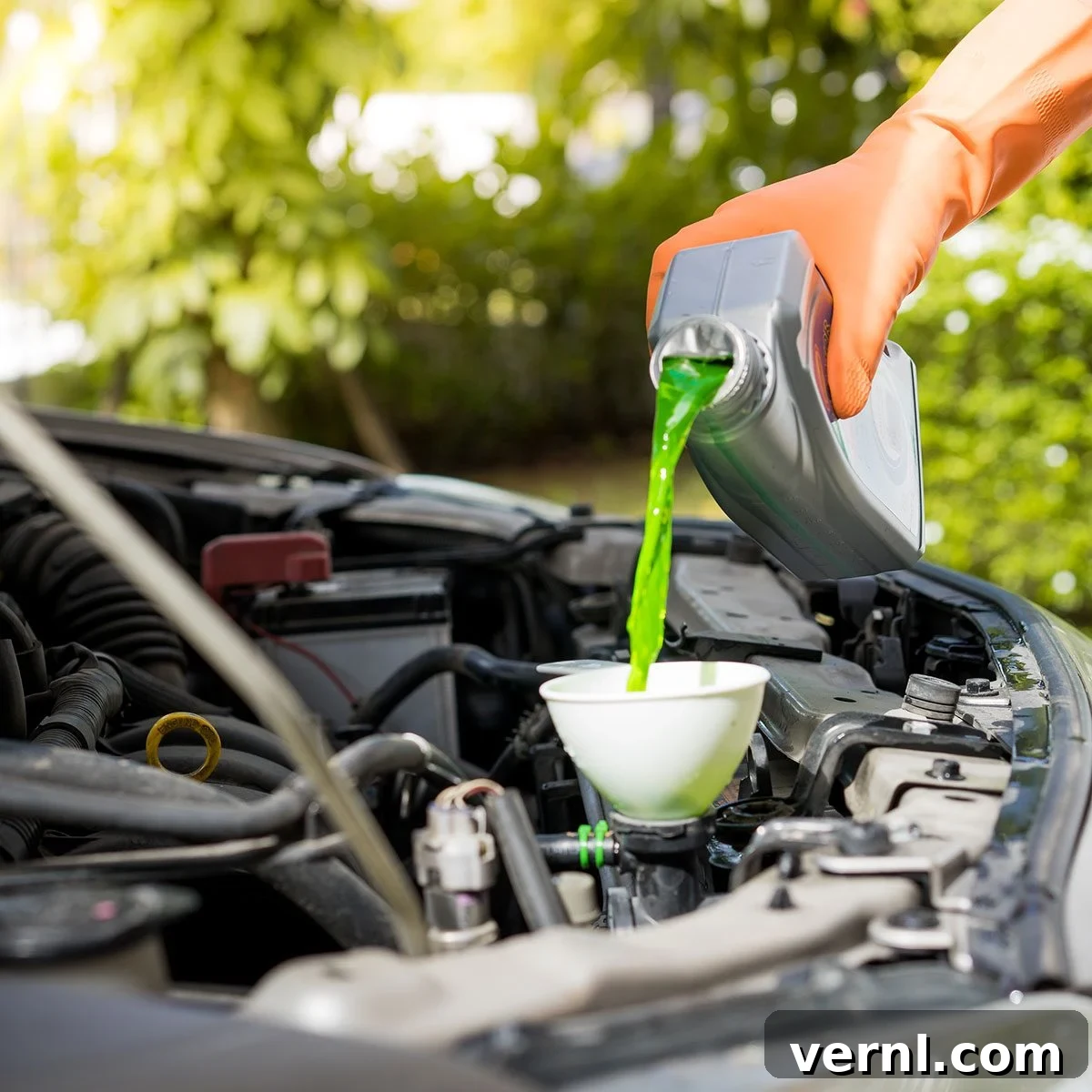
Decoding Engine Coolant Colors: What Your Antifreeze is Telling You
Engine coolant, often referred to as antifreeze, is an indispensable fluid for the health and longevity of your vehicle’s engine. It plays a dual role: preventing the water in your cooling system from freezing in cold temperatures and boiling over in extreme heat. But have you ever noticed that coolant comes in a rainbow of colors—most commonly green and orange? While these hues once served as clear indicators of a coolant’s chemical composition, the modern automotive world has introduced complexities that blur these lines. Understanding the nuances behind coolant colors and technologies is crucial for proper vehicle maintenance.
The Indispensable Role of Engine Coolant (Antifreeze)
At its core, engine coolant is designed to regulate the operating temperature of your engine. As an engine runs, it generates an immense amount of heat. Without an effective cooling system, this heat can quickly lead to overheating, causing severe damage to critical engine components. Coolant, a mixture of ethylene glycol or propylene glycol and water, circulates through the engine block, cylinder head, and radiator, absorbing excess heat and then dissipating it into the atmosphere. Beyond temperature regulation, coolant also contains vital additives that protect the cooling system from corrosion, rust, and cavitation.
The choice of coolant isn’t merely about its primary function; it’s also about compatibility with the materials used in your vehicle’s cooling system, which have evolved significantly over the decades. This evolution is precisely why different coolant formulas, and consequently, different colors, came into existence.
Why Coolant Comes in Different Colors: A Historical Perspective
The color of engine coolant historically served as a quick visual identifier for its chemical makeup and the type of corrosion inhibitors it contained. In simpler times, a specific color almost always indicated a specific technology. However, as coolant formulas have developed over the years and new technologies have been introduced to the market, the clearly defined differences between coolant colors have become significantly blurred. Manufacturers can now dye different types of coolants various colors, leading to potential confusion if one relies solely on visual cues.
This is why the most critical piece of advice for any vehicle owner is to always consult your vehicle’s owner’s manual. The manual will specify the exact type of coolant required for your engine, usually by referring to a specific standard or chemical composition. Once you have this information, match it to what’s on the label of the coolant bottle, not just its color. If you need further clarification or help deciding on a coolant, contacting the dealership where you purchased the vehicle or a trusted mechanic is always recommended.
Green Antifreeze: The Traditional Inorganic Additive Technology (IAT)
If you encounter green antifreeze, it most likely signifies an older formula based on what is known as Inorganic Additive Technology (IAT). This traditional coolant technology has been the standard for many decades and remains relevant for a significant number of vehicles on the road.
What is IAT Coolant?
IAT coolants are characterized by their robust blend of inorganic salts, primarily silicates and phosphates. These additives form a protective layer on the internal surfaces of the cooling system components, acting as a sacrificial barrier against corrosion. This protective layer is particularly effective for vehicles built with traditional materials such as steel, iron, copper, and brass, which were prevalent in older vehicle designs.
Designed for Older Vehicles
Green IAT antifreeze formulas were specifically engineered to prevent the corrosion of these metal components. Vehicles manufactured before the year 2000 typically fall into this category, as their cooling systems often featured a higher concentration of steel and copper parts compared to modern vehicles. The strong anti-corrosion properties of silicates and phosphates are crucial for these systems to prevent rust and degradation.
Maintenance and Service Life
While effective, the protective additives in IAT coolants tend to deplete over time. The silicates can also settle out of the solution, potentially leading to abrasive wear or blockages if not maintained. For this reason, most manufacturers recommend changing IAT antifreeze every 36,000 miles or every three years, whichever comes first. Regular flushing and refilling with fresh IAT coolant are essential to ensure continuous protection for your engine’s cooling system. Here’s a guide to flushing antifreeze from your cooling system.
Orange Antifreeze: Embracing Modern Organic Acid Technology (OAT)
The appearance of orange antifreeze typically indicates a more modern formula rooted in Organic Acid Technologies (OAT). This technology emerged as vehicle manufacturing evolved and new materials were integrated into cooling systems.
What is OAT Coolant?
Towards the end of the 1990s and into the 2000s, vehicle manufacturers began incorporating more lightweight and durable materials like aluminum and nylon into cooling system components. These new materials, while beneficial for overall vehicle performance and fuel efficiency, reacted differently to the traditional inorganic additives found in green IAT coolants. The silicates and phosphates in IAT coolants, while excellent for traditional metals, could potentially harm aluminum components or become less effective in preventing corrosion in these newer systems.
OAT coolants utilize organic acids, primarily carboxylates, as their main corrosion inhibitors. Instead of forming a thick protective layer like IAT coolants, OAT coolants create a thinner, more stable protective film directly on the metal surfaces where corrosion protection is needed. This targeted approach results in several advantages.
Designed for Modern Materials
The updated formula of orange OAT coolant was developed specifically to combat corrosion in these new materials, particularly aluminum, without causing issues. OAT coolants are designed to provide long-lasting, effective protection for modern cooling systems that often feature extensive use of aluminum radiators, heater cores, and engine components, along with various plastic and rubber hoses.
Extended Service Intervals
One of the most significant benefits of OAT antifreeze is its extended service life. Because organic acid inhibitors deplete much slower than their inorganic counterparts, OAT coolants can provide protection for a considerably longer period. While IAT coolant typically requires changing every 36,000 miles or three years, OAT antifreeze is designed to last much longer, often up to 100,000 to 150,000 miles or five years. Despite this extended life, it’s still a good idea to have your orange coolant checked about every 50,000 miles or per your manufacturer’s recommendations to ensure its integrity. Want to test your coolant? Here’s how to do it with a multimeter.
Beyond Green and Orange: The Evolving Landscape of Coolant Technologies
While green IAT and orange OAT represent two foundational coolant technologies, the market has further diversified. You might encounter coolants in pink, blue, red, or even yellow/gold. These often signify Hybrid Organic Acid Technology (HOAT), Phosphated Organic Acid Technology (P-OAT), or Silicated Organic Acid Technology (SOAT). HOAT coolants, for example, combine the best features of both IAT and OAT, using a smaller amount of silicates alongside organic acids for improved long-term protection, especially against aluminum corrosion. Each of these variations is tailored to specific engine designs and material compositions.
This proliferation of coolant types underscores why relying solely on color can be misleading. A pink coolant from one manufacturer might be a different chemical formulation than a pink coolant from another. Therefore, the owner’s manual remains your ultimate authority, guiding you to the precise specifications (e.g., VW G12, Ford WSS-M97B44-D, Dex-Cool).
The Perils of Mixing Different Colors and Types of Antifreeze
It’s never a good idea to mix two different colors or types of antifreeze. While mixing coolants won’t typically cause any immediate dangerous reactions or explosions, the long-term consequences can be detrimental to your cooling system and engine. The seemingly benign act of mixing can lead to a sludgy chemical mixture that fails to perform its essential functions.
Why Mixing is Harmful:
- Additive Incompatibility: The primary issue lies in the incompatibility of the corrosion inhibitor packages. IAT coolants rely on silicates and phosphates, while OAT coolants use organic acids. When these different chemical formulations are mixed, they can react negatively, causing the additives to neutralize each other or precipitate out of the solution.
- Sludge and Gel Formation: This chemical reaction often results in the formation of a thick, gelatinous sludge or solid particles. This “sludge” can accumulate in critical areas of the cooling system.
- Reduced Heat Transfer: A thick or sludgy coolant loses its ability to flow efficiently and transfer heat effectively. This drastically reduces the cooling system’s capacity, increasing the risk of engine overheating.
- Clogging and Blockages: The precipitated solids and sludge can clog the narrow passages of the radiator, heater core, and water pump. Blockages restrict coolant flow, leading to localized hot spots and potential system failure.
- Corrosion and Damage: When the protective additives are compromised, the cooling system components become vulnerable to corrosion, pitting, and cavitation. This can accelerate the degradation of the radiator, water pump, thermostat, and even engine gaskets.
- Water Pump Failure: Sludge can put undue stress on the water pump, causing premature wear and failure.
The bottom line is simple: do not mix different colors or types of antifreeze. If you’re unsure what type of coolant is in your vehicle, or if you need to top off but don’t have the exact match, it’s best to consult a professional or flush the system and refill it with the correct coolant.
Frequently Asked Questions About Engine Coolant
Can I use a universal coolant if I don’t know which antifreeze is required?
The use of “universal” coolants can be a tempting solution when you’re uncertain about your vehicle’s specific requirements, but caution is advised. While many universal coolants claim compatibility with a wide range of systems, they are not a foolproof substitute for manufacturer-specified fluids. Always check your owner’s manual first to ensure any universal coolant is explicitly approved or to confirm the required specifications.
John Vorisek, founder at Repair Surge, advises, “Universal coolants should only be used temporarily because engines are designed to use specific types of coolant. Each type has its own chemical makeup, and long-term use of a universal coolant can damage the internal parts of the engine.” These universal formulations often use a blend of technologies, typically hybrid organic acid technology (HOAT), designed to be less reactive with various systems. However, this generalized approach may not offer the optimal protection tailored to your engine’s specific materials and design.
Tim Rodifer, technical director for Mr. Transmission, echoes this warning: “While universal coolants are designed to mix with most types, they aren’t compatible with every system. Using the wrong antifreeze can cause corrosion and scaling in the radiator, potentially leading to overheating and damage to other components like the heater core.” In an emergency, a universal coolant might get you to a service center, but it should not be considered a permanent solution. For optimal engine health and longevity, always adhere to the coolant type recommended by your vehicle manufacturer.
How can I tell if my antifreeze is old or degraded?
Regular visual inspections and occasional testing can help you determine if your antifreeze is old or degraded. Ignoring these signs can lead to reduced cooling efficiency and potential engine damage.
Visual Signs of Degradation:
- Color Change: Fresh antifreeze typically has a vibrant, clear color (green, pink, orange, etc.) with a fluorescent look. As it degrades, it may become dull, brownish, rusty, or even develop a murky appearance. A brownish hue often indicates rust or corrosion within the system.
- Cloudy or Murky Texture: If your coolant looks cloudy, murky, or less transparent than usual, it’s a strong indicator of degradation or contamination.
- Particles or Sediment: The presence of solid particles, flakes, or sediment floating in the coolant reservoir is a clear sign of internal corrosion, breakdown of additives, or material deterioration within the cooling system.
- Slime or Oil Sheen: A slimy texture or an oily film on the surface of the coolant can indicate a more serious issue, such as a blown head gasket allowing oil to mix with the coolant.
Olfactory Cues:
- Burnt Smell: A distinct burnt smell coming from your coolant can signify overheating or severe degradation of the fluid.
- Loss of Sweet Smell: Fresh coolant often has a somewhat sweet odor (though you should never taste it, as it’s toxic). Degraded antifreeze can lose this characteristic smell or develop an acrid scent.
Rodifer notes, “Fresh antifreeze is usually bright green, pink, or orange with a fluorescent look. Degraded antifreeze can also lose its sweet smell, fail a hydrometer test, or contribute to overheating issues.”
Testing Methods:
- Test Kit: Over-the-counter coolant test kits, including hydrometers or refractometers, can measure the coolant’s freezing and boiling points, indicating its concentration and effectiveness. pH strips can also assess its acidity, which rises as additives deplete.
- Multimeter Test: As mentioned, a multimeter can be used to check for electrical current in the coolant, which can indicate corrosion potential.
Beyond visual and olfactory cues, it’s crucial to check your owner’s manual to see if you’re overdue for a coolant change based on mileage or time intervals.
“Keep in mind the intervals manufacturers recommend should be cut in half based on what is called severe driving conditions,” says Frank Scandura, owner of Frank’s European Service. “Most manufacturers will recommend service intervals at normal driving conditions, when in reality most people drive under severe operating conditions.” Severe driving conditions include frequent short trips, driving in extreme temperatures, heavy stop-and-go traffic, towing heavy loads, or driving on dusty roads. If your driving habits align with these conditions, proactive coolant maintenance is even more critical.
About the Automotive Experts
- John Vorisek is the founder of Repair Surge, which he established in 2003. His company is dedicated to providing factory-authorized automotive service data to empower both vehicle owners and independent auto repair facilities in diagnosing and addressing vehicle issues effectively.
- Tim Rodifer serves as the technical director for the Moran Family of automotive franchisors, a group that includes prominent names like Mr. Transmission and Milex Complete Auto Care. He brings over two decades of extensive experience in the automotive industry to his role.
- Frank Scandura is the owner of Frank’s European Service, a respected automotive repair shop located in Las Vegas, Nevada. With an impressive 45 years of automotive experience, Frank has also contributed his expertise by writing dozens of articles for AutoTechIQ, a valuable resource designed to educate car owners on various automotive issues and help them find trustworthy repair shops nearby.
Feeling intimidated by automotive work? Understanding your coolant is just one step. Here are 12 great tips for DIY mechanics to help you tackle more tasks with confidence.
Conclusion: Prioritizing Correct Coolant for Engine Health
While the vibrant colors of engine coolant might catch your eye, remember that they are no longer the definitive guide to choosing the right fluid for your vehicle. The evolution of engine materials and coolant technologies has created a diverse landscape where specificity triumphs over generalized assumptions. Green IAT and orange OAT coolants represent distinct chemical compositions tailored to different eras of vehicle manufacturing, each offering unique corrosion protection mechanisms and service intervals.
The cardinal rule of coolant maintenance is to always consult your vehicle’s owner’s manual and match the coolant label’s specifications precisely. Mixing incompatible coolants can lead to significant problems, from reduced cooling efficiency and sludge formation to severe engine damage. Likewise, while universal coolants offer a temporary solution, they should not replace the manufacturer-recommended fluid for long-term protection.
Regular inspection for visual signs of degradation—such as color changes, cloudiness, or particles—and adherence to recommended service intervals (adjusted for severe driving conditions) are paramount. By understanding the science behind your coolant and making informed choices, you ensure your engine remains properly protected, running smoothly, and lasts for many miles to come. When in doubt, always seek advice from certified automotive professionals.