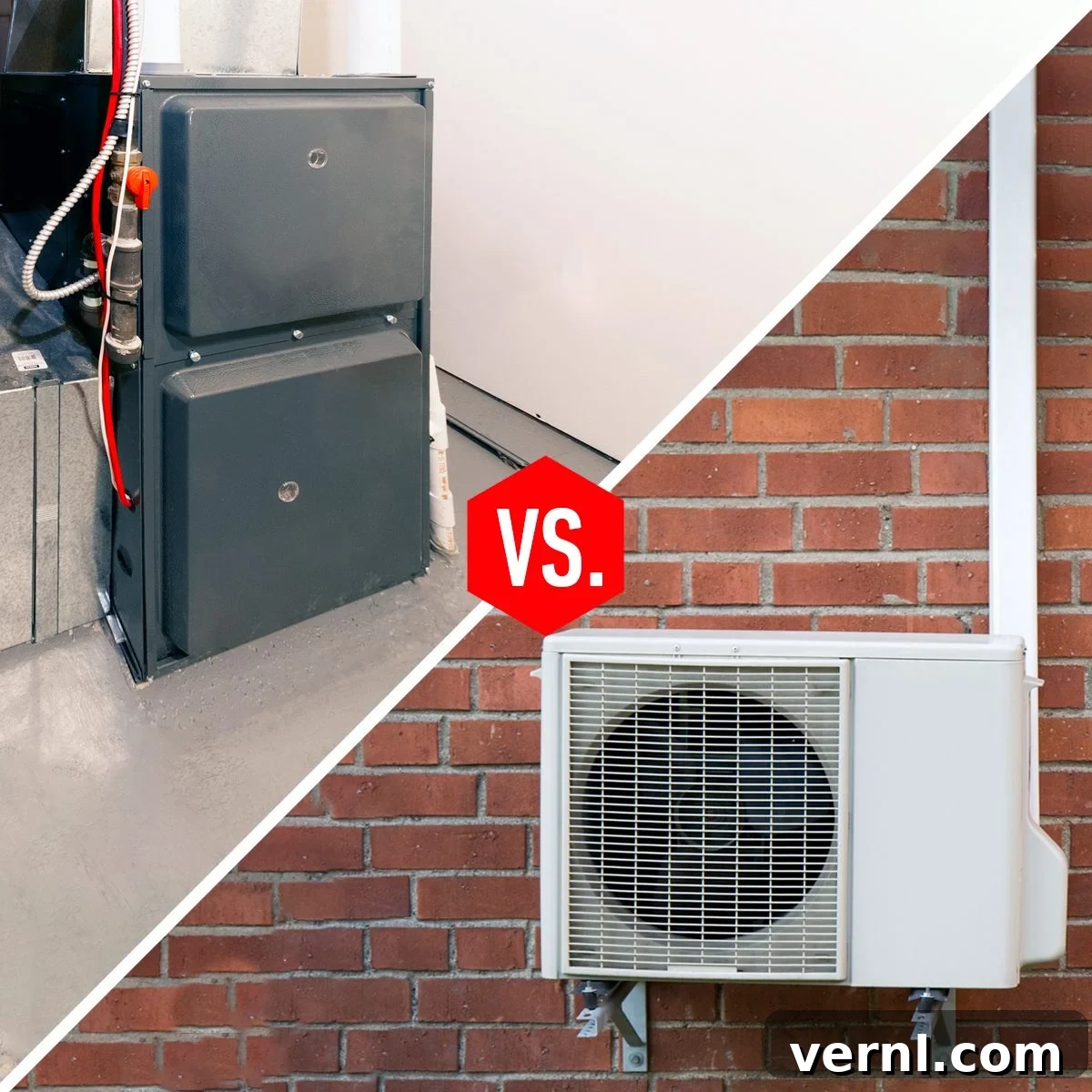
Heat Pump vs. Furnace: The Ultimate HVAC Upgrade Guide for Energy-Efficient Homes
Upgrading your home’s heating, ventilation, and air conditioning (HVAC) system is a significant investment that impacts both your comfort and your energy bills. For homeowners across the U.S., particularly those residing in California and other forward-thinking states, the choice between a traditional furnace and a modern heat pump system has never been more relevant. Several compelling factors are driving a powerful shift towards heat pump technology, making it a front-runner for your next home heating and cooling solution.
Two primary reasons highlight this growing preference for heat pumps. First, the landmark Inflation Reduction Act (IRA), enacted by Congress in 2022, introduced the High-Efficiency Electric Home Rebate Act (HEEHRA). This transformative legislation provides homeowners with substantial financial incentives, offering rebates of up to $8,000 for the installation of a new heat pump system. These rebates significantly reduce the upfront cost, making advanced, energy-efficient technology more accessible than ever.
Second, states like California are leading the charge in environmental sustainability. The California Air Resources Board recently voted to prohibit the sale of new gas furnaces by 2030, a clear signal of the state’s commitment to cleaner energy and reduced emissions. This pioneering decision is likely to inspire other states to adopt similar policies, underscoring the long-term viability and ecological advantages of electric heating solutions like heat pumps.
The widespread adoption of heat pumps isn’t merely a legislative push; it’s rooted in their inherent benefits. At their core, heat pumps operate on electricity and do not produce harmful greenhouse gas emissions, a stark contrast to fossil fuel-burning furnaces. While electric furnaces also run on electricity, heat pumps stand out for their exceptional energy efficiency. They don’t generate heat; instead, they transfer it, leading to significantly lower operating costs and a smaller carbon footprint.
Thanks to continuous advancements in HVAC technology and innovative designs, modern heat pumps are remarkably resilient. They can maintain optimal indoor comfort levels even when outdoor temperatures plummet to as low as minus-10 degrees Fahrenheit, challenging the long-held misconception that heat pumps are only suitable for moderate climates. This enhanced performance further solidifies their position as a versatile and reliable heating and cooling solution for diverse geographical regions.
What Is a Heat Pump System and How Does It Work?
To truly understand the innovation behind heat pumps, it helps to think of them as an air conditioner that can operate in reverse. While an air conditioner extracts heat from inside your home and expels it outdoors, a heat pump possesses a unique reversing valve that allows it to perform both functions: heating your home in winter and cooling it in summer.
A heat pump operates on the same fundamental thermodynamic principles as your refrigerator. It utilizes a closed-loop refrigeration cycle involving a refrigerant, a compressor, and two sets of coils (evaporator and condenser) separated by a tiny expansion valve or aperture. The process begins with the compressor pressurizing the refrigerant in the condenser coils, causing it to liquefy and release its latent heat, which is then circulated into your home for heating.
Conversely, during the cooling cycle or in the outdoor unit during heating, the pressurized liquid refrigerant passes through the aperture, causing it to rapidly vaporize in the evaporator coils. This vaporization process absorbs heat from the surrounding air (either indoor air for cooling or outdoor air for heating). The now gaseous refrigerant then cycles back to the compressor to be re-pressurized, continuously repeating the cycle. Crucially, a heat pump uses a fan to circulate the warmed air (from the condenser coils) into your living space, making it an incredibly efficient way to heat.
Most common heat pump systems, known as air-source heat pumps, consist of two primary components. The outdoor unit typically houses the compressor, a fan, and a set of coils that act as either an evaporator or condenser depending on the season. The indoor unit contains another set of coils and a fan, usually integrated within a structure called an air handler. These units are connected by a refrigerant line running through your home’s wall, facilitating the heat exchange process. For homes without existing ductwork or for zoned heating/cooling, smaller, independent indoor units known as mini-splits are available, providing precise temperature control for individual rooms or areas.
Understanding the Traditional Furnace System
In contrast to a heat pump, a furnace generates heat through combustion or resistive heating. A furnace typically resides in a basement, utility room, or closet, and its primary function is to produce heat that is then distributed throughout the home via a network of ducts by a powerful blower fan, usually housed within the air handler unit.
Every furnace system comprises a heat source, a heat exchanger, and a blower. For fuel-burning furnaces (natural gas, propane, or oil), the heat source involves igniting the fuel in a combustion chamber. The heat generated warms the air passing through the heat exchanger, preventing direct contact between combustion gases and indoor air. These combustion gases are then safely expelled outdoors through a flue or chimney.
Modern high-efficiency gas furnaces represent a significant improvement over their predecessors. These advanced units employ a secondary heat exchanger to extract even more heat from the combustion gases, achieving near 100% efficiency. Instead of needing a traditional flue, they condense the combustion gases, emitting only slightly acidified water through a PVC drain pipe. While highly efficient in converting fuel to heat, it’s important to remember that they still rely on fossil fuels, contributing to the broader environmental concerns that governments like California are addressing through policies aimed at phasing them out.
Key Considerations When Choosing Between a Heat Pump and a Furnace
When embarking on the journey of building a new house or undertaking a major HVAC system overhaul, the decision between a heat pump and a furnace is multifaceted. The generous HEEHRA incentives from the Inflation Reduction Act provide a compelling financial argument in favor of heat pumps, significantly offsetting their initial installation costs and making them an attractive long-term investment.
However, climatic conditions remain a critical factor. In regions where ambient temperatures consistently drop below minus-10 degrees Fahrenheit, a conventional furnace typically offers more robust and reliable heating, often preferred for its immediate, high-BTU heat output in extreme cold. While modern heat pumps can operate effectively at lower temperatures, the coldest climates may still necessitate a supplementary heating source.
For homes that are meticulously sealed and adequately insulated, a heat pump can be an outstanding primary heating solution. In such cases, homeowners might consider integrating resistive heat strips within the air handler. These strips can provide auxiliary or emergency heat on the absolute coldest days, ensuring comfort without relying heavily on them for day-to-day operation. Optimal home envelope performance is crucial for maximizing heat pump efficiency, as it minimizes heat loss and reduces the load on the system.
Heat Pump System Pros and Cons
Pros of Heat Pumps
- Remarkably Low Operating Costs: Heat pumps are celebrated for their exceptional energy efficiency. Because they transfer existing heat rather than generating it, they consume significantly less electricity than electric furnaces and cost roughly half as much to run as natural gas or electric furnaces. Compared to oil or propane furnaces, the savings are even more dramatic, often reducing operating costs by two-thirds. This efficiency translates into substantial savings on your monthly utility bills over the system’s lifespan.
- Cost-Effective Installation with Added Value: While initial installation costs for a heat pump can be comparable to a conventional furnace, the availability of government incentives, particularly the HEEHRA rebates of up to $8,000, can drastically reduce your out-of-pocket expenses. Furthermore, a single heat pump system provides both heating in winter and cooling in summer, eliminating the need to purchase and install separate air conditioning units. This dual functionality offers considerable savings on equipment and installation, consolidating your HVAC needs into one highly efficient system.
- Space-Saving Design and Versatility: Heat pumps are designed with space efficiency in mind. The primary outdoor unit, which houses the compressor and coils, typically requires only about 24 inches of clearance around it, making it suitable for various outdoor placements. The indoor unit, which may be part of an air handler or a compact mini-split, often requires even less space and can frequently be wall-mounted, freeing up valuable floor space in basements or utility rooms. This compact design is particularly beneficial for smaller homes or those with limited utility areas.
- Environmental Benefits: Running solely on electricity, heat pumps produce zero on-site emissions, contributing to cleaner air and a reduced carbon footprint, especially when powered by renewable energy sources. This aligns with global efforts to combat climate change and creates a healthier indoor environment.
Cons of Heat Pumps
- Performance in Extreme Cold Climates: While modern air-source heat pumps have made significant strides, their efficiency can diminish in extremely cold climates (e.g., consistently below -10°F). In such conditions, they may require supplementary heating elements or a dual-fuel system. To overcome this limitation, ground-source (geothermal) or water-source heat pumps are excellent alternatives, maintaining high efficiency regardless of air temperature. However, installing these systems involves laying extensive piping underground or underwater, an undertaking that can be significantly more complex and expensive.
- Potential for Noise: The primary source of noise in a heat pump system originates from the outdoor compressor unit. While manufacturers have made considerable improvements in sound dampening, some models can still produce a hum or fan noise that might be noticeable, especially if the unit is located close to windows, bedrooms, or outdoor living areas. Homeowners should consider the unit’s Seasonal Energy Efficiency Ratio (SEER) and Heating Seasonal Performance Factor (HSPF) ratings, as well as its decibel rating, and plan for optimal placement to minimize disturbance.
Furnace System Pros and Cons
Pros of Furnaces
- Quiet and Unobtrusive Operation: Furnaces are generally designed to be installed in out-of-the-way locations such as basements, utility closets, or attics. Beyond the initial whoosh of the gas igniting or the gentle sound of air moving through the registers, furnaces typically operate very quietly. This unobtrusive nature ensures minimal disturbance to your living environment, maintaining a peaceful home atmosphere.
- Simplified Maintenance Requirements: Compared to the more complex refrigeration cycle of a heat pump, furnaces often require less intricate maintenance. Regular tasks typically involve periodic filter changes, annual professional inspections, and occasional vacuuming of accessible components. There are no refrigerant coils to clean, no compressors to meticulously monitor, and generally fewer specialized components requiring attention, which can lead to lower long-term maintenance costs and simpler upkeep.
- Extended Lifespan and Durability: Furnaces are renowned for their robustness and longevity. With fewer intricate parts involved in their core heat generation process compared to the dual-functionality of a heat pump, they tend to experience less wear and tear. A well-maintained furnace can reliably serve a home for an average of 20 years, often exceeding this lifespan. This is typically five years longer than the average lifespan of a heat pump, representing a solid long-term investment.
- Reliable Heat in Extreme Cold: Furnaces are designed to generate intense heat quickly, making them exceptionally reliable in even the most frigid climates. They are not affected by ambient outdoor temperatures in the same way air-source heat pumps can be, providing consistent warmth no matter how low the thermometer drops.
Cons of Furnaces
- Higher Operating Costs: The most significant drawback of furnaces, particularly those relying on natural gas, oil, or propane, is their operating cost. Burning fuel to generate heat is inherently less efficient than transferring it, as heat pumps do. This often results in higher monthly utility bills, especially when compared to the highly efficient operation of a modern heat pump. Electric resistive furnaces also incur higher operating costs due to the direct conversion of electricity into heat.
- Source of Air Pollution and Emissions: Standard-efficiency furnaces, which rely on combustion and exhaust gases through flues, contribute to outdoor air pollution and greenhouse gas emissions. While high-efficiency furnaces significantly reduce these emissions by condensing gases, they still rely on fossil fuels, making them a part of the environmental challenge. The increasing regulatory pressure and homeowner preference for greener alternatives highlight this as a substantial disadvantage.
- Separate Cooling System Required: Unlike heat pumps, a furnace is solely a heating appliance. Homeowners who opt for a furnace will need to install a separate air conditioning system to provide cooling during warmer months, incurring additional installation costs, equipment expenses, and potentially more complex maintenance for two distinct systems.
Making the Final Heat Pump vs. Furnace Decision
When weighing the options between a heat pump and a furnace, the decision often boils down to a few critical factors, primarily your local climate and long-term financial and environmental goals. While the upfront installation costs for standard-efficiency furnaces and heat pumps can be quite similar, especially with the substantial government incentives available for heat pumps, the overall value proposition differs significantly.
In moderate climates, where temperatures rarely dip into extreme lows, the choice to opt for a heat pump is often a clear one. The combination of impressive energy efficiency, low operating costs, dual heating and cooling capabilities, and attractive government rebates makes a heat pump an undeniable winner. It provides comprehensive comfort with a significantly reduced environmental footprint.
Conversely, in regions characterized by extremely cold winters where temperatures frequently plunge far below freezing, a furnace often remains the more reliable and sometimes necessary choice. Furnaces deliver powerful, consistent heat regardless of outdoor conditions, ensuring unwavering comfort in the harshest climates. However, even in these areas, a high-efficiency furnace paired with an electric heat pump in a dual-fuel system can offer a balanced approach, allowing the heat pump to handle moderate temperatures efficiently and the furnace to kick in during extreme cold.
If your climate falls somewhere between these two extremes, the decision may require a bit more research. It’s highly advisable to speak with neighbors who have already installed heat pumps to gauge their satisfaction and performance in your specific microclimate. More importantly, consult with several reputable local HVAC dealers. They can provide invaluable insights into system sizing, optimal technologies for your home’s unique characteristics, and accurate cost estimates, including potential rebates. Heat pump technology continues to evolve rapidly, with ongoing improvements in cold-climate performance and efficiency, meaning the perfect heat pump solution for your home may be closer than you think.
Furnace FAQs: Common Questions and Parts Explained
Whether you’re trying to understand how your furnace works, troubleshoot common issues, or simply explore its various components, here are the answers to some of the most frequently asked furnace questions, along with detailed explanations of key parts:
- What Is a Furnace?
- How Does a Gas Furnace Work?
- What Are Furnace Energy Efficiency Ratings?
- Understanding the Different Parts of a Furnace
- What That Furnace Switch Is For
- What Is a Furnace Heat Exchanger?
- What Is a Furnace Inducer Motor?
- What Does a Furnace Pressure Switch Do?
- How Much Will It Cost to Replace a Furnace Blower Motor?
- Boilers vs. Furnaces: What’s the Difference?