How Long Should You Keep Your Car? A Comprehensive Guide
As a Master ASE and General Motors technician with over 50 years in the automotive repair industry and vocational educator, I’ve learned a thing or two about maximizing a car’s lifespan. I typically keep my vehicles for 15 to 20 years, or even longer. This involves meticulous maintenance: regular fluid flushes, preemptive filter, hose, and belt replacements, a new battery every three years, and prompt attention to any arising issues. My well-aged cars look and perform almost as well as they did when new.
However, reality eventually sets in for everyone. The escalating costs of maintaining older vehicles become undeniable. Parts can become scarce, and rust, especially in regions with heavy salt use, becomes an unrelenting foe. Twenty-year-old cars often have minimal financial value, diminishing the incentive to sell them. In my case, donating them to my former technical school became a way to contribute to the training of future automotive technicians.
So, how do you decide when to continue investing in your car and when it’s no longer a worthwhile endeavor? Experts from the financial, automotive, and insurance sectors weigh in on determining when repair costs outweigh the benefits of keeping your current vehicle. This guide will walk you through everything you need to consider before making that decision.
Understanding Car Value: More Than Just Dollars and Cents
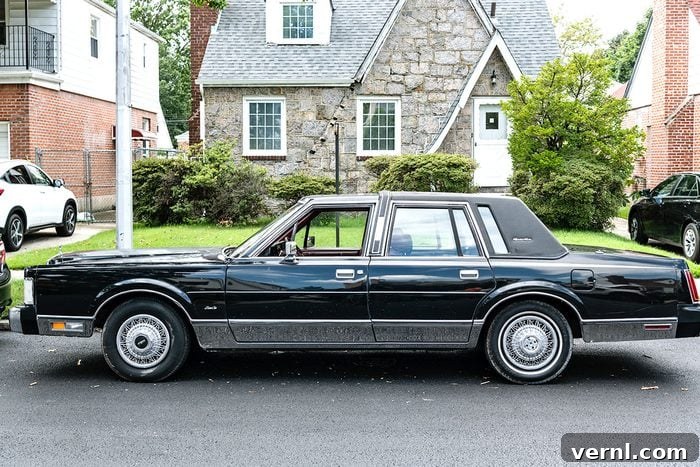
Every car possesses value, whether monetary, emotional, related to reliability, design, or simply as a nostalgic object. However, in purely financial terms, a car’s worth is determined by what someone is willing to pay for it on a specific day – what the market will bear.
Kelley Blue Book (KBB) stands out as an invaluable resource for consumers seeking to determine the cash value of their vehicle. For the most accurate valuation, be thorough in listing all options and providing precise information regarding mileage, accident history, and the condition of the glass, body, paint, and seats.
Zander Cook of Leaseend emphasizes the multifaceted nature of a car’s financial value, encompassing operating costs, utility value, and the degree to which the car continues to meet your needs. Beyond the tangible, he highlights the often-overlooked value of “peace of mind” – the reassurance that your vehicle is unlikely to experience a catastrophic failure that isn’t covered by a warranty.
Factors Influencing a Car’s Financial Value
According to Ben Shoolin, a specialist in new, used, and leased cars, “Car values can mean different things to different people.” Here’s a breakdown of key factors:
- Market Value: Driven by supply and demand, location, seasonality (e.g., convertibles in summer, 4-wheel drive in winter), and broader economic trends.
- Trade-In Value: The offer a dealer makes when you “trade in” your car for another. Typically lower than market value.
- Retail Value: The listed price of a car on the market.
- Book Values: Published estimates from sources such as Kelley Blue Book or NADA Guides. Remember that these may not always reflect local market variations.
- Replacement Value: Determined by your insurance company to replace your car with a similar vehicle if it’s totaled.
- Residual Value: The projected worth of a car at the end of a lease term.
Emotional Value vs. Financial Value: A Personal Equation
The value a car holds for you personally can be a very subjective and abstract concept. Melanie Musson, a finance expert at AutoInsurance.org, points out that “A car that may have hardly any cash value may be a reliable workhorse for you.” Emotional value is often exclusive to the owner.
Michael A. Klitzke, Esq., CEO at Auto Law Firm, clarifies that “Financial value only counts when you are buying or selling a vehicle.” He further explains, “Whether someone else thinks your car is ugly, if you like your vehicle, it isn’t having any major problems, and it fits your needs, it doesn’t matter how old it is if you like [your car] keep it.” The key is whether the car continues to serve its purpose for you.
Shoolin shares a personal anecdote, admitting, “I am the perfect example of an emotional car owner.” He recently sold his cherished 1974 Pontiac Grand AM, his first new car. Despite its high emotional value after 50 years, he recognized that selling it was the most sensible decision.
Understanding a Typical Vehicle Lifespan
The lifespan of a vehicle varies widely. Junk Car Medics estimates that most cars in the U.S. last approximately 16 to 17 years or 150,000 to 160,000 miles. Klitzke emphasizes that “With good maintenance, the manufacturer/brand, driving style and habits, plus the climate where you live, many models can exceed 200,000 miles.”
Conversely, stop-and-go city driving, exposure to dirty or dusty conditions, harsh climates, and a lack of basic maintenance will undoubtedly shorten a car’s lifespan.
The Impact of Depreciation on Your Car’s Value
Depreciation, driven by factors such as age, mileage, market demand, and economic conditions, represents the gradual decline in a car’s value over time. Cook explains, “Internal combustion engine vehicles lose about 20 to 25 percent of their value in the first year, then another 50 to 60 percent over the next four years.”
The good news is that depreciation tends to slow down significantly after the first five years. However, Shoolin cautions that “Mileage, condition, and brand reputation still influence a car’s overall value.” Cook also notes that “Luxury and electric vehicles sometimes see even sharper early depreciation.”
Analyzing the Cost of Car Ownership Over Time
The latest AAA Annual Report on Vehicle Costs estimates that “owning and operating a new car [driven 15,000 miles annually] costs $11,577 a year.” Experts agree that the first five years are the most expensive due to the significant depreciation during this period.
However, as depreciation stabilizes, maintenance and repair costs tend to increase. On the other hand, insurance costs and financing fees usually decrease. Factors such as location-dependent taxes, registration and licensing fees, and fluctuating fuel costs also play a role in the overall cost of ownership.
Edmunds offers an excellent online Cost of Car Ownership tool that can help you calculate unforeseen costs you’ll want to consider before purchasing your next vehicle. This tool helps you see the long-term financial implications of your vehicle choice.
How Insurance Costs Change As Vehicles Age
Newer cars typically have higher monthly insurance premiums due to higher replacement costs and the inclusion of collision coverage. However, Musson explains that as cars age, “because depreciation and replacement value decrease (meaning it will cost the insurance company less for a total loss settlement), they have lower insurance premiums.”
Klitzke adds that “Insurance companies like to use LKQ (“Like, Kind, Quality” or junkyard parts) and cheaper ‘knock off’ parts instead of the more expensive original equipment manufacturer (OEM) parts. Brand-new vehicles will not have those cheaper parts available.” The use of LKQ parts can also lower a car’s value due to diminished value.
Conducting a Breakeven Analysis
A breakeven analysis is a simple calculation that helps determine if the cost of repairing an aging vehicle exceeds the cost of making payments on a newer car. For example, if you’re spending $3,000 to $4,000 annually on repairs, consider whether you could purchase a replacement car for the same monthly cost.
Risk is also a key consideration. Cook advises that “If the vehicle is entering the mileage or age range where major failures become more likely, you should factor that risk into your breakeven math, even if the car hasn’t had a big issue yet.” The breakeven point may also depend on how much you drive. Shoolin notes that “High-mileage drivers reach breakeven faster than low-mileage drivers. Positive equity (your car is worth more than what is owed) extends the breakeven point.”
Budgeting for unexpected repairs can help you stay ahead of the breakeven curve and avoid significant, unexpected expenses.
Mechanical Reliability: A Critical Factor in the Decision
A breakeven analysis is incomplete without considering mechanical reliability. Even if the numbers look favorable on paper, mechanical reliability determines whether a car can actually deliver on those potential savings. Frequent mechanical breakdowns are not only inconvenient but also represent a financial drain.
Performing a cost-per-mile analysis can help assess a car’s true value. Musson notes that “Holding onto your older car can be a risk-versus-reward trade-off. Cars that are regularly serviced and maintained have longer lifespans, run reliably for higher than average miles and tend to hold their value better and also give owners more peace of mind and less frustration.”
Frequently Asked Questions About Car Ownership and Lifespan
Is “10 Years or 150,000 Miles” a Good Rule of Thumb?
The answer depends. When I started working on cars in the 1960s, vehicles reaching 100,000 miles were a rarity. As mechanical reliability improved over subsequent decades, the 10-year or 150,000-mile guideline became a point of reference, signaling that major systems (engine, transmission, suspension, air conditioning, and electronics) might begin to fail and require expensive repairs.
Modern cars are more complex but are generally more durable. Consumer Reports suggests that modern vehicles “should be capable of 200,000 miles or more…[and] generally are better built because many features are implemented efficiently, such as abilities added via software rather than new mechanical components.”
What is the 50% Rule When It Comes to Vehicle Value?
Klitzke explains that “It doesn’t make sense to repair a vehicle if the cost is more than 50 percent of the current value. But if you can’t afford to purchase a new vehicle (or can only afford to purchase a prior accident vehicle), then it might be a terrible idea to give up on the current vehicle that needs repairs.” Remember that even after repairs, the car’s market value won’t necessarily increase significantly.
Meet the Experts Who Contributed to This Guide
- Ben Shoolin: A seasoned General Motors salesperson with over 45 years of experience, and an award-winning Buick/GMC Mark of Excellence Sales and Leasing Specialist at O’Neil GMC in Warminster PA.
- Melanie Musson: An auto industry, insurance, and finance expert with AutoInsurance.org, and a fourth-generation member of her family to work in the insurance sector.
- Michael A. Klitzke: CEO at Auto Law Firm, PC, specializing in auto fraud and lemon law cases against car dealers in California.
- Zander Cook: Chief Risk Revenue Officer (CRO) at Lease End, a platform helping drivers with lease payoffs and vehicle purchases.
Sources Used in This Article
- AAA: “AAA Releases Annual Report on Vehicle Costs”
- Alan “Ollie” Gelfand: Owner German Car Depot and German Car Expert
- Auto Recycling World: “How Long Do Cars Really Last in the USA?”
- Consumer Reports: “What Is a Reasonable Life Span for a Modern Car?”
- Edmunds: “Cost of Car Ownership – 5-Year Cost Calculator”
- Forbes: “Car Ownership Statistics 2025”
- J.D. Power: “How To Calculate Diminished Value”