
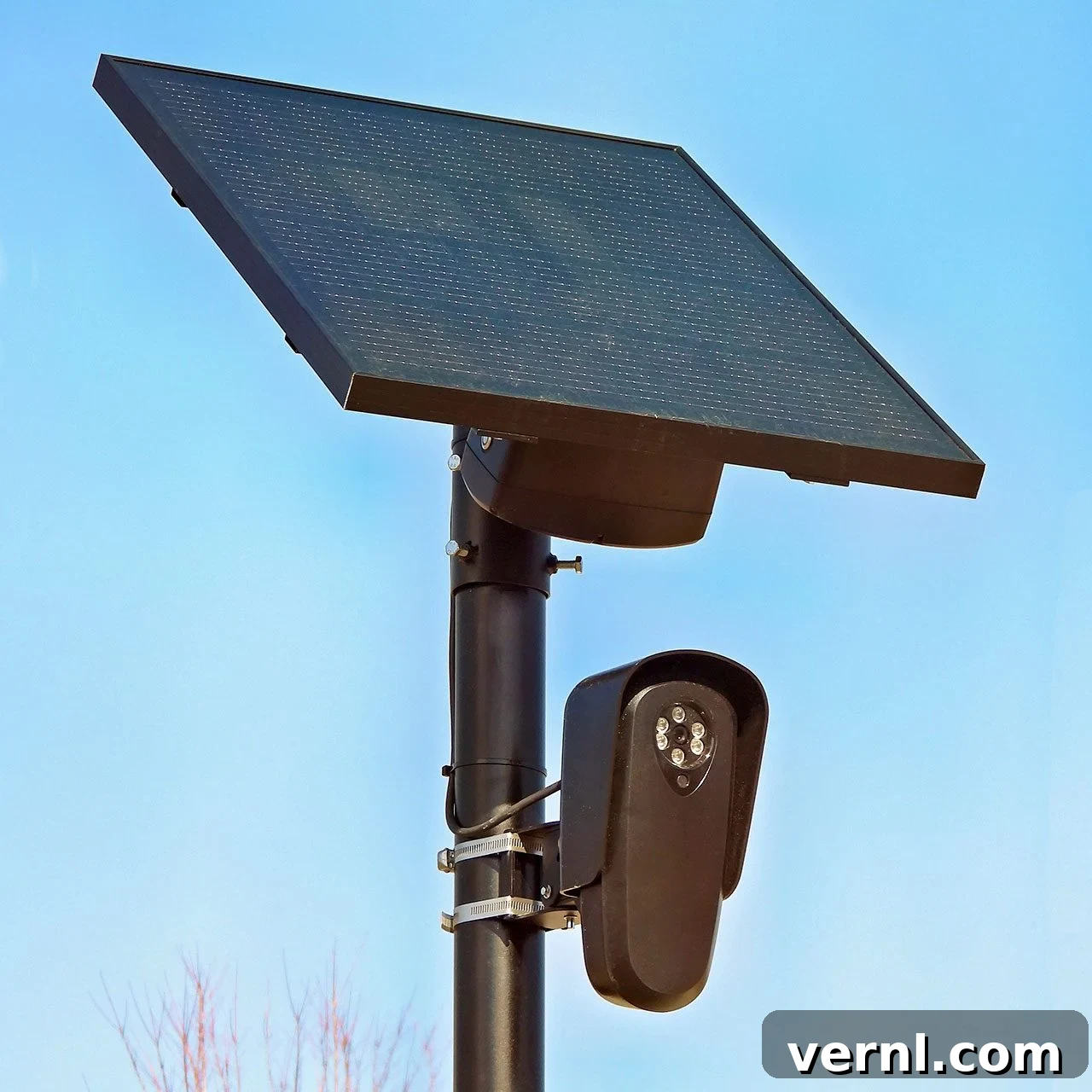
A recent Family Handyman article reported on growing concern over Flock cameras, the Automated License Plate Readers (ALPRs) produced by Flock Safety. Marketed as tools to help fight crime and recover stolen vehicles, these devices have raised privacy alarms because they can be used to create detailed travel records and long-term location histories of drivers.
“From a data perspective,” says security expert Aimee Simpson, “a record of these cameras could map out someone’s entire life. When they go to work, the route they take, if they go to the gym, what supermarket they go to, where their friends live, etc. Having that extensive travel history is a little unnerving without full transparency about what that data is used for and where it’s stored (and who can access it).”
With input from Texas attorney Kevin Henrichson, who focuses on commercial vehicle and car-accident cases, this article explains how to identify Flock cameras, where they are typically installed, what they record, who can access the data, and how to find camera locations.
What Does a Flock Camera Look Like?
A Flock camera is typically a small, dark-colored rectangular box mounted on a thin pole that is shorter than a standard streetlight. They may also be attached partway up a streetlight or traffic signal pole. The most distinctive feature to watch for is a small solar panel mounted immediately above the camera unit; red light and speed cameras rarely include that solar panel.
Where Are Flock Cameras Usually Installed?
Municipalities, homeowners associations, private businesses and property managers commonly install these cameras at neighborhood entrances and exits, along roads with higher crime or accident rates, and in parking lots. Large retailers and some apartment complexes use them to log vehicles entering and leaving their premises. Because many different organizations can deploy Flock cameras, it is not unusual to find multiple units at the same intersection or entrance, each owned and controlled by a separate entity.
Flock cameras are also common in parking lots for loss prevention and security. Churches, schools and other institutions sometimes install them to monitor vehicles on their property.
How Are Flock Cameras Different From Regular Traffic Cameras?
Red light and speed cameras are designed to record specific violations and generate citations only when an infraction occurs. In contrast, Flock cameras capture every vehicle that passes within view. The collected reads are not used for traffic citations; instead they are stored and can be searched against watchlists or queried during investigations.
What Information Do Flock Cameras Collect?
Flock systems are intended to capture license-plate data, along with basic vehicle descriptors such as make, model, color and condition. In practice, images can sometimes include vehicle occupants and visible identifying traits—hair color, tattoos, clothing—if those occupants are in range and visible to the camera. The systems can also create movement patterns and heat-map style visualizations to show where a vehicle of interest has been detected over time.
Henrichson notes that the system is primarily designed to identify vehicles rather than individual faces. Still, the potential for capturing additional identifying details contributes to privacy concerns.
Who Can Access Flock Camera Data?
The data recorded by a Flock camera is stored in a database controlled by the camera owner—typically the municipality, business, HOA or property owner that purchased or installed the unit. Those owners set access and retention policies for the footage. Requests for access often require formal procedures and there is no universal standard guaranteeing public availability. Even when access is possible, it can be limited and time-consuming to obtain.
There is also the risk of data breaches, unauthorized sharing, or sale to third parties. Aggregated ALPR data can be valuable, making such systems potential targets for hackers or for entities seeking to purchase location data.
Can You Find Out Where Flock Cameras Are Located?
Some agencies and property owners publish camera locations in transparency portals, but practices vary widely. Availability of location information depends on the owner’s willingness to disclose it. Independent efforts, such as crowdsourced databases, track reported ALPR locations across the U.S., compiling public reports and user submissions.
FAQ
What do Flock cameras look for?
Each read typically records the license plate, a description of the vehicle, and the time and date of detection. Reads are compared against watchlists that can include stolen vehicles, wanted plates, Amber and Silver Alerts, and other flagged identifiers.
Do Flock cameras take pictures of drivers?
Flock cameras are generally positioned to capture the rear of vehicles and the license plate. They are not designed to perform facial recognition. However, if occupants are visible in the camera’s field of view, those images may be recorded incidentally.
Can Flock cameras track your car?
Yes. Each read is saved and can be compared to other captures of the same vehicle, creating a traceable record of movements over time if a user or investigator queries the database.
How long do Flock cameras keep your data?
Retention policies vary by owner. Default retention periods are subject to change and can be set differently by each agency or property owner. Some users keep data for only a few days, while others retain it for months or longer, depending on local policy and contractual arrangements.
About the Experts
- Kevin Henrichson is a board-certified personal injury attorney with extensive experience in commercial vehicle and car-accident cases. He is a partner at Byrd Davis Alden & Henrichson, LLP, a longstanding personal injury law firm in Austin, Texas.
- Aimee Simpson is a security expert with experience in identity security, insider risk management, data loss prevention, and security awareness. She serves in product marketing leadership at a cybersecurity company.
Sources
- American Civil Liberties Union: analysis and reporting on ALPR use and privacy concerns.
- DeFlock.org: a crowdsourced registry tracking reported ALPR locations across the United States.