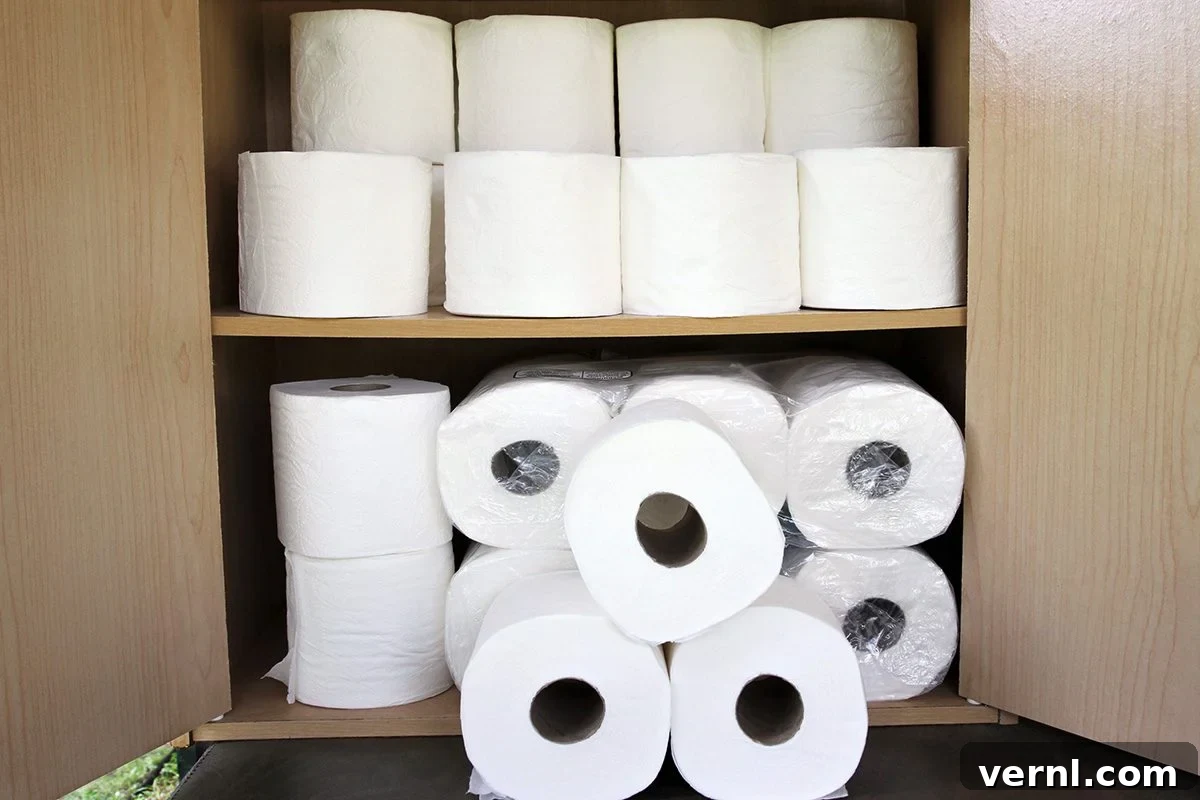
Is Buying Toilet Paper in Bulk a Smart Move? Storage Tips & Eco-Friendly Alternatives
Many consumers are drawn to the idea of buying toilet paper in bulk, thinking they’re getting the best deal. However, a closer look at the numbers reveals a different story. A standard six-roll package from a budget retailer might cost around $4, which translates to roughly $0.67 per roll. On the other hand, a larger package containing 30 rolls from a warehouse club could set you back $25, or approximately $0.83 per roll. Even considering the potential size difference in individual rolls, the cost savings aren’t as significant as one might expect. So, what truly motivates the decision to purchase toilet paper in large quantities?
Convenience likely plays a pivotal role. For households with multiple family members, the appeal of not having to constantly replenish their toilet paper supply for extended periods can outweigh the minor price difference. This is especially true for those who vividly remember the panic-buying and shortages that occurred at the onset of the Covid-19 pandemic, which highlighted the importance of having essential household supplies on hand.
Regardless of the driving force behind the purchase, stockpiling a large volume of toilet paper inevitably raises the question: Is it safe to store toilet paper in bulk? To answer this question comprehensively, we’ve consulted with house cleaning specialists and a seasoned plumber, each offering valuable insights into the matter.
Does Toilet Paper ‘Expire’? Understanding Degradation and Storage Lifespan
Technically, toilet paper doesn’t have an expiration date like food products. According to house cleaning expert Petya Holevich, “Toilet paper doesn’t ‘expire’ in the way food does, but it can degrade over time. The paper can become brittle, discolored, or lose some of its softness and absorbency if it’s stored for many years, especially in humid or damp conditions.”
However, even without a climate-controlled storage environment, plumbing supervisor Megan Doser emphasizes that toilet paper can maintain its quality for years. “Toilet paper is not the kind of product that can go bad because of age or mold. It absorbs moisture very well but dries out quickly – this sets it apart from other things like concrete, drywall, or fabric that are porous and hold moisture for long hours. Toilet paper can absorb some moisture, but it has no nutrients for mold to feed on.”
Storing Toilet Paper in Bulk: Best Practices for Maintaining Quality
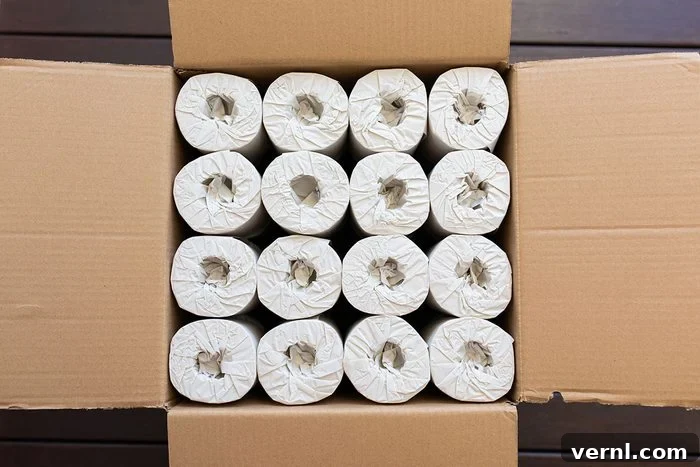
Properly storing toilet paper prevents moisture and pest infestations.
Even though toilet paper doesn’t have a “use by” date, improper storage can lead to undesirable outcomes. Housecleaning expert Neel Parekh points out that toilet paper can attract moisture, leading to a musty odor, even if mold isn’t a concern. Furthermore, “paper products make great nesting material for bugs and mice,” he adds.
The key takeaway is to store toilet paper in a dry, enclosed space off the floor. This practice minimizes musty odors and prevents bulk toilet paper from becoming a haven for rodents. Consider investing in airtight containers or shelving units to ensure optimal storage conditions.
Potential Risks Associated with Bulk Toilet Paper Storage
While keeping toilet paper in its original plastic packaging is a good starting point, it’s not a foolproof solution against pests. Mice, in particular, are notorious for their ability to chew through plastic in search of nesting materials. Therefore, ensuring that your storage space is rodent-proof is crucial.
Beyond pest control, there are also potential health and comfort considerations. Holevich cautions, “Old toilet paper is unlikely to be harmful; it can be less comfortable and less effective to use.” This is especially true if the toilet paper is exposed to sunlight, which can degrade the paper fibers and reduce their absorbency. It’s important to consider rotating your stock if you buy in bulk to prevent the use of less effective rolls.
Parekh highlights another potential issue: dust accumulation. “Allergens build up on toilet paper that has been sitting for years,” he warns. This can be a significant concern for individuals with allergies or sensitivities.
Eco-Friendly Alternatives to Bulk Toilet Paper Storage
Both housekeeping experts advocate for bidets as a sanitary and eco-friendly alternative to traditional toilet paper. Bidets are readily available, relatively inexpensive, and easy to install. After installing a bidet in your bathroom, a significant reduction in toilet paper consumption is often realized, primarily using it for drying or accommodating guests unfamiliar with bidets. Imagine the extra storage space that could be reclaimed by reducing or eliminating the need for bulk toilet paper altogether!
However, if you prefer to continue using toilet paper, there are still ways to minimize your environmental impact. Doser suggests, “Standard brands use virgin wood pulp and more water and energy to make, while recycled and bamboo options are 100% recycled and much lower-impact. The gray, cheap, and slightly rough recycled kind is actually more eco-friendly than the bright white, ultra-soft rolls.” Choosing recycled options makes a big difference.
Holevich emphasizes the sustainability of bamboo as a toilet paper material. Bamboo grows quickly and requires fewer resources than traditional trees. Besides that, bamboo fibers are generally softer than recycled wood pulp, providing added comfort.
Reusable cloth wipes, also known as family cloth, represent another alternative. These soft, washable cloths can be used in place of toilet paper and then laundered. “Even though they require proper hygiene practices, they significantly reduce disposable waste,” says Holevich. This method can be particularly appealing to those committed to minimizing their environmental footprint.
Frequently Asked Questions (FAQ) About Bulk Storage
What Household Items Are Safest to Store in Bulk?
Holevich suggests focusing on food items with a long shelf life, frequent usage, and reasonable cost. Examples include:
- Rice
- Pasta
- Beans and oats
- Canned goods
- Sugar
- Some spices (stored in airtight containers)
Parekh recommends stocking up on cleaning supplies such as dish soap, laundry detergent, all-purpose cleaners, and trash bags. Doser cautions against prolonged storage of products containing chemicals, as they can lose their effectiveness over time.
What Items Should Never Be Stored in Bulk?
Avoid storing perishable or moisture-sensitive food items in bulk. According to Holevich, “Storing fresh produce, dairy, eggs, soft cheeses, baked goods, and some herbs and spices in large quantities increases the risk of spoilage, waste, and even foodborne illness.”
Parekh warns that flour can develop rancid oils and attract pantry moths, while batteries lose their charge when stored for extended periods.
About the Experts
- Neel Parekh is the founder and CEO of MaidThis, a home cleaning franchise that utilizes technology to provide residential and short-term rental services.
- Megan Doser is the owner of Doctor Fix It, a family-owned plumbing, heating, and electric company serving the Denver area since 1978.
- Petya Holevich is an experienced house cleaning and laundry expert with over 5 years of experience at Fantastic Services.