Comprehensive Guide to Identifying, Controlling, and Preventing Cutworms in Your Lawn and Garden
Cutworms are among the most frustrating and destructive pests that homeowners and farmers can encounter. These voracious larvae pose a significant threat, indiscriminately feeding not only on lawns but also devastating vegetable plants, ornamental flowers, and vital farm crops across the globe. Once they establish a presence, the damage can be substantial, making early detection and effective control paramount for preserving your landscape and harvests.
“These non-discriminate feeders attack a wide range of plants, making them a common enemy for gardeners and landscapers alike,” explains Dave Holmes, a seasoned lawn expert from The Grounds Guys. “All common turfgrasses are particularly susceptible to the damage inflicted by these nocturnal larvae, which can quickly transform a lush lawn into a patchwork of devastation.” This comprehensive guide will equip you with the knowledge to accurately spot these ravenous pests and implement strategies to send them packing, protecting your yard from being cut to shreds.
What Exactly Are Cutworms? Understanding the Lifecycle of a Destructive Pest
Cutworms are not a distinct insect but rather the larval stage of various moth species belonging to the family Noctuidae. The adult cutworm moths, which are typically dull-colored and nocturnal, lay their eggs in clusters, often on grass blades or weeds, from spring through fall, depending on the specific moth species and regional climate. These moths are notoriously attracted to light sources, which explains why cutworm infestations frequently occur on lawns surrounding well-lit homes. A few weeks after the eggs are laid, they hatch, unleashing a new generation of destructive cutworm larvae.
The true damage begins once these larvae emerge. Cutworms earn their name from their distinctive feeding habit: they chew through turfgrass and other plants at the crown – the critical pale section at the base where the shoot and root systems converge. This severance of the plant blade from its root system is often fatal for the plant, leading to the characteristic “cut off” appearance of damaged vegetation. This highly destructive behavior has solidified the caterpillar’s reputation as a particularly unwelcome and damaging invader in any garden or lawn.
Cutworms are primarily nocturnal feeders, meaning they emerge from their hiding spots to feed under the cover of darkness. During the day, they retreat into the soil, under thatch, or beneath leaf litter, making them incredibly difficult to spot. Their feeding habits can vary slightly by species, with some being surface feeders (cutting plants just above the soil line), others being climbing cutworms (feeding on leaves and fruits higher up on plants), and some acting as subterranean feeders (damaging roots and underground stems). Understanding their lifecycle and nocturnal nature is crucial for effective identification and targeted control efforts.
Common Types of Cutworms You Might Encounter
While there are numerous species of cutworms found globally, a handful are particularly common and problematic in North America. Understanding the different types can aid in identification, though control methods are generally similar across species. According to Dave Holmes, the two most frequently encountered species are the:
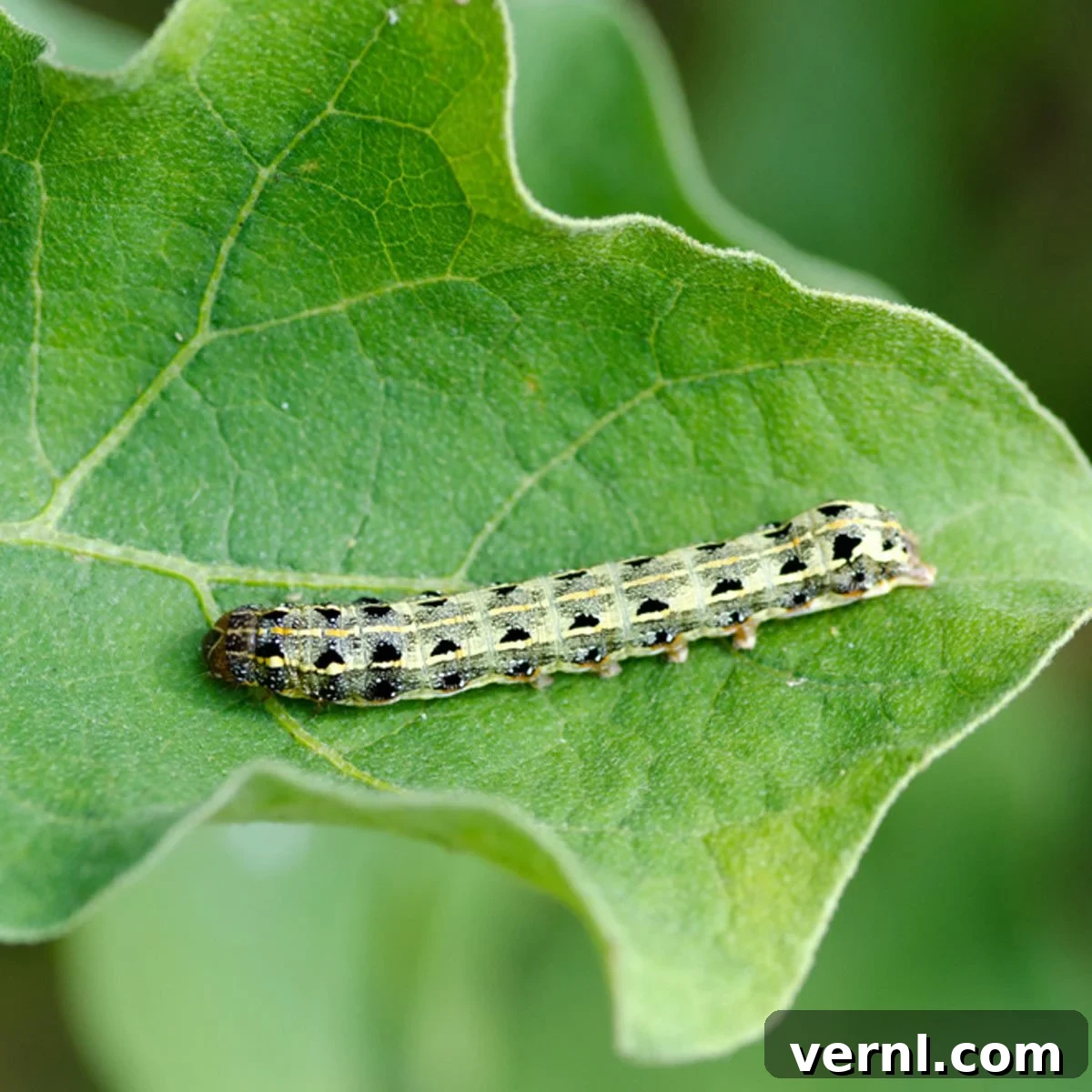
- Black Cutworm (Agrotis ipsilon): Known for its dark, greasy-looking body, often with brown to black spots or stripes running the length of its back and sides. These are aggressive surface feeders and can cause significant damage to young plants and turf.
- Variegated Cutworm (Peridroma saucia): This species displays a variety of colors, ranging from pale green to brown or black, often featuring a pale white line and/or distinctive yellow dots along its back. Variegated cutworms are known to be climbing feeders, capable of damaging leaves, fruits, and even ripening produce on plants.
Beyond these prominent two, depending on your specific geographic location and local climate, you might also encounter other destructive types, including:
-
Army Cutworm (Euxoa auxiliaris)
-
Bristly Cutworm (Lacinipolia renigera)
-
Bronzed Cutworm (Nephelodes minians)
-
Claybacked Cutworm (Agrotis gladiaria)
-
Clayhill Cutworm (Agrotis subterranea)
-
Dingy Cutworm (Feltia ducens)
-
Pale Western Cutworm (Agrotis orthogonia)
Each species, while sharing common destructive traits, may have slight variations in preferred host plants, feeding patterns, and life cycles. However, the general strategies for detection and control outlined below remain effective for most cutworm species.
Recognizing the Signs of a Cutworm Infestation: Early Detection is Key
Due to their nocturnal nature and habit of hiding in underground burrows or beneath dense thatch near the soil surface during the day, cutworms are notoriously difficult to spot directly. Instead, you’ll most likely become aware of their presence through the unmistakable damage they leave behind. Knowing what to look for can significantly improve your chances of early detection and successful intervention.
Visual Damage to Plants and Lawns
The most common and definitive sign of a cutworm infestation in your lawn is the appearance of circular patches of grass that look as if they’ve been neatly sliced off at the base, just above the soil line. This can create bare spots or areas where grass blades are detached from their roots. “Depending on the specific species and environmental conditions, this characteristic damage typically manifests from early summer through the fall,” notes Holmes.
In garden beds, cutworms can cause even more dramatic damage. Young seedlings and tender plants often appear severed at the stem base, falling over as if someone used tiny scissors. Older, more established plants may show holes in leaves or entire leaves chewed through, particularly from climbing cutworm varieties. The damage can progress rapidly, wiping out entire rows of seedlings overnight.
Spotting the Larvae Themselves
While challenging, you can sometimes catch the larvae themselves, especially during the early morning hours or late evening when they are most active. Drew Wagner of Sod Solutions advises, “If you gently brush your hand across the surface of the soil, particularly in damaged areas, you may notice them. They typically make a distinctive ‘C’ shape and curl up tightly when disturbed, making them easier to identify.” They are often plump, smooth, and range from gray to brown or black.
Other Telling Indicators
- Increased Bird Activity: “A significant number of birds scratching and pecking vigorously at your lawn can be a strong indicator of a large cutworm population in the grass,” Holmes points out. Birds are opportunistic feeders, and a sudden abundance of caterpillars provides an irresistible feast.
- Presence of Frass: Another key sign is the presence of tiny, black, pellet-like droppings, known as frass, found around the bases of damaged plants near the soil surface. This insect waste is a clear sign of active feeding in the area.
- Soapy Water Drench Test: To confirm a suspected cutworm infestation, especially in lawns, try a “soapy water drench” test. Mix two tablespoons of dish soap with a gallon of water and pour it over a square foot of affected lawn. The soap irritates the cutworms, forcing them to the surface within 5-10 minutes, making them visible for counting and confirmation.
Effective Strategies to Eliminate Cutworms from Your Property
Once you’ve confirmed a cutworm infestation, swift action is crucial to minimize damage. Fortunately, as Dave Holmes notes, these insatiable pests are relatively susceptible to various control methods, including chemical insecticides and several biological control agents. The most critical factor for successful control is to apply treatments when the caterpillars are young and relatively small. “For optimal results, consider making control applications approximately 14 to 21 days after the peak adult moth flight activity, as this timing aligns with the emergence of young larvae,” he advises.
1. Chemical Insecticides (When Necessary)
For severe infestations or when other methods have proven insufficient, chemical insecticides can be an effective solution. Holmes specifically recommends products containing:
- Imidacloprid: A systemic insecticide that is absorbed by the plant and then ingested by feeding insects, providing longer-lasting control. Brands like Merit 0.5 Insecticide Granules often contain this active ingredient.
- Bifenthrin: A contact insecticide that kills pests upon contact or ingestion. It offers quick knockdown and is found in products such as Compare-N-Save Indoor/Outdoor Insect Control.
Important Note: Always read product labels carefully and follow all application instructions, safety precautions, and recommended dosages. Be mindful of environmental impact and potential harm to beneficial insects when using chemical controls. Apply in the late afternoon or early evening when cutworms are becoming active, and avoid applying before rain to ensure the product has time to work.
2. Biological Control Agents (Eco-Friendly Options)
For those preferring more environmentally conscious approaches, several biological control options are highly effective against cutworms:
- Bacillus thuringiensis (Bt): This naturally occurring bacterium, available in products like Monterey B.T. Biological Insecticide, is a potent biological control option recommended by experts like the University of California Integrated Pest Management Program. Bt works as a stomach poison, specifically targeting caterpillars and other moth larvae after they ingest it, causing them to stop feeding and eventually die. It is most effective when applied during the young larval stages. To optimize results, avoid irrigating the treated area for at least two days after application.
- Beneficial Nematodes: Releasing specific species of beneficial nematodes (e.g., Steinernema carpocapsae or Heterorhabditis bacteriophora) into the soil is another highly effective natural biological control option, according to Holmes. These microscopic worms are natural parasites that actively hunt for and enter cutworm larvae, releasing bacteria that kill the pest. They are safe for humans, pets, and plants, and are best applied to moist soil in the evening.
- Diatomaceous Earth (DE): You can also spread food-grade DE (diatomaceous earth) around affected plants. This natural powder consists of fossilized diatoms, whose microscopic, razor-sharp edges abrade the waxy outer layer of the cutworm, causing dehydration and death. Ensure the DE remains dry for maximum effectiveness.
3. Physical Control Methods
For smaller infestations or as a non-chemical alternative, physical control can be effective:
- Hand-Picking: “If you spot cutworms and prefer not to use chemicals, simply grab them and drop them into a bucket of soapy water to kill them,” suggests Drew Wagner. This method is most effective at night when the cutworms are actively feeding on the surface, making them easier to find.
- Protective Collars: For individual garden plants or seedlings, create physical barriers using cardboard collars. Cut paper towel or toilet paper rolls into 2-inch sections, place them around the stem of the plant, and push them about an inch into the soil. This prevents surface-feeding cutworms from reaching and severing the stem.
How To Prevent Cutworms From Coming Back: Long-Term Strategies
“Unfortunately, there is no effective pre-emergent treatment you can apply to a lawn that will prevent cutworms from hatching,” states Dave Holmes. However, he emphasizes that a proactive approach incorporating good lawn and garden care practices can significantly limit or even stop their damage before it severely harms or kills your lawn and plants.
1. Thatch Management
- Control Thatch: “Cutworms love to hide and overwinter in the dense thatch layer of a lawn during the day, making it an ideal protective habitat for them,” Holmes explains. A thick thatch layer can also shield them from pesticides. Regularly dethatching your lawn when needed helps to limit this protective layer, making your lawn less hospitable to cutworms and improving the efficacy of any treatments.
2. Optimal Lawn and Garden Care Practices
- Regular Mowing and Weed Control: Cutworm moths are often attracted to taller grass and weeds as preferred sites for laying their eggs. Maintaining a regular mowing schedule and keeping your lawn at a healthy height (typically 2.5 to 3 inches) can significantly deter an invasion. Similarly, keeping your garden beds free of weeds reduces potential egg-laying sites.
- Proper Watering: While not a direct preventative, ensuring proper watering practices can help. Overwatering can sometimes create excessively moist conditions that favor certain pests. Conversely, drought-stressed plants are more susceptible to pest damage. Aim for deep, infrequent watering to encourage strong root development.
- Promote Beneficial Predators: Encourage natural predators of cutworms, such as birds (which are alerted by large infestations), ground beetles, spiders, and parasitic wasps, to your yard. Planting diverse native plants and avoiding broad-spectrum pesticides can help create a hospitable environment for these helpful insects.
- Strategic Lighting: Since adult cutworm moths are attracted to light, consider adjusting your outdoor lighting. Using yellow bug lights, motion-sensor lights, or simply turning off unnecessary outdoor lights at night can reduce the number of moths drawn to your property, thereby reducing potential egg-laying.
3. Continuous Vigilance and Monitoring
- Year-Round Observation: “Although cutworms are primarily a problem during the warmer months of early and late summer, they have the potential to harm lawns and gardens throughout the entire growing season,” Holmes advises. Consistent monitoring and maintaining your regular lawn care tasks all year round are essential. Regularly inspect your plants and turf for any early signs of damage or pest activity, which allows for prompt action and prevents small problems from escalating into major infestations.
By understanding the cutworm life cycle, recognizing the early signs of infestation, and implementing a combination of cultural, biological, and—when necessary—chemical controls, you can effectively protect your lawn and garden from these relentless pests. Proactive prevention and consistent vigilance are your best tools in maintaining a healthy, vibrant outdoor space free from cutworm damage.