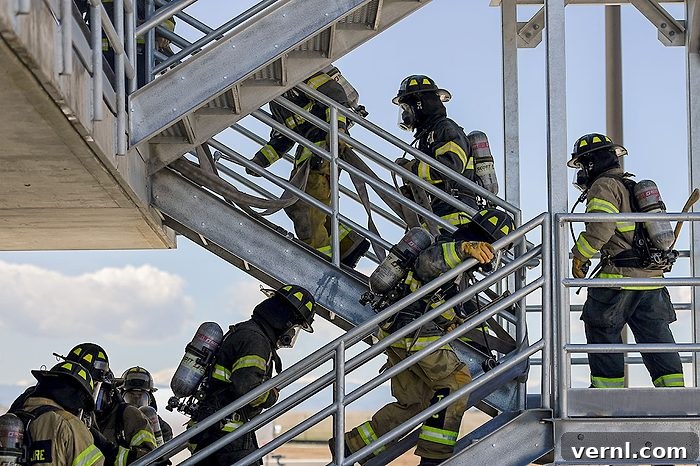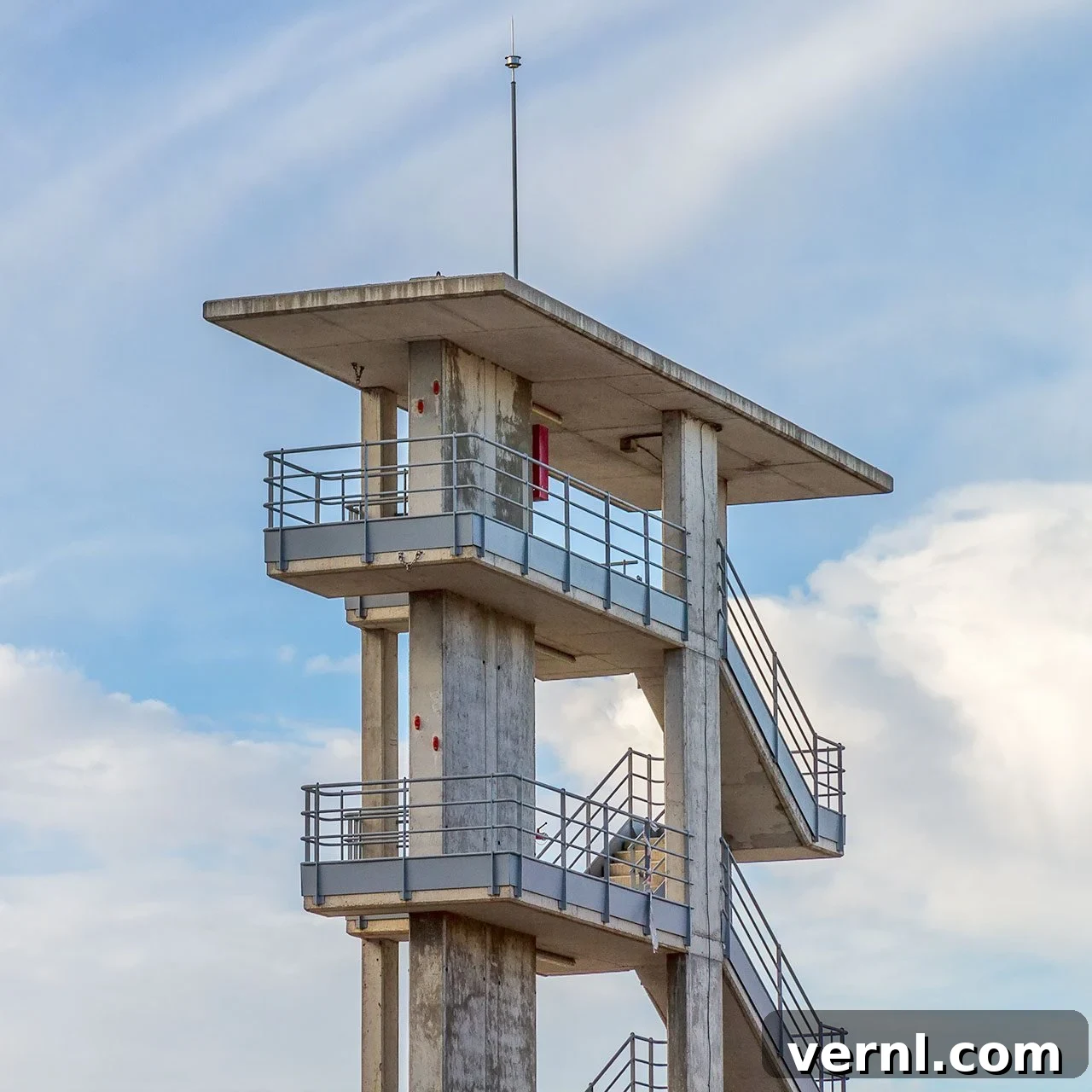
If you happen upon a giant staircase standing alone in an open area, you’re not imagining things. Though these structures can look unfinished or out of place, they usually have an intentional and practical purpose. Many of these odd staircases are purpose-built training structures used by firefighters.
These distinctive open stairways—often called fire training staircases, stair towers, drill towers, or training towers—are found at larger fire stations, public safety training campuses, and fire academies. They are designed without enclosed rooms or upper floors so that firefighters can practice stair climbing, hose handling, rescues, and other vital skills in a controlled but realistic setting.
What Is a Fire Training Staircase?
Fire training staircases are specialized structures that replicate the physical and logistical challenges firefighters face when climbing stairs under heavy loads and stressful conditions. Rather than being part of a finished building, they are intentionally exposed: flights of stairs, platforms, and landings with clear sight lines and easy access for instructors and safety personnel.
These towers let firefighters practice carrying hoses, rescue tools, medical gear, and self-contained breathing apparatuses while moving up and down multiple flights. Training scenarios include stair climbs while wearing full turnout gear, hose advancement and deployment on stairs, search and rescue drills, and high-angle or rope-based rescues from elevated platforms. Because stairs are a common obstacle in residential, commercial and high-rise emergencies, repeated training on these structures builds endurance, balance, footwork, and the judgment needed to conserve energy and maintain safety under strain.
Why Are Fire Training Staircases Designed That Way?
The open, minimal design of training staircases serves several training and safety goals:
– Clear visibility: Instructors can easily observe technique, monitor trainees, and identify potential hazards. Open sight lines make it simpler to intervene or give feedback in real time.
– Realistic environmental exposure: An exposed stair tower allows teams to train in weather conditions such as heat, humidity, rain, wind, or cold so they experience the added complexity of environmental factors similar to real incidents.
– Versatility: The structure accommodates many types of drills—hose deployment, search and rescue, high-angle rigging, and patient carry training. It also serves for fitness-focused activities like timed stair climbs or interdepartmental competitions that test strength and endurance.
– Safety and control: Conducting repetitive, high-risk training on a dedicated tower reduces wear on operational buildings and provides a controlled environment with specific safety measures in place, such as anchor points, railing systems, and designated observation areas.
Because these towers mimic stairwells and landings found in apartment buildings, offices, hotels, and high-rise structures, they help firefighters rehearse the coordination and physical demands that actual emergencies impose.
Where Are These Staircases Usually Located?
You will most often find fire training staircases at:
– Fire academies and municipal fire training centers
– Regional public safety campuses that consolidate training resources
– Larger fire stations with in-house training facilities
– Dedicated outdoor drill fields adjacent to emergency services complexes
Some towers are freestanding; others are integrated into larger mock-ups that simulate full interior spaces—apartment stacks, office floors, or industrial layouts. Regardless of the exact configuration, the visible, seemingly “unfinished” staircases are intentional tools designed to prepare first responders for the realities of emergency operations.
When you next see one of these standalone stair towers, remember it’s not abandoned or half-built. It’s a practical training asset built to help firefighters and other responders practice the skills, coordination, and physical stamina needed for real-world emergencies.
Sources
Fire Engineering — The Ups and Downs of Understanding High-Rise Stairwells
Fire Training Structures — How a Fire Training Tower Simulates Firefighting in High-Rise Buildings
Fire Facilities — Firefighter Combat Challenge Stair Tower
RELATED:
- The real reason these standalone stair towers exist and how they improve firefighter preparedness
- How stair towers are used in fitness and endurance events for first responders
- Training benefits of open-air drill towers versus enclosed simulation buildings