In an increasingly environmentally conscious world, the quest for sustainable living often begins at home, specifically with how we manage our waste. While some regions boast sophisticated and straightforward waste management systems, others grapple with widespread confusion, particularly when it comes to plastic recycling. This disparity was strikingly evident to me during a visit to a friend in Scotland, whose family of four produced remarkably little waste destined for the landfill. Their city’s robust curbside recycling and composting programs, coupled with a strong societal expectation for proper use, created an effective system. This stands in stark contrast to the complexities and misunderstandings often encountered here in the United States, especially concerning the symbols etched onto plastic containers.
Those ubiquitous numbers nestled within the chasing arrows symbol—officially known as Resin Identification Codes, or RIC numbers—typically range from one to seven. Understanding what these numbers signify and how to sort plastics correctly is not merely a suggestion; it’s a critical practice. Proper sorting prevents large batches of otherwise recyclable materials from becoming contaminated and, regrettably, rerouted to incinerators or landfills. This guide aims to demystify these recycling numbers, offering clarity on plastic types, common recycling mistakes, and most importantly, effective strategies for reducing your overall plastic footprint.
Understanding the Meaning Behind Recycling Symbols and Numbers
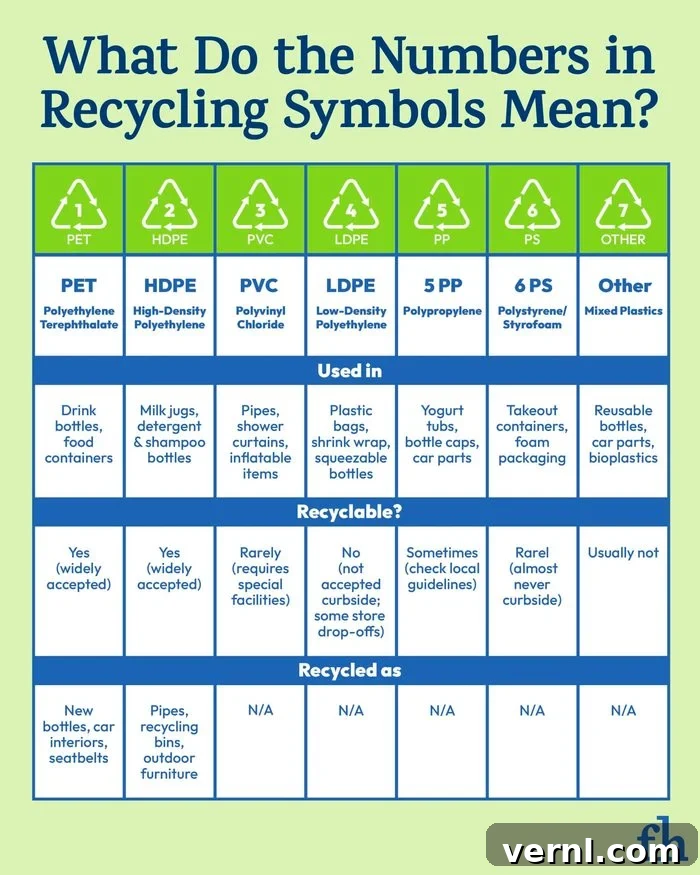
The Resin Identification Codes (RIC) are designed to help consumers and recycling facilities identify the specific type of plastic an item is made from. While they serve as a classification system, it’s crucial to understand that the presence of a number within the recycling symbol does not automatically guarantee an item’s recyclability. This common misconception leads to significant issues within the recycling stream, contributing to what is known as “wish-cycling.”
The origin of these symbols is, surprisingly, not entirely benign. As Aminah Taariq-Sidibe, manager of End Plastics at EarthDay.org, reveals, these symbols emerged in the 1980s as an initiative by the plastic industry. They adapted the familiar paper recycling symbol and integrated a number into its core. According to Taariq-Sidibe, “This move was essentially a greenwashing tactic to make people feel good about plastic use, while very little plastic actually gets recycled.” This historical context is vital for understanding why, despite widespread awareness of the symbols, global plastic recycling rates remain shockingly low, often below 10% for all plastics ever produced. Many plastics are simply not economically or technically viable to recycle, rendering the symbol a misleading marker for consumers.
#1 PET (Polyethylene Terephthalate)
PET plastic is one of the most widely recognized and extensively recycled plastic types globally. You’ll commonly find it in clear beverage bottles, such as water, soda, and juice bottles, as well as in some food containers like peanut butter jars. Its transparency and light weight make it a popular choice for single-use packaging. PET boasts a high recycling rate compared to other plastics, often finding new life as fiber for carpets, fleece materials, new bottles and containers, strapping, and even components for car interiors and seatbelts. To ensure proper recycling, always remember to empty out all contents thoroughly and remove bottle caps, as these are often made from a different type of plastic (usually #2 HDPE or #5 PP) and should be recycled separately or discarded, depending on local guidelines. Rinsing containers prevents contamination of entire recycling batches.
#2 HDPE (High-Density Polyethylene)
HDPE is a robust, opaque, and highly durable plastic, making it another widely accepted and easily recyclable material. It’s frequently used for containers that require more rigidity and strength than PET, such as milk jugs, detergent bottles, shampoo and conditioner bottles, and some household cleaner containers. Its high-density nature makes it excellent for reuse applications after recycling. Post-consumer HDPE can be transformed into a diverse range of products, including playground equipment, picnic tables, recycling bins, plastic lumber, piping systems, and outdoor furniture. Similar to PET, it’s imperative to empty and rinse HDPE containers and remove their caps before placing them in your recycling bin. This simple step significantly enhances the efficiency and purity of the recycling process.
#3 PVC (Polyvinyl Chloride)
PVC is a highly versatile but problematic plastic from a recycling perspective. Its applications are extensive, ranging from construction materials like pipes and window frames to consumer products such as shower curtains, inflatable air beds, garden hoses, and certain types of food packaging (though less common now). The significant challenge with PVC lies in its chemical composition. It contains dangerous chemicals, including chlorine, which can release harmful dioxins when incinerated or processed improperly. Consequently, PVC is rarely accepted in curbside recycling programs. Its recycling typically requires specialized facilities and processes, making it economically and logistically difficult. As Gareth Lloyd Jones, managing director at HIPPO waste management, points out, “This is why such a high percentage (around 82%) of PVC waste worldwide ends up in landfill, with just 3% actually being recycled.” Due to its environmental and health concerns, many advocate for reducing or eliminating PVC use wherever possible.
#4 LDPE (Low-Density Polyethylene)
LDPE is characterized by its flexibility and relative softness. It is commonly found in plastic bags (grocery bags, bread bags), frozen food packaging, squeezable bottles (e.g., honey, mustard), shrink wrap, and other flexible films. Despite being technically recyclable, LDPE is generally not accepted in most curbside recycling programs. The primary reason for this exclusion is its propensity to jam sorting machinery at recycling facilities. These thin, flexible plastics can wrap around gears and belts, causing significant operational disruptions, costly delays, and potential damage to equipment. It is therefore crucial to keep LDPE out of your curbside bin to prevent contaminating entire batches of otherwise recyclable materials. However, many grocery stores and other big-box retailers offer dedicated drop-off points for plastic bags and films. Always check with your local stores for available collection programs for these specific materials.
#5 PP (Polypropylene)
Polypropylene (PP) is a durable, heat-resistant plastic with a wide range of applications. It’s often used for items that need to withstand higher temperatures or require a more rigid structure than LDPE. Common examples include yogurt and butter tubs, deli containers, bottle caps (for #1 and #2 bottles), car parts, some household appliances, and even certain types of carpets and reusable containers. The recyclability of PP varies significantly by region. While some municipalities and recycling facilities have the infrastructure to process PP, many still do not. Therefore, it is absolutely essential to double-check with your local recycling guidelines to confirm whether PP is accepted in your curbside program. If it’s not accepted, consider reducing your consumption of products packaged in PP or seeking alternative disposal methods where available.
#6 PS (Polystyrene or Styrofoam)
Polystyrene (PS) is perhaps best known in its expanded foam form, commonly referred to as Styrofoam. It’s widely used in disposable items like coffee cups, to-go food containers, egg cartons, and protective packaging materials (e.g., for electronics). PS is notoriously difficult and expensive to recycle due to its low density (meaning it takes up a lot of space for very little material weight), its brittle nature, and its high susceptibility to contamination from food residues. Consequently, PS is almost never accepted in curbside recycling programs. Its bulky nature and processing challenges mean that the vast majority of PS waste ends up in landfills, where it persists for hundreds of years. Reducing consumption of PS products is one of the most effective ways to mitigate its environmental impact, as recycling options are extremely limited.
#7 Other (Miscellaneous or Mixed Plastics)
The #7 category serves as a catch-all for all other types of plastics that do not fit into categories #1 through #6, or for items made from a mix of different plastic resins. This category is diverse and can include polycarbonate (PC), often found in safety glasses, CDs/DVDs, and some car parts; nylon; certain types of reusable water and baby bottles (though many are now BPA-free and may fall into other categories or be specifically labeled); and compostable bioplastics. While the presence of the recycling symbol might lead consumers to “wish-cycle” these items, assuming they are recyclable, this is generally not the case. As Jones aptly states, “People often see this number and assume it’s recyclable because it has the recycling symbol, however, these items tend not to be widely recyclable, especially those with mixes of plastics.” The complexity of mixed plastics makes them extremely challenging and often impossible to sort and reprocess effectively, resulting in most #7 plastics being sent to landfill.
Beyond the Numbers: Essential Tips for Proper Recycling
Even with a clear understanding of RIC numbers, effective recycling hinges on following proper procedures. Recycling guidelines vary significantly based on local facility capabilities and market demands for recycled materials. Always prioritize checking your local recycling program’s specific instructions, often available on municipal websites, dedicated recycling apps, or through local waste management providers. Adhering to these guidelines is crucial to prevent contamination and ensure your efforts genuinely contribute to recycling rather than sending materials to the landfill.
- Rinse Out Containers Thoroughly: One of the most common and detrimental recycling mistakes is failing to rinse out containers. Leftover food particles, liquids, or greasy residues from items like yogurt cups, jam jars, or soda bottles can contaminate an entire batch of otherwise valuable recyclables. This contamination can render the entire load unusable, leading to it being rejected and sent to a landfill. A quick rinse with water is often sufficient to remove residues and keep your recyclables clean and viable.
- Place Recyclables Loose in the Bin: It’s a widespread habit, but bagging your recyclables before placing them in the curbside bin is often counterproductive. Plastic bags, even if they are technically recyclable (e.g., LDPE #4), can tangle and jam sorting machinery at recycling facilities. This causes costly breakdowns, delays, and safety hazards for workers. Unless specifically instructed by your local program, always place individual recyclable items directly into the bin without using plastic bags.
- Avoid Greasy or Food-Soiled Items: Items made from recyclable materials, such as cardboard pizza boxes, paper napkins, and paper plates, cannot be recycled if they are soiled with grease or food residue. The oil and food particles seep into the paper fibers, making them impossible to separate during the pulping process. These items should be composted if your area offers a program for organic waste, or otherwise disposed of in general waste. If only a portion of a pizza box is greasy, you might be able to tear off and recycle the clean sections.
- Say No to “Wish-Cycling”: Wish-cycling refers to the practice of putting items into the recycling bin when you are unsure if they are recyclable, simply “wishing” they will be. This well-intentioned but misguided act is a major source of contamination. When non-recyclable items are mixed with genuinely recyclable ones, they can compromise the quality of the entire batch, leading to its rejection by recycling facilities. When in doubt, it’s always better to throw an item in the trash than to risk contaminating a valuable stream of recyclables.
- Check Local Guidelines Regularly: Recycling rules can change due to technological advancements, market shifts for recycled materials, or local policy updates. What was recyclable last year might not be today, and vice-versa. Make it a habit to periodically review your local municipality’s recycling guidelines to stay informed and ensure your efforts are effective.
The Bigger Picture: Prioritizing Plastic Waste Reduction
While understanding recycling symbols and practicing proper disposal is commendable, it’s essential to recognize that recycling is just one part of the solution to the global plastic crisis. The ultimate goal should always be to minimize plastic waste at its source. As Aminah Taariq-Sidibe from EarthDay.org aptly states, a far more impactful approach is to “avoid buying products made of plastics in the first place, especially single-use items, which account for roughly half of all plastics.”
The “Reduce, Reuse, Recycle” hierarchy of waste management places reduction at the very top for a critical reason. Every new plastic product manufactured consumes virgin resources, energy, and contributes to carbon emissions, regardless of whether it eventually gets recycled. The infrastructure for plastic recycling is limited, expensive, and often ineffective, with a staggering less than 10% of all plastics ever produced having actually been recycled. This means the vast majority ends up polluting our environment for centuries, breaking down into harmful microplastics.
Moreover, the health implications of widespread plastic use are increasingly clear. Taariq-Sidibe emphasizes, “Plus food and drinks in plastic containers are often contaminated with microplastic particles which you then consume, so it’s not good for your health either to use plastics all the time.” These tiny plastic fragments can leach into our food and water, posing potential risks to human health, the full extent of which is still being researched.
To truly make a difference, consider these actionable steps for reducing plastic in your daily life:
- Opt for Reusables: Invest in reusable water bottles, coffee cups, shopping bags, and food containers.
- Buy in Bulk: Purchase groceries and household items in bulk to reduce individual plastic packaging.
- Choose Plastic-Free Alternatives: Look for products packaged in glass, metal, paper, or those with no packaging at all.
- Support Businesses with Sustainable Practices: Patronize companies committed to reducing plastic use and offering eco-friendly options.
- Cook More at Home: Reduce reliance on takeout and convenience foods that often come with excessive plastic packaging.
By shifting our focus from merely managing plastic waste to actively preventing it, we can contribute significantly to a healthier planet and a more sustainable future.
Frequently Asked Questions About Plastic Recycling
Can I recycle plastic without a recycling symbol on it?
Generally, if a plastic item does not feature a Resin Identification Code (RIC) or any explicit recycling instructions, it is highly unlikely to be accepted by standard curbside recycling programs or facilities. Small plastic items, like certain caps or unique components, often lack symbols. While some non-plastic items (like glass jars or metal cans) might not have the chasing arrows symbol but are still recyclable, for plastic, the absence of a symbol typically indicates it should be placed in the general waste bin. Always consult your local recycling guidelines to be absolutely sure.
Do all recyclables have a recycling symbol?
No, not all recyclable items bear the universal chasing arrows symbol with a number. This symbol is primarily used for plastics. Other common recyclable materials such as glass jars, metal cans (aluminum, steel), and various paper products (cardboard, newspapers, magazines) typically do not carry this specific plastic symbol. Instead, their recyclability is usually identified by the material type itself or by other specific symbols (like the Mobius loop for paper/cardboard without a number). For these materials, relying on your local recycling program’s comprehensive list of accepted items is the most reliable approach.
Is all plastic recyclable?
Definitely not. This is a crucial misconception that contributes to wish-cycling. While types #1 (PET), #2 (HDPE), and #5 (PP) are the most widely accepted and commonly recycled plastics due to their market value and processing feasibility, many other types (#3 PVC, #4 LDPE, #6 PS, and #7 Other) are rarely, if ever, accepted by standard curbside programs. The reasons vary, including chemical composition, processing difficulties, low economic value, and contamination risks. In reality, less than 10% of all plastic ever produced has been recycled, highlighting the significant limitations of plastic recycling as a solution to plastic pollution.
What happens if I recycle something that’s not recyclable?
Recycling non-recyclable items, often referred to as “wish-cycling,” has several detrimental consequences. Primarily, it contaminates entire batches of otherwise recyclable materials. When contaminated loads arrive at a sorting facility, they often cannot be processed effectively and may be rejected altogether, resulting in the entire batch being diverted to landfills or incinerators instead of being recycled. Moreover, certain non-recyclable items, such as thin plastic bags or shrink wrap (LDPE #4), are particularly problematic as they can jam and damage expensive sorting machinery, causing costly repairs, operational delays, and increased processing costs for recycling facilities. Always adhere to local guidelines to avoid these issues.
About the Experts
- Aminah Taariq-Sidibe is manager of End Plastics at EarthDay.org, an organization dedicated to driving global environmental change with a specific goal of reducing plastic pollution by 60% by 2040. Her expertise centers on advocating for policy changes and consumer awareness to combat plastic waste.
- Gareth Lloyd Jones is a seasoned waste management expert and managing director at the UK-based waste management company HIPPO. With 15 years of experience in the industry, he provides valuable insights into the practical challenges and solutions in waste collection, sorting, and disposal.
Related Resources for Sustainable Living
- The Real Reason Aluminum Foil Has a Shiny Side and a Dull Side
- Think Adirondack Chairs Are Uncomfortable? You’re Using Them Wrong
- Why You Shouldn’t Crush Aluminum Cans Before Recycling