
Insulated Garage Door Costs: Is It a Smart Investment for Your Home?
Upgrading your home for better energy efficiency is always a worthwhile pursuit. When it came time to replace my garage doors, the allure of insulated options was strong. As someone who uses half of the garage as a workshop and crafting space, maintaining a comfortable temperature year-round is important. While I ultimately chose wood French garage doors, due to their natural insulating properties and aesthetic fit, the benefits of insulated doors – energy savings and noise reduction – were undeniably attractive, but the higher price tag needed consideration.
This article delves into the specifics of insulated garage doors, comparing their advantages and disadvantages to help you determine if the investment is right for your needs. We’ll explore the costs, the materials, and what kind of return you can expect on your investment.
What Exactly is an Insulated Garage Door?
An insulated garage door is designed to minimize the transfer of heat or cold air between your garage and the outside environment. This feature is particularly beneficial for homes with attached garages, where temperature fluctuations can significantly impact the home’s internal climate. Unlike standard garage doors, which typically consist of a single panel, insulated doors incorporate layers of insulating materials within the door panels.
The primary benefit of this design is its ability to maintain a more consistent temperature within the garage. This reduces the workload on your HVAC system, potentially leading to lower energy bills and a more comfortable living space.
To gain a better understanding of the cost/benefit relationship, I spoke with garage door professional Jon Russell. He highlighted that “Insulated garage doors generally come with a higher initial price compared to standard, non-insulated doors. However, over time the energy savings can often balance out the upfront cost.” Considering the overall cost of a garage door is a crucial step in the decision-making process.
Insulated Garage Doors: The Pros and Cons
If you live in a region with extreme temperatures, either hot or cold, an insulated garage door is worth strongly considering. Let’s break down the advantages and disadvantages to help you make an informed decision:
Advantages of Insulated Garage Doors
- Energy Efficiency: The most significant benefit is the potential for energy savings. Insulated doors help maintain a stable temperature in your garage. This reduces the need for excessive heating or cooling, leading to lower energy consumption and potentially lower utility bills.
- Noise Reduction: These doors act as a sound barrier, reducing the transfer of noise from outside. This can be particularly beneficial if you live near a busy street or in an area with frequent disturbances.
- Durability and Strength: Insulated garage doors, especially those with polyurethane insulation, are generally more robust and resistant to dents and other types of damage compared to non-insulated doors. This can extend the lifespan of your garage door and reduce the need for repairs.
Disadvantages of Insulated Garage Doors
- Higher Upfront Cost: Insulated garage doors typically come with a higher purchase price compared to standard, non-insulated models. This is due to the added materials and construction complexity.
- Maintenance Considerations: Some materials used in insulated doors, such as wood, may require regular maintenance to preserve their appearance and prolong their lifespan. This may include painting, staining, or sealing.
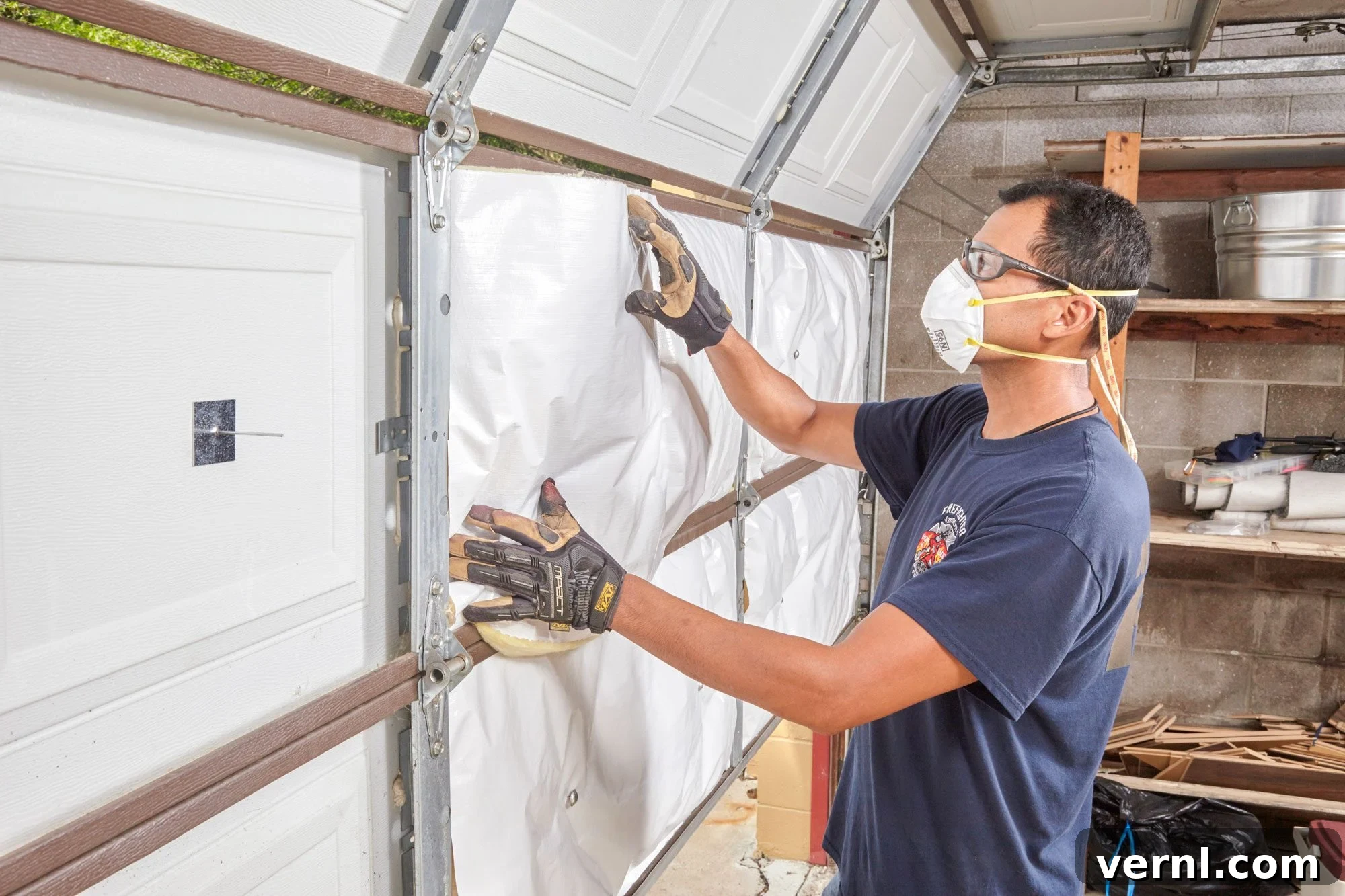
- Installation Complexity: While DIY installation is possible, particularly with certain types of insulation like polystyrene, improper installation can negate the benefits of the insulation. Professional installation may be required for optimal performance and safety.
How Much Does an Insulated Garage Door Cost? A Detailed Breakdown
The cost of an insulated garage door varies based on multiple factors. These include the size of the door, the materials used, the design chosen, and whether you are replacing an existing door or installing a new one. Understanding these elements can help you create a budget that reflects your needs.
On average, homeowners can expect to pay between $750 and $2,300 for a standard-size, single insulated garage door. However, the price can range from approximately $350 for the door itself if you’re planning a DIY project, to $4,500 or more if you opt for professional installation, with all the associated labor costs.
Insulated Garage Door Costs by Size
Here’s a breakdown of the average price ranges for installing an insulated garage door, organized by garage size. These estimates typically include the cost of parts and labor. Remember to factor in an extra $100 for removing the old garage door, and anticipate electrician costs averaging around $125 per hour if any electrical work is necessary.
- One-Car Garage: $700 to $1,550
- Two-Car Garage: $2,400 to $2,900
- Three-Car Garage: $3,800 to $4,300
Insulated Garage Door Costs by Material
The material used in the construction of your insulated garage door also impacts the cost. Different materials have varying weights, making installation easier or more difficult, which affects labor costs. The following price ranges include estimated labor costs of $100 to $500.
- Steel: $600 to $3,500
- Aluminum: $800 to $2,500
- Fiberglass: $1,100 to $2,600
- Wood: $800 to $4,600
Understanding R-Value and Insulation Materials
The R-value is a critical measure that indicates the insulation’s resistance to heat flow. A higher R-value means superior insulating properties. The choice of insulation material directly impacts the door’s R-value and, consequently, its cost. The prices listed below typically include labor expenses.
Polystyrene Insulation
Polystyrene is a type of rigid foam insulation available in sheet form. It is placed between the layers of the garage door, offering a basic level of insulation.
- Benefits:
- Lightweight for easier installation.
- Water-resistant, ensuring durability.
- R-value: R-4 to R-6
- Price: $750 to $1,500
Polyurethane Insulation
This type of insulation is a foam that is sprayed between the door panels. It expands to completely fill the space, providing excellent insulation and support.
- Benefits:
- Adds rigidity to the door, improving its strength and durability.
- Acts as a sound barrier, reducing external noise levels.
- R-value: R-12 to R-18
- Price: $1,000 to $3,500
Reflective Insulation
Reflective insulation typically comprises aluminum foil attached to polyethylene or bubble wrap. It works by reflecting radiant heat, which makes it particularly effective in warmer climates.
- Benefits:
- Effectively reflects heat, keeping the garage cooler during hot weather.
- Lightweight and easy to install.
- R-value: R-3 to R-6
- Price: $800 to $2,000
Fiberglass Insulation
Fiberglass is a commonly used insulation material in residential applications, composed of fine glass fibers. For garage doors, it’s usually sandwiched between two layers of the door material.
- Benefits:
- Lightweight, making installation relatively straightforward.
- Resists heat transfer and provides sound insulation.
- R-value: R-2.9 to R-3.8
- Price: $800 to $2,500
- To insulate an existing garage door with fiberglass, expect to pay around $100 for a DIY kit.
Rigid Foam Insulation
This dense material provides high insulating values with a thinner profile compared to other insulation types. It is often made from polystyrene, polyisocyanurate, or polyurethane.
- Benefits:
- Moisture-resistant, decreasing the chance of mold growth.
- Adds structural strength and rigidity to the door.
- R-value: R-4 to R-6.5
- Price: $850 to $2,600
- DIY foam board insulation kits are priced at $50 to $125.