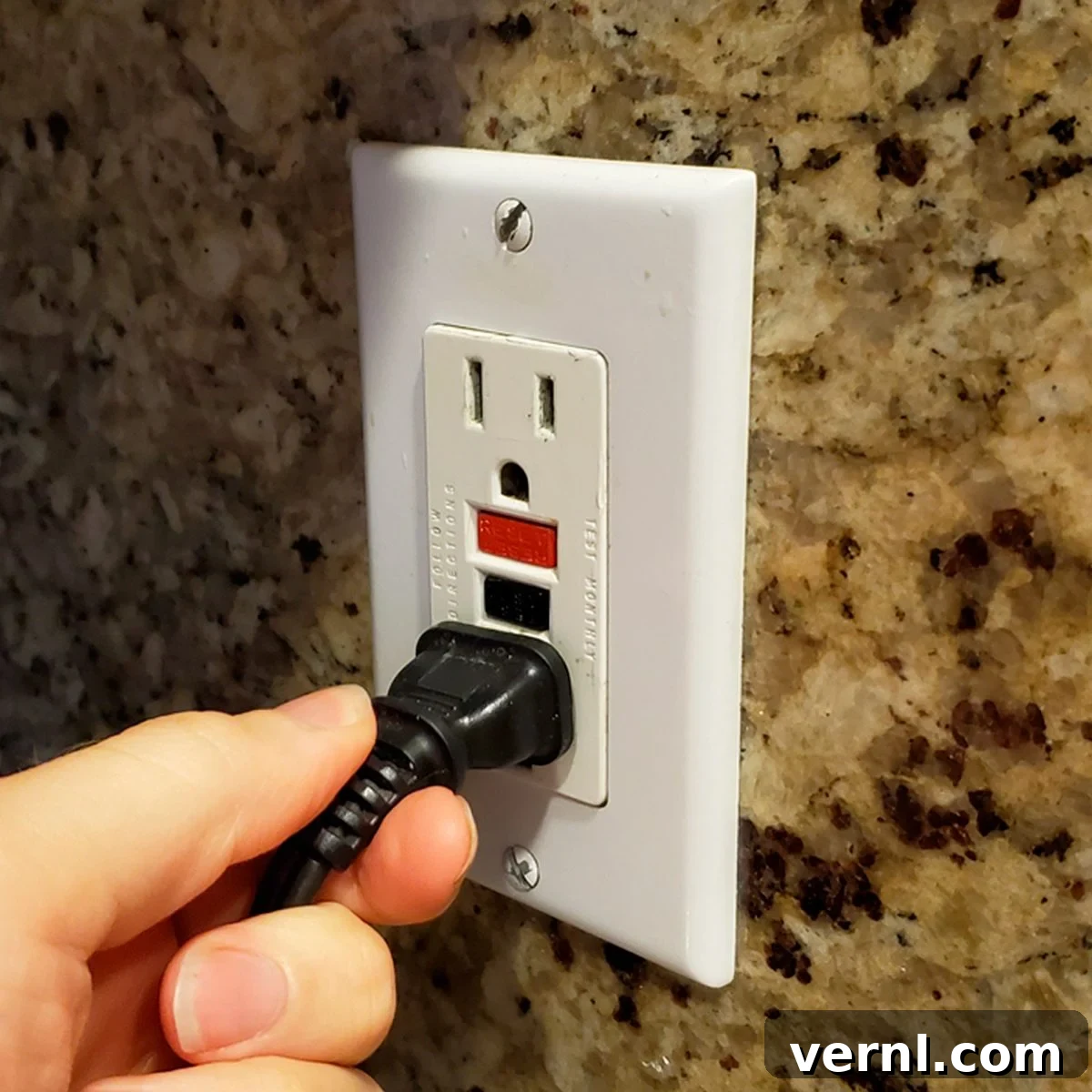
The Silent Guardian: Understanding and Embracing GFCI Protection
In 1978, as a rookie apprentice electrician, I experienced my first electrical shock. It was a moment etched vividly in my memory, a harsh introduction to the inherent dangers of electricity. GFCI (Ground-Fault Circuit Interrupter) technology was nascent at that time, and GFCI-protected receptacles were not yet standard. I was on a damp concrete floor, meticulously repairing broken receptacles in one room, when my foreman, believing I had finished, inadvertently re-energized the circuit in the adjacent room. The sudden jolt was immediate and petrifying. A scream, perhaps, escaped my lips, and I was momentarily stunned, held captive by the current.
Fortunately, nearby colleagues rushed to my aid, helping me to my feet. Though shaken, I was ultimately okay. My foreman, horrified by the oversight, felt immense guilt. That incident served as a stark, unforgettable lesson, immediately prompting us to devise a stringent safety protocol to prevent such an occurrence from ever happening again. This personal experience underscores a crucial truth: electrical safety is paramount, and advancements in technology, particularly the widespread adoption of GFCIs, have revolutionized how we protect ourselves from potentially lethal electrical hazards in our homes and workplaces.
What Is a GFCI Protected Outlet, and Why Is It Essential?
A GFCI receptacle outlet, or a GFCI-protected branch circuit, is a life-saving device engineered to provide protection against severe and potentially fatal electrical shocks. Unlike standard outlets or circuit breakers that primarily protect against overloads and short circuits, a GFCI specifically targets ground faults – a unique type of electrical malfunction that can send current through an unintended path, such as the human body.
The development of GFCI technology marked a significant leap forward in electrical safety. Prior to its widespread adoption, many people suffered serious injuries or fatalities from seemingly minor electrical incidents, especially in environments where water was present. Recognizing this critical vulnerability, electrical engineers and safety experts developed the GFCI to offer an additional layer of protection that traditional circuit breakers could not provide. These devices are designed to detect minute imbalances in electrical current, tripping the circuit almost instantaneously to prevent harm.
GFCI protection is available in several versatile forms, each suited for different applications and levels of convenience:
- GFCI Receptacles: These are the most common form homeowners encounter. They look like standard wall outlets but feature “Test” and “Reset” buttons. When installed in a circuit, a single GFCI receptacle can protect itself and all subsequent outlets wired downstream from it on the same circuit. They are typically found in bathrooms, kitchens, garages, and outdoor areas where the risk of ground faults is higher.
- GFCI Circuit Breakers: Installed directly into your home’s main electrical panel, a GFCI breaker protects an entire branch circuit, including all outlets and lighting fixtures connected to it. This provides comprehensive protection for specific areas or rooms, often used when protecting an outdoor circuit or an entire kitchen. There are also “Dual Function” AFCI/GFCI breakers, which combine protection against both arc faults (which can cause fires) and ground faults, offering an even higher level of safety.
- Blank-Face GFCI Devices: These devices do not have an outlet; instead, they are designed to protect downstream outlets or permanent fixtures on a circuit. They are often used in locations where a receptacle isn’t needed but ground fault protection for hardwired appliances or lighting is required, such as under a sink protecting a garbage disposal, or in a laundry room protecting a washing machine.
- Portable GFCI Devices and Extension Cords: For temporary protection, portable GFCIs plug into existing outlets, providing ground fault protection for any tool or appliance plugged into them. GFCI extension cords offer similar protection, making them ideal for use with power tools outdoors or in damp environments where permanent GFCI outlets may not be available. These are invaluable for job sites and DIY projects, ensuring safety wherever you need it.
Understanding these different forms allows homeowners and professionals to select the most appropriate GFCI solution for various electrical safety needs, ensuring robust protection against the silent, deadly threat of ground faults.
Deciphering a Ground Fault: What It Is and Why It Is Dangerous
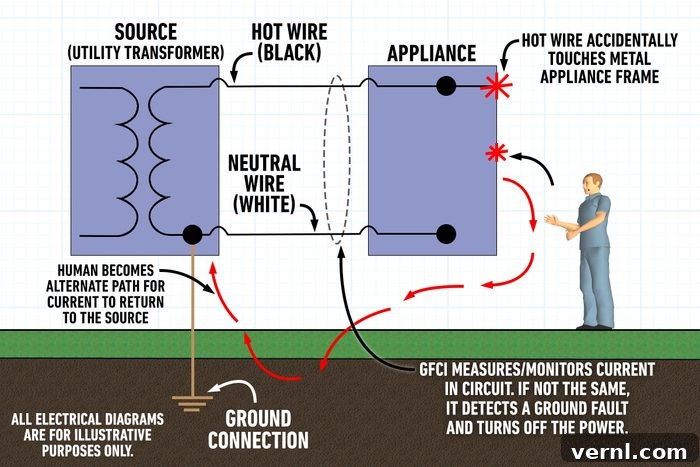
To truly appreciate the indispensable role of a GFCI, one must first grasp the concept of a ground fault. The National Electrical Code (NEC), the authoritative standard for electrical safety in the United States, defines a ground fault as “an unintentional, electrically conductive connection between an ungrounded conductor of an electrical circuit and the normally non-current carrying conductors, metal enclosures, metal raceways, metal equipment or earth.”
In simpler terms, a ground fault occurs when electricity strays from its intended path. Instead of flowing safely through the designated hot and neutral wires, the “hot” or energized wire inadvertently comes into contact with something it shouldn’t – something that is not designed to carry current, but can. This could be the metallic casing of your countertop microwave oven, the exposed wiring of a damaged appliance, or, most perilously, a human being. Imagine standing barefoot on wet grass, holding an extension cord with frayed insulation; if the hot wire touches your hand, your body becomes an unintended, conductive path for the electricity to reach the earth, completing the circuit.
The danger of a ground fault lies in this deviation. Unlike an overload, where too much current flows through a circuit, or a short circuit, where hot and neutral wires touch, a ground fault sends current through an alternative, often human, path. This alternative path can expose individuals to dangerous levels of electrical current, leading to severe shocks, burns, internal injuries, and even electrocution. What makes ground faults particularly insidious is that they can involve relatively small amounts of current – sometimes as little as 0.005 amperes – which are too low to trip a standard circuit breaker but more than enough to cause cardiac arrest or other life-threatening physiological responses.
Common scenarios for ground faults include:
- A faulty appliance where internal wiring touches the metal frame.
- A damaged power cord where insulation is compromised, exposing the live wire.
- Moisture or water coming into contact with electrical components or outlets.
- Tools or appliances falling into water (e.g., a hairdryer into a bathtub).
- Accidental contact with live wires due to poor wiring, DIY mistakes, or wear and tear.
In each of these situations, the ground fault presents an immediate and severe risk, making the rapid intervention of a GFCI not just beneficial, but absolutely critical for preventing tragedy.
The Mechanics of Safety: How a GFCI-Protected Outlet Works
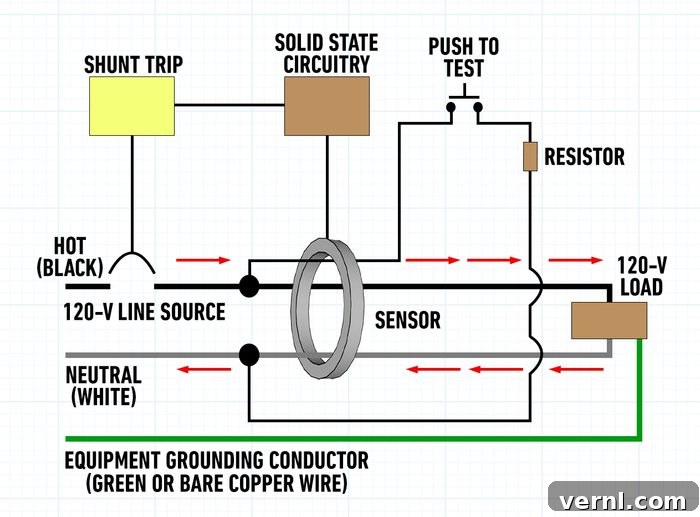
At the heart of every electrical system, somewhere outside your home, an electric utility transformer diligently steps down high-voltage power to the safer 240/120 volts that energize our homes. This transformer is, metaphorically, the “source of all power” for your household. The fundamental principle of electrical circuits dictates that electricity must always complete a full loop: it leaves the source, flows through appliances and lighting, and must ultimately return to that same source. In simplified terms, power flows to your appliances via the black (or sometimes red) “hot” wire and returns to the source via the white “neutral” wire. This continuous, balanced flow is the essence of a healthy electrical circuit.
A GFCI device acts as a vigilant guardian, continuously monitoring this delicate balance. Internally, a GFCI employs a sensing coil, often toroidal (donut-shaped), through which both the hot and neutral wires pass. As electricity flows to an appliance, the GFCI measures the current in the outgoing hot wire. Simultaneously, it measures the current returning through the neutral wire. In a perfect, healthy circuit, the current flowing out through the hot wire should be precisely equal to the current flowing back through the neutral wire. The GFCI is programmed to detect even the slightest discrepancy.
If the returning current in the neutral wire is not exactly the same as the current in the outgoing hot wire, even a tiny difference, the GFCI instantly detects a ground fault. This imbalance signals that a portion of the electrical current is finding an alternative route back to the “source” – a path other than the neutral wire. And, critically, that alternative path could very well be through a person, such as the individual standing in wet grass, holding a damaged extension cord, or touching a faulty appliance.
The speed at which a GFCI operates is its most life-saving feature. Upon detecting this ground fault, the GFCI mechanically trips and shuts off the power to the affected circuit in a fraction of a second – typically within 1/40th of a second. Modern GFCI technology is engineered to interrupt the flow of electricity if the ground fault current is between 0.004 to 0.006 amperes (4 to 6 milliamperes). This is a crucial threshold because medical research indicates that currents above 6 milliamperes can cause ventricular fibrillation (erratic heartbeats) and paralysis of respiratory muscles, leading to death. By acting so quickly and at such low current differentials, a GFCI can prevent a potentially lethal shock from escalating into a fatal incident, essentially stopping the current before it can cause severe damage to the human body.
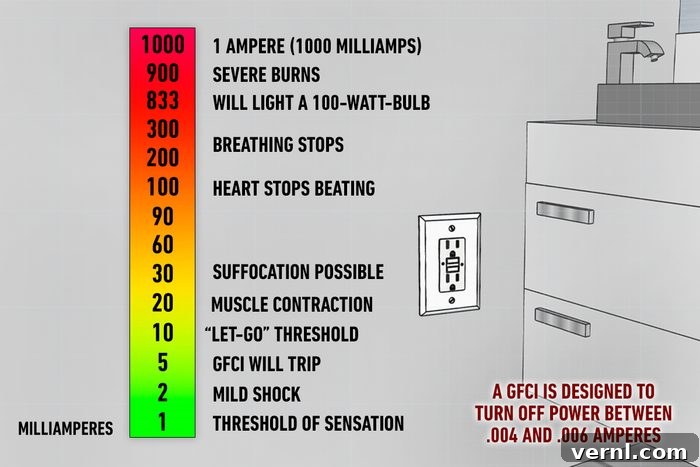
This rapid response and sensitive detection mechanism make the GFCI an unparalleled safety device, crucial for protecting lives in environments where electrical hazards are heightened. Its ability to distinguish between normal current flow and a dangerous leakage of current is what truly sets it apart from other protective devices.
Where GFCI Protection Is Required in Your Home: A Comprehensive Guide
The National Electrical Code (NEC) meticulously outlines where GFCI protection is mandated, constantly evolving to enhance safety standards. All GFCI devices, whether receptacles or circuit breakers, must be installed in readily accessible locations. This ensures they can be quickly reached for operation, troubleshooting, and crucially, for the monthly testing recommended to verify their functionality. All 120-volt and 240-volt receptacles installed in the following locations are typically required to have GFCI protection, reflecting areas where the risk of ground faults is significantly elevated:
Bathrooms: The Classic Water-Electricity Mix
The NEC defines a bathroom as an area with a sink and one or more of the following: a toilet, urinal, tub, shower, bidet, or similar fixtures. It is almost a universal truth that water and electricity are an incredibly dangerous combination. The presence of sinks, showers, and tubs means a constant potential for water splashes, spills, and condensation. Any electrical appliance, such as a hairdryer, curling iron, or electric shaver, used near water poses a severe risk. GFCI protection here is non-negotiable, acting as a critical safeguard against accidental electrocution if an appliance falls into water or if stray current finds a path through a wet surface.
Garages, Accessory Buildings, and Boat Houses: Damp and Dusty Environments
Garages, tool sheds, workshops, and similar utility locations often feature damp concrete, gravel, or dirt floors. These conditions increase conductivity, making the risk of electrical shock much higher if a power tool, extension cord, or appliance develops a fault. The presence of water, moisture, or even high humidity significantly amplifies the potential for a shock hazard, as it provides an easy path for electricity to ground through a person. Boat houses, in particular, combine this risk with proximity to large bodies of water, making GFCI an absolute necessity.
Outdoors: Direct Contact with Earth
This category is arguably one of the most critical. When you’re outdoors, you are, by definition, in direct contact with the earth. The ground itself acts as a massive conductor, eagerly accepting any stray electrical current. Whether you’re mowing the lawn, trimming hedges, using power tools, or simply enjoying outdoor lighting, any equipment with a faulty cord or internal wiring can turn your body into a conduit to the earth. Rain, dew, and irrigation only exacerbate this danger, making GFCI protection essential for all outdoor receptacles to prevent tragic accidents.
Crawl Spaces and Basements: Hidden Hazards
Similar to garages and accessory buildings, crawl spaces and basements often present damp concrete, exposed dirt, or gravel floors. These environments are prone to moisture, leaks, and high humidity, significantly increasing the electrical shock hazard. Any receptacle in these confined and often neglected areas, especially those used for sump pumps, dehumidifiers, or temporary lighting, must be GFCI protected to safeguard against electrical faults in potentially wet conditions.
Kitchens: The Hub of Appliances and Water
The kitchen is a bustling area, a confluence of water sources (sinks, dishwashers, refrigerators with water dispensers) and a multitude of electrical appliances (microwaves, toasters, coffee makers, blenders, electric kettles). This unique combination presents a significantly higher risk of electrical shock. Spills, splashes, and the close proximity of water-using appliances to electrical outlets make GFCI protection mandatory for all countertop receptacles, as well as those serving dishwashers, electric ranges, and similar fixtures in kitchens. This ensures safety even during everyday tasks.
Sinks: Proximity to Water
All receptacles located within six feet (1.8 meters) from the top inside edge of the bowl of any sink, including those in wet bars, laundry rooms, or utility sinks, are required to have GFCI protection. This requirement is rooted in practicality: many portable or hand-held appliances come with cords up to six feet long. The intention is to ensure that even if an appliance is used at its cord’s maximum reach near a water source, the user remains protected from potential ground faults.
Bathtubs and Shower Stalls: Intimate Water Contact
Similar to sinks, all receptacles within six feet of the outside edge of a bathtub or shower stall must be GFCI protected. This encompasses any outlets in the immediate vicinity of bathing areas, where direct contact with water is not only possible but highly probable. Given the full-body immersion in water, the risk of a severe or fatal shock in these locations is extremely high without adequate GFCI safeguards.
Laundry Areas: Moisture and Appliances
The very nature of laundry areas involves significant moisture and water, from washing machines to utility sinks and clothes dryers that generate humidity. Receptacles serving these appliances, or any others in the laundry space, are prone to moisture exposure and potential leaks. GFCI protection ensures that any electrical fault, perhaps from a failing appliance or an accidental water spill, is quickly detected and mitigated, preventing dangerous shocks.
Indoor Damp/Wet Locations: The Catchall for Moisture
This category serves as a broad safeguard, encompassing any other indoor damp or wet areas that could pose an increased risk of electrical shock. Examples include mudrooms where wet footwear and clothing are common, or an indoor greenhouse with high humidity and frequent watering. Any location where moisture is routinely present requires GFCI protection for receptacles to maintain a safe electrical environment.
Crawl Space Lighting Outlets: Beyond Receptacles
The GFCI requirement isn’t solely limited to receptacle outlets. All 120-volt lighting outlets, whether permanently installed or temporary, in crawl spaces must also have GFCI protection. Given that crawl spaces often have dirt or damp concrete floors, the risk of a shock hazard from lighting fixtures, especially if damaged or improperly installed, is considerable. This ensures that anyone working or inspecting in these areas is protected.
Specific Appliances: Hardwired and Plug-In
The requirement for GFCI protection extends beyond general-use receptacles to specific appliances, regardless of whether they are plugged into an outlet or direct-wired (hard-wired). GFCI is mandated for branch circuits or outlets supplying the following appliances rated at 120 or 240 volts and 60 amperes or fewer:
- Sump Pumps: Often located in basements where water is a constant threat, sump pumps are critical for flood prevention but also pose an electrical risk.
- Dishwashers: Water-using appliances in kitchens are prime candidates for ground faults.
- Electric Ranges, Wall-Mounted Ovens, and Counter-Mounted Cooking Units: These large appliances often combine heating elements with metal casings, making GFCI protection vital for user safety.
- Clothes Dryers: Like washing machines, dryers operate in damp laundry environments and can develop faults.
- Microwave Ovens: Commonly used countertop appliances in kitchens, these require protection especially given their proximity to sinks.
This comprehensive list highlights the NEC’s proactive approach to safeguarding against electrical hazards in areas where specific appliances inherently increase the risk.
Outdoor Outlets Revisited: A Broad Safety Net
This acts as another catchall category, ensuring comprehensive protection for all outdoor outlets. It applies to all outdoor outlets for cord-and-plug-connected or direct-wired equipment supplied by branch circuits rated 120 or 240 volts and 50 amperes or fewer. This includes outlets specifically located in garages, accessory buildings, and boat houses, even if they are covered by other categories. The emphasis here is on ensuring that any electrical device used outdoors, regardless of its specific location within the property, benefits from GFCI protection due to the inherent risks of outdoor environments.
There are some specific exceptions to these requirements, such as for snow-melting and deicing receptacles that are permanently installed and out of reach from the ground, where the risk of human contact with a fault is minimized. There is also typically an exception for HVAC (Heating, Ventilation, and Air Conditioning) equipment, like outdoor air-conditioner units, as they are hardwired and generally considered out of reach for casual contact, with internal protection mechanisms.
Regular maintenance is crucial for GFCI devices. You should periodically test your GFCI outlets, typically monthly, by pressing the “Test” button. The GFCI should trip and cut power. Pressing “Reset” should restore power. If it doesn’t trip or reset, it may be faulty and should be replaced immediately by a qualified electrician.
When Will Whole-House GFCI Protection Be Required? The Future of Electrical Safety
The question of when whole-house GFCI protection will become a mandatory standard in the United States is complex, yet the trend is clear: electrical codes are incrementally moving towards this goal. Many developed countries, particularly in Europe, have already adopted comprehensive whole-house protection against ground fault leakage currents through the widespread use of Residual Current Devices (RCDs), which are functionally similar to GFCIs. These mandates are driven by a singular objective: to significantly reduce the incidence of lethal electrical shocks and enhance overall public safety.
The U.S. National Electrical Code (NEC) has steadily expanded GFCI requirements with each new edition, pushing for broader application in more areas of the home. This incremental approach allows the industry to adapt, and manufacturers to innovate, while also considering cost implications for homeowners. The benefits of whole-house GFCI protection would be profound, offering a virtually impenetrable shield against ground faults in every corner of a residence, protecting not only outlets in traditionally hazardous areas but also lighting, permanently wired appliances, and less obvious locations where faults could occur.
Challenges to implementing whole-house GFCI include the potential for nuisance tripping from older appliances or inductive loads, which could be an inconvenience for homeowners. However, advancements in GFCI technology are continuously addressing these issues, making devices more reliable and less prone to false trips. The cost of upgrading older homes to meet such a standard would also be a significant consideration, potentially requiring changes to main electrical panels and extensive wiring modifications.
Despite these challenges, the trajectory towards whole-house GFCI protection seems inevitable. As technology improves, costs decrease, and public awareness of electrical hazards grows, future editions of the NEC are likely to continue expanding these requirements. The ultimate vision is a home where every circuit is monitored for ground faults, providing an unprecedented level of safety for occupants. Embracing this future means fewer accidents, greater peace of mind, and a more robust electrical infrastructure capable of protecting lives from the silent, often invisible, threat of electrical current.