
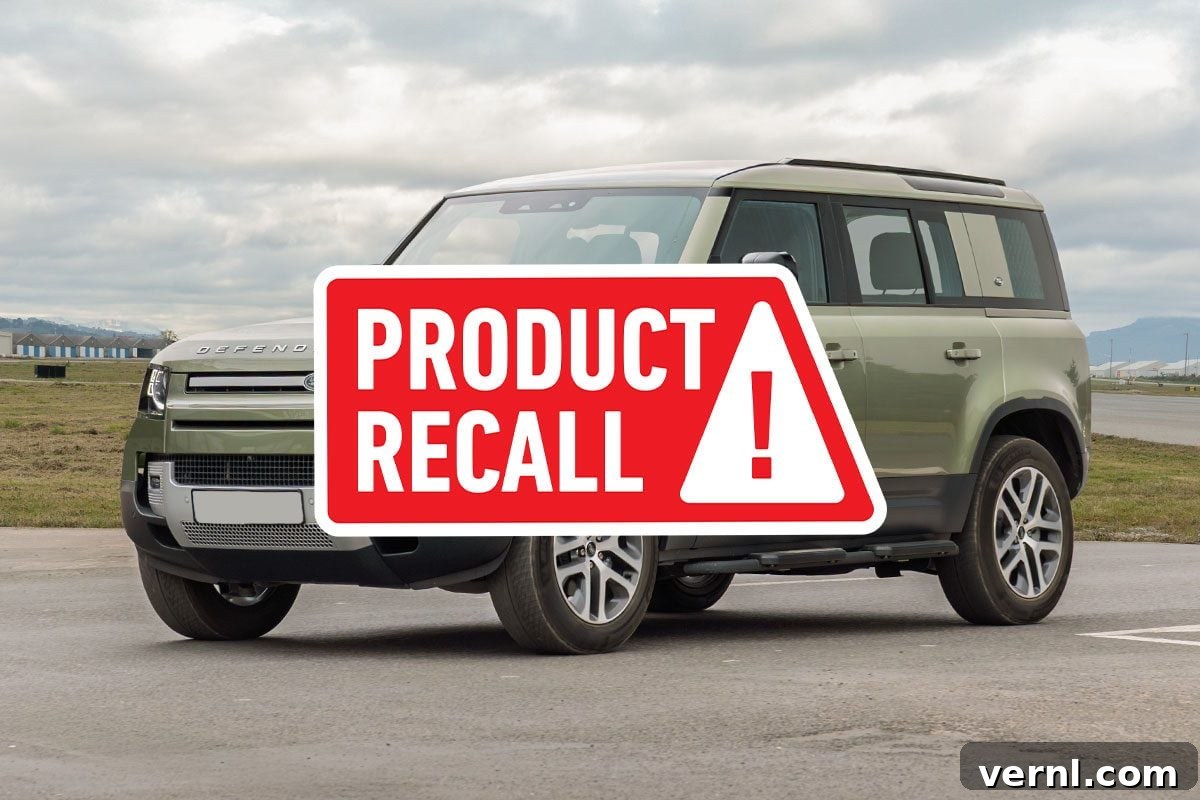
Bad news for those who cherish the thrill of off-road adventures or embark on exciting road trips with their Land Rover. The National Highway Traffic Safety Administration (NHTSA) has recently issued a critical recall affecting specific Land Rover Defender models. This urgent announcement highlights a significant safety concern: faulty seat belts in the third row. Without properly functioning seat belts, the very journeys you love could expose occupants to severe risks, increasing the potential for serious injuries or worse in the event of a collision. Understanding the specifics of this recall is paramount for owners of the affected vehicles to ensure the safety of their passengers and return to their adventures with peace of mind. We’ve meticulously analyzed the NHTSA brief to provide you with a comprehensive breakdown of which Land Rovers are impacted, the precise nature of the defect, and the steps you need to take to rectify the issue promptly.
Urgent Safety Alert: Land Rover Defender Third-Row Seat Belt Recall
For drivers and passengers alike, seat belts are the primary line of defense in a vehicle. They are designed to restrain occupants securely during a sudden stop or collision, significantly reducing the risk of impact with the vehicle’s interior or ejection. The integrity of every component in a seat belt system is non-negotiable, which is why this latest recall for the Land Rover Defender demands immediate attention. This in-depth guide aims to equip owners with all necessary information regarding the recall, empowering them to take decisive action to safeguard their vehicle’s occupants.
Why Is Jaguar Land Rover Recalling These Vehicles?
The core of this safety recall stems from a manufacturing defect concerning the third-row lower seat belt anchorage bracket. According to the official NHTSA brief, certain impacted Land Rover Defender vehicles may have a “weld stud with insufficient weld” in this critical component. To elaborate, a weld stud is a small metal projection that is typically welded to a surface to provide an attachment point. In this context, it’s crucial for securely anchoring the lower part of the third-row seat belt to the vehicle’s chassis.
The Critical Role of the Weld Stud in Seat Belt Safety
The weld is the fundamental connection point that helps to anchor your seat belt firmly in place. It ensures that the seat belt can withstand the immense forces exerted during a crash, effectively restraining an occupant. If this weld is insufficient or compromised, it means the anchorage point for the seat belt is not as strong as it should be. The NHTSA’s warning is unequivocal: “a seat belt assembly with an insufficient weld may not properly restrain an occupant during a crash, increasing the risk of injury.” This isn’t just a minor malfunction; it’s a structural weakness that directly impacts the seat belt’s ability to perform its life-saving function when it’s most needed.
Understanding the Risks
In any vehicle, a properly functioning seat belt system is vital. In a premium SUV like the Land Rover Defender, often chosen for its robust capabilities and the adventurous spirit it embodies, safety features are paramount. Whether you’re navigating challenging off-road terrains or cruising at highway speeds, unexpected events can occur. Even the most cautious driver cannot account for every variable on the road. A freak accident, an unforeseen obstruction, or another driver’s error could lead to a collision. In such scenarios, if the third-row seat belt’s anchorage fails due to an insufficient weld, passengers in those seats could be violently thrown forward or sideways. This dramatically escalates the risk of severe injuries, including but not limited to head trauma, spinal injuries, internal organ damage, or even fatalities. Given the severity of these potential outcomes, it is absolutely imperative that owners take this recall with the utmost seriousness and act swiftly.
Which Land Rovers Have Faulty Seat Belts?
Identifying the specific vehicles affected by this recall is the first crucial step for owners. The recall brief explicitly states that nearly 500 units of the 2026 Land Rover Defender are potentially equipped with these faulty third-row seat belts. It is important to note that this recall specifically targets the 2026 model year of the Defender. While 500 vehicles might seem like a small number in the grand scheme of automotive production, for those specific owners, the implications are significant and warrant immediate attention.
How to Verify If Your Vehicle is Included
If you are the owner of a 2026 Land Rover Defender, there are immediate steps you should take to determine if your vehicle is part of this recall:
- Check Your Vehicle Identification Number (VIN): The most direct and reliable method is to enter your vehicle’s unique 17-character VIN on the official NHTSA website. This powerful online tool allows you to search for any open recalls associated with your specific vehicle. The VIN can typically be found on the driver’s side dashboard, visible through the windshield, or on the driver’s side door jamb. It is also usually listed on your vehicle registration and insurance documents.
- Await Official Communication from Jaguar Land Rover: Jaguar Land Rover, as the manufacturer, is obligated to directly notify all registered owners of affected vehicles. These notifications are usually sent via mail and will contain detailed instructions on the recall, including how to schedule a repair. Keep a close eye on your mailbox in the coming weeks.
Regardless of whether you search your VIN or await a letter, it is strongly advised to treat your vehicle as though it does have faulty seat belts until you have received definitive confirmation otherwise. The safety of your passengers should never be gambled with. Until you are certain of the integrity of your third-row seat belts, it is prudent to err on the side of caution and restrict their use.
Is There a Fix? Understanding the Recall Remedy
The good news amidst this safety concern is that Jaguar Land Rover has a clear and decisive plan to address the defect. According to the company’s statement, “dealers will replace the third-row lower seat belt anchorage bracket, free of charge.” This commitment ensures that owners will not incur any financial burden for a manufacturing defect that impacts critical safety features.
The Repair Process and What to Expect
The repair involves replacing the problematic anchorage bracket, ensuring that the new component features a properly welded stud, thus restoring the seat belt’s full safety functionality. Owners should anticipate the following:
- Notification Timeline: Jaguar Land Rover will be mailing out owner notification letters in mid-May 2026. If you own a 2026 Land Rover Defender, be vigilant and check your mailbox regularly for this important communication.
- Scheduling the Repair: Once you receive the notification, or if you’ve confirmed your VIN on the NHTSA website, contact your nearest authorized Land Rover dealership. They will be able to schedule an appointment for the recall service. It is advisable to call ahead to ensure they have the necessary parts and technician availability.
- No Cost to Owners: As mandated by federal regulations for safety recalls, the replacement of the faulty part and the associated labor will be entirely free of charge to the owner.
Immediate Safety Precautions for Owners
While you await your notification letter or the opportunity to schedule your repair, it is crucial to take immediate safety precautions. Until you know for certain that your third-row seat belts are properly welded and fully functional, refrain from allowing any passengers to occupy those seats. This is a temporary but necessary measure to eliminate the risk posed by the defective component. Prioritize the safety of your family and friends by ensuring they use only the first and second-row seats where the seat belt systems are confirmed to be operating as intended.
The Broader Importance of Vehicle Recalls and Safety
This Land Rover Defender recall serves as a powerful reminder of the continuous commitment to vehicle safety by manufacturers and regulatory bodies like the NHTSA. Recalls are not necessarily indicators of a fundamentally flawed vehicle design but rather a testament to rigorous testing, post-production monitoring, and the dedication to addressing potential safety issues as soon as they are identified. The NHTSA plays a crucial role in overseeing these processes, ensuring that manufacturers adhere to strict safety standards and that consumers are promptly informed of any risks.
Understanding the NHTSA’s Role
The National Highway Traffic Safety Administration is a federal agency within the U.S. Department of Transportation. Its mission is to save lives, prevent injuries, and reduce vehicle-related crashes. The NHTSA sets and enforces safety standards for motor vehicles, investigates safety defects, and requires manufacturers to recall vehicles when safety defects are found. Their comprehensive database of recalls is an invaluable resource for every vehicle owner.
Manufacturer Responsibility and Consumer Trust
For automotive brands like Land Rover, issuing a recall is a critical exercise in maintaining consumer trust. It demonstrates their commitment to safety and responsibility. While no manufacturer wishes to announce a recall, their transparent and swift action in rectifying defects builds credibility. For consumers, engaging with the recall process by checking their VIN and promptly scheduling repairs is a direct way to contribute to overall road safety and ensure their own protection.
Beyond the Recall: General Seat Belt Safety Tips
While addressing this specific recall is paramount, it’s also a good opportunity to review general seat belt safety practices:
- Always Wear Your Seat Belt: Ensure all occupants, including those in the back seats, are properly buckled up on every journey, no matter how short.
- Proper Fit: The lap belt should fit snugly across your hips, not your stomach. The shoulder belt should cross the middle of your chest and shoulder, not your neck. Adjust the seat and seat belt height if possible.
- Children’s Safety: Ensure children are in appropriate car seats or booster seats for their age and size, always installed according to manufacturer instructions.
- Regular Checks: Occasionally inspect your seat belts for any signs of wear, fraying, cuts, or issues with the buckles. If you notice any problems, have them inspected by a professional.
Contact Information for Further Assistance
If you have additional questions or require further clarification regarding this recall, do not hesitate to reach out to the appropriate channels:
- You can contact Land Rover’s customer service directly at 800-637-6837.
- For reference, Land Rover’s internal number for this recall is D098.
- The NHTSA’s recall number for this specific issue is 26V163000.
Your prompt attention to this recall is not just a matter of compliance but a critical step in ensuring the safety and well-being of everyone who travels in your Land Rover Defender. Act today to confirm your vehicle’s status and schedule the necessary repair.
Source
Insufficiently Welded Seat Belt Anchorage Bracket, National Highway Traffic Safety Administration, 2026.
RELATED ARTICLES ON VEHICLE SAFETY AND FEATURES:
- Do You Know What That Little Button on Your Seat Belt Is For?
- What Those Lines on Your Backup Camera Really Tell You
- Here’s What The Small Panel On Your Car’s Front Bumper Is For