Empower Your Home: A Comprehensive Guide to DIY Electrical Wiring
Considering tackling your home’s electrical projects yourself? You’re on the right track! For many homeowners, embracing DIY electrical work is not only a practical decision but also an incredibly rewarding one. While electricity demands respect and careful handling, the fundamentals of household wiring are surprisingly accessible. This guide will walk you through why taking charge of your home’s electrical needs can be one of the smartest decisions you make, echoing the experiences of countless DIY enthusiasts—including myself, having wired multiple homes from the utility pole to the final outlet. Each successful inspection and completed project reinforces the compelling reasons to embrace do-it-yourself electrical work.
The Undeniable Advantages of DIY Electrical Projects
1. Significant Savings: Time and Money in Your Pocket
One of the most immediate and compelling reasons to undertake your own electrical work is the substantial financial saving. Electricians are highly skilled professionals, and their expertise comes at a premium. A significant portion of the cost of electrical work is typically attributed to labor. By opting for DIY, you effectively eliminate this major expense. Even if a particular task takes you twice as long as an experienced professional, you’re still making excellent use of your spare time, turning hours into saved dollars. This financial benefit extends beyond initial project costs. You’ll gain the flexibility to work on your schedule, avoiding the often-long wait times to fit into a professional electrician’s busy calendar. Need an outlet replaced quickly? No need to wait days or weeks for an appointment; you can tackle it when it suits you best. This autonomy translates into both direct cost savings and invaluable time savings, allowing you to manage your home improvement projects with greater efficiency and less stress. Furthermore, knowing you can handle minor electrical fixes yourself reduces reliance on costly emergency call-outs, offering long-term economic advantages to the savvy homeowner.
2. Become a More Capable and Confident Homeowner
The journey of installing or repairing your home’s wiring imbues you with an unparalleled understanding of its intricate systems. This isn’t just about saving money; it’s about gaining invaluable knowledge and self-sufficiency. As you learn the principles of circuits, grounding, and connections, you’ll automatically develop a keen eye for troubleshooting potential issues down the line. That humming breaker or mysterious power outage won’t seem nearly as daunting when you’ve personally laid the wires and understand the flow of electricity in your home. This newfound expertise comes in handy for future maintenance, whether it’s replacing a worn-out breaker, upgrading a fixture, or adding a new branch circuit for a workshop. Over time, you’ll find yourself completing minor electrical jobs from start to finish in less time than it would take an electrician just to travel to your home, truly mastering the electrical backbone of your property. This empowerment fosters a deep sense of confidence and competence, transforming you from a passive homeowner to an active manager of your dwelling’s vital systems. You’ll develop a practical skill set that benefits you for years, making you more resilient and prepared for any home challenge.
To truly master the art of safe and efficient electrical work, understanding the initial steps is crucial. Learn how to rough-in electrical wiring, setting a solid foundation for all your future projects. This foundational knowledge is key to building an electrical system that is both functional and secure.
3. Ensuring High-Quality, Meticulous Results
While licensing ensures a certain baseline of safety and competence, it doesn’t always guarantee impeccable craftsmanship or the most economical use of materials. Just like any trade, the quality of work among professionals can vary significantly. When you undertake your own electrical projects, you have complete control over the attention to detail. As an amateur, you might spend more time on each connection, ensuring every wire is neatly tucked, every staple is properly secured, and every box is meticulously installed. This level of care often results in wiring that is not only safe and functional but also aesthetically pleasing and easier to maintain in the future. I’ve personally had electrical inspectors comment on the neatness of my amateur wiring, often noting it surpasses the work of many professionals they observe. This isn’t about expertise, but about the dedication and personal investment a homeowner brings to their own property. You’re building for yourself, and that often translates into a superior, more durable, and thoughtfully designed electrical system for your home. This dedication ensures that your electrical installations are built to last, providing peace of mind for years to come, knowing that every component has been handled with utmost care.
Before diving deep into installations, it’s essential to grasp the basics of your materials. This is what you need to know about electrical cable and wiring to make informed choices for your projects, ensuring longevity and compliance with safety standards.
Prioritizing Safety and Continuous Learning in DIY Electrical
When it comes to electricity, safety is paramount and unequivocally takes precedence over all other benefits. Approaching electrical wiring requires a rigorous commitment to two fundamental safety principles: protecting yourself from immediate hazards and ensuring the long-term safety of your home and its occupants. Understanding these principles is not just advisable; it is absolutely essential for any successful DIY electrical project.
Protecting Yourself from Electrical Shocks
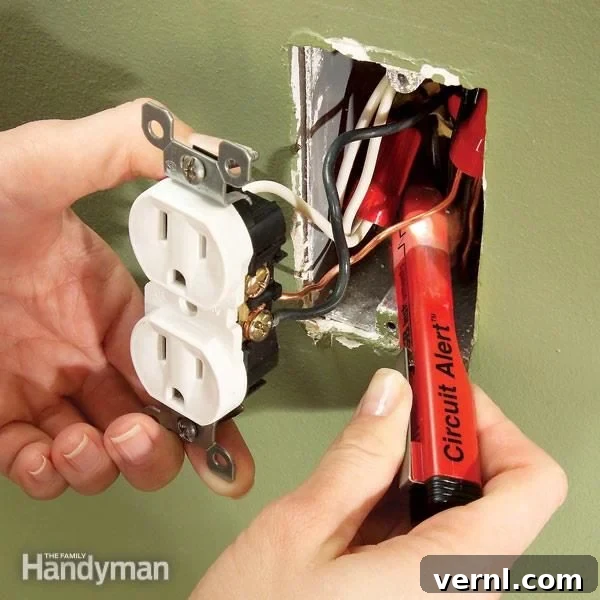
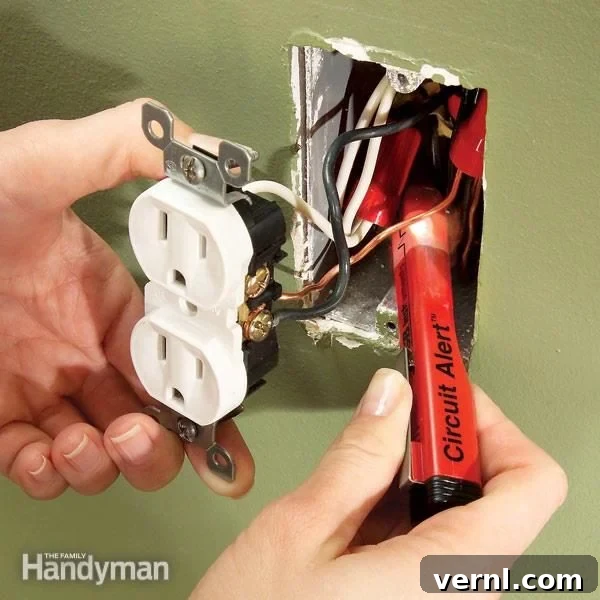
Your first and most critical step before beginning any electrical work is to confirm that the wires you are handling are completely de-energized. This means shutting off the corresponding breakers in your electrical panel, or in some cases, even the main power supply to your entire home. Never rely solely on turning off a light switch; always assume a wire is hot until proven otherwise. The indispensable tool for this task is a non-contact voltage tester (like the one pictured above). Before touching any wire, use this device to check, then double-check, and even triple-check that no current is flowing. This step should become an ingrained habit, a non-negotiable part of your electrical workflow, ensuring that you are consistently protected from accidental shocks. Implementing a “lockout/tagout” procedure, where you physically lock the breaker in the “off” position and tag it to prevent others from turning it back on, adds an extra layer of security, especially in homes with multiple residents who might inadvertently restore power.
Designing for Future Safety and Reliability
Beyond immediate personal safety, you must also consider the long-term integrity and safety of the electrical system you are installing for those who will live with it in the future. This involves sound engineering practices and meticulous execution. Proper grounding is non-negotiable, providing a safe path for fault currents and preventing dangerous voltage buildup, which can cause appliance malfunctions or even electrocution. Creating tight, solid wire connections, whether using twist-on connectors or crimp connectors, is vital; loose connections can lead to arcing, overheating, and potential fire hazards. Furthermore, correctly sizing breakers for your circuits is paramount. An oversized breaker, for instance, might fail to trip when an overload occurs, allowing excessive current to flow through wiring not designed to handle it. This could cause wires to overheat, insulation to melt, and potentially ignite a fire—sometimes years after the initial installation. While wiring is indeed a high-stakes endeavor, the procedures and guidelines for ensuring safety are neither overly complicated nor excessively demanding. With diligent adherence to established codes and best practices, it is a game that can absolutely be played and won safely, ensuring your home remains a secure environment for decades.
Embracing Continuous Education and Resources
No matter your experience level, continuous learning is crucial in electrical work. The dynamic nature of electrical codes and advancements in technology means there’s always something new to learn. I highly recommend investing in and regularly referring to comprehensive books on safe household wiring specifically tailored for non-professionals. One excellent resource that stands out is “Safe Household Wiring Projects” by Rex Cauldwell. Such books provide detailed explanations, diagrams, and code references that demystify complex concepts, making them understandable for the layperson. Additionally, many community colleges offer evening classes on safe household wiring. These courses provide hands-on experience and direct instruction from qualified electricians, allowing you to absorb a significant amount of practical knowledge very quickly and ask questions in a structured environment. Online tutorials, reputable DIY websites, and forums can also supplement your learning, but always cross-reference information with official codes and trusted sources to ensure accuracy and safety.
Leveraging the Permitting and Inspection System
Perhaps the most overlooked yet vital safety net for DIY electrical work is the local permitting and inspection system. This system is designed precisely to ensure that all electrical installations meet the stringent safety standards of the National Electrical Code (NEC) and local amendments. Never bypass this critical step, as attempting to do so can lead to dangerous installations, significant fines, and complications with home insurance or future sales. Before starting any significant electrical project, consult your local building department to understand the specific permits required. Once your work is completed, schedule a professional inspection. The inspector will review your work, identify any potential issues, and ensure everything is up to code. This isn’t just about compliance; it’s about gaining an independent, expert verification of your work’s safety and quality. Think of it as a mandatory safeguard that protects your investment, your property, and most importantly, your family. Remember, doing your own electrical work isn’t about cutting corners; it’s about following the rules diligently and ensuring they are applied correctly, with an expert eye providing the final approval and peace of mind.
Regular checks are essential for ongoing safety. Here are 10 electrical safety checks all homeowners should do every year to maintain a secure electrical system and identify potential issues before they become serious problems.
Essential Tools and Exciting DIY Electrical Projects
Embarking on basic household electrical wiring doesn’t require an extensive or expensive collection of specialized tools. In fact, many of the essential items you might already own or can acquire affordably. A well-equipped DIY electrical toolkit is characterized by efficiency and precision, allowing you to tackle a wide range of tasks safely and effectively. Investing in good quality tools is a wise decision, as they not only perform better but also last longer, enhancing your safety and the quality of your work.
Your Core DIY Electrical Toolkit
- Multi-bit screwdriver: An indispensable tool for tightening terminals, securing outlets and switches, and working with various screw types commonly found in electrical components. Its versatility saves space and time, offering a range of bit options in one compact tool.
- 16 oz. claw hammer: Essential for securing electrical boxes, driving staples for cable management, and minor demolition tasks when opening walls for new wiring. A well-balanced hammer provides control and efficiency.
- Cordless drill: Perfect for drilling holes through studs for running new wiring, mounting electrical boxes, and speeding up assembly of fixtures. Its portability and power are invaluable for accessing tight spaces without the hassle of cords.
- Wire strippers and cutters: Crucial for removing insulation from wires precisely without damaging the copper strands, and for cutting wires to the correct length. A good quality pair makes a significant difference in preventing frayed wires and ensuring solid connections.
- Cable rippers (Romex strippers): Specifically designed for safely and quickly removing the outer jacket of non-metallic (Romex) cable, revealing the insulated conductors inside without nicking them. This specialized tool greatly simplifies cable preparation.
- Slip-lock pliers (Tongue & Groove Pliers): Excellent for gripping, bending, and shaping wires, especially heavier gauge wires, and for working with conduit or connectors. Their adjustable jaws offer versatility for various tasks.
- Tape measure: For accurate measurements of wire runs, box placement, and ensuring code compliance for distances. Precision in measurement prevents waste and ensures a professional finish.
- Non-contact voltage tester: (Reiterated for emphasis) Absolutely critical for verifying that circuits are de-energized before beginning work and for diagnosing live circuits during troubleshooting. This is your primary safety device, signaling the presence of voltage without direct contact.
Starting Small: Your First DIY Electrical Projects
One of the greatest aspects of DIY electrical work is the flexibility it offers. You can start with simple, low-risk projects to build your confidence and expand your skills gradually, once you’ve thoroughly absorbed the safety protocols. Don’t feel pressured to rewire your entire house on day one. Begin with tasks that are manageable and allow you to practice fundamental techniques in a safe, controlled manner.
- Changing a broken switch: A straightforward task that teaches you how to identify hot, neutral, and ground wires, make secure connections, and safely de-energize a circuit. This is an excellent entry point into understanding basic circuit control. Explore comprehensive guides on wiring switches and outlets for detailed instructions.
- Replacing a light socket: Similar to changing a switch, this project helps you understand basic fixture wiring and the importance of secure connections within an enclosed space. It’s a fundamental skill for maintaining your home’s lighting. Learn how to wire a light socket correctly.
- Installing a new light fixture: Once comfortable with switches and sockets, upgrading an old fixture or installing a new one is a logical next step, often involving slightly more complex wiring connections and mounting. This project allows for personalization and aesthetic improvements.
- Upgrading standard outlets to GFCI or AFCI: This project introduces you to crucial safety devices. Installing a Ground Fault Circuit Interrupter (GFCI) outlet in wet areas like bathrooms and kitchens, or an Arc Fault Circuit Interrupter (AFCI) outlet in living spaces, significantly enhances protection against electrical hazards by detecting and preventing dangerous electrical conditions.
- Adding an outdoor outlet: For those looking to extend power outside, this project involves understanding weather-resistant enclosures, proper conduit use, and potentially trenching for underground wiring. This expands your home’s functionality and requires adherence to specific outdoor electrical codes. Here’s how to run power to a shed, garden, or lamppost, which includes essential considerations for outdoor wiring projects.
Each successful project will build upon the last, fostering a sense of accomplishment and the kind of deep confidence that only true competence can deliver. As you grow more comfortable and knowledgeable, you’ll be amazed at the range of electrical tasks you can confidently undertake, enhancing your home and your self-reliance simultaneously.
For visual learners, understanding common pitfalls can prevent costly mistakes. It’s highly recommended to watch videos that illustrate the top electrical mistakes to avoid. These insights can save you time, money, and ensure safety in your DIY endeavors, providing a practical complement to your theoretical learning.