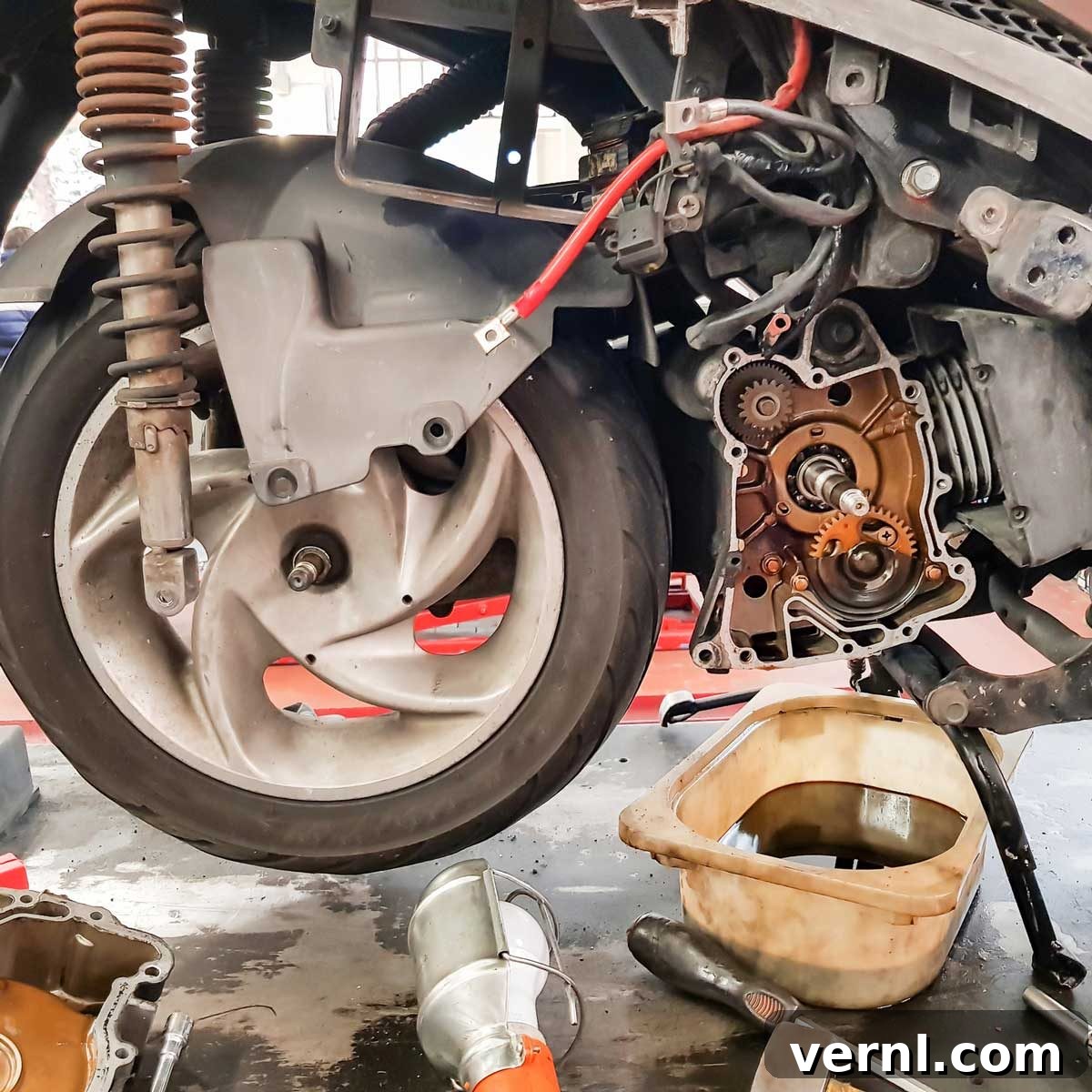
Replacing your motorcycle’s engine oil is arguably one of the most critical motorcycle maintenance procedures any rider can perform. While often compared to changing your car’s oil, the stakes are arguably even higher for motorcycles. The compact, high-revving nature of a motorcycle engine, combined with the multiple roles its oil must fulfill, means that regular, diligent oil changes are not just recommended, but absolutely essential for the longevity and performance of your machine.
Your motorcycle’s engine oil is far more than just a lubricant; it’s a multi-functional fluid critical to the health of your bike. It lubricates moving parts, dissipates heat, protects against corrosion, and even cleans the engine by suspending contaminants. Failing to properly maintain this vital fluid can lead to a cascade of problems, including severe engine and transmission damage, noticeable impairment in performance, and a significant reduction in fuel economy. Understanding the profound importance of your bike’s engine oil, knowing which type to use, and adhering to the correct replacement schedule are fundamental aspects of responsible motorcycle ownership. This comprehensive guide will delve into all these reasons, helping you keep your two-wheeled companion running smoothly and reliably for years to come.
Why Motorcycle Oil Matters So Much
The engine oil in your motorcycle is a workhorse, performing several vital functions simultaneously, which is why its integrity is paramount. Unlike many cars, where separate fluids handle different tasks, motorcycle oil often bears a heavier burden, making its quality and regular replacement non-negotiable.
Essential Lubrication
At its core, engine oil’s primary role is to lubricate the myriad moving parts within the engine. Components like the crankshaft, connecting rods, pistons, camshafts, and valves all move at incredible speeds and with immense precision. Without a protective film of oil, metal-on-metal contact would quickly lead to excessive friction, generating destructive heat and rapid wear. This friction would not only cause parts to grind down, leading to premature failure, but also drastically reduce engine efficiency and power output.
Protection Against Wear and Corrosion
Modern engine oils are not just base oils; they are sophisticated formulations containing various additives designed to enhance their protective qualities. These additives help prevent wear by forming a barrier between metal surfaces, even under extreme pressure. Furthermore, oil protects the engine from the corrosive nature of moisture and combustion by-products. As fuel burns, it creates acidic gases and water vapor, which can condense and lead to rust and corrosion within the engine. Oil additives neutralize these harmful substances and keep them suspended, preventing them from adhering to engine components.
Cooling System Support
While many modern motorcycles are “liquid-cooled” with a dedicated coolant system, most air-cooled motorcycles, and even many liquid-cooled ones, rely heavily on engine oil as a significant engine coolant. As oil circulates throughout the engine, it absorbs heat generated by friction and combustion, carrying it away from critical components like the cylinder heads and pistons. This heat is then dissipated as the oil flows through the sump and sometimes an external oil cooler. Without effective oil cooling, engine temperatures can soar, leading to overheating, component distortion, and potential seizure.
Transmission and Clutch Lubrication
Here lies a key distinction from most cars: in the vast majority of motorcycles, the same oil that lubricates the engine also lubricates the transmission and, crucially, the wet clutch. In cars, the engine typically uses a different oil from the automatic transmission fluid used in cars. This means motorcycle oil must possess specific properties to handle the shearing forces within the gearbox and the unique friction requirements of a wet clutch, ensuring smooth gear changes and preventing clutch slip or grab. Using the wrong oil can severely impact clutch performance and transmission life.
Unfortunately, over time, the oil’s lubrication qualities and protective additives inevitably break down due to heat, sheer forces, and chemical reactions. Simultaneously, contaminants like dirt, metal particles from wear, and moisture accumulate. This degradation compromises the oil’s ability to perform its essential functions. That’s precisely why it’s absolutely critical to maintain the integrity of your motorcycle oil by changing it at regular intervals and by always using the correct type of oil recommended for your specific bike.
Understanding the Different Types of Motorcycle Oil
Choosing the right oil begins with understanding the fundamental differences between the types available. Each offers distinct advantages and disadvantages, catering to different rider needs and motorcycle designs.
- Mineral Oil (Conventional): Also commonly referred to as “conventional” oil, mineral oil is derived directly from petroleum, a product of refined crude oil. This “fossil fuel” is formed by the underground decomposition of dead organisms over millions of years. While mineral oil is typically the most affordable option on the market and serves as an effective lubricant, its natural origin means it contains a certain amount of impurities and molecular inconsistencies left over from the crude oil refining process. As a result, mineral oils tend to break down quicker under the high heat and stress of a motorcycle engine and transmission, necessitating more frequent replacement than their synthetic counterparts. They are often a good choice for older bikes or those with lower performance requirements.
- Synthetic Oil: These oils represent the pinnacle of lubrication technology. Unlike mineral oils, synthetic oils are produced from chemically modified petrochemicals through a complex and highly controlled production process. This allows manufacturers to create a very precise and consistent chemical composition specifically engineered for optimal engine lubrication and protection. Synthetic oils boast superior thermal stability, meaning they resist breakdown at higher temperatures, and offer exceptional wear protection. They also flow better in cold weather, reducing engine wear during startup. While significantly more expensive than mineral oils, their extended lifespan and enhanced protective qualities can justify the investment, especially for high-performance bikes or those ridden in demanding conditions.
- Semi-Synthetic Oil (Blend): Semi-synthetic oils, as the name suggests, are a clever compromise. They are a mixture of mineral and synthetic oils, typically containing between five and 30 percent synthetic base stock. This hybrid formulation aims to capture the best attributes of both types. Semi-synthetic oils offer improved longevity, better thermal stability, and enhanced engine protection compared to conventional mineral oils, yet they remain more affordable than full synthetics. They provide an excellent middle-ground solution for many riders seeking a balance between performance, protection, and cost-effectiveness.
How To Choose the Best Motorcycle Oil for Your Bike
Selecting the ideal engine oil for your motorcycle is a decision that impacts its performance, reliability, and lifespan. Given that motorcycle engine oil serves more purposes than car engine oil, there are several special considerations to keep in mind. The most authoritative source for this information is always your motorcycle’s user manual or owner’s handbook. It will clearly outline the manufacturer’s recommended specifications, which are crucial for optimal operation and warranty compliance.
Your manual should provide details on several key parameters:
- Oil Type: The manual will specify whether your bike requires mineral, semi-synthetic, or full synthetic oil. This recommendation is based on the engine’s design, tolerances, and intended operating conditions. Adhering to this is fundamental.
- Viscosity Grade (or “Weight”): This is indicated by a set of numbers and a letter (e.g., 10W-40).
- The first number, followed by ‘W’ (for Winter), indicates the oil’s viscosity at cold temperatures. A lower number (e.g., 5W) means the oil is thinner and flows more easily in cold weather, providing quicker lubrication during startup.
- The second number indicates the oil’s viscosity at operating temperature (typically 100°C). A higher number (e.g., 50) means the oil remains thicker at high temperatures, offering better protection under hot, demanding conditions.
- 10W-40 is a very common viscosity grade for motorcycles, offering a good balance for various climates and riding styles. However, your manual might recommend different grades based on anticipated ambient temperatures. Using the correct viscosity ensures proper lubrication across the engine’s temperature range.
- American Petroleum Institute (API) Classification: The API classification is a two-letter code that indicates the oil’s service category, reflecting its lubrication and additive properties. These ratings range from SA through SN (as of recent updates), with later letters indicating superior performance and protection. Most motorcycle manufacturers, and the API itself, generally recommend an oil with a rating of SG or higher. This ensures the oil has adequate detergents, dispersants, anti-wear agents, and anti-corrosion properties suitable for motorcycle engines.
- Japanese Automotive Standards Organization (JASO) Classification: This is a crucial specification unique to motorcycles, especially those with wet clutches. The JASO classification is also a two-letter code that indicates the qualities of the friction modifiers present in the oil, which can significantly influence clutch performance.
- JASO MA (or MA1/MA2): Most motorcycles use a manual transmission with an oil-lubricated (“wet”) clutch. For these bikes, an oil with a JASO MA rating is essential. These oils contain specific friction modifiers that prevent clutch slip, ensuring smooth engagement and reliable power transfer. MA2 offers even better friction performance than MA1.
- JASO MB: Motorcycles with automatic transmissions or scooters that do not have a wet clutch system should use an oil with the JASO MB rating. These oils contain more friction modifiers, which, while beneficial for reducing friction in non-clutch applications, would cause a wet clutch to slip excessively.
Using an oil without the correct JASO rating can lead to premature clutch wear, poor clutch engagement, or even damage.
Always defer to your motorcycle’s user manual for the specific oil to choose. It’s the definitive guide from the engineers who designed your bike, ensuring you select a product that perfectly matches its unique requirements. Deviating from these recommendations can lead to suboptimal performance, increased wear, and potentially costly damage.
How Often Does Motorcycle Oil Need to Be Changed?
The frequency of your motorcycle oil changes is a critical factor in its long-term health and performance. It’s not a one-size-fits-all answer, as it depends on several variables, including the type of oil your bike uses, the number of miles accumulated, and the frequency and style of your riding. Your motorcycle’s user manual will always provide the manufacturer’s recommended service intervals, which should be your primary guide. However, here are some general rules and considerations:
- Mineral Oil: Due to its natural composition and faster breakdown rate, mineral oil typically requires more frequent replacement. A good general guideline is to replace mineral oil every 2,000 to 3,000 miles, or at least once a year, whichever comes first. Some experts might even recommend a minimum of twice a year, especially for bikes ridden regularly or in hot climates.
- Synthetic Oil: With their superior stability and resistance to breakdown, synthetic oils offer extended drain intervals. You can generally expect to replace synthetic oil every 7,000 to 10,000 miles, or at least once a year. While some high-quality synthetics might boast even longer intervals, annual replacement is still crucial due to moisture accumulation and additive depletion over time, regardless of mileage.
- Semi-Synthetic Oil: As a blend, semi-synthetic oil falls between mineral and full synthetic in terms of longevity. A reasonable interval for semi-synthetic oil is typically every 5,000 to 6,000 miles, or at least once a year. This offers a good balance of protection and service life without the premium cost of full synthetic.
Factors Influencing Oil Change Frequency
While the mileage and time guidelines are useful, certain riding conditions can necessitate more frequent oil changes, even if you haven’t hit the recommended mileage. These are often referred to as “severe service” conditions:
- Short Trips: Surprisingly, you may need to replace your oil at more regular intervals if you primarily take short trips (under 30 minutes) or don’t ride your motorcycle frequently. This is because an engine needs to be regularly driven (not just idling) for around 30 minutes at operating temperature to fully burn off any moisture and fuel contaminants that have accumulated in the oil. During short rides, the engine doesn’t reach optimal temperature long enough to vaporize these elements, leading to accelerated oil degradation and potential engine corrosion.
- Infrequent Riding & Winter Storage: If you can’t ride your motorcycle for 30 minutes every one to two weeks, as often happens during the winter months or periods of extended storage, it’s highly recommended to replace your oil every four to six months. Moisture and contaminants can sit in the oil for prolonged periods, causing significant damage. Many riders opt for an oil change right before winter storage and again in the spring to ensure optimal protection.
- Dusty or Dirty Environments: Riding in dusty conditions, off-road, or in heavy traffic where exhaust fumes and particulate matter are abundant can introduce more contaminants into your oil, shortening its effective life.
- Extreme Temperatures: Consistently riding in very hot or very cold weather puts extra stress on the oil, potentially accelerating its breakdown.
- Aggressive Riding: Frequent hard acceleration, high-RPM riding, track days, or carrying heavy loads all place increased demands on your engine and oil, warranting more frequent changes.
Beyond changing the oil, it’s also crucial to replace the oil filter with every oil change. The oil filter is responsible for trapping contaminants, and a clogged or inefficient filter can undermine the benefits of fresh oil. Regularly checking your oil level between changes and topping it off as needed is also a simple yet vital habit to maintain engine health. By understanding these factors and adhering to a proactive maintenance schedule, you ensure your motorcycle’s engine remains well-protected and performs at its best for many miles to come.