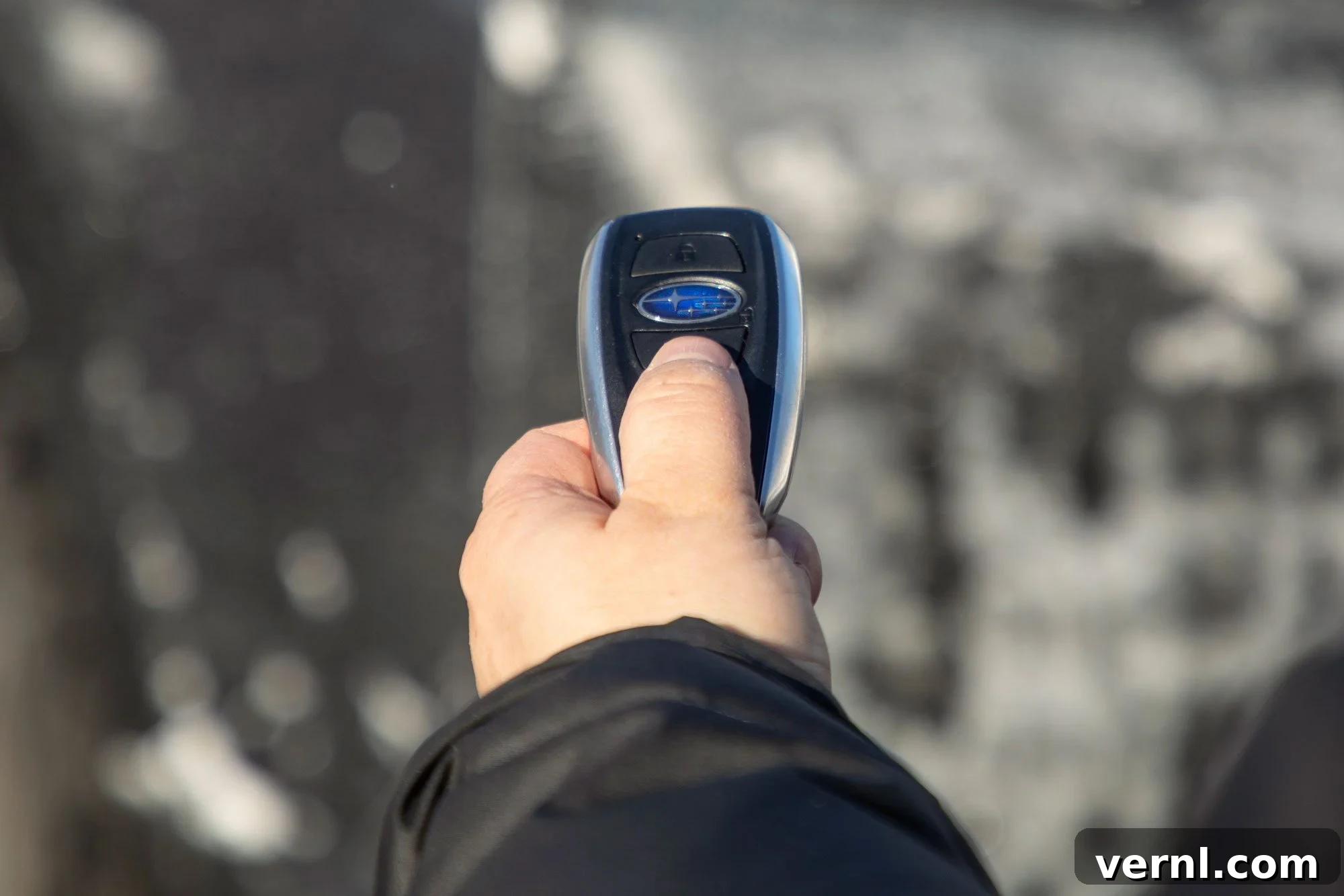
Car Key Fob: Your Essential Guide to Emergency Unlocking and Starting Your Vehicle
Your car key fob is a small, everyday device that often goes unnoticed until it stops working. This compact marvel of modern technology grants you convenient access to your vehicle, but what happens when its battery dies, leaving you stranded, perhaps in a bustling grocery store parking lot? The thought alone can induce panic: How do you unlock your car, let alone start it, with a seemingly defunct key fob?
“Fobs do just up and fail,” explains Chris “Moose” Pyle, a seasoned master-certified technician with over two decades of automotive expertise at JustAnswer. He points out common culprits for fob failure, “especially when water is related, like accidentally washing it, or it being in your pocket getting wet, or in the bottom of a cup holder with a condensating drink on top of it.”
A dead key fob can quickly escalate from a minor inconvenience to a significant problem, particularly depending on your location and the urgency of your situation. Imagine being far from home, with no spare battery or alternative transportation.
“If your car has a push-button start, you might not be able to start the engine at all,” cautions Tomer Ruderman, founder and owner of Car Keys Ottawa. “However, the good news is that most modern cars are equipped with clever backup methods. So, fortunately, it’s an easy fix if you’re prepared and know these simple tricks.”
Don’t let a lifeless key fob leave you in a bind. This comprehensive guide will walk you through essential techniques and little-known features to unlock and start your car even when your key fob is unresponsive. Being prepared with this knowledge can save you time, stress, and potential headaches, ensuring you’re never truly stranded.
Mastering Your Dead Car Key Fob: Unlocking and Starting Your Vehicle in an Emergency
Finding yourself with a dead key fob and no immediate access to a replacement battery can be a frustrating experience. However, there’s no need to panic. Modern vehicle manufacturers have anticipated this exact scenario, integrating clever backup systems that make unlocking and starting your car surprisingly straightforward. While the precise method may vary slightly depending on your car’s make and model – always a good reason to consult your owner’s manual for specific instructions – several common tricks are widely applicable across many types of vehicles. Understanding these emergency protocols is key to regaining control of your vehicle.
First, You’ll Need to Unlock Your Car: The Hidden Mechanical Key
The initial hurdle when dealing with a dead key fob is simply getting into your car. Many drivers are unaware that most contemporary key fobs house a traditional, old-fashioned mechanical key, carefully concealed within their sleek plastic casing. This is your first line of defense.
- Locate and Release the Hidden Key: Begin by carefully examining your key fob. You’ll typically find a small sliding button or a latch on the side or back. This button is designed to release the mechanical key. Slide or press it, and with a gentle pull – sometimes requiring a little “oomph” or the assistance of a fingernail – the physical key should slide out or pop free from its housing. This mechanical key is identical to the traditional keys used in older car models, providing a reliable failsafe for entry.
- Access the Key Slot: Once you have the mechanical key in hand, proceed to your car door. If you immediately spot a visible key slot on the door handle, simply insert the mechanical key and turn it to unlock the door, just as you would with a conventional car key. However, many modern vehicles feature a more streamlined design, where the key slot is cleverly hidden behind a small cover on the door handle. This cover is usually designed to blend seamlessly with the handle’s aesthetics. To access the slot, carefully use the tip of your mechanical key to gently pry off this cover. It’s often located on the underside or at one end of the handle. Exercise caution to avoid scratching your vehicle’s paint or damaging the plastic cover. Once the cover is removed, the traditional key slot will be revealed, allowing you to manually unlock your car.
Now That You’re Inside, Here’s How to Start the Car with a Dead Key Fob:
Once you’ve successfully gained entry to your vehicle using the mechanical key, the next challenge is starting the engine. Fortunately, vehicle manufacturers have also implemented ingenious backup systems for ignition, even when the key fob’s battery is completely depleted.
- The “Push-to-Start” Fob Method: In many cars equipped with a push-button start system, the solution is remarkably simple. First, reinsert the mechanical key back into its key fob casing, ensuring the fob is fully assembled. Instead of using your finger to press the START button as you normally would, use the entire key fob itself to depress the ignition button. This is not a random trick; it’s a deliberate backup system. Many manufacturers embed an RFID (Radio-Frequency Identification) chip or an NFC (Near Field Communication) antenna within the key fob. When the fob’s primary battery is dead, placing the fob directly against the push-button start allows the car’s ignition system to detect this passive chip through short-range electromagnetic induction, confirming it’s the correct key and enabling the engine to start. Hold the fob against the button firmly while attempting to start the vehicle.
- Utilize a Hidden Key Fob Slot: Some vehicles offer an even more dedicated backup method: a hidden key fob slot. This feature is often found in specific models, such as certain Fords. For instance, in some Ford models, the backup slot is ingeniously integrated into the cup holder or console compartment. These slots are precisely molded to fit your key fob perfectly. To use this feature, simply slide your dead key fob into this designated slot. Once the fob is securely in place, the car’s system can read the passive RFID chip within the fob, even without battery power. You can then proceed to use the push-button start as you normally would, and your engine should come to life. Other car brands might have similar slots located in the glove compartment, under the dashboard, or within the center console. Always consult your owner’s manual for the exact location in your specific vehicle.
- The Traditional Steering Column Key Slot: While increasingly rare in newer models, some vehicles, particularly older models or specific brands like certain Mazda models, still feature a physical key slot directly in the steering column. If neither the push-button method nor a hidden slot works for your car, check for this traditional ignition barrel. If present, separate the mechanical key from your fob and insert it into this slot, turning it to start the car. This method bypasses the electronic fob entirely, relying solely on the mechanical key’s unique cut to engage the ignition.
Other Essential Ways To Unlock Your Car When Your Key Fob Fails
Even with the ingenious backup methods for using a dead key fob, it’s wise to have additional strategies in your toolkit. Knowing these alternative ways to access your vehicle can provide extra peace of mind and get you out of a tough spot if your primary methods aren’t working or aren’t applicable to your situation.
- Access the Car Remotely via Smartphone App: In today’s connected world, many modern vehicles, once a luxury car exclusive, now come equipped with telematics systems that allow remote control through a dedicated smartphone app. If your car supports this feature, you might be able to unlock your car doors directly from your phone. Popular examples include the FordPass Connect app, myChevrolet mobile app, MyMazda app, and the Toyota app, all of which typically offer remote unlocking capabilities. This is an incredibly convenient feature, but it requires foresight: you must have the app installed, connected to your vehicle, and set up *before* your key fob battery dies. Furthermore, while basic remote functions might be free, many advanced remote services often require an active subscription or a monthly fee. Ensure your phone itself is charged and has network access to utilize this option.
- Get Closer to the Vehicle: Sometimes, your key fob’s battery isn’t completely dead; it might just be critically low. In such cases, the fob’s signal strength diminishes, making it unable to communicate with your car from its usual distance. If your fob isn’t working as reliably as it normally does, try moving much closer to your vehicle. Place the key fob directly against the car’s door handle, or even against the door panel itself, and then press the unlock button. The proximity might allow the weak signal to be detected by the car’s receiver, granting you entry. This method works because even with a low battery, there might be just enough residual power to emit a very short-range signal.
- Call Roadside Assistance: If all else fails – you can’t find the mechanical key, the backup start methods aren’t working, or your phone is dead/locked in the car – don’t hesitate to call for professional help. Roadside assistance services are specifically designed for such emergencies. Before you ever encounter trouble, take the proactive step of confirming whether your car insurance policy or vehicle warranty includes roadside assistance coverage. If it does, save the contact number directly into your phone. As an extra layer of precaution, print a physical copy of the number and keep it in your purse or wallet, or even taped inside a sun visor, in case your phone battery is depleted or your device is inaccessible. These services can dispatch a technician to open your car, and in some cases, even provide a temporary battery or help you get a replacement key.
Frequently Asked Questions About Your Car Key Fob
How Do I Replace the Battery in My Car Key Fob?
Replacing your key fob battery is a straightforward DIY task that can save you a service appointment. Most fobs are designed for easy battery access. You’ll typically find a small notch or seam along the edge where the two halves of the fob meet. You can gently pry or twist it open using a small flathead screwdriver, a coin, or a specialized plastic prying tool.
“Swap it out for a new one, snap the fob back together and you’re good to go,” advises Tomer Ruderman. He emphasizes a crucial precaution: “Just be careful not to damage the circuit board inside while opening it.”
Before you start, consult your car’s owner’s manual to identify the specific battery type required for your fob. The most common types are 3-volt lithium coin batteries, such as a CR2032 or CR2025. These are readily available at electronics stores, pharmacies, and even many supermarkets. Once you’ve opened the fob, note the orientation of the old battery (usually positive side up) before carefully removing it. Insert the new battery in the same orientation, ensuring it’s seated correctly, then snap the two halves of the fob back together until you hear a secure click.
How Can I Prevent My Car Key Fob from Dying Unexpectedly?
Proactive measures are your best defense against a dead key fob. The most effective step is to replace your key fob batteries regularly, even if they still seem to be working.
“You can do so when you rotate your tires, change out summer and winter tires, change your smoke detector batteries, get your oil changed, or at any other regular interval that makes sense in your routine,” suggests Melanie Musson, an auto industry expert with Autoinsurance.org. A good rule of thumb is to replace them every one to two years to prevent unexpected failures.
Beyond routine replacement, consider these additional preventative tips from Ruderman:
- Avoid Proximity to Electronics and Metal Objects: Do not store your key fob near other electronic devices, such as smartphones, laptops, or tablets, or alongside large metal objects. These items can sometimes interfere with the fob’s signal or even induce a parasitic drain on its battery, causing it to deplete faster.
- Do Not Leave the Fob Inside the Car Overnight: If your car features a push-button start system and passive entry (meaning the car detects the fob automatically when you approach or are inside), leaving the key fob inside the vehicle, especially overnight, can lead to accelerated battery drain. The key fob and the car will continuously communicate, “pinging” each other to confirm proximity and readiness to start. This constant communication keeps the fob’s internal circuits active, consuming battery power much more quickly than if it were stored away from the vehicle. Always take your key fob with you when you exit your car to preserve its battery life.
About the Experts
- Tomer Ruderman is the esteemed founder and owner of Car Keys Ottawa. With extensive experience in the automotive security sector, he collaborates with various vehicle owners, auto repair shops, garages, and organizations on projects of all scales, specializing in key solutions and vehicle access.
- Chris “Moose” Pyle is a master-certified automotive technician boasting over 20 years of hands-on experience in the field. Since 2006, he has been a trusted expert for JustAnswer, the leading expert on-demand platform, where he provides invaluable insights and solutions to a wide range of automotive queries.
- Melanie Musson is a highly respected auto industry expert who has contributed her extensive knowledge to Autoinsurance.org for nearly a decade. Her insights cover various aspects of vehicle ownership, maintenance, and insurance.
RELATED
- Do You Know What That Little Button on Your Seat Belt Is For?
- What Those Lines on Your Backup Camera Really Tell You
- Here’s What The Small Panel On Your Car’s Front Bumper Is For