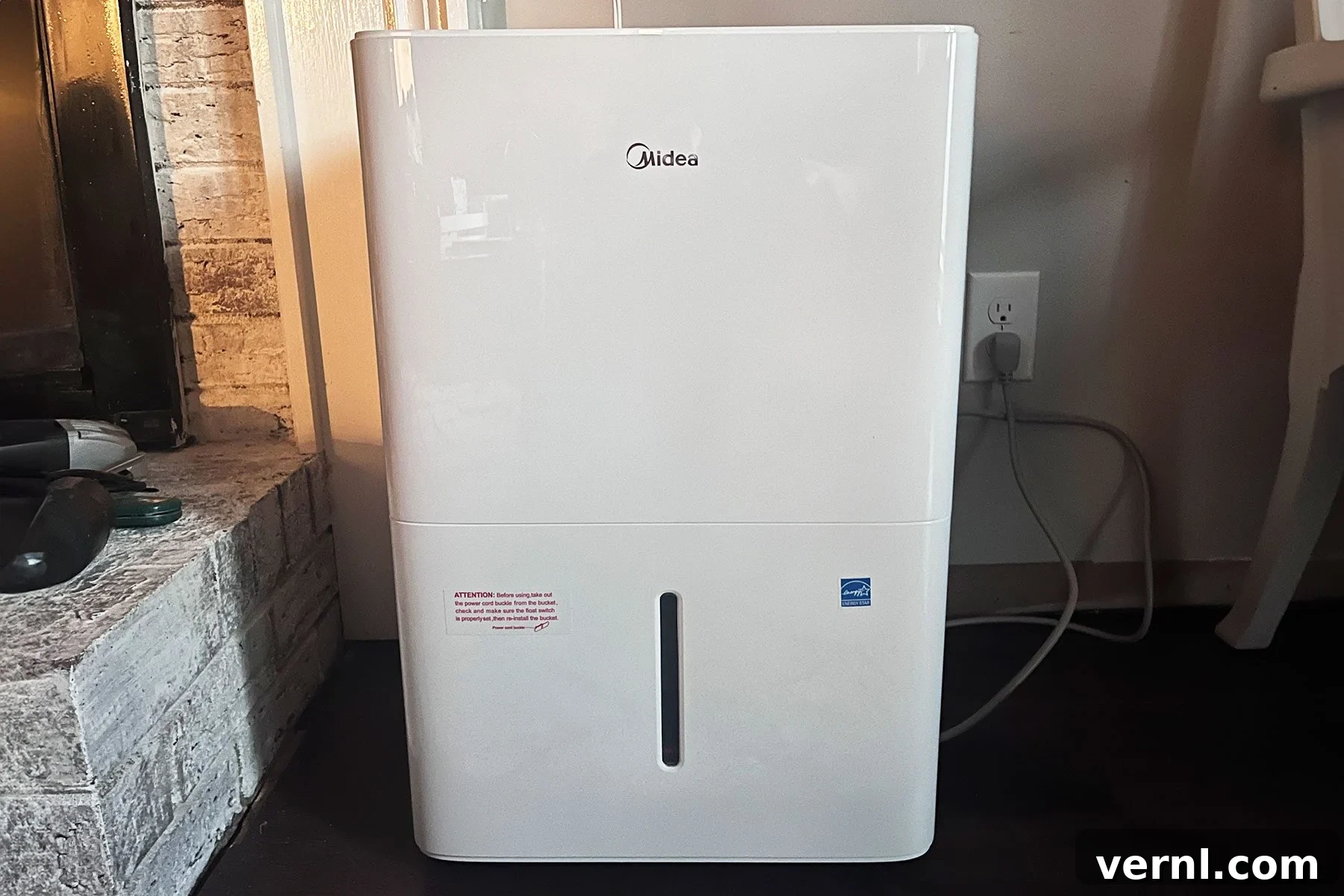
Having recently relocated from the bustling streets of New York to the warmer, more humid climate of North Carolina, two aspects of my new life have proven particularly challenging: the quest for an authentic New York-style bagel (a struggle I refuse to concede) and the pervasive, inescapable humidity. Even in mid-April, stepping outside feels like walking into a steam bath, leaving me drenched in sweat almost instantly. While the cool blast of air conditioning offers temporary respite indoors, it does little to actively combat the excess moisture that silently infiltrates our living spaces. This unchecked humidity isn’t just uncomfortable, making everything feel perpetually sticky; it’s a breeding ground for mold and mildew, a potential trigger for respiratory issues, and a silent threat to the structural integrity and air quality of your home.
This is precisely where my Midea dehumidifier has transitioned from a mere appliance into an indispensable household hero. Without exaggeration, this machine has been an absolute lifesaver over the past several weeks, working tirelessly to restore comfort and health to my indoor environment. I fully intend to keep it running faithfully until the cooler, crisp breezes of autumn finally grace us once more.
In this comprehensive Midea dehumidifier review, I’ll delve into the reasons behind its impressive performance, highlight the standout features that distinguish it from competitors, and guide you on whether this exceptional unit is the right solution for maintaining optimal humidity levels in your own living areas or even challenging spaces like a crawl space.
Midea Dehumidifier – Our Top Pick
I Tried It: An Energy Star-certified dehumidifier that efficiently covers up to 4,500 square feet, featuring a reusable air filter, quiet operation, and smart controls perfect for basements and large rooms.

Image Credit: VIA MERCHANT
Shop on Amazon
Understanding the Midea Dehumidifier: A Powerful Solution for Modern Homes
While Midea might not boast the immediate brand recognition of giants like GE or Samsung in Western markets, this Chinese-based multinational is, in fact, one of the world’s largest and most innovative appliance manufacturers. Their extensive product line spans everything from refrigerators to air fryers, but they are particularly renowned for their advanced air conditioners and, critically, their highly effective dehumidifiers. This global presence and commitment to innovation underscore the quality and reliability you can expect from their products.
The specific Energy Star-certified Midea dehumidifier I’ve been testing comes in a range of capacities to suit diverse needs: models designed for spaces up to 1,500, 3,000, and an impressive 4,500 square feet. At its core, this machine operates on the same fundamental principle as other dehumidifiers: it draws in humid air, cools it over refrigerated coils to condense the excess water vapor, and then collects this water in a convenient tank situated at the front base of the unit. The dry, cooler air is then expelled back into the room, creating a more comfortable and healthier atmosphere.
However, the Midea dehumidifier elevates this basic function with a suite of premium features that truly set it apart. These include an intuitive adjustable humidity control, robust caster wheels for effortless portability, and a remarkably quiet operational noise level, especially considering its substantial moisture removal capacity. Furthermore, select models offer smart connectivity through the Midea Air app, allowing users to remotely monitor performance, manage settings, and gain insights into their room’s air quality, offering unparalleled convenience and control.
Unpacking the Midea Dehumidifier’s Superior Features
Having personally evaluated over ten different dehumidifiers throughout my quest for optimal humidity control, I can confidently state that the Energy Star-certified Midea dehumidifier is the only unit I’ve chosen to keep and integrate permanently into my home. Its array of thoughtful features genuinely enhance its effectiveness and user experience, making it a standout performer.
Innovative Side Air Venting for Optimal Airflow
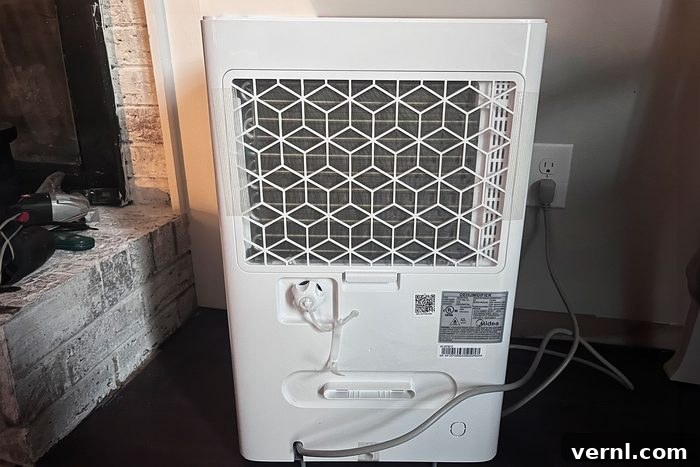
One distinctive design element of the Midea dehumidifier is its side air venting system, a departure from the more common top or rear venting found on many competitors. While I initially approached this feature with skepticism regarding its impact on overall performance, I’ve come to appreciate its practical advantages. Side venting significantly reduces the likelihood of accidentally obstructing airflow, which can happen easily if a unit with rear vents is placed too close to a wall. This thoughtful design ensures maximum efficiency by allowing the machine to operate unobstructed, regardless of its proximity to furniture or walls.
Intriguingly, I’ve also observed that the air expelled from the side vents feels noticeably cooler compared to air from top or rear-venting models. While scientific proof for this subjective sensation is elusive, numerous other online reviewers have echoed this observation, suggesting a shared experience. It’s important to remember that dehumidifiers don’t directly cool a room in the same way an air conditioner does. Their primary function is moisture removal. However, by reducing humidity, the Midea unit creates a perceived cooling effect, making the room feel significantly more comfortable and less oppressive, especially during peak humidity, contributing to overall energy savings by allowing you to set your thermostat a few degrees higher.
Precise Adjustable Humidity Settings for Tailored Comfort
Achieving the right balance of indoor humidity is crucial, not just for comfort, but for health and property preservation. While excessive moisture is detrimental, leading to rampant mold growth, dust mite proliferation, and aggravated respiratory conditions, an environment that is too dry also presents its own set of problems. Low humidity can result in dry skin, irritated sinuses, coughing, and even cause damage to wooden furniture, flooring, and paint by making them crack or warp over time. Understanding this delicate balance, humidity refers to the amount of water vapor present in the air.
The Midea dehumidifier addresses this critical need with its highly responsive adjustable humidity feature, allowing users to precisely set their desired humidity level anywhere within a broad range of 35% to 80%. The U.S. Environmental Protection Agency (EPA) recommends maintaining indoor humidity levels between 30% to 50% to prevent the growth of mold and mildew while ensuring a comfortable living environment. However, this optimal range can vary slightly depending on the specific room or climate.
In my experience in North Carolina, setting the unit to approximately 50% delivered the most significant relief from the oppressive humidity without making my home feel excessively dry, like the Sahara. I thoroughly tested this feature, making frequent adjustments, and found the machine to be remarkably responsive and accurate. This level of granular control is particularly beneficial for individuals with specific needs, such as collectors who require precise humidity conditions to protect valuable items like antique books, comic collections, or musical instruments from moisture damage or excessive dryness. The Midea’s ability to maintain a consistent environment makes it an invaluable tool for both general comfort and specialized preservation.
Generous Tank Capacity for Extended Operation
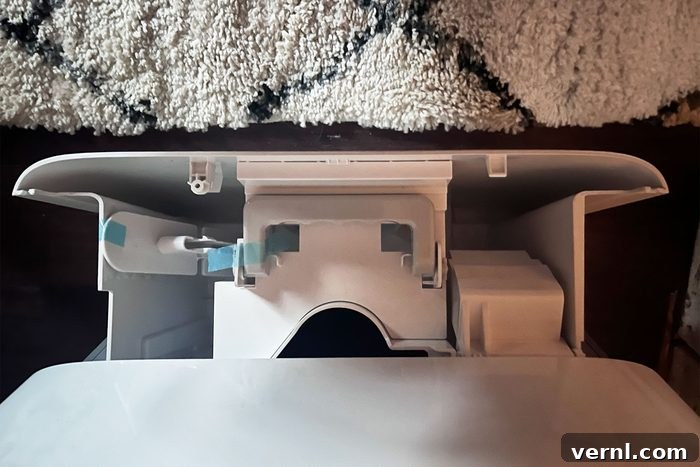
The water tank capacity of Midea dehumidifiers varies by model size, offering flexibility to meet different moisture removal demands. The smallest unit boasts a respectable 22-pint capacity, while the largest, designed for expansive areas, can hold an impressive 50 pints of collected water. This substantial capacity translates directly into less frequent emptying, providing significant convenience, especially in highly humid climates or when you’re away from home for extended periods.
Fifty pints represents a considerable volume of moisture extracted from the air daily, which can be easily repurposed. The reservoir is thoughtfully designed with a convenient carrying handle, making it simple to transport the collected water for watering plants, reducing waste, and adding an eco-friendly dimension to its operation. Feedback from numerous customers residing in notoriously humid regions, such as New Orleans and southern Florida, consistently praises the 50-pint tank’s ability to manage a full day’s moisture without needing an immediate empty. For my location just outside Charlotte, NC, I typically find myself needing to empty the tank only every two to four days, depending on the prevailing weather conditions, underscoring its efficiency and user-friendliness.
Reliable Auto Shut-Off for Spill-Free Operation
One of the most frustrating experiences with a dehumidifier can be discovering a large puddle of water on your floor, a result of an overflowing tank. Fortunately, the Midea dehumidifier incorporates a crucial auto shut-off function that completely eliminates this concern. This intelligent safety feature automatically powers down the unit the moment the water reservoir reaches its full capacity, preventing any spillage. Furthermore, it emits a distinct beeping noise to alert you that the tank needs to be emptied. While this audible alert is incredibly useful, it’s worth noting that if you reside in a particularly humid area and the unit fills overnight, the beeping might wake you. For this reason, a proactive approach of emptying the tank before bed can ensure uninterrupted sleep and continuous, worry-free operation.
Seamless Portability with High-Quality Caster Wheels
Weighing in at approximately 33.5 pounds, the Midea dehumidifier is a substantial appliance. While not excessively heavy, it’s certainly not something you’d want to manually lift and carry from room to room. Recognizing the need for easy mobility, Midea has equipped this unit with four high-quality, smooth-rolling caster wheels. These wheels are a game-changer for portability, allowing you to effortlessly glide the dehumidifier across most hard floor surfaces, enabling you to target humidity wherever it’s most needed.
As with virtually any wheeled appliance, its maneuverability can be somewhat diminished on thick carpeting. However, for rooms with hardwood, tile, or even low-pile rugs, the wheels perform admirably, making the Midea dehumidifier a truly versatile and easily repositionable solution for whole-home humidity management. This feature dramatically enhances the user experience, eliminating the strain and hassle often associated with moving larger appliances.
Optional Continuous Drainage for Hands-Off Operation
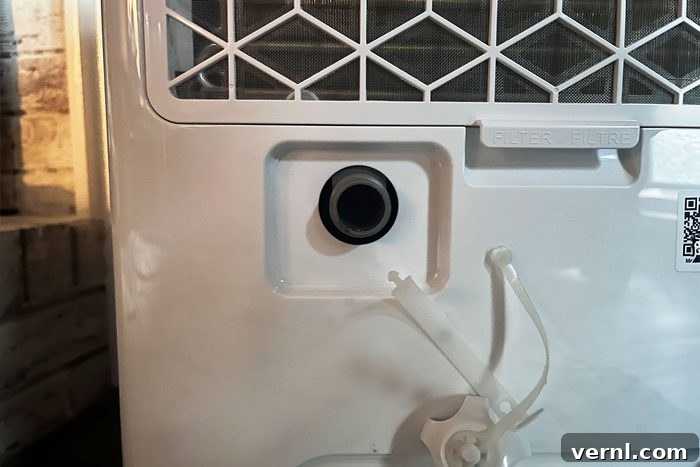
My primary critique of the Midea dehumidifier is the absence of an included drainage hose, despite the unit offering a highly beneficial continuous draining function. Given that drainage hoses are relatively inexpensive, it’s a puzzling omission from an otherwise feature-rich package. While procuring one from a local hardware store like Home Depot or Lowe’s is straightforward, the convenience of a complete, ready-to-use system would be a welcome addition. If Midea provides the option for continuous drainage, bundling the necessary component seems a logical next step to enhance customer satisfaction.
This oversight is the main reason I haven’t fully utilized the continuous drainage feature on my unit yet (that, and North Carolina’s humidity, while significant, isn’t always at an extreme level that demands constant draining). However, extensive customer reviews consistently confirm that the continuous drain function operates flawlessly when properly set up, especially for applications like a basement dehumidifier or in areas experiencing persistently high humidity. The primary feedback from users is that only one specific model (the 4,500 sq ft unit) includes an internal pump. Without this pump, users must position the dehumidifier strategically to drain water via gravity into a floor drain or a container placed close to the ground. For those needing to drain uphill or across longer distances, investing in the pump-equipped model or an external condensate pump would be essential for truly hands-off operation.
Surprisingly Quiet Operation for Its Robust Performance
For a machine of its substantial size and powerful moisture extraction capabilities, the Midea dehumidifier operates with impressive quietness. While it certainly isn’t silent, its operational sound profile is far more akin to a gentle white noise machine than a disruptive water vacuum (though, in essence, it is performing a similar function). This nuanced difference in sound quality makes it far less intrusive than many comparable units, allowing it to integrate more seamlessly into various living spaces without becoming a constant annoyance.
Standing approximately two feet tall and 16 inches wide, the Midea unit falls into the larger category of residential dehumidifiers. Typically, as dehumidifiers increase in size and capacity, their noise levels tend to escalate. Consequently, I was bracing myself for a much louder appliance when I first unboxed this model. Its ability to effectively remove significant amounts of moisture while maintaining a relatively low and tolerable noise output is a testament to Midea’s engineering and a significant advantage for users who value peace and quiet in their homes.
Economical and Eco-Friendly Washable Filter System
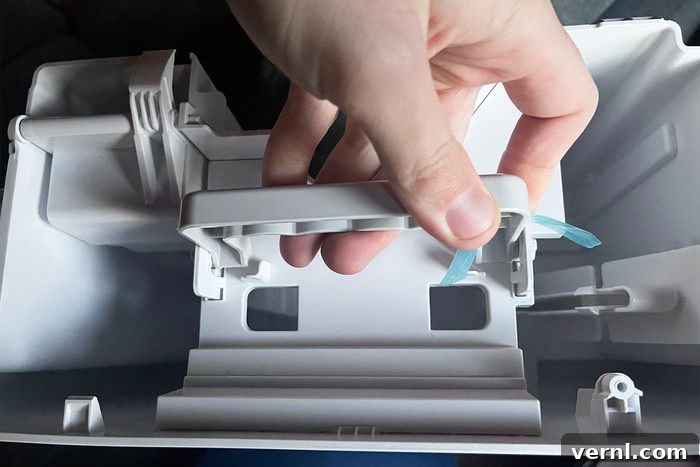
The Midea dehumidifier is equipped with a built-in air filter that is designed for easy washing and reuse. Regular filter maintenance is crucial for optimal performance and air quality. Most experts recommend cleaning dehumidifier filters every two to three weeks, especially during periods of heavy use, and typically suggest annual replacement of built-in filters to maintain efficiency. However, Midea explicitly highlights that its washable filter is designed to “reduce the need for expensive replacement parts,” implying that with proper cleaning, the filter can last the lifetime of the unit, significantly lowering long-term operational costs and environmental impact. This design choice not only makes the Midea a more economical option but also a more environmentally responsible one, reducing landfill waste from disposable filters.
Our Rigorous Testing Methodology for the Midea Dehumidifier
My testing environment, just outside Charlotte, NC, provides an ideal challenge for any dehumidifier, with significant humidity levels often persisting from early April well into October. This prevalent humidity is precisely why many Charlotteans eagerly seek respite in the nearby beaches and mountains – it’s a constant battle for comfort indoors. My personal journey with dehumidifiers began shortly after moving here in August 2022, and the Midea dehumidifier has been a staple in my girlfriend’s approximately 2,000-square-foot house since September 2023. This review, penned in April 2024, reflects a comprehensive, real-world evaluation spanning seven months of continuous use.
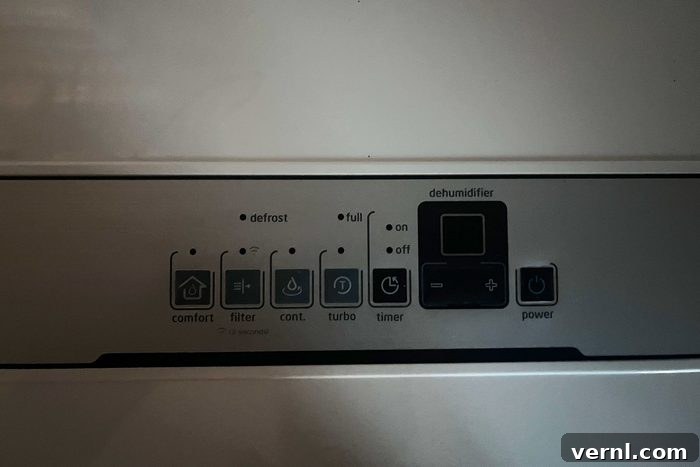
During this extensive period, I meticulously assessed the Midea’s performance in various aspects. I monitored its effectiveness in making the entire house feel noticeably more comfortable, observing how quickly it could reduce humidity to desired levels. I extensively utilized its many features, including experimenting with different adjustable humidity settings to find the optimal balance for comfort and health. The 24-hour timer was also put to the test for scheduling operation. To evaluate its portability, I frequently moved the unit between different rooms, assessing the ease of transport provided by its wheels. Furthermore, I paid close attention to its noise level in various settings and consistently tracked its overall performance and reliability as the seasons changed and months progressed. This thorough, long-term testing approach provides a robust foundation for my findings, ensuring a realistic and practical assessment of the Midea dehumidifier’s capabilities.
Pros of the Midea Dehumidifier:
- Highly energy efficient (Energy Star certified)
- Precise adjustable humidity settings for optimal control
- Remarkably quiet operation, especially for its size
- Equipped with high-quality wheels for effortless portability
- Requires no assembly, ready to use out of the box
- Generous water tank capacity reduces emptying frequency
- Features an optional continuous operation mode for hands-off use
- Connects to the Midea Air app for smart control and monitoring
- Includes a convenient 24-hour timer for scheduled operation
- Comes with a washable and reusable air filter for cost savings
Cons of the Midea Dehumidifier:
- Despite its portability, it remains a relatively large appliance
- Does not include a drainage hose for continuous operation (must be purchased separately)
Midea Dehumidifier vs. GE Dehumidifier: A Feature and Value Showdown
When it comes to home electronics, GE undoubtedly carries a more prominent brand name. However, the critical question is whether this brand recognition translates into a superior dehumidifier compared to Midea. While I haven’t personally tested GE’s dehumidifiers, a close comparison of specifications and pricing suggests that the Midea often represents a significantly better value proposition. For instance, the Midea 50-pint option without a pump is typically around $60 cheaper than its GE counterpart. Furthermore, a Midea dehumidifier equipped with a pump often matches the price of a GE unit without one, and GE’s pump-equipped models can exceed $300, creating a substantial price disparity.
My hot take is that much of this price difference is attributed to GE’s well-established brand equity rather than a substantial difference in core functionality or performance. Let’s conduct a more detailed side-by-side comparison of the Midea and GE 50-pint dehumidifiers (without a pump) to illustrate this point.
Both brands offer models capable of covering expansive spaces up to 4,500 square feet, feature a large 50-pint water capacity, come with a removable tank for easy emptying, incorporate an essential auto shut-off function to prevent overflows, and are equipped with wheels for portability. Moreover, their physical dimensions are remarkably similar. Where the GE model distinguishes itself are two key areas: first, it boasts a “smart function” that dynamically adjusts power settings based on the room’s current humidity level to optimize energy usage. While this sounds appealing, I argue whether it’s worth an extra $60. The Midea dehumidifier is already Energy Star-certified, a clear indicator of its energy efficiency, suggesting that its operational costs are already optimized. The incremental savings from GE’s smart feature might not justify the additional upfront investment.
The second point of differentiation, and technically a third, is that the GE model includes a drainage hose and offers both automatic and manual drainage options. Is this worth an extra $60? Again, I lean towards no. The Midea also provides a continuous drainage option; the only requirement is purchasing a separate hose, which typically ranges from $12 to $20 depending on the model and length. This small additional cost still leaves the Midea significantly more affordable than the GE. While you might find better deals on GE dehumidifiers during seasonal sales, it’s highly probable that Midea units will also be discounted concurrently, maintaining their competitive edge. Ultimately, for comparable performance and features, the Midea often delivers superior value, especially for budget-conscious consumers.
What Other Reviewers Are Saying: A Consensus of Satisfaction
Our positive experience with the Midea dehumidifier is far from an isolated incident. The unit has garnered widespread acclaim, reflected in its impressive average rating of 4.3 stars on Amazon, supported by over 9,500 five-star reviews from verified purchasers. This robust positive feedback underscores its reliability and effectiveness in real-world applications across diverse environments.
One notable five-star Amazon reviewer, R. Smith, provided a compelling testimonial: “It has been running 24 hours a day, seven days a week for the past three years. That is almost 26,000 running hours without any issues so far.” This speaks volumes about the Midea’s exceptional durability and consistent performance, a critical factor for any appliance designed for continuous operation in demanding conditions.
The general consensus found across various online platforms, including forums like Reddit, often highlights the Midea dehumidifier’s robust capability. As one Reddit user succinctly put it, it’s “Great for the basement but a tad loud for living spaces.” This sentiment regarding noise levels is a recurring theme. Some shoppers, mirroring my own experience, report that the noise doesn’t bother them, perceiving it more as a beneficial white noise. Others, however, find it to be a noticeable presence that might be distracting in quieter living areas. Ultimately, the perception of noise is highly subjective and will depend entirely on individual tolerance and the specific environment in which the dehumidifier is used. For areas like basements, utility rooms, or garages where ambient noise is less of a concern, its performance significantly outweighs any minor acoustic inconvenience.
Final Verdict: The Midea Dehumidifier – An Unbeatable Solution for Humidity Control
Humidity is more than just an annoyance; it’s a tangible threat to our indoor comfort, our health, and the longevity of our homes. The Midea dehumidifier stands out as one of the highest-performing and most reliable units I’ve ever had the pleasure of using. It has proven to be the singular device capable of transforming my living room from a perpetually sticky, uncomfortable space into a pleasantly dry and refreshing oasis during the relentless summer months. Its intelligent design and robust features collectively differentiate it from a crowded market of similar models. From its precisely adjustable humidity settings, which allow for tailored comfort and specific environmental control, to its smooth-rolling wheels that facilitate effortless repositioning, every aspect of this unit is geared towards user convenience and optimal performance. Add to this its surprisingly quiet operational noise level for a machine of its capacity, and the generous 50-pint tank that minimizes the frequency of emptying, and you have a truly exceptional product.
If you reside in a house or apartment that measures 1,000 square feet or more and consistently battles the challenges of high humidity, I wholeheartedly and emphatically recommend investing in the Midea dehumidifier. Don’t wait until your living space begins to feel like a damp, oppressive swamp; take proactive control of your indoor environment with this powerful and efficient solution.
Where to Purchase Your Midea Dehumidifier
Midea Dehumidifier – Shop Now
I Tried It: A dependable dehumidifier with a reusable air filter, available in various sizes to suit basements and large rooms, ensuring optimal humidity control and improved air quality.

Image Credit: VIA MERCHANT
Shop on Amazon
The Energy Star-certified Midea dehumidifier is readily available for purchase on Amazon, offering a range of sizes to perfectly match your specific needs. Pricing is competitive and reflective of its quality and features:
- For spaces up to 1,500 square feet, the unit costs approximately $180.
- A model designed for areas up to 3,000 square feet is priced around $220.
- The largest capacity unit, covering up to 4,500 square feet, is available for about $240.
It’s important to note that these specific models do not come with an integrated pump. If you intend to utilize the continuous drainage function, you will need to position the unit near a floor drain or a container placed close to the ground for gravity-fed drainage. For those requiring the flexibility to drain water uphill or across longer distances, the Midea model with an integrated pump, which also covers up to 4,500 square feet, is available for approximately $270. This pump-equipped version offers the ultimate convenience for hands-off, continuous operation in challenging environments.
Frequently Asked Questions About Midea Dehumidifiers

What is the best humidity setting for a Midea dehumidifier?
The optimal humidity setting for your Midea dehumidifier typically falls within the range recommended by the U.S. Environmental Protection Agency (EPA), which is between 35% and 50% relative humidity. The “best” setting for your home will be the one that consistently keeps your indoor environment within this healthy and comfortable range, preventing mold growth without making the air excessively dry. You can precisely monitor your room’s humidity using a hygrometer. For individuals in highly humid regions like Florida or Louisiana, achieving this balance might require operating the Midea dehumidifier on a higher, more aggressive setting. Conversely, those in naturally drier northern climates may find that a lower setting is sufficient to maintain ideal conditions. Experimenting within this EPA-recommended range will help you discover the perfect setting for your specific needs and local climate.
What does the Smart button do on a Midea dehumidifier?
On Midea dehumidifier models equipped with the “Smart” button feature, pressing it activates an intelligent auto-sensing mode. In this mode, the dehumidifier’s internal sensors continuously measure the ambient humidity level in the room. Based on this real-time data, the unit automatically adjusts its power settings and fan speed to efficiently achieve and maintain an ideal humidity range, typically aiming for 35% to 50% relative humidity. This feature provides hands-off operation, ensuring energy-efficient performance by only running as much as necessary to keep your environment comfortable and healthy. It’s important to note, however, that the “Smart” button functionality is an advanced feature and may not be available on all Midea dehumidifier models.
How can I make sure my dehumidifier is working effectively?
To confirm that your dehumidifier is operating properly and efficiently removing moisture, begin by ensuring it’s powered on and the humidity settings are correctly adjusted for your space, ideally targeting between 35% and 50% relative humidity. After letting the unit run for a couple of hours, visibly check the water collection tank; you should observe water accumulating. If you’re using the continuous drainage option, verify that water is actively draining through the connected hose. Beyond these immediate checks, you should also notice a tangible difference in your environment: a significant reduction in the damp, clammy feeling in the air, and a noticeable decrease in any musty odors. For a more precise and objective evaluation, use an independent hygrometer to measure the humidity level in the room both before and after the dehumidifier has been operating for a sustained period. A clear drop in relative humidity indicates effective performance.