
The unseen network of tree roots beneath our landscapes, vital for tree health, can unfortunately become a homeowner’s nightmare. These relentless explorers are naturally drawn to moisture and nutrients, making buried water lines and plumbing pipes an irresistible target. Even the tiniest crack or loose joint in a pipe acts as an invitation, allowing roots to infiltrate and interrupt the crucial flow of water into and out of your home. As Lou Meyer of Davey Tree Company aptly puts it, “Tree roots respond to the sound waves of water and will seek it out. If there’s the tiniest crack in a pipe, they will capitalize on that to get to the water. I’ve seen sewer lines completely clogged.”
Identifying a root intrusion early can save you from significant headaches and costly repairs. Common warning signs include the tell-tale sound of gurgling from your household drains, indicative of restricted flow. When these gurgles are accompanied by foul odors emanating from your drains or unexplained squishy, wet areas in your yard, particularly near septic lines, there’s a strong probability that tree roots are the culprit. Ignoring these signs can lead to complete blockages, sewage backups, and even structural damage to your plumbing system.
While dealing with tree root invasion is rarely an easy fix, homeowners have several proven strategies at their disposal. This comprehensive guide will walk you through effective methods for eliminating existing roots, offer natural alternatives, explain when to call in professional assistance, and detail preventative measures to safeguard your plumbing from future intrusions. Understanding these approaches is key to maintaining a healthy home and a thriving landscape.
Effective Methods for Eliminating Tree Roots from Pipes
When faced with the inconvenient reality of plumbing issues caused by root intrusion, homeowners often seek swift and reliable solutions. Tanya Klein of Anta Plumbing And Drain Services in Toronto, Ontario, a recognized expert in drainage solutions, highlights several chemical treatments that can effectively clear tree roots from your pipes. These methods target the roots directly, offering a powerful way to restore proper water flow.
Utilizing Chemical Root Killers for Pipe Clearance
- Foaming Root Killer with Dichlobenil: This advanced chemical solution is a highly recommended option for tackling stubborn root invasions. Klein explains its mechanism: “It stops root growth, kills the root in the pipe and prevents regrowth.” The magic lies in its activation upon contact with water, allowing it to expand and fill the pipe, coating the roots thoroughly. Application is remarkably simple: you merely pour it into your toilet and flush. The foam then travels through your plumbing system, specifically targeting the problem areas where roots have established themselves. This dual-action approach—killing existing roots and inhibiting future growth—makes it a go-to for effective and lasting root control within pipes. Always ensure to follow the manufacturer’s instructions for the best results and safety.
- Copper Sulfate: Another widely available chemical solution, copper sulfate, can be found at most hardware stores. Klein advises on its use: “Just pour it down your toilet and flush. It typically takes a few hours to work.” Copper sulfate acts by gradually dehydrating and killing the roots it comes into contact with. However, its effectiveness comes with important caveats. Klein strongly emphasizes its toxic nature, which has led to bans in certain regions. It is absolutely crucial to “always check local regulations” before using copper sulfate, as improper disposal or use can pose significant risks. “It can pose risks to pets and people who come into contact with it,” she warns, highlighting the need for extreme caution. Moreover, while effective for roots, copper sulfate can potentially harm beneficial bacteria in septic systems, so homeowners with septic tanks should consult a professional before use.
Exploring Natural and Environmentally Friendly Root Management Options
For those seeking less aggressive or more environmentally conscious methods, natural alternatives offer a viable path to managing tree roots. These options often rely on dehydration or other non-toxic processes to address root growth within pipes.
- Rock Salt: Among natural solutions, plain old rock salt stands out as a favored and accessible method. Klein champions this approach, stating, “The safest way, and the way I prefer, to get rid of tree roots from pipes is old-fashioned rock salt that you buy cheaply from any grocery store.” The principle behind rock salt is its ability to draw moisture out of the roots through osmosis. As the roots lose water, they gradually dry up and die. For effective treatment, you will typically need about two pounds of rock salt, which you flush down your toilet. A critical instruction to follow is to avoid using that toilet or flushing again for approximately 12 hours, allowing the salt ample time to work its magic. This natural solution is highly regarded as a non-toxic option for killing tree roots in pipes, posing minimal risk to pets, people, or the environment when used correctly. While it may take longer than chemical treatments, its safety profile makes it an attractive choice for many homeowners.
When Professional Intervention Becomes Essential
While DIY methods can be effective for minor root intrusions, there are situations where the blockage is simply too severe, or the risk of pipe damage too high, to handle on your own. In such cases, hiring a qualified plumbing professional is not just recommended, but often crucial. Professionals bring specialized equipment and expertise to the table, employing mechanical means that effectively clear tree roots while minimizing potential harm to your plumbing system.
- Hydro-Jetting: Considered one of the most powerful and effective methods for clearing pipe blockages, hydro-jetting utilizes high-pressure water streams to obliterate roots and flush out debris. Ben Gold of Recommended Home Buyers, who frequently encounters and resolves these issues in property refurbishment, explains its efficiency: “Hydro-jetting is a highly effective method that utilizes high-pressure water to disintegrate and flush out tree roots. It’s a non-invasive approach that not only clears the immediate blockage but also prevents future root growth.” The intense water pressure not only cuts through roots but also cleans the interior walls of the pipes, removing accumulated grease, scale, and other debris that roots can cling to, thereby reducing the likelihood of quick regrowth. Gold strongly advises, “Definitely leave this method to a pro,” emphasizing the need for specialized equipment and training to operate the powerful machinery safely and effectively without damaging pipes.
- Mechanical Auger (or Plumber’s Snake): For certain types of blockages or when hydro-jetting isn’t suitable, a mechanical auger, commonly known as a plumber’s snake, can be employed. This device features a flexible cable with a cutting head that is fed into the pipe to physically cut through and retrieve roots. Gold notes, “While effective, it’s important to note that this method may require professional assistance and can sometimes cause damage to aging pipes.” Augers are excellent for creating a pathway through a dense root mass but may not completely clear the pipe of all root fragments or clean the pipe walls as thoroughly as hydro-jetting. Professionals can skillfully navigate the auger, minimizing the risk of accidental pipe puncturing or cracking, especially in older or more fragile plumbing systems.
Beyond these mechanical solutions, you should consider professional help if:
- You experience recurring blockages despite trying DIY methods.
- There’s significant sewage backup in multiple drains.
- You suspect major pipe damage, such as breaks or collapses, which requires camera inspection.
- You are unsure of your plumbing layout or the extent of the root intrusion.
A professional plumber can use specialized cameras to inspect the pipes, accurately diagnose the problem, and recommend the most appropriate and least intrusive solution.
Installing a Root Barrier: A Long-Term Prevention Strategy
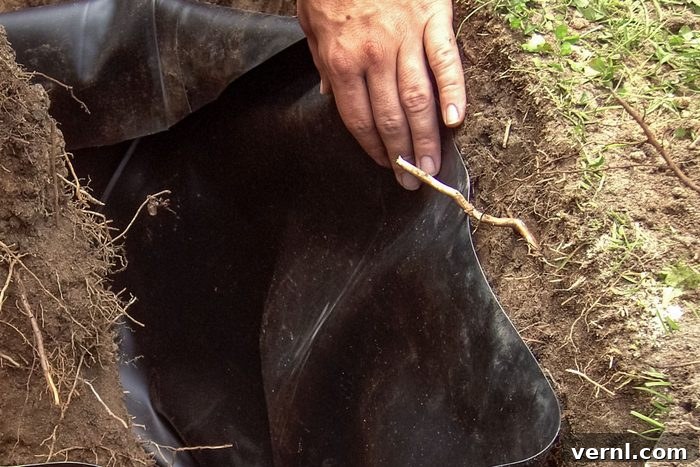
Once intrusive tree roots have been successfully removed and your drains are flowing freely again, the next logical step is to implement preventative measures to stop root regrowth and protect your plumbing system for the long haul. Moreover, it’s crucial to safeguard the health of your trees; long-term exposure to some of the chemical treatments mentioned earlier can be detrimental or even fatal to trees. As Lou Meyer wisely states, “We don’t want to take out a healthy, happy tree. You can put a root barrier in place.”
Root barriers offer a highly effective and permanent solution to this problem. Typically constructed from robust, high-density polyethylene (HDPE), non-woven geo-textile fabrics, or other durable materials, these barriers are strategically installed underground. They are commonly placed alongside building foundations, critical sewer and water lines, and near sidewalks or patios – any area prone to root intrusion and potential damage. Once properly in place, a root barrier acts as a physical obstruction, redirecting roots downwards and away from your sensitive infrastructure, thereby providing a lasting defense.
Here’s a detailed guide on how to install one:
- Step 1: Careful Excavation and Root Pruning: Begin by precisely locating the water or sewer line where the root problem has occurred. Carefully dig a trench down to this depth, exposing the pipes and the offending roots. Using sharp loppers or a pruning saw, meticulously prune away all roots from the problem area. Ensure clean cuts to minimize stress on the tree. Continue to deepen and extend the trench, aiming for a depth of approximately 24 to 30 inches. This depth is critical because it needs to be deeper than the typical lateral root growth of most trees, forcing roots to grow beneath the barrier rather than over it. The width of the trench should allow enough space to comfortably place the barrier and backfill properly.
- Step 2: Strategic Placement of the Root Barrier: Once the trench is prepared and cleared, it’s time to install the root barrier. Different products offer varying designs. Some root barrier products feature interlocking panels that connect to create a continuous, solid structure, ideal for forming a rigid wall. Others are completely pliable, available in rolls, and can be wrapped around pipes or molded to specific contours. Select the type that best suits your specific situation and the shape of the area you are protecting. It is vital to extend the top edge of the barrier to just above the finished soil surface. This prevents roots from simply growing over the top of the barrier and bypassing its protective function. After placement, consider adding a layer of mulch or gravel over the exposed edge for aesthetic purposes and to further suppress any superficial root growth, helping to keep the area neat and tidy.
- Step 3: Thorough Backfilling and Compaction: With the root barrier correctly positioned, carefully backfill the trench with the excavated soil. As you backfill, it’s important to compact the soil incrementally in layers. This ensures that the barrier remains firmly in place and that there are no significant air pockets that could lead to settling later on. Water the area thoroughly after backfilling to help settle the soil and eliminate any remaining air voids.
By investing the time and effort into installing a root barrier, you can effectively safeguard your home’s plumbing from future root invasions, ensuring peace of mind and preserving the health of your beloved trees.
Forward Thinking: Responsible Tree Planting for a Sustainable Landscape
The challenges posed by tree roots in plumbing should never deter us from embracing the profound benefits that trees bring to our environment. As Meyer passionately asserts, “Roots can be a problem, but please don’t let that stop you from planting more trees. They are a wildly important asset to our environment. We love trees and want more of them.” The key lies in thoughtful planning and responsible tree selection.
Effective landscaping involves choosing the right tree species for your specific environment and providing them with ample space to thrive without interfering with underground infrastructure. Certain trees are naturally more aggressive in their search for water and nutrients, making them high-risk choices near plumbing lines. Meyer highlights trees that typically grow near water sources in nature, such as cottonwoods, sycamores, river birch, and weeping willows. These species possess extensive and vigorous root systems that actively seek out moisture, making them prime candidates for pipe intrusion. It is crucial to plant such species farthest from any potential water or sewer lines.
Instead, consider incorporating smaller tree species that have less aggressive root systems. Examples like dogwoods, redbuds, Japanese maples, or certain ornamental fruit trees are excellent choices for areas closer to your home or utility lines, as their root spread is generally more contained and less invasive.
For medium-sized trees, such as many varieties of red maples or black gum trees, it is advisable to maintain a safe distance of 10 to 15 feet away from your foundation or water lines. These trees provide wonderful canopy and aesthetic value but still require careful placement. For larger, stately trees like oaks, hickories, or tulip poplars, which develop extensive and deep root systems over decades, a minimum distance of at least 20 feet from any structures or utility lines is absolutely essential to prevent future conflicts. These grand trees offer incredible environmental benefits, but their mature size and root spread must be factored into your long-term landscape plan.
In situations where you cannot avoid planting a large tree in an area that might become problematic decades down the road, proactive measures are paramount. Installing a root barrier during the initial planting phase can be an invaluable investment, effectively heading off a future problem before it even begins. This forethought and strategic planning are fundamental to maintaining a healthy, beautiful landscape, filled with thriving trees, all while ensuring your home’s plumbing remains free from root issues.
Frequently Asked Questions About Tree Roots in Pipes
What is the most effective way to permanently eliminate tree roots from plumbing pipes?
The top solution for permanently addressing tree roots in plumbing pipes involves a multi-pronged approach combining immediate treatment with long-term prevention. For existing intrusions, potent chemical root killers, such as foaming root killers containing dichlobenil or careful application of copper sulfate (where permitted), are highly effective. These solutions work to destroy existing roots within the pipe and inhibit future root growth. For a truly lasting solution that prevents future ingress, installing a physical root barrier around your plumbing lines or foundation is crucial. This barrier redirects roots away from your pipes, effectively eliminating their access in the future and providing peace of mind for decades to come. Always ensure to follow safety guidelines and local regulations for any chemical treatments.
How long does it typically take to kill roots after tree removal or chemical application?
The time it takes to kill tree roots can vary significantly depending on the method used, the size and species of the roots, and the overall health of the tree. Chemical root killers, like dichlobenil products or copper sulfate, can begin to work within a few hours to several days, with full effects often observed over a few weeks as the roots fully decompose. Natural treatments, such as rock salt, may require a longer period, sometimes several weeks, for the roots to fully dehydrate and die. If a tree has been removed, the remaining roots will eventually die, but this natural decomposition process can take anywhere from several months to several years. Regardless of the initial method, it is important to follow up with preventative measures, such as installing root barriers, to inhibit regrowth and prevent future problems with your plumbing system.
How can I identify if tree roots are the cause of my recurring drain clogs?
Beyond the classic gurgling drains and slow-moving water, several other indicators suggest tree root intrusion. Look for localized wet spots or unusually lush patches of grass in your yard, particularly near sewer or water lines, as these could indicate a leak attracting roots. Foul odors emanating from drains or the yard can signify sewage leakage due to root damage. Repeated clogs in the same drain, especially after heavy rainfall, are another strong sign. For definitive confirmation, professional plumbers can perform a video camera inspection of your pipes, which provides a clear view of any root intrusion, pipe damage, or other blockages, allowing for precise diagnosis and targeted treatment.
About the Experts Featured in This Guide
- Tanya Klein is the CEO of Anta Plumbing & Drain Services, a certified drainage contractor based in Toronto, offering comprehensive plumbing and drainage cleaning services for both commercial and residential clients throughout the Greater Toronto Area. Under her leadership, Anta Plumbing has earned a reputation as a leader in trenchless water main and sewer line installations, alongside providing swift 24-hour emergency response services.
- Ben Gold is the owner of Recommended Home Buyers, a real estate investing company operating in Baltimore. He specializes in assisting homeowners with selling their properties quickly and efficiently. Gold is widely recognized for his honest, customer-centric approach, ensuring that all home sellers receive straightforward, easy-to-understand assistance and expert advice throughout their property sale journey.
- Lou Meyer serves as a Regional Business Developer at The Davey Tree Expert Company, a distinguished firm providing an array of tree care, grounds maintenance, and environmental consulting services across the U.S. through its Davey Commercial Landscape Service. His dedicated efforts significantly contribute to the advancement of sustainable tree care practices and the enhancement of urban green spaces, aligning perfectly with Davey Tree’s core mission.
Key Sources and References
- Recommended Home Buyers: “About Ben Gold”
- Davey Commercial Landscape Service: “About Lou Meyer”
- Anta Plumbing & Drain Services: “About Tanya Klein”