
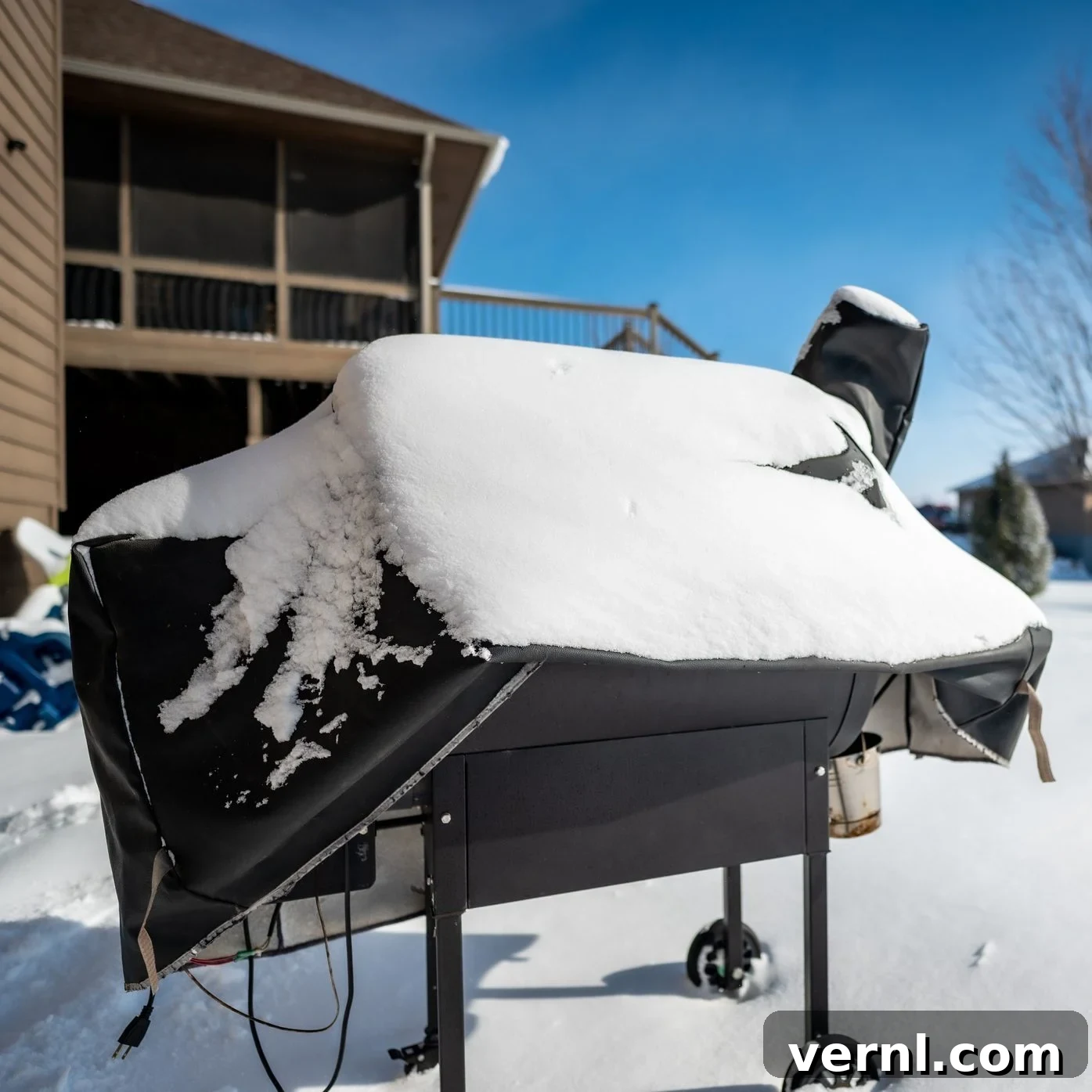
For those living in regions where winter brings snow and freezing temperatures, an outdoor grill or smoker often goes into hibernation for several months. However, simply abandoning your prized cooking equipment to the elements is a recipe for disaster. Proper seasonal preparation, particularly for a pellet grill or smoker, is not just about cleaning; it’s about protecting a significant investment and ensuring its longevity. Even if you’re fortunate enough to reside in a warmer climate, these essential maintenance tasks are crucial for extending the life and performance of all pellet-powered cookers.
Pellet grills and smokers are sophisticated pieces of equipment, representing a considerable investment for any outdoor cooking enthusiast. Treating them with the care they deserve ensures they’ll deliver delicious results for many seasons to come. Neglecting proper storage and maintenance can lead to costly repairs, premature wear, and frustrating breakdowns when you’re ready to fire them up again. This comprehensive guide outlines quick, easy, and essential steps you should take to prepare your pellet grill or smoker for extended downtime or to give it a thorough annual tune-up. By following these guidelines, you’ll safeguard your equipment against environmental damage, pest infestations, and mechanical issues, guaranteeing a seamless return to grilling and smoking pleasure.
A quick note on terminology: While some devices are marketed specifically as “pellet grills” and others as “pellet smokers,” the reality is that most modern pellet-powered cookers are versatile enough to handle both grilling and smoking tasks with ease. For clarity and inclusivity throughout this article, we will use the term “grill or smoker” to refer to all types of pellet-fueled outdoor cooking appliances.
How to Clean Your Pellet Smoker or Grill
One of the most critical steps in preparing your pellet grill or smoker for an off-season, or simply for ongoing maintenance, is a thorough cleaning. Food debris, grease, and ash left inside can attract unwanted pests during colder months and create ideal conditions for mold and mildew growth, even in cold outdoor environments. A dirty cooker not only looks unsightly but can also lead to inconsistent temperatures, ignition problems, and even potential fire hazards. Here’s a detailed, step-by-step guide to cleaning your pellet grill or smoker effectively:
- Perform a High-Temperature Burn-Off: Begin by firing up your grill or smoker to its maximum recommended temperature. It’s a good practice to consult your owner’s manual or the manufacturer’s website for the exact maximum temperature setting. Leave the cooking grates inside during this process. These grates are particularly vulnerable to accumulated grease and food particles, which can harbor bacteria and mold. Allowing the grill to run at its highest setting for approximately one hour will effectively carbonize and burn off the majority of built-up grease, food bits, and residue on the grates and interior surfaces. This initial step significantly reduces the amount of manual scraping and scrubbing required later.
- Allow for Complete Cooling: After the high-temperature burn-off, turn off your grill or smoker and let everything cool down completely. This is a crucial safety step. Attempting to clean a hot or warm grill can lead to burns and is generally less effective as grease can still be somewhat liquid. Patience here ensures a safer and more thorough cleaning process.
- Crucial Pellet Removal: When preparing any pellet-powered cooker for extended storage, you ABSOLUTELY MUST remove all pellets from the hopper, the burn pot, and especially the auger mechanism. Pellets are essentially compacted wood particles designed to burn efficiently. However, if they absorb moisture – which is almost inevitable over time, even with a cover – they will expand significantly. At best, this expansion creates a messy, sawdust-like paste that can be difficult to clean. More seriously, bloated, swollen pellets can jam the auger, damage the motor, or even crack components within the hopper and feeding system. This kind of damage can be expensive to repair and potentially void your warranty. A shop vacuum is an invaluable tool for this task; its powerful suction can easily extract any missed pellets and sawdust from crevices. Do not underestimate the importance of this step; be diligent and ensure every last pellet is removed from the entire feeding system.
- Thoroughly Brush and Wipe Down Interior Surfaces: Once the pellets are removed, focus on eliminating the remaining soot, ash, and carbonized residue. While traditional wire brushes have been popular, they pose a safety risk: individual bristles can break off and potentially end up in your food, which can be extremely dangerous. Due to this concern, nylon-bristle brushes or even stiff-bristled plastic brushes are gaining popularity and are often recommended for their safety. Use a robust grill brush to scrape off any remaining chunks of carbonized food or grease from the cooking grates, internal walls, drip tray, and any other exposed areas. After brushing, use paper towels or a clean cloth to wipe down the inside surfaces. This step is essential for picking up the fine soot and ash particles that the brush might not have completely removed. A thorough wipe-down leaves the interior much cleaner and prevents these particles from mixing with new food during your next cook.
- Apply a Quality Spray Cleaner: To achieve a truly deep clean and ensure your grill or smoker is pristine, use a good spray cleaner. While this should be part of your routine maintenance multiple times a year, it’s especially critical when preparing your equipment for the off-season. At this point, the interior should primarily have fine soot and perhaps a thin film of grease remaining. Spray cleaners, particularly those with citrus-based formulations, are highly effective at cutting through grease and dissolving stubborn residue. Apply the cleaner generously to any remaining dirty parts, including the grates, interior walls, and drip pan. Let it sit for a few minutes according to the product’s instructions, then wipe everything down one last time with fresh paper towels or a microfiber cloth. Citrus cleaning products not only do an excellent job of degreasing but also leave your equipment smelling fresh and clean, deterring pests and preventing unpleasant odors from developing during storage.
Cover Your Pellet Grill or Smoker
While it might seem like common sense, you’d be surprised how many people invest hundreds, or even thousands, of dollars in a high-quality pellet grill, smoker, or outdoor pizza oven, only to leave it exposed to the harsh elements. A grill cover is not just an accessory; it’s a vital piece of protection that shields your equipment from rain, snow, sleet, hail, intense sun, dust, and even bird droppings or tree sap. For most outdoor cooking equipment manufacturers, model-specific covers are available. These custom-fit covers are designed to hug the contours of your specific grill, providing superior protection. A quality, model-specific cover typically ranges from $50 to $100 or more for deluxe versions, reflecting the better materials and construction. They often feature durable, weather-resistant fabrics like heavy-duty polyester with PVC backing, offering excellent waterproofing and UV protection.
I strongly recommend investing in a model-specific cover over a generic alternative. The tailored fit prevents water pooling, reduces wind lift, and ensures comprehensive coverage of all critical components. If your specific grill model doesn’t offer a cover, or if you prefer a more budget-friendly option, numerous generic covers are available on platforms like Amazon, usually ranging from $20 to $40. When opting for a generic cover, it’s imperative to meticulously measure the dimensions (height, width, depth) of your pellet grill or smoker to purchase a cover that closely matches its size. A cover that is too large will sag and collect water, while one that is too small won’t offer adequate protection. To prevent your cover from blowing off during strong winds, ensure it comes with a secure locking strap or cinch cord at the bottom. If your chosen cover lacks this feature, it’s wise to purchase a sturdy strap or two separately, such as luggage straps with buckles, to firmly secure the cover to the grill or smoker’s legs. Properly securing the cover is paramount, especially if your equipment will be unattended for several months, as a dislodged cover leaves your grill vulnerable and can go unnoticed for extended periods, exposing it to potential damage.
Unplug Your Pellet Grill or Smoker
This is a mistake many grill owners, myself included, have made. Leaving your pellet grill plugged in, even when not in use, can lead to unforeseen and costly issues. My own experience involved leaving my pellet grill plugged in through the winter, only to find in the spring that the electronic control board, the “brain” of the unit, was no longer functioning. After troubleshooting with customer service, I was informed that prolonged periods of being plugged in, particularly through winter months, can cause problems. This can be due to various factors: minor power surges, voltage fluctuations, or even just the constant “trickle” draw of power that can stress sensitive electronic components over time. Even when turned off, many modern appliances draw a small amount of “phantom” power to maintain settings or keep a clock running. For a higher-end model like mine, replacing the control board set me back $99. While I was relieved it was all it took to get my grill operational again, it was an avoidable expense. Even for lower-end models, a replacement control board can cost $40 or more, plus the time and effort of installation. Always unplug your pellet grill or smoker when it’s not in active use, especially for extended storage. This simple action protects its sensitive electronics from potential damage and saves you money on your electricity bill.
Disconnect Everything From Your Pellet Grill or Smoker
Beyond simply unplugging the main power cord, it’s crucial to disconnect and properly store any detachable accessories. This includes, but is not limited to, meat probes, internal temperature sensors, rotisserie kit components, and any other items that plug into or attach to your grill. Each of these components has sensitive connectors and wiring that can be prone to corrosion, damage from moisture, or general wear and tear if left exposed or attached. Take the time to gently disconnect these items. Once disconnected, clean them thoroughly, especially the meat probes, to remove any food residue or grease. Then, place all disconnected accessories in a sealable plastic bag. This serves a dual purpose: it protects the items from dust, moisture, and pests during storage, and it keeps them organized. A great strategy is to place this sealed bag on the shelf directly underneath your cooker, inside the cabinet, or in a readily accessible storage bin. That way, when spring arrives and you’re eager to get back to cooking, you’ll know exactly where all your essential components are, preventing a frantic search and ensuring you have everything you need to start grilling right away.
Store Your Pellet Grill or Smoker in a Safe Location
The overarching principle for prolonging the life of your pellet grill or smoker is to keep it dry and protected from the elements. The ideal scenario for extended storage is to move your cleaned and prepared grill or smoker into a garage, shed, or a covered patio that offers full protection from wind, rain, snow, and extreme temperature fluctuations. This provides a stable environment that minimizes exposure to moisture, which can cause rust and electronic issues, and protects against harsh winds that can damage covers or even topple the unit. It also deters pests from nesting inside. If an indoor storage space isn’t an option, and you must leave your equipment outside, strategic placement is key. Position the grill under the overhang of your roof, on a covered porch, or in another location where it will receive overhead protection. Ensure that rain or melting snow is not likely to run down and pool up on the cover or around the legs of the grill, as standing water can compromise the cover’s integrity and lead to rust. If your existing overhang isn’t large enough to provide adequate protection from driving rain, ice, and snow, consider investing in a small, portable canopy or a lean-to shelter specifically designed for outdoor equipment. Additionally, if storing outdoors, consider placing the grill on a raised platform or paver stones to keep its legs and wheels off direct contact with damp ground, further minimizing moisture exposure and protecting against rust.
Using Your Grill or Smoker Again in the Spring
After months of storage, or even just a period of inactivity, it’s essential to perform a few final checks before you start cooking on your pellet grill or smoker again. This ensures both the safety of your food and the optimal performance of your equipment. Begin by visually inspecting the entire unit for any signs of damage, pest nests, or corrosion that might have occurred during storage. Check the auger for free movement and ensure the igniter is clean and functional. Once you’re confident everything looks good, it’s highly recommended to run your grill or smoker at its highest temperature setting with no food inside for at least one hour. This “burn-off” cycle serves multiple purposes: it helps to burn off any residual dust, odors, or unseen contaminants that might have accumulated during storage, ensuring all parts are thoroughly sanitized and food-safe. It also allows you to confirm that the igniter, auger, and fan are all working correctly and that the grill is holding temperature accurately. Once this burn-off is complete and the grill has cooled down slightly, you can open it up, perform a quick final wipe-down if necessary, and then you’ll be fully ready to embark on another season of delicious grilling and smoking, confident in your equipment’s readiness and cleanliness.