
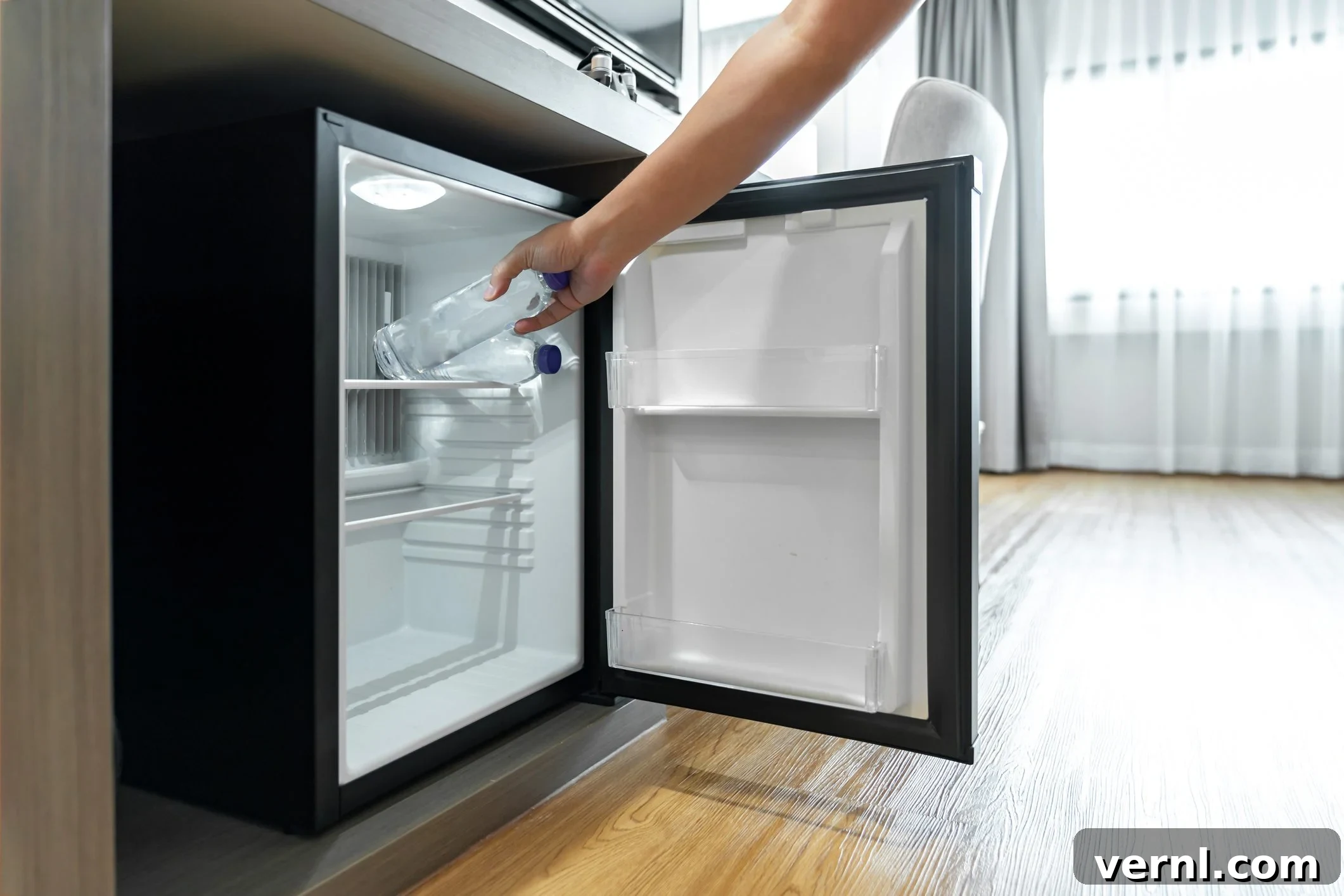
Imagine having refreshing drinks and snacks always within arm’s reach, whether you’re working late in your home office, unwinding in a basement entertainment area, or simply needing extra chilled storage. This incredible convenience is exactly what a high-quality mini fridge offers. These compact refrigerators are the ultimate solution for keeping items refrigerated practically anywhere there’s an outlet, especially in environments where every square inch of space is precious.
While mini-fridges are most commonly associated with dorm rooms – and for good reason – their utility extends far beyond student accommodations. I’ve personally experienced the transformative benefits of a mini fridge in diverse spaces, such as enhancing the functionality of a basement wet bar or providing a refreshing oasis in an attic office. By eliminating the hassle of going up and down stairs whenever you want a drink or snack, a small refrigerator significantly increases both the convenience and overall livability of these areas.
One of the most appealing aspects of a compact fridge is its inherent versatility. Due to their smaller footprint, many models can fit snugly on a countertop, desk, or even be tucked away within cabinetry, as long as there’s sufficient clearance for proper ventilation. Mini fridges come in a wide array of capacities, typically ranging from about 1.7 to 4.5 cubic feet, though specialized models can be even more compact or slightly larger. This extensive variety ensures that you’ll likely discover the perfect compact refrigerator to precisely fit your specific needs, whether it’s for a few cans of soda or a week’s worth of lunch prep.
Why Invest in a Mini Fridge? Unpacking the Multifaceted Benefits of Compact Refrigeration
The decision to purchase a mini fridge often stems from a desire for greater convenience, enhanced functionality, and optimized space utilization. These small yet powerful appliances deliver a multitude of advantages that make them an invaluable addition to nearly any environment.
Unmatched Convenience at Your Fingertips
A strategically placed mini fridge transforms any area into a self-sufficient zone. Imagine a home office where your coffee creamer, healthy snacks, and an afternoon energy drink are always within arm’s reach, eliminating disruptive trips to the main kitchen. Or consider a garage workshop, where a cold beverage is an indispensable reward after a session of hard work. For families with infants, a mini fridge in the nursery can conveniently store breast milk or formula, making nighttime feedings much simpler and quicker. This immediate, effortless access to chilled items is arguably the most compelling reason to invest in a compact refrigerator.
Space-Saving Design Tailored for Any Layout
Unlike their full-sized counterparts, mini fridges are meticulously designed with portability and space efficiency as core priorities. Their compact dimensions allow them to be placed in tight corners, discreetly under desks, prominently on countertops, or seamlessly integrated into custom cabinetry. This makes them an ideal choice for apartments, small homes, RVs, boats, or even as a supplementary unit in a larger house where additional storage is desired. The remarkable ability of a mini fridge to fit where a traditional appliance simply cannot opens up new possibilities for organization and functionality in previously underutilized areas.
Versatility Across Various Settings and Lifestyles
The applications for a mini fridge are remarkably diverse, extending far beyond the classic dorm room or simple office scenario. They excel in a multitude of environments, enhancing daily living:
- Entertainment Areas: They are perfect for a basement bar, game room, or home theater, keeping beverages, mixers, and snacks perfectly chilled for guests and family.
- Bedrooms & Nurseries: Ideal for storing medications, beauty products, baby bottles, or discreet late-night refreshments, minimizing disturbance.
- Garages & Workshops: A robust mini fridge can withstand varied temperatures, providing essential cold drinks during projects or workouts.
- Outdoor Kitchens & Patios: Specialized outdoor-rated models can perfectly complement your outdoor bar or grilling setup, built to resist the elements.
- Travel & Mobile Living: Portable mini fridges are excellent for RVs, campers, and long road trips, offering the comfort of home refrigeration on the go.
- Personalized Storage: From dedicated beauty fridges for skincare products to specialized wine coolers, mini fridges cater to very specific storage needs.
Mini Fridge Pricing: What to Expect and Why Costs Vary Significantly
The cost of a mini fridge can fluctuate dramatically, reflecting differences in size, brand reputation, included features, and the overall type of unit. Understanding these variations is crucial for effectively budgeting and making an informed purchasing decision for your new appliance.
Generally, traditional freestanding mini fridges represent the most budget-friendly entry point, with prices often starting as low as $100. These are typically the straightforward models found in dorm rooms, basic office setups, or as simple auxiliary storage, offering essential refrigeration without an extensive array of advanced features. However, as Brian Madson, refrigeration project manager at Perlick, a recognized expert in high-performance refrigeration solutions, points out, the price spectrum expands dramatically for more specialized and integrated units.
Built-in under-counter refrigerators, designed to seamlessly integrate with your existing cabinetry for a sleek, custom appearance, typically start at a considerably higher price point, around $1,000. These premium models, frequently found in high-end kitchens, sophisticated entertainment centers, or custom home bars, can easily exceed $3,500 for those equipped with advanced features, superior insulation, and specialized finishes. Factors such as a high-quality glass door, precise digital temperature controls, dual-zone cooling capabilities, ice makers, or a premium stainless steel exterior contribute significantly to these higher price points, offering both enhanced aesthetics and functionality.
When considering your investment, it’s wise to think about the appliance’s intended lifespan, its visibility within your space, and the importance of specific features that align with your lifestyle. A basic, affordable model might suffice perfectly for occasional use or in a hidden location, while a more durable, aesthetically pleasing, and feature-rich unit might be justified for a prominent area or a space that sees heavy, frequent use.
Demystifying Mini Fridge Energy Consumption: Do They Use a Lot of Electricity?
One common concern among prospective buyers is the energy usage of a mini fridge. Thankfully, when compared to larger household appliances such as full-sized refrigerators or washing machines, mini fridges are remarkably energy efficient, often consuming surprisingly little power.
“Even high-performance under-counter refrigeration uses about the same amount of electricity as the average flat-screen TV,” explains Brian Madson from Perlick. This comparison often surprises people, effectively highlighting just how little power these compact units truly consume. Their smaller compressors and reduced internal volume mean there’s less space to cool and maintain temperature, directly translating into significantly lower energy demands compared to their larger counterparts.
How Many Watts Does a Mini Fridge Use Annually?
Understanding wattage and kilowatt-hours (kWh) can help put energy consumption into clearer perspective. According to Madson, most mini fridges use approximately 200 to 400 kilowatt-hours (kWh) per year. This figure can vary depending on the fridge’s specific size, its overall design, and the inherent efficiency of its refrigeration system. To put this into a relatable context, a standard desktop computer often pulls around 600 kWh per year, meaning a typical mini fridge frequently consumes significantly less energy than your average computer setup. This impressively low annual consumption makes them an economical choice for supplementary refrigeration in any setting.
What Does a Mini Fridge Cost to Operate Monthly?
The operating cost of a mini fridge is impressively low, positioning them as a highly cost-effective addition to any space. Madson estimates that an Energy Star-rated mini fridge should cost “less than $3 per month” to run. For models that are not Energy Star certified, the cost would still be quite modest, typically falling “less than $5 per month.” These figures are based on average electricity rates and unequivocally underscore the minimal financial impact of owning and operating a mini fridge.
Choosing an Energy Star rated model further guarantees optimal energy efficiency, as these appliances feature enhanced insulation and more efficient compressors designed to minimize power consumption. This translates directly to not only lower utility bills over time but also a reduced environmental footprint, aligning perfectly with sustainable living practices.
Maximizing Energy Efficiency for Your Mini Fridge: Practical Tips
Even with their inherent efficiency, you can further reduce operating costs and extend the operational life of your mini fridge by conscientiously following a few simple yet effective tips:
- Proper Placement: Ensure the fridge is positioned in a cool spot, away from direct sunlight or significant heat sources like ovens, which force the compressor to work harder. Leave sufficient clearance (typically 2-4 inches) around the back and sides for adequate ventilation.
- Maintain Seal Integrity: Regularly inspect the door seal (gasket) for any visible gaps, cracks, or damage. A compromised seal allows cold air to escape, causing the compressor to cycle more frequently.
- Avoid Overfilling: While a moderately full fridge can run more efficiently than an empty one (as stored items help retain cold), overfilling it can restrict crucial airflow, thereby reducing its overall efficiency.
- Regular Defrosting: If your mini fridge is equipped with a manual defrost freezer compartment, frost buildup is a common occurrence. When the ice reaches about a quarter-inch thick, it’s time to defrost, as excessive frost acts as an insulator, impeding cooling efficiency.
- Optimize Temperature Setting: Set the thermostat to the manufacturer’s recommended temperature (usually between 37-40°F or 3-4°C for refrigeration). Setting it unnecessarily colder will consume more energy without significant benefit.
Key Considerations When Buying a Mini Fridge: Your Comprehensive Selection Guide
Choosing the perfect mini fridge involves more than just selecting the first compact model that catches your eye. To ensure you select the best unit that precisely fits your specific needs, available space, and budget, it’s crucial to keep several pivotal factors in mind. Thoughtful consideration at this initial stage will undoubtedly lead to long-term satisfaction and optimal utility from your new appliance.
- Freezer Section Requirements: Carefully evaluate your need for frozen storage. Some mini fridges come equipped with a small, full-width freezer compartment, which is perfect for ice trays, a few frozen meals, or small treats. Other models may feature only a tiny icebox for a single tray, or no freezer section at all. If frozen items are a priority, ensure the freezer is adequately sized for your needs. Conversely, if you primarily require chilled storage, opting for a model without a freezer will maximize the available refrigeration space, which can be far more practical for purely chilled items. Be aware that most mini fridge freezers are manual defrost, requiring occasional thawing and maintenance.
- Capacity and Volume: While this might sound obvious, it’s vital to meticulously consider what you plan to store. Mini fridges are measured in cubic feet, with typical models ranging from 1.7 to 4.5 cubic feet. A 1.7 cubic foot unit might comfortably hold a few cans and a snack, whereas a 4.5 cubic foot model could accommodate several beverage bottles, lunch items, and more substantial provisions. Visualize the specific items you’ll be storing – beverages, lunch containers, specific food items – and choose a capacity that comfortably fits your inventory without being overstuffed, as overfilling can significantly reduce cooling efficiency.
- Space & Dimensions for Placement: This is a critically important step: always measure your intended placement area thoroughly before making a purchase. This is especially vital if the mini fridge is destined for a specific, confined spot, such as discreetly behind a home bar, neatly between existing cabinets, or tucked under a desk. Remember to account for adequate door swing clearance and, most critically, proper ventilation. Most mini fridges require a few inches of space around the back and sides for proper airflow to prevent the compressor from overheating and to maintain energy efficiency. Failing to provide adequate ventilation can drastically shorten the appliance’s lifespan and unnecessarily increase energy consumption.
- Electrical Cord Length and Safety: Always check the length of the electrical cord. It must be sufficiently long to reach the nearest suitable, grounded outlet without needing an extension cord, which can be a significant fire hazard and may reduce power efficiency. Ensure the cord won’t create a tripping hazard and that the outlet is a dedicated, grounded receptacle suitable for an appliance’s power draw.
- Ice Maker Integration: Built-in ice makers are generally considered a luxury feature and are typically found only in higher-end, larger compact refrigerators or specialized under-counter units. If a consistent supply of ice is a high priority for your needs, and your chosen mini fridge doesn’t offer this feature, consider pairing it with a dedicated countertop ice maker. This often provides a more efficient and reliable ice supply than relying on a small, integrated freezer compartment.
-
Primary Use and Intended Environment: Your mini fridge’s main purpose and the environment in which it will operate will significantly influence your optimal choice.
- Dorm Room/Office: Focus on basic reliability, sufficient capacity for everyday essentials, and potentially quiet operation to avoid distractions.
- Entertainment/Bar Area: Aesthetics (e.g., a sleek glass door), ample capacity for beverages, and potentially a reversible door for flexible placement are key considerations.
- Outdoor Use: It is crucial to look for models specifically rated for outdoor environments, featuring durable, weather-resistant construction (such as heavy-gauge 304 stainless steel) and robust insulation to effectively handle temperature fluctuations and moisture. An outdoor bar necessitates a fridge built to withstand the elements.
- Wine or Specialized Beverage Cooler: These often boast precise temperature control, UV-protective glass doors, and specialized shelving designed to cradle bottles securely.
- Beauty/Skincare Fridge: Smaller “beauty fridges” are specifically designed for cosmetics and often feature specific temperature ranges suitable for preserving active ingredients.
-
Additional Features & Aesthetic Appeal: Don’t overlook features that significantly enhance usability, convenience, and visual appeal.
- Reversible Door: This feature allows you to change the direction of the door swing to best suit your space’s layout, offering invaluable flexibility.
- Adjustable Shelves: Offers superb flexibility for storing items of various heights and shapes, allowing for customized internal organization.
- Can Dispensers/Door Storage: Optimizes internal space for frequently accessed items like soda cans or tall bottles.
- Interior Lighting: Makes it incredibly easy to see contents, especially in dimly lit environments.
- Security Lock: A valuable feature for dorms, offices, or shared spaces to secure valuable or personal contents.
- Finish and Color: From classic black and white to charming retro designs or sleek stainless steel, the external appearance can be chosen to perfectly complement your existing decor.
Top Mini Fridge Recommendations for Every Need and Budget
To assist you in navigating the vast and sometimes overwhelming market of compact refrigerators, we’ve carefully curated a selection of highly-rated mini fridges. Each recommendation offers unique features and caters to different requirements and budgets, representing excellent choices for a variety of applications, from simple dorm life to sophisticated outdoor entertainment areas.
-
Bull Freestanding Mini Fridge (2.5 cu. ft. capacity) – ~$190:
This highly-rated and reliable option is an excellent choice for general use in dorms, home offices, or as an auxiliary fridge in any room. As an Energy Star-certified model, it boasts a practical full-width freezer compartment, making it remarkably versatile for storing both chilled items and a small amount of frozen goods. Its reversible door offers flexible placement options, easily adapting to your room’s specific layout. This is a solid, no-nonsense choice for dependable and efficient refrigeration.
View on Amazon -
Black+Decker Compact Refrigerator (1.7 cu. ft. capacity) – ~$148:
For individuals with extremely limited space or minimal refrigeration needs, this Black+Decker model stands out as an excellent, smaller alternative. It delivers dependable performance within a super compact footprint, making it perfect for a single dorm resident, a personal office desk, or even a bedside setup for late-night essentials. Despite its small size, it’s thoughtfully designed for both efficiency and convenience, solidifying its status as a popular choice for truly tight spaces.
View on Amazon -
Frigidaire Stylish Retro Mini Fridge (3.2 cu. ft. capacity) – ~$184:
If aesthetics are as paramount as functionality, the Frigidaire retro mini fridge is an undeniable standout. Available in six vibrant, fun colors, it effortlessly adds a touch of vintage charm and personality to any room. Beyond its eye-catching design, it offers a practical 3.2 cubic feet of storage, complete with internal shelving for organized cooling. A unique and highly convenient feature is the integrated bottle opener on the side, making it absolutely perfect for entertainment areas or game rooms. It’s an ideal choice for those who want to combine distinctive style with everyday utility.
View on Amazon -
Bull Outdoor Rated Refrigerator (4.4 cu. ft. capacity) – ~$589:
Engineered specifically to withstand the rigors of the elements, this Bull outdoor mini fridge is a robust and resilient solution for your outdoor kitchen or patio bar. Constructed from heavy-gauge 304 stainless steel, it is explicitly built for exceptional durability and longevity in exterior environments. Its generous 4.4 cubic foot capacity provides ample space for a wide array of beverages and ingredients needed for outdoor entertaining, making it a wise and enduring investment for significantly enhancing your al fresco living experience.
View on Amazon -
Avallon Luxury Under-Counter Refrigerator (5.66 cu. ft. capacity) – ~$1,199:
For those seeking a truly premium and sophisticated compact refrigeration experience, the Avallon unit offers an array of luxury features and superior performance. As a splurge item, it fully justifies its price with advanced functionalities such as elegant LED interior lighting, precise touch controls for meticulous temperature management, and a robust key lock for enhanced security of its contents. Its generous 5.66 cubic foot capacity and sleek, contemporary design make it an ideal choice for sophisticated home bars, high-end executive offices, or as a dedicated beverage cooler where both aesthetics and advanced features are paramount.
View on Build.com
Maintenance Tips for Your Mini Fridge: Ensuring Longevity and Peak Efficiency
Proper care and consistent maintenance are absolutely crucial for maximizing the lifespan and maintaining the optimal energy efficiency of your mini fridge. By diligently following these straightforward steps, you can help keep your compact refrigerator running smoothly, effectively, and reliably for many years to come.
Regular Cleaning Routines
Maintaining cleanliness both inside and outside your mini fridge is fundamental for hygiene and performance.
- Interior Cleaning: Routinely wipe down shelves, walls, and door compartments with a mild soap and water solution to prevent food spills from hardening and unpleasant odors from developing. For a thorough deep clean, remove all contents and unplug the unit before scrubbing.
- Exterior Cleaning: Dust and wipe the exterior surface regularly. For appliances with stainless steel finishes, utilize a specialized stainless steel cleaner to prevent streaks and maintain its pristine luster.
- Condenser Coils Maintenance: On many mini fridge models, the condenser coils are strategically located at the back or underneath the unit. Over time, dust, pet hair, and debris can accumulate on these coils, forcing the fridge to work harder. Gently vacuum or brush them off every few months to significantly improve energy efficiency.
Defrosting for Manual Defrost Freezers
If your mini fridge is equipped with a manual defrost freezer compartment, frost buildup is an inevitable occurrence that needs attention.
- Timely Defrosting: When ice buildup reaches approximately a quarter-inch thick, it is definitely time to defrost. Excessive frost acts as an insulator, reducing cooling efficiency and taking up valuable storage space.
- The Defrosting Process: Always unplug the unit, remove all contents, and allow the ice to melt naturally. Place towels or a shallow pan to absorb the melting water. Crucially, never use sharp objects or heating devices to chip away at ice, as this can severely damage the evaporator coils and internal components. Once fully defrosted, meticulously clean and dry the interior thoroughly before plugging it back in and restocking.
Checking Door Seals for Integrity
The door gasket (seal) is a critical component for maintaining consistent internal temperatures and preventing energy loss.
- Regular Inspection: Periodically inspect the door seal for any visible cracks, tears, hardening, or signs of wear. A simple test involves closing the door on a dollar bill; if it pulls out easily, the seal might be compromised.
- Seal Cleaning: Keep the gasket clean, as sticky spills or food particles can prevent a tight, effective seal. Wipe it gently with warm, soapy water.
- Replacement: If the seal is significantly damaged or no longer providing an airtight closure, consider replacing it promptly, as a faulty seal can dramatically increase energy consumption.
Ensuring Proper Ventilation is Key
Maintaining good airflow around your mini fridge is absolutely essential for its optimal performance, energy efficiency, and overall longevity.
- Adequate Clearance: Always ensure you maintain the manufacturer-recommended clearance (typically 2-4 inches) around the back and sides of the unit. This space allows heat to dissipate efficiently.
- Strategic Location: Avoid placing the mini fridge in direct sunlight or directly next to heat-producing appliances like ovens or radiators. Good ventilation enables the compressor to dissipate heat effectively, preventing overheating and unnecessary energy expenditure.
Conclusion: Finding Your Ideal Compact Refrigeration Solution
Mini fridges are far more than mere conveniences; they are versatile, energy-efficient, and space-saving appliances that can profoundly enhance the functionality, comfort, and livability of various environments. From keeping your favorite beverages perfectly chilled in a bustling dorm room to providing specialized, dedicated storage for an outdoor bar or a productive home office, the right compact refrigerator can make a remarkable and tangible difference in your daily life.
By carefully considering pivotal factors such as desired capacity, the primary intended use, potential energy efficiency (especially looking for Energy Star ratings), and the array of available features, you can confidently select a mini fridge that not only meets your immediate needs but also integrates seamlessly and effectively into your unique lifestyle. Whether your priority is affordability, distinctive design, or high-end performance with advanced features, rest assured, there’s a perfect mini fridge out there waiting to bring a touch of refreshing chilled convenience into your world. Invest wisely, maintain diligently, and fully enjoy the myriad refreshing benefits of your new compact companion.