
Mastering Your Car’s Lane Keep Assist System for Enhanced Safety
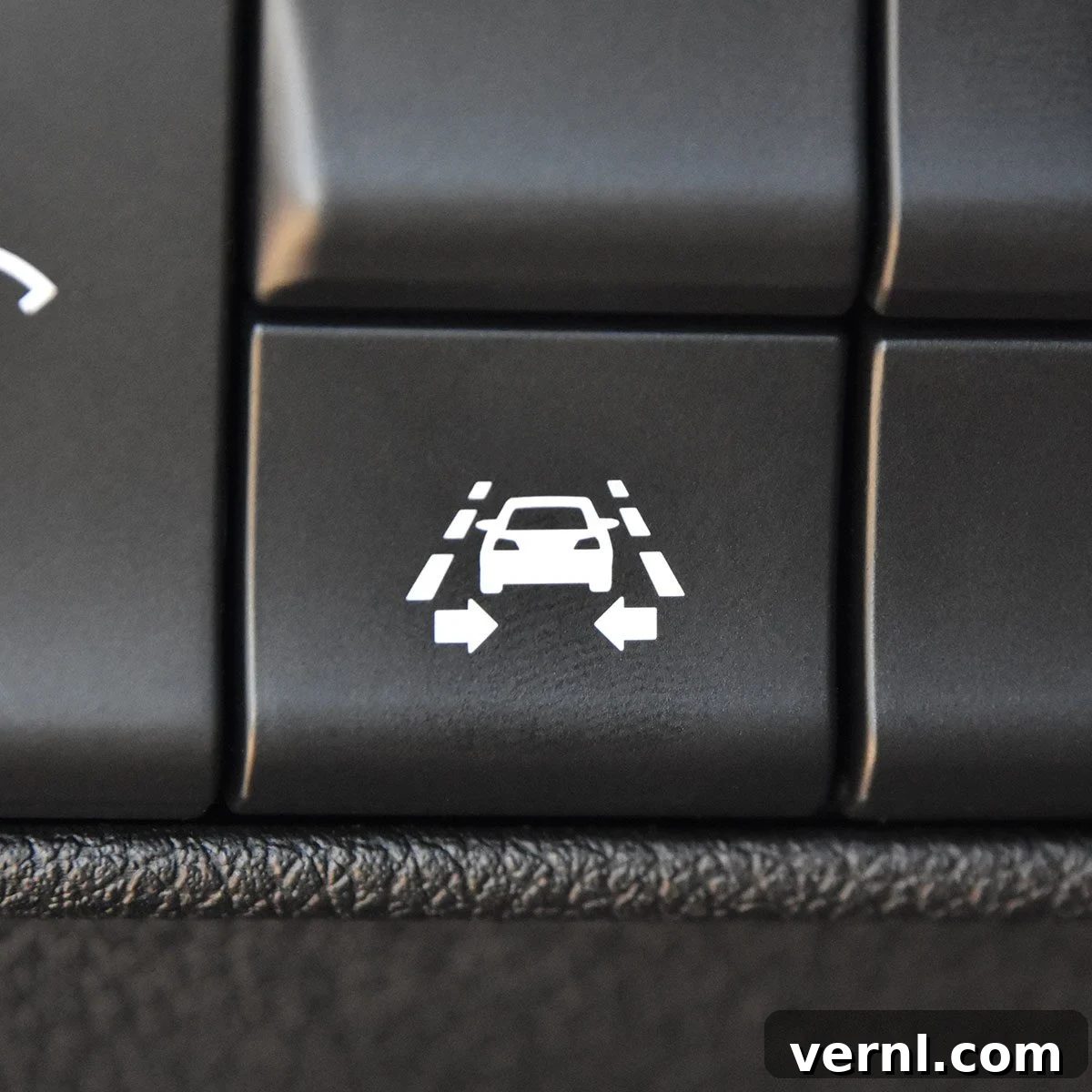
In an era where automotive innovation advances at lightning speed, modern vehicles are equipped with an ever-growing array of sophisticated safety features. From advanced braking systems to intricate parking aids, these technologies are designed to make our journeys safer and more comfortable. However, the sheer volume of buttons, toggles, and digital settings can sometimes feel overwhelming, making it a genuine undertaking to learn what each function does. Yet, amidst this complexity, certain features truly stand out as invaluable guardians on the road. One such essential innovation is the “Lane Keep Assist” system, often activated by a dedicated button on your steering wheel or dashboard, typically identifiable by an icon depicting a vehicle with lines on either side.
Like many contemporary driver-assist systems, Lane Keep Assist (LKA) offers the flexibility to be toggled on or off, depending on your preference. However, its inclusion in newer vehicles represents a significant enhancement to passive safety, providing an extra layer of protection that can be crucial, particularly during long drives or moments of momentary distraction. While it’s imperative never to fully rely on LKA as a substitute for attentive driving, it serves as an intelligent co-pilot, actively working to improve your driving precision and overall road safety.
What Exactly Does the Lane Keep Assist Button Do?
When you press the Lane Keep Assist button, you activate a sophisticated safety feature designed to prevent your vehicle from unintentionally drifting out of its lane. According to Chevrolet and many other manufacturers, when this setting is enabled and your vehicle is traveling above a certain speed, the system continuously monitors your car’s position relative to lane markings. Should it detect that you are beginning to drift without an active turn signal, it will issue a warning and can even provide gentle steering corrections to help guide your vehicle back toward the center of your lane.
It’s critically important to understand that Lane Keep Assist is not an autonomous driving system. While your car may offer slight steering input to nudge you back into your lane, it will not drive itself, navigate turns, or take over control for extended periods. Instead, LKA acts as a crucial buffer, offering you precious extra milliseconds to react and reposition your vehicle fully into the correct lane, significantly reducing the risk of side-swipe collisions or veering off the road due to inattention. It’s a supportive technology, augmenting driver capability rather than replacing it.
The Technology Behind Lane Keep Assist: How It Works
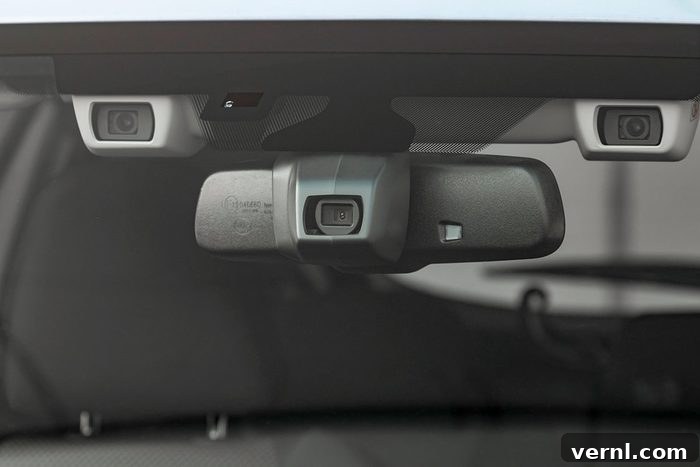
The magic behind Lane Keep Assist is rooted in advanced sensor technology and intricate software algorithms. The primary component for most LKA systems is a forward-looking camera, often mounted discreetly behind your vehicle’s windshield, typically in front of the inside rearview mirror. This camera serves as the system’s “eyes,” constantly scanning the road ahead.
Vision and Sensor Capabilities
The high-resolution camera continuously captures images of the road surface, specifically looking for painted lane lines. In more advanced systems, radar or ultrasonic sensors might also contribute data, especially in challenging conditions. The vehicle’s onboard computer then processes this visual information in real-time, identifying the boundaries of your current lane.
Lane Detection and Speed Thresholds
For the Lane Keep Assist system to engage, your vehicle must be traveling above a manufacturer-defined minimum speed. This speed threshold varies between car models and brands but is commonly around 35-45 mph. For instance, many Chevrolet vehicles activate LKA when the speed exceeds 37 mph. Below this speed, for example, in slow city traffic or during parking maneuvers, the system typically deactivates to prevent unnecessary interventions.
The Warning System and Active Intervention
If the camera detects that your vehicle is approaching or crossing a lane line without your turn signal activated, the system initiates a warning. This warning can be visual (an icon flashing on your dashboard or head-up display), auditory (a chime or beep), or haptic (a vibration in the steering wheel or seat). Crucially, LKA goes a step further than mere warnings; it actively intervenes by applying a gentle torque to the steering wheel, subtly guiding the vehicle back towards the center of the lane. This intervention is designed to be noticeable enough to alert the driver but not so forceful as to be jarring or unexpected.
Intelligent Disengagement and Driver Override
One of the most intelligent aspects of LKA is its ability to discern intentional lane changes from unintentional drifts. As Chevrolet emphasizes, the system will not issue warnings or corrections if it registers that you are actively using your turn signal, or if it detects deliberate steering, acceleration, or braking inputs. This ensures that the system assists only when truly needed, allowing the driver to maintain full control during planned maneuvers. The easiest and most responsible way to interact seamlessly with this system is to consistently utilize your turn signal every time you change lanes, merge, or make turns – a fundamental driving habit that LKA helps reinforce.
Key Benefits of Utilizing Lane Keep Assist
Integrating Lane Keep Assist into your driving routine offers a multitude of tangible benefits that contribute to a safer and more relaxed driving experience.
Enhanced Driver Awareness and Accident Prevention
LKA acts as an invaluable second set of eyes, constantly monitoring your vehicle’s position. This heightened vigilance significantly reduces the likelihood of unintentional lane departures, which are a common cause of accidents, especially those involving head-on collisions or veering off the road. By gently intervening or alerting you, LKA gives you crucial time to correct your steering, potentially preventing severe incidents.
Mitigating Driver Fatigue on Long Journeys
Long drives can be mentally exhausting, and driver fatigue often leads to a decrease in attention and an increased risk of drifting. Lane Keep Assist can significantly mitigate this by subtly assisting with steering corrections, reducing the constant micro-adjustments drivers typically make. This lessens the burden on the driver, allowing for a more relaxed experience and helping to maintain alertness over extended periods behind the wheel.
Promoting Better Driving Habits
For drivers who might occasionally forget to use their turn signals, LKA serves as a gentle but effective reminder. Since the system only intervenes when a lane change occurs without an indicator, it subtly encourages the consistent use of turn signals. This not only makes driving smoother and safer for the individual but also contributes to better overall traffic flow and communication on the road.
Lane Keep Assist vs. Lane Departure Warning: What’s the Difference?
While often bundled together and sometimes confused, it’s essential to distinguish between Lane Keep Assist (LKA) and Lane Departure Warning (LDW). Both systems aim to prevent unintentional lane departures, but they do so with different levels of intervention.
- Lane Departure Warning (LDW): This is the more basic of the two. If your vehicle begins to drift out of its lane without a turn signal, LDW will issue an alert – typically visual, auditory, or haptic (e.g., steering wheel vibration). Its sole function is to warn the driver, prompting them to take corrective action.
- Lane Keep Assist (LKA): LKA builds upon LDW. It provides all the warnings of LDW but adds an active component: gentle, corrective steering input. If you drift, LKA will not only warn you but also actively steer the vehicle slightly to help guide it back into the center of the lane. Think of LDW as a notification and LKA as a notification plus a helping hand.
Many modern vehicles offer both features, often activated by the same button, with LKA being the more advanced function that includes the active steering component.
Limitations and Best Practices for LKA
While Lane Keep Assist is a powerful safety tool, it’s not foolproof and has specific limitations. Understanding these is key to utilizing the system effectively and responsibly.
When LKA Might Not Perform Optimally
The effectiveness of Lane Keep Assist is highly dependent on its ability to clearly detect lane markings. Consequently, certain conditions can impede its performance:
- Faded or Absent Lane Markings: On older roads, construction zones, or roads without clear lines, the camera may struggle to identify the lane boundaries, causing the system to disengage or perform erratically.
- Poor Weather Conditions: Heavy rain, snow, fog, or glaring sunlight can obscure the camera’s view, leading to reduced functionality or temporary deactivation.
- Sharp Curves or Complex Intersections: LKA systems are primarily designed for straight roads or gentle curves. In very sharp turns or complex urban intersections, the system may not be able to accurately track the lane.
- Dirty Sensors or Windshield: Dirt, mud, snow, or ice on the camera lens (located on the windshield) can obstruct its view and prevent the system from working correctly. Regular cleaning of your windshield, especially the area around the camera, is vital.
Driver Responsibility and Overrides
It cannot be stressed enough that Lane Keep Assist is an assistance system, not an autopilot. Drivers must remain fully engaged and keep their hands on the steering wheel at all times. LKA is designed to be easily overridden; a firm steering input from the driver will always take precedence over the system’s corrections. If the system detects a lack of driver engagement (e.g., no hands on the wheel for an extended period), it will typically issue warnings and eventually deactivate until driver input is re-established.
Essential Driving Habits for LKA Users
To maximize the benefits of LKA and ensure a seamless driving experience:
- Consistent Turn Signal Use: Make it a habit to use your turn signal for every lane change or turn. This communicates your intent to the system (and other drivers), preventing unnecessary warnings or interventions.
- Maintain a Clean Windshield: Regularly clean your windshield, paying particular attention to the area where the forward-looking camera is located.
- Understand Your Vehicle’s System: Refer to your car’s owner’s manual to understand the specific speed thresholds, warning types, and limitations of your particular Lane Keep Assist system.
- Stay Attentive: Never rely on LKA to drive the car for you. It’s a supportive technology that requires an alert and engaged driver.
The Future of Driver Assistance Systems
Lane Keep Assist represents a significant stepping stone in the evolution of Advanced Driver-Assistance Systems (ADAS). As automotive technology progresses, features like LKA are foundational to more advanced semi-autonomous driving capabilities, such as highway driving assist systems that can maintain speed, distance, and lane centering for extended periods. Understanding and responsibly utilizing current ADAS features like LKA not only makes today’s roads safer but also prepares drivers for the increasingly automated vehicles of tomorrow.
Conclusion: Drive Smarter, Drive Safer with Lane Keep Assist
The “Lane Keep Assist” feature is far more than just another button in your car; it’s a sophisticated safety guardian designed to actively reduce the risk of accidents caused by unintentional lane departures. By providing timely warnings and gentle steering assistance, LKA empowers drivers to maintain better control, reduce fatigue, and reinforce safer driving habits. While it’s crucial to understand its limitations and remember that it’s an assistance system, not an autonomous driver, integrating Lane Keep Assist into your daily driving can significantly enhance your safety and peace of mind on the road. Embrace this technology responsibly, and experience a smarter, safer way to drive.
Source
About Lane Keep Assist with Lane Departure Warning, Chevrolet.