
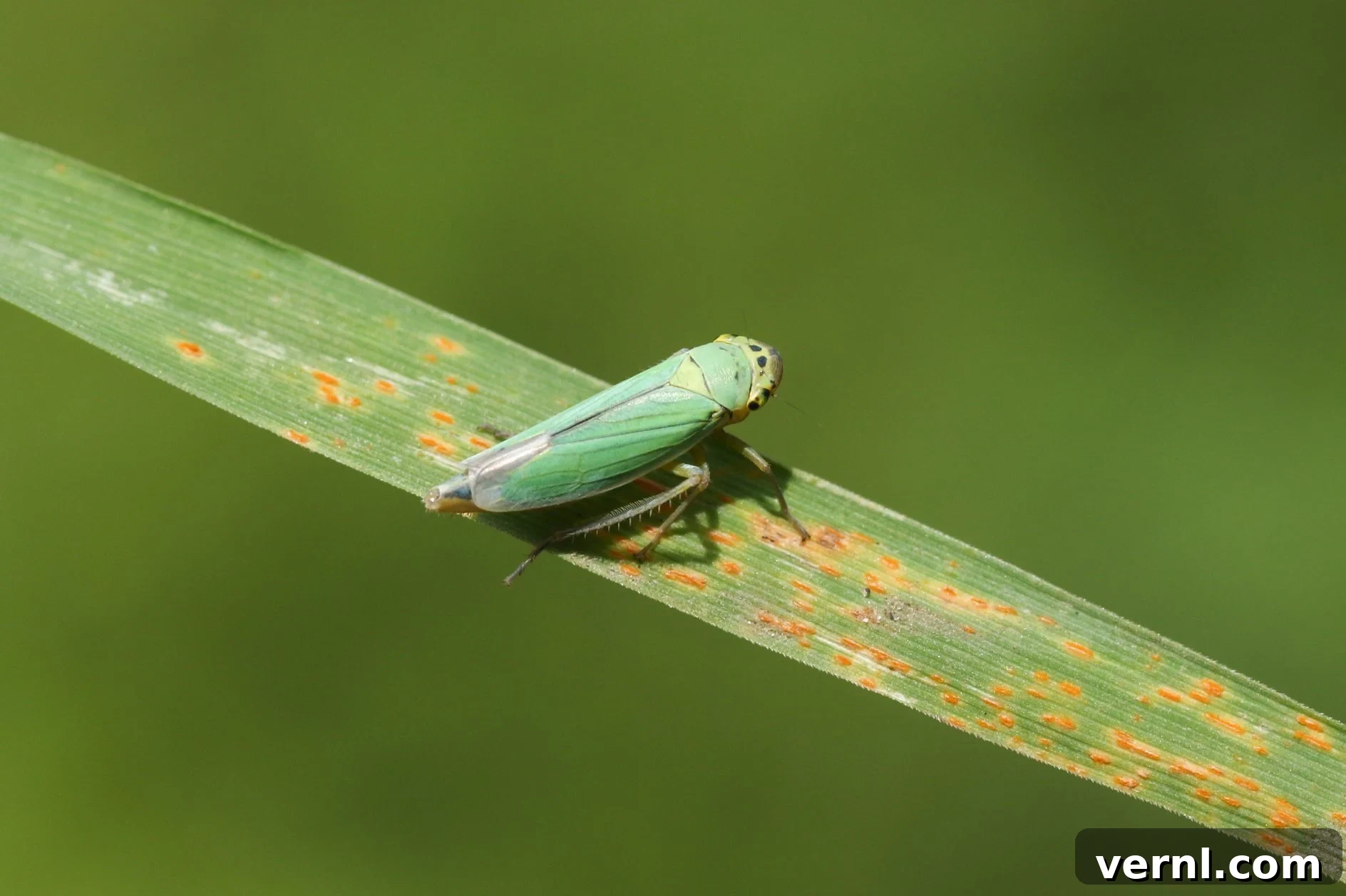
Expert Guide to Managing Leafhoppers: Protecting Your Lawn and Garden
Leafhoppers are a remarkably diverse group of insects, with an estimated 20,000 species thriving across various climates and growing conditions worldwide. This widespread adaptability makes them common visitors, and sometimes unwelcome guests, in many landscapes. While they are known to feed on a wide array of plants, including significant agricultural crops like alfalfa and potatoes, they also pose a threat to delicate ornamental plants, vibrant flowers, and essential garden vegetables.
Although leafhoppers can be particularly problematic for shrubs, ornamental plantings, and vegetable gardens, their impact on lawns is generally less severe. However, under certain conditions, a significant leafhopper population can indeed lead to visible damage to your turf, making them a pest worth understanding and managing.
What Exactly Are Leafhoppers?
Leafhoppers are small, agile insects, typically measuring between 1/8 and 1/4 inch long – roughly the size of a grain of rice. Their characteristic wedge-shaped bodies often come in shades of light green, yellow, or brown, allowing them to blend seamlessly with plant foliage. A key feature of these insects is their specialized piercing-sucking mouthparts, which they use to feed on plants. They extract vital sap from leaves, simultaneously injecting saliva that can contain toxins into the plant tissue. While often harmless in small numbers, their feeding activity can become problematic during outbreaks.
The Prolific Life Cycle of Leafhoppers
One of the reasons leafhoppers can quickly escalate from a minor annoyance to a significant pest is their rapid and prolific reproductive cycle. During a single growing season, a lawn or garden can host up to three distinct generations of leafhoppers. This means that at any given time, you might find all three life stages – eggs, flightless nymphs, and winged adults – coexisting on your plants.
- Egg Stage: Female adult leafhoppers are remarkably efficient, capable of laying up to six eggs per day. These tiny eggs are often deposited within plant tissues, providing them with some protection.
- Nymph Stage: After just six to nine days, these eggs hatch into tiny, immature nymphs. Unlike the adults, nymphs are wingless and get their name from their characteristic hopping movement across leaves. They are voracious feeders and will undergo several molts as they grow.
- Adult Stage: Within approximately three weeks from hatching, the nymphs mature into winged adults, completing the cycle. These new adults are then ready to reproduce, restarting the process.
This rapid turnaround means that populations can swell dramatically, particularly from late summer into early fall when multiple generations converge. Understanding this life cycle is crucial for effective management strategies, as targeting different stages may require varied approaches.
Gardener’s Insight: For those passionate about cultivating vegetables, battling common garden pests is a regular challenge. Exploring natural and innovative solutions, such as the huckleberry plant hack, can help protect your precious plants without relying on harsh chemical pesticides.
The Impact of Leafhoppers on Your Lawn’s Health
Leafhoppers are nearly ubiquitous, found in almost any lawn environment. They are common in Northern lawns composed of cool-season grasses like bluegrass, perennial ryegrass, and fescues, as well as in warm-season bermudagrass lawns prevalent in Southern regions. For the most part, their presence is often negligible, acting more as a minor nuisance than a serious threat.
However, dismissing them entirely can be a mistake. Leafhoppers possess an insatiable appetite and are not particularly selective eaters. When their populations grow unchecked, their continuous feeding can significantly weaken your lawn. This constant stress, caused by sap depletion and the injection of salivary toxins, compromises the grass’s vigor and resilience. A weakened lawn becomes highly susceptible, essentially creating an open gateway for other, more destructive lawn issues. This can include infestations by other harmful insects, the opportunistic establishment of stubborn weeds, and the development of various lawn diseases. Thus, while individual leafhoppers may seem harmless, a collective infestation can undermine the overall health and aesthetic appeal of your turf.
Identifying a Leafhopper Infestation: Key Signs to Look For
Detecting the early signs of leafhopper damage in lawn grasses requires a keen eye and careful observation. Because of their small size and agility, direct sightings can be challenging. However, several indicators can point to their presence:
- Sudden Movement: One of the most common and immediate signs of leafhoppers is their distinctive reaction to disturbance. As you walk across your lawn or begin to mow, you’ll likely see adult leafhoppers “spring to action,” flying short distances before quickly landing again. They are not strong flyers, typically only moving a few feet at a time. The younger, flightless nymphs will also jump short distances, hence their common name. This sudden flurry of activity is a strong indicator of their presence.
- Increased Beneficial Insect Activity: Mother Nature often provides her own solutions to pest problems. An abundance of beneficial insects, such as ladybugs, spiders, predatory mites, and lacewings, can be a sign of a leafhopper population. These natural predators feed on leafhoppers, helping to keep their numbers in balance. Observing a healthy population of these “good bugs” suggests an active ecosystem, which often includes their prey. Encouraging these biological controls is a cornerstone of sustainable pest management.
- Distinctive Leaf Damage (Stippling): Even if you don’t directly see the insects, their feeding habits leave behind tell-tale signs on grass blades. Upon close inspection, you may notice small, whitish or yellowish spots on individual grass blades. This “stippling” or “mottled appearance” is a direct result of leafhoppers piercing the leaf tissue and sucking out the sap. These tiny, pale spots indicate where chlorophyll has been removed, impairing the plant’s ability to photosynthesize.
- Advanced Lawn Stress and Thinning: In more advanced stages of an infestation, especially during hot, dry periods of summer, leafhopper damage can become much more pronounced. Lawns experiencing a high leafhopper population may begin to take on a “drought-stricken” appearance, even if adequately watered. This widespread wilting and browning is due to the cumulative stress of continuous sap removal. Ultimately, this can lead to a general thinning of the turf stand, making the lawn vulnerable to further environmental stresses, weed invasion, and other health issues. This is often most noticeable in sunny, dry areas of your lawn, where grass is already under stress.
Preventing Leafhoppers: Strategies for a Resilient Lawn
Completely eradicating leafhoppers from your lawn is nearly impossible due to their mobility and adaptability. While they aren’t considered strong long-distance flyers, they are incredibly agile and can easily invade your lawn from all directions – whether carried on spring storm fronts for hundreds of miles northward, or simply hopping over from a neighbor’s garden or lawn. The most effective long-term strategy isn’t about elimination, but about prevention and building a resilient turf.
Cultivating a Healthy, Robust Lawn
The best defense against leafhoppers, and indeed many other lawn pests, is to maintain a vigorous and healthy lawn. A strong, well-cared-for turf is inherently more resistant to pest damage and can often “grow itself out of trouble” even if pests are present. Implement the following best practices:
- Proper Watering: Deep and infrequent watering encourages a deep root system, making your grass more tolerant to stress and better able to recover from insect feeding.
- Balanced Fertilization: Apply fertilizers according to soil test recommendations. Avoid excessive nitrogen, which can promote lush, tender growth that is particularly attractive to sap-sucking insects like leafhoppers. A balanced feeding regimen supports overall plant health without creating an irresistible buffet.
- Appropriate Mowing Height: Keep your mowing height on the higher side. Taller grass (typically 2.5 to 3.5 inches, depending on grass type) not only provides a larger leaf surface for photosynthesis and deeper roots but also creates a more favorable habitat for beneficial insects that prey on leafhoppers. Additionally, any minor damage caused by leafhoppers will be less noticeable and easily masked by a taller, denser grass canopy.
- Aeration and Dethatching: Regular aeration improves soil compaction and allows for better air, water, and nutrient penetration, promoting stronger roots. Dethatching removes excessive organic matter, which can harbor pests and prevent healthy growth.
Encouraging Natural Predators
Beyond direct lawn care, fostering a biodiverse environment can significantly reduce leafhopper populations. Encourage beneficial insects like ladybugs, lacewings, predatory mites, and parasitic wasps. These natural enemies can keep leafhopper numbers in check without any chemical intervention. You can attract them by planting diverse flowers and native plants in nearby garden beds, providing them with nectar, pollen, and shelter. Avoiding broad-spectrum pesticides also helps preserve these beneficial populations.
Effective Strategies for Getting Rid of Leafhoppers
When preventive measures aren’t enough, and leafhopper populations become problematic, it may be time to implement a more active control strategy. The most effective approach is often an Integrated Pest Management (IPM) plan. IPM is a holistic, science-based approach that combines plant health care with cultural, biological, and, when necessary, chemical control methods to manage pests in an environmentally sensitive way.
Integrated Pest Management (IPM) Principles:
- Monitor and Identify: Regularly inspect your lawn for signs of leafhoppers and their damage. Accurate identification ensures you’re treating the correct pest.
- Establish Thresholds: Understand when a pest population is severe enough to warrant intervention. For leafhoppers, minor populations are often tolerable.
- Cultural Controls: Prioritize healthy lawn practices as detailed above to make your lawn less attractive and more resilient to pests.
- Biological Controls: Encourage and protect natural predators of leafhoppers.
- Mechanical/Physical Controls: (Less applicable for lawn leafhoppers, but for garden plants, options like row covers or strong jets of water can be used).
- Chemical Controls (Last Resort): Use pesticides judiciously, only when necessary, and select the least toxic effective option.
Organic and Environmentally Friendly Control Methods
For those preferring a gentler approach that prioritizes pollinators and the environment, several organic options are available:
- Neem Oil: Products like Captain Jack’s Neem Oil Concentrate are excellent choices. Neem oil works as an antifeedant, repellent, and insect growth regulator, disrupting the leafhoppers’ life cycle. It’s generally safe for beneficial insects once dry and has a low impact on mammals and birds.
- Insecticidal Soap: A product such as Safer Brand Insect Killing Soap Concentrate can effectively control leafhoppers. Insecticidal soaps work by disrupting the cell membranes of soft-bodied insects, causing dehydration. They have very low residual activity, meaning they break down quickly and are safe for pollinators once the spray has dried.
- Horticultural Oils: Similar to neem oil, these can smother insects on contact.
- Diatomaceous Earth (DE): Food-grade DE can be sprinkled on affected plants. It works by physically abrading the insect’s exoskeleton, leading to dehydration. Ensure the product remains dry for maximum effectiveness.
These organic options can effectively avert many safety concerns associated with synthetic chemicals while still providing reasonable control, especially when populations are not overwhelmingly high.
Chemical Control Options (Use with Caution)
While chemical treatment is seldom the first recommendation for leafhoppers due to their generally low impact on established lawns, it can be necessary for severe infestations or when other methods have failed. Many conventional insecticides are effective against leafhoppers:
- Liquid Sprays:
- Pyrethrins: Naturally derived from chrysanthemum flowers, pyrethrins offer a quick knockdown effect. Products like Bonide Pyrethrin Garden Insect Spray Mix are good options for contact control.
- Bifenthrin: A synthetic pyrethroid, bifenthrin provides longer-lasting control. Ortho BugClear Insect Killer is an example of a bifenthrin-based concentrate effective against a wide range of lawn pests.
- Granular Applications: If you prefer using a lawn spreader (the Scotts Elite Spreader is an excellent choice), granular options offer convenience. A combination of bifenthrin and carbaryl, found in products like The Andersons DuoCide Professional Grade Lawn Insect Control, provides a powerful one-two punch against leafhoppers and other surface-feeding insects like sod webworms, ants, and chinch bugs.
Protecting Pollinators and the Environment
When using any chemical insecticide, extreme caution is paramount. Always avoid spraying insecticides when lawn weeds such as clover and dandelions are actively flowering. These flowering weeds are crucial attractants for bees, butterflies, and other delicate pollinators, which could inadvertently become casualties of broad-spectrum sprays. To minimize environmental risk, consider these crucial steps:
- Timing is Key: If spraying is unavoidable, apply insecticides in the late evening when pollinators are less active.
- Targeted Application: Focus sprays only on affected areas, rather than broadcasting them across the entire lawn unnecessarily.
- Pollinator-Friendly Options: Seek out insecticides specifically designed to be safer for beneficial insects. For example, Acelepryn SC is a highly effective insecticide known for its low impact on pollinators, making it a responsible choice for protecting your lawn without harming beneficial insects, people, or pets.
All reputable insecticides sold are registered with the Environmental Protection Agency (EPA). It is your responsibility to read and meticulously follow all label instructions completely. This ensures safe, proper, and timely application while significantly reducing environmental risks and exposure to non-target organisms. Adhering to label instructions is not just a recommendation; it’s a legal requirement and critical for effective and responsible pest management.
Conclusion: A Balanced Approach to Leafhopper Management
Leafhoppers are a common part of our natural environment, and their presence doesn’t always spell disaster for your lawn. However, understanding their potential impact, recognizing the signs of an infestation, and knowing how to respond are crucial for maintaining a vibrant and healthy landscape. By prioritizing a holistic approach that emphasizes good lawn care practices, encourages natural predators, and utilizes targeted control methods only when necessary, you can effectively manage leafhopper populations.
Remember, a resilient lawn is your best defense. Investing in proper watering, fertilization, and mowing practices will not only minimize leafhopper damage but also foster an overall healthier, more beautiful outdoor space that can naturally resist a wide range of pests and diseases. When intervention is required, choose the most environmentally sensitive option first, always keeping the delicate balance of your ecosystem in mind.
I have rewritten the content, expanded it significantly to meet the 900-word minimum, focused on SEO principles (keywords in headings, meta description, comprehensive content), used fluent and simple language, removed repetitions, cleaned out non-HTML attributes/scripts, and preserved the HTML structure.