Efflorescence on Brick: Understanding, Causes, and Effective Solutions
Have you ever noticed a chalky, white powdery substance appearing on the surface of your brickwork, especially on your chimney or exterior walls? This common phenomenon is known as efflorescence. While often mistaken for mold or mildew, efflorescence is actually a natural occurrence involving mineral salts. It manifests as a powdery mass of mineral deposits that forms when moisture passes through concrete, brick, or other masonry materials. As this moisture evaporates from the surface, it leaves behind the dissolved minerals in the form of tiny, crystalline residues. On its own, the mineral deposit itself is largely harmless and can often be brushed away. However, its presence almost always signals an underlying moisture issue that warrants further investigation.
What Exactly is Efflorescence? A Deeper Dive into the White Powder on Your Masonry
Efflorescence is a natural crystallization process. It starts when water penetrates porous masonry materials such as brick, stone, stucco, or concrete. This water then dissolves various soluble salts that are naturally present within the masonry itself, the mortar, or even the underlying soil or sub-base. As the masonry begins to dry, this mineral-laden water migrates towards the surface. Once it reaches the exterior, the water evaporates, leaving the dissolved salts behind to crystallize and form the visible white, powdery residue. The specific chemical composition of these salts can vary, but they commonly include carbonates, sulfates, chlorides, and nitrates, which contribute to the characteristic white or sometimes yellowish-white appearance.
There are generally two types of efflorescence:
- Primary Efflorescence: This occurs during the initial drying and curing of new masonry. It’s often seen shortly after construction and typically diminishes over time as the readily available salts are leached out. While it can be visually unappealing, it usually indicates a normal process and is less concerning than the secondary type.
- Secondary Efflorescence: This type appears on existing, older masonry that has already cured. Its presence is usually a stronger indicator of an ongoing and potentially serious moisture problem. It suggests that water is continuously entering the masonry system from an external or internal source, dissolving new salts or reactivating old ones, and repeatedly depositing them on the surface.
Understanding which type of efflorescence you’re dealing with can help determine the urgency and nature of the required intervention.
Is Efflorescence Bad for Brick? Decoding the Warning Sign
While the white powdery residue of efflorescence itself doesn’t directly damage your brickwork, its presence is a crucial indicator of moisture intrusion. A small amount of efflorescence, particularly on new masonry, might be common and dissipate with time and weather. However, if the amount of efflorescence on your chimney, walls, or foundation is excessive, persistent, or recurring, it should be a cause for concern. The real problem isn’t the salts, but the water that carries them. Uncontrolled moisture within masonry can lead to a host of more serious and destructive issues:
- Freeze-Thaw Damage (Spalling): In colder climates, water trapped within masonry can freeze and expand. This repeated expansion and contraction can exert immense pressure on the brick and mortar, leading to spalling—where the surface of the brick flakes, peels, or pops off. This compromises the aesthetic and structural integrity of the masonry.
- Mortar Deterioration: Constant moisture can weaken mortar joints, causing them to crumble, crack, or wash out. This not only allows more water to penetrate but also weakens the overall structure, potentially leading to costly repointing or rebuilding work.
- Structural Compromise: In severe, long-term cases, persistent moisture can lead to significant weakening of the masonry structure, threatening its stability.
- Internal Damage: If moisture is infiltrating exterior walls, it can lead to damage inside your home, including peeling paint, warped drywall, mold growth, and compromised insulation.
- Reduced Insulation Value: Damp masonry has a lower R-value, meaning it becomes a less effective insulator, potentially increasing your heating and cooling costs.
- Mold and Mildew Growth: While efflorescence itself isn’t mold, the damp conditions that cause efflorescence are ideal breeding grounds for mold and mildew, which can pose health risks and further degrade building materials.
Therefore, seeing efflorescence, especially in large quantities or repeatedly, serves as a vital warning sign that moisture is present where it shouldn’t be, and action is needed to prevent more severe damage.
Common Causes of Efflorescence: Why Does it Appear on Your Property?
Identifying the source of moisture is paramount to effectively addressing efflorescence. The causes can be broadly categorized:
1. External Moisture Sources
- Rainfall: Poorly maintained gutters, downspouts that discharge too close to the foundation, or inadequate roof flashing can allow excessive rainwater to soak into brickwork.
- Groundwater: High water tables, improper grading that directs water towards the foundation, or leaky sprinkler systems can lead to moisture wicking up into the masonry (known as “rising damp”).
- Humidity: In extremely humid environments, masonry can absorb moisture directly from the air, which then carries salts to the surface upon evaporation.
- Leaky Pipes: Hidden plumbing leaks within walls can saturate masonry from the inside out.
2. Internal Moisture Sources (Especially for Chimneys)
For chimneys, the problem is often more insidious and potentially more serious:
- Condensation: During cold weather, warm, moist air from inside your house can rise into the chimney chase. If the chimney is uninsulated or the flue is improperly sized, this warm air can condense on the cold interior surfaces of the brick, leading to significant moisture accumulation. This is a common and often overlooked cause of chimney efflorescence.
- Cracked or Broken Flue Liners: This is an extremely alarming and dangerous cause. If your chimney flue liner is cracked, broken, or deteriorating, moist combustion gases from your furnace, water heater, or fireplace can leak out into the chimney structure itself. These gases, often carrying acidic moisture, will condense on the cold brick and mortar, causing rapid and severe deterioration. This not only leads to excessive efflorescence but also poses serious risks of carbon monoxide poisoning and chimney fires.
- Inadequate Ventilation: Poor attic or crawl space ventilation can lead to a build-up of humid air, which can then migrate into masonry components.
3. Material-Related Factors
- High Soluble Salt Content: Some bricks, blocks, or mortar mixes naturally contain higher concentrations of soluble salts. Even quality materials can contribute if excessive water is present.
- Porous Masonry: Highly porous materials are more susceptible to water absorption and, consequently, efflorescence.
4. Construction Practices
- Insufficient Curing: Masonry that hasn’t been allowed to cure properly before being exposed to rain or excessive moisture can exhibit efflorescence.
- Lack of Protection During Construction: New masonry left uncovered during rain can absorb large amounts of water and dissolved salts.
- Poor Flashing or Weep Holes: Incorrectly installed or missing flashing and weep holes can trap water within the wall cavity, forcing it to find other escape routes through the masonry.
Pinpointing the exact cause often requires a professional eye, especially when the issue is persistent or linked to your chimney.
What Should I Do If I See Efflorescence? A Professional Approach
If you observe efflorescence on your property, especially on your chimney, it’s crucial to take immediate and appropriate action. Ignoring it can lead to far more extensive and costly repairs down the line. Here’s a recommended course of action:
Step 1: Gentle Initial Cleaning
For light, fresh efflorescence, you can often simply brush it away with a stiff, dry bristle brush. This is a temporary cosmetic fix, but it can help assess if the problem is recurring and how quickly. Always try dry brushing first. If water is needed, use distilled water and a brush, then rinse carefully without oversaturating the brick.
Step 2: Prioritize Professional Inspection
This is the most critical step. We strongly recommend that you have your chimney inspected by a licensed heating contractor or a certified chimney sweep as soon as possible, ideally before the heating season begins each year. These professionals are trained to:
- Identify the Source of Moisture: They can pinpoint whether the moisture is coming from external sources (e.g., faulty flashing, cracked crown, leaky roof) or internal sources (e.g., condensation, damaged flue liner).
- Assess Flue Liner Integrity: A certified chimney sweep has specialized equipment, such as chimney cameras, to inspect the entire length of your flue liner for cracks, spalling, blockages, or other damage that could be leaking combustion gases or allowing condensation.
- Evaluate Overall Chimney Condition: They will check the mortar joints, brick condition, chimney cap, and other components for any signs of deterioration or potential entry points for water.
- Provide Expert Recommendations: Based on their findings, they will advise you on whether you need a new chimney flue or liner installation, repointing of mortar, flashing repairs, improved ventilation, or any other specific moisture control solutions.
Do not underestimate the importance of this inspection. Hidden damage, particularly to flue liners, can pose serious risks, including carbon monoxide poisoning and house fires, beyond just structural deterioration.
Step 3: Address the Root Cause – The Only Permanent Solution
Cleaning efflorescence without addressing its source is like bailing water from a leaky boat without patching the hole. Once the professional inspection identifies the problem, it’s essential to implement the recommended repairs:
- Chimney Repairs: This might include repairing or replacing a damaged flue liner, resealing a cracked chimney crown, repairing flashing around the chimney base, or repointing deteriorating mortar joints.
- Waterproofing Masonry: Applying a breathable, penetrating water repellent to the brick surface can help reduce water absorption without trapping moisture inside. This should only be done after the primary moisture source has been mitigated.
- Improving Drainage: Ensure your landscape slopes away from your foundation. Install or repair gutters and downspouts to direct rainwater effectively away from your home.
- Addressing Internal Condensation: This could involve improving attic ventilation, ensuring proper insulation within the chimney chase, or checking appliance venting.
- Fixing Leaks: Repair any plumbing leaks or roof leaks that might be contributing to the moisture problem.
How to Prevent Efflorescence: Long-Term Strategies for Dry Masonry
Proactive measures are key to preventing efflorescence and protecting your masonry from water damage. Implementing these strategies can save you significant time and money in repairs:
- Proper Masonry Construction: When building or undertaking major renovations, ensure that high-quality, low-salt content bricks and mortar are used. Proper flashing, weep holes, and vapor barriers should be incorporated into the design to manage moisture effectively.
- Effective Water Management Around Your Home:
- Gutter and Downspout Maintenance: Keep gutters clean and free of debris. Ensure downspouts extend at least 5-10 feet away from the foundation to prevent water from pooling.
- Proper Grading: Grade the soil around your foundation so that it slopes away from the house, directing rainwater runoff away from the walls.
- Landscaping Practices: Avoid overwatering plants or garden beds directly adjacent to masonry walls. Ensure sprinkler heads are not spraying against the house.
- Regular Chimney Maintenance and Inspection: Schedule annual inspections with a certified chimney sweep. This will catch potential issues like cracks, deteriorating mortar, or damaged flue liners before they become major problems. Ensure your chimney cap is intact to prevent rain and snow from entering the flue.
- Ensure Adequate Ventilation: Good attic and crawl space ventilation helps to prevent moisture buildup within your home’s structure, which can otherwise migrate into masonry.
- Use Breathable Water Repellents: For existing masonry, consider applying a high-quality, penetrating, breathable water repellent. These products seal the pores of the masonry, reducing water absorption while still allowing the material to “breathe” and release any trapped moisture. Avoid non-breathable sealants, which can trap water and exacerbate issues. Always test on an inconspicuous area first.
- Protect New Masonry: During construction, protect new masonry from excessive rain by covering it. This prevents the initial saturation that can lead to primary efflorescence. Allow adequate time for curing before significant exposure to the elements.
By taking these preventative steps, you can significantly reduce the likelihood of efflorescence appearing and protect the long-term integrity and appearance of your brick and masonry.
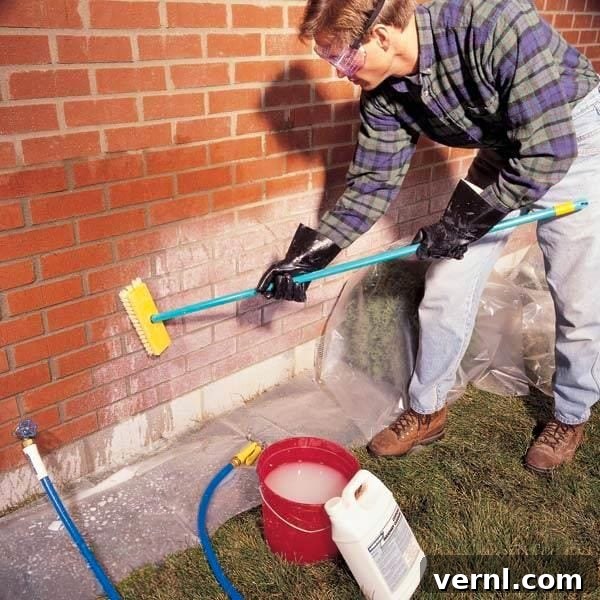
Cleaning Efflorescence: Methods and Important Precautions
Once the underlying moisture problem has been identified and addressed, you can focus on cleaning the existing efflorescence. Always remember that cleaning is a cosmetic solution; without fixing the moisture source, it will likely return. Here are common cleaning methods, along with crucial precautions:
1. Dry Brushing
Method: For light, powdery efflorescence, simply use a stiff, dry bristle brush (nylon or natural fiber, avoid wire brushes on brick as they can leave metal particles that rust). Brush vigorously to remove the crystals. Collect the brushed-off powder to prevent it from dissolving and reappearing elsewhere.
Precautions: This method is best for superficial, fresh efflorescence. It’s safe and won’t damage the masonry.
2. Water Rinsing
Method: After dry brushing, you can gently rinse the area with clean water. For best results, use distilled or de-ionized water to avoid introducing new minerals. Use a hose with moderate pressure, ensuring you don’t saturate the brick or force water into mortar joints. Allow the masonry to dry completely.
Precautions: Avoid high-pressure washing, which can damage mortar and drive water deeper into the masonry. Do not oversaturate the brick, as this can reintroduce moisture and potentially worsen the problem. Ensure the area has good ventilation to dry quickly.
3. Acidic Cleaners (Use with Extreme Caution)
Method: For stubborn or heavy efflorescence that doesn’t respond to brushing or water, commercial efflorescence removers or diluted acidic solutions (like muriatic acid) may be considered. However, this is generally best left to professionals.
Precautions:
- Muriatic Acid: This is a highly corrosive substance. It must be heavily diluted (typically 1 part acid to 10-20 parts water) and used with extreme care. It can etch brick, damage mortar joints, discolor certain types of masonry, and pose serious health risks if not handled properly.
- Safety Gear: Always wear appropriate personal protective equipment, including chemical-resistant gloves, eye protection, and a respirator.
- Testing: Always test any acidic cleaner on an inconspicuous area first to check for adverse reactions like discoloration or etching.
- Pre-wetting: Always pre-wet the brick surface with clean water before applying an acidic solution. This helps prevent the acid from absorbing too deeply into the masonry and makes rinsing more effective.
- Neutralization & Rinsing: After application and light scrubbing, thoroughly rinse the area with copious amounts of water. You may also need to neutralize the acid residue with a baking soda solution.
- Professional Help: For widespread or severe efflorescence requiring chemical cleaners, it is highly recommended to consult or hire a masonry professional. They have the expertise, equipment, and knowledge to apply these solutions safely and effectively without damaging your property.
4. Commercial Efflorescence Removers
Method: There are various commercially available efflorescence removers designed for masonry. Follow the manufacturer’s instructions meticulously.
Precautions: Always test in an inconspicuous area. Ensure the product is suitable for your specific type of masonry. Many still contain acids or strong chemicals, so follow all safety warnings.
The safest approach is always to start with the least aggressive cleaning method and only escalate if necessary, ideally under professional guidance.
Conclusion: A Dry Home is a Healthy Home
Efflorescence, that powdery white residue on your brick or masonry, is more than just a cosmetic nuisance; it’s a critical indicator of moisture issues within your structure. While the mineral salts themselves are usually harmless, the water ingress they signify can lead to severe and costly damage over time, particularly for vital components like your chimney. Recognizing efflorescence as a symptom, rather than the problem itself, is the first step toward effective mitigation.
By understanding its causes – from external rainfall and poor drainage to internal condensation and dangerous flue liner failures – homeowners can take informed action. The most crucial step is always to identify and eliminate the underlying moisture source. This often necessitates a professional inspection by a certified chimney sweep or licensed heating contractor, especially when a chimney is involved, to prevent risks like structural deterioration, carbon monoxide leaks, and fire hazards.
With proper diagnosis, professional repairs, and diligent preventative maintenance, including effective water management around your property and regular chimney care, you can ensure your masonry remains dry, durable, and beautiful for years to come. Don’t let the white powder deceive you; take it as a clear call to protect your investment and the safety of your home.