
When I first picked up a macrophotography lens, my initial instinct was to explore the vibrant world of my backyard garden, eager to capture the intricate beauty of its flowers up close. It wasn’t until I later enlarged those images on my computer screen that a truly astonishing reality unveiled itself. What my naked eyes had completely missed was an entire, bustling universe thriving just beneath the surface—a microcosm of tiny insects, delicate spider webs shimmering with dew, and countless other minute details. On virtually every leaf and stem, a complex and dynamic world unfolded, revealing the profound interconnectedness of nature right outside my door.
In this captivating miniature ecosystem, spiders emerge as the undisputed apex predators. Much like the sharks of the ocean or the lions of the savanna, these eight-legged hunters are the primary guardians of your garden’s health. They play an indispensable role in maintaining ecological balance by keeping populations of often-pesky insects in check. Far from being the creepy creatures many perceive them to be, garden spiders are often strikingly beautiful, adorned with vibrant colors, and almost universally harmless to humans. Understanding their crucial contributions and unique characteristics can transform your perspective on these vital garden inhabitants. Here’s an in-depth look at the fascinating world of beneficial garden spiders and why you should welcome them into your outdoor space.
The Essential Guide to Beneficial Garden Spiders: Types, Benefits, and How to Attract Them for Natural Pest Control
Types of Beneficial Garden Spiders
Diving deeper into the garden’s hidden corners reveals a diverse array of spider species, each with unique hunting strategies, appearances, and behaviors. Recognizing these different types of garden spiders can help you appreciate their specific roles in maintaining a healthy, balanced ecosystem. Let’s explore some of the most common and beneficial spiders you’re likely to encounter.
Green Lynx Spider (Oxyopidae)
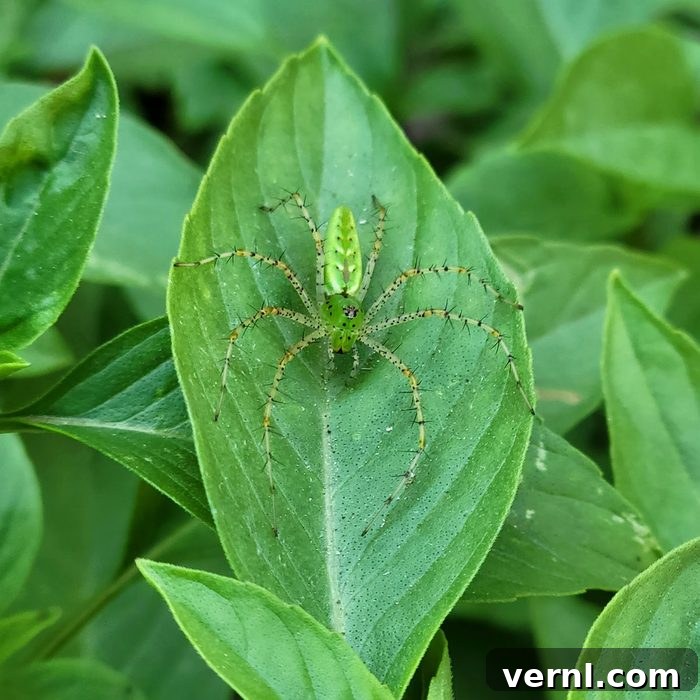
The Green Lynx spider is a true marvel of camouflage and predatory efficiency. With its brilliant emerald-green body, often accented with red or white stripes, it blends seamlessly into the foliage of garden plants. Unlike many other spiders, green lynx spiders are “ambush predators” and do not construct elaborate webs to catch their prey. Instead, they patiently perch on leaves and stems, waiting for unsuspecting insects to wander within striking distance. Their keen eyesight and incredible agility allow them to pounce with remarkable speed and precision.
As the seasons shift and the vibrant green leaves begin to dry out and change color in the fall, these intelligent spiders adapt their camouflage. Their bodies gradually turn a pale yellow, allowing them to remain perfectly hidden amidst the changing autumn palette. This evolutionary adaptation highlights their mastery of disguise, making them incredibly effective hunters throughout the growing season.
“The lynx spider has an affinity for shrubs and a voracious appetite for true bugs like stink bugs and other common garden pests,” explains Shubber Ali, a renowned native plant expert and CEO of Garden for Wildlife. “They’re also known for being exceptionally agile and fast, demonstrating a remarkable ability to stalk and pounce on their prey, much like a cat—a characteristic that gives them their fitting name.” Their diet often includes a wide range of harmful insects, making them invaluable allies in natural pest control.
To encourage these incredible natural pest controllers to establish residency in your yard, consider planting native shrubs such as Great St. John’s wort. These plants provide the ideal leafy habitat for green lynx spiders to hunt and thrive, contributing significantly to a healthy, balanced garden ecosystem.
Jumping Spider (Salticidae)
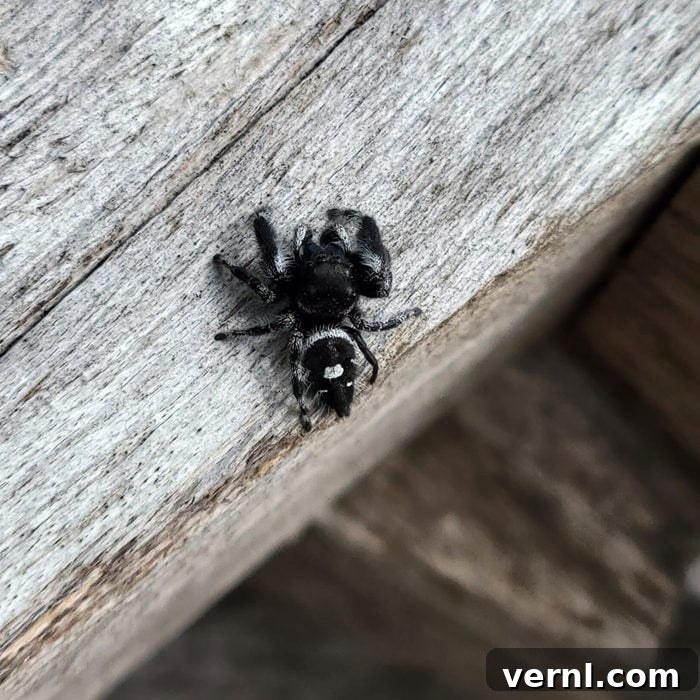
Often considered the most charismatic members of the spider world, jumping spiders are truly fascinating creatures. “With their remarkably large and endearingly cute eyes, these spiders are by far the puppies of the spider world,” quips Francisco Garcia Bulle Bueno, entomology manager at Butterfly Pavilion in Westminster, Colorado, the world’s first invertebrate zoo accredited by the Association of Zoos and Aquariums (AZA). These captivating spiders possess eight eyes, with the two largest forward-facing ones providing exceptionally acute vision, essential for their unique hunting style.
As their name suggests, jumping spiders are renowned for their incredible agility and their ability to leap many times their own body length to pounce on prey. They don’t build webs for catching food; instead, they are active hunters, using their excellent eyesight to spot insects and then executing precision jumps. More than 6,000 species of jumping spiders have been identified worldwide, showcasing an astonishing diversity of colors and patterns—from iridescent metallic blues and greens that shimmer in the sunlight to more subdued but equally striking dull oranges and earthy reds.
These adaptable spiders can be found almost anywhere in the garden, from the tops of tall plants to the crevices of garden structures. They particularly favor small, dark, and sheltered spaces for nesting and resting, such as under leaves, within bark fissures, or in tiny nooks and crannies. Their diet primarily consists of small insects like aphids, mites, and small flies, making them highly effective biological pest control agents.
To make your garden an irresistible haven for these adorable and efficient predators, consider planting species like orange butterfly milkweed. While milkweed is famously known for monarch butterflies, it also attracts a variety of tiny insects like aphids, which serve as an easily accessible buffet for jumping spiders, ensuring they have a constant food supply.
Wolf Spider (Lycosidae)
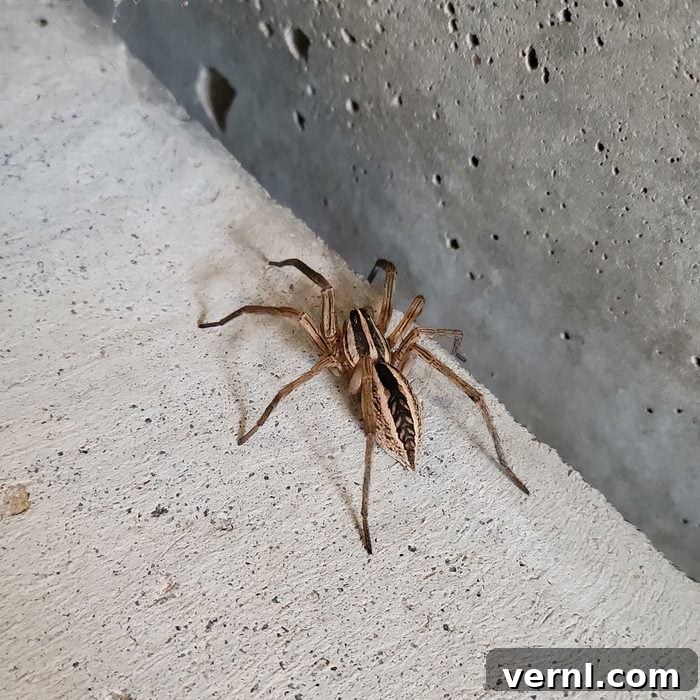
Wolf spiders are a common sight in most garden landscapes, often recognized by their robust, hairy bodies that range in color from mottled brown to gray. These ground-dwelling hunters get their name from their wolf-like hunting strategy—they don’t spin webs to ensnare prey but instead actively pursue and pounce on their victims. Consequently, you’re most likely to spot them scurrying across the ground, darting through leaf litter, or hiding under rocks and logs.
Their success as predators is attributed to a combination of exceptional agility, impressive speed, and remarkably acute eyesight. This allows them to effectively hunt down a wide array of garden insect pests, including crickets, grasshoppers, beetles, and even other spiders. Wolf spiders are typically solitary creatures, but they are known for a unique and heartwarming aspect of their maternal care.
“Wolf spiders are unique in the way that they carry their eggs,” observes Bulle Bueno. “The egg sac, a round, silken globe, is meticulously carried on their backs, providing a beautiful example of maternal care and protection as the mother transports her offspring wherever she goes.” After the spiderlings hatch, they often ride on their mother’s back for a period before dispersing, a truly remarkable display of parental devotion in the insect world.
To create an inviting habitat for these industrious hunters, focus on planting low-growing shrubs and groundcovers that provide ample cover close to the soil surface. A thick layer of natural mulch or leaf litter also offers excellent hiding spots and hunting grounds for wolf spiders, making your garden a safer and more productive environment for them.
Orb Weaver Spider (Araneidae)
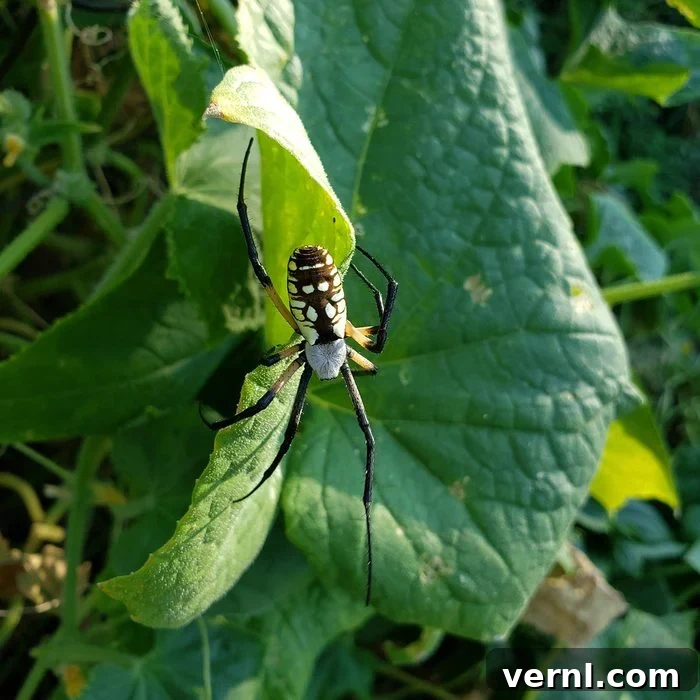
Orb weaver spiders are the quintessential web-building arachnids, famous for constructing the classic, intricate, and aesthetically pleasing spiral webs that are often depicted in popular culture. These graceful spiders are true engineers of the natural world, meticulously crafting their geometric masterpieces between tree branches, tall plants, or even garden structures like fences and sheds. “If you ever happen to see a large, circular web glowing ethereally in the moonlight, it is commonly the impressive work of an orb weaver,” notes Ali.
Each orb web is a marvel of natural engineering, meticulously designed for maximum efficiency. It features a strong framework of non-sticky silk spokes radiating outwards, providing structural integrity. This framework is then intricately topped off with a final spiral of silk coated in sticky droplets, which are specifically designed to ensnare flying insects. Once the web is complete, the orb weaver spider typically positions herself either in the center of the web, poised to detect vibrations, or in an inconspicuous hideout nearby, connected to the web by a signal line. From this vantage point, she patiently monitors any disturbances, instantly reacting to the telltale tremors that indicate trapped prey.
Their diet includes a wide variety of flying insects, such as flies, mosquitoes, moths, and even larger bugs, making them incredibly effective at reducing pest populations in your garden. “Orb weavers play a crucial ecological role in controlling insect populations, and their webs are not just traps but true marvels of natural engineering that demonstrate sophisticated design principles,” emphasizes Ali. By allowing their webs to remain undisturbed, you support these amazing creatures and benefit from their continuous pest control efforts.
To encourage orb weavers, avoid disturbing their webs, especially in the mornings when dew makes them most visible. Provide sturdy anchor points like tall plants, trellises, or garden stakes, and ensure good air circulation in your garden to help them build and maintain their delicate but strong webs.
Crab Spider (Thomisidae)
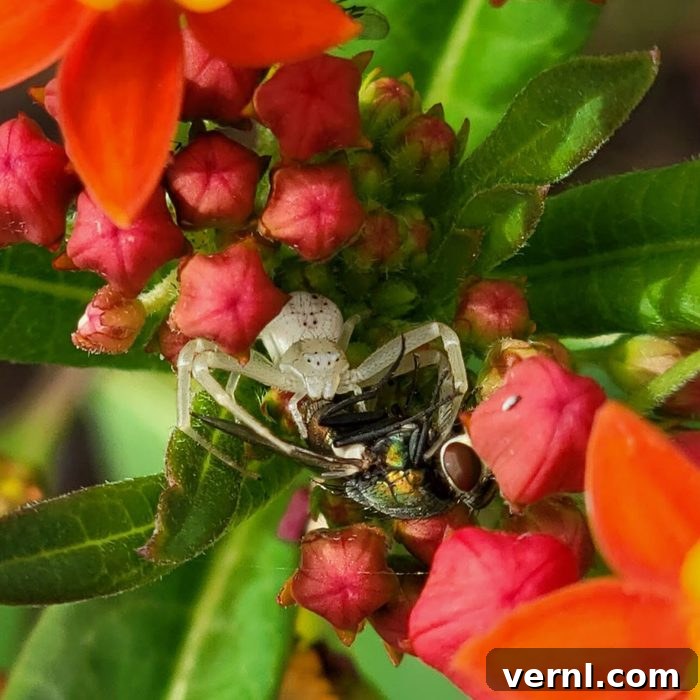
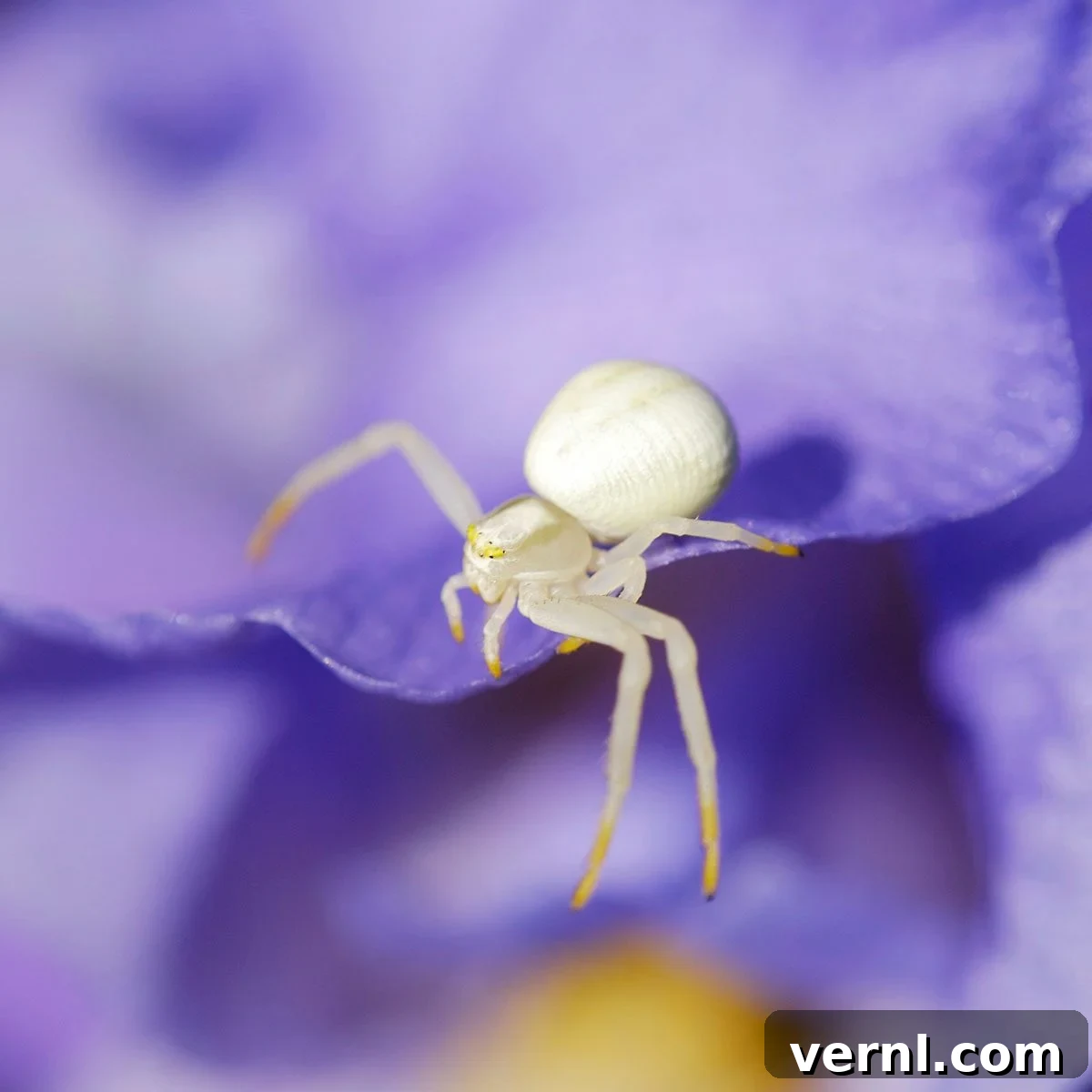
Crab spiders, also affectionately known as flower spiders, are masters of camouflage and ambush. You’re most likely to discover these intriguing arachnids patiently lurking on blooms and foliage, where they lie in wait to ambush unsuspecting prey. Their remarkable ability to change color to perfectly match their surroundings—whether it’s a vibrant yellow petal, a pristine white blossom, or a rich purple flower—makes them incredibly difficult to spot. This chameleon-like adaptation allows them to become virtually invisible to both their prey and potential predators.
These spiders are characterized by their two elongated front legs, which are often held outstretched, giving them a crab-like appearance. This unique posture, combined with their ability to move sideways or backward with surprising speed, further reinforces their common name. Unlike many other garden spiders, crab spiders do not construct webs for hunting. Instead, they rely entirely on their camouflage and lightning-fast strikes to capture insects that visit flowers for nectar or pollen. Their diet includes a variety of flower-visiting insects, such as bees, wasps, and flies, making them valuable contributors to the balance of your garden ecosystem.
“They particularly love yellow, white, or purple blooms and flowers, such as the beautiful smooth blue aster,” says Ali, highlighting their preference for specific floral environments. By planting a diverse array of colorful native flowers, you can attract these fascinating hunters and benefit from their silent but effective pest control services. These spiders are a testament to nature’s ingenuity in adapting to specialized niches within the garden.
Grass Spider (Agelenidae)
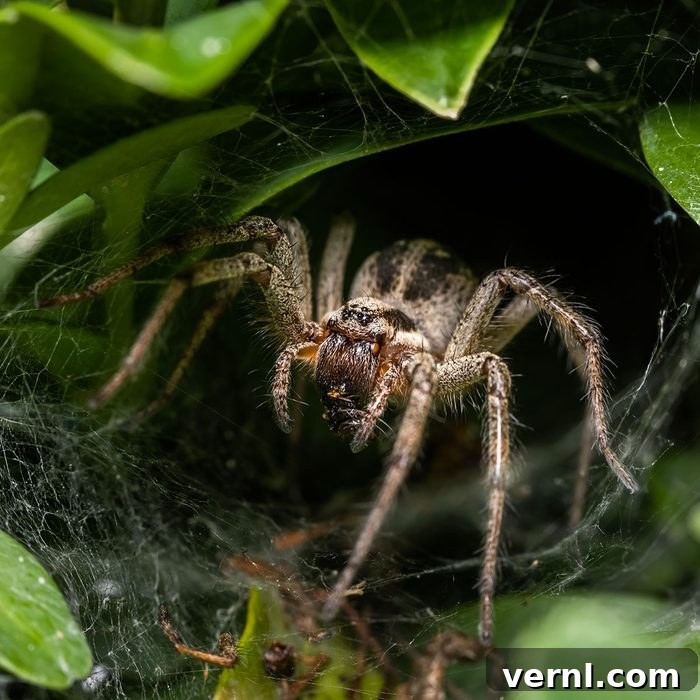
Grass spiders are among the most common arachnid residents in many gardens, though they often go unnoticed due to their unassuming appearance. They bear a close resemblance to wolf spiders but typically lack the dense, fuzzy hair coat that characterizes their ground-dwelling cousins. What truly sets grass spiders apart, however, is their distinctive web construction: they weave large, flat sheet webs that lie horizontally across blades of grass, low-growing vegetation, or even across lawns. A key feature of these webs is a funnel-shaped retreat located at one edge, which serves as the spider’s shelter and ambush point.
When an insect lands on the sheet web, the vibrations alert the grass spider, which then darts out from its funnel retreat with incredible speed to capture its prey. “They are also known to be quite fast runners and possess very good vision, which aids in their rapid pursuit and capture of prey,” notes Bulle Bueno. This combination of speed and good eyesight makes them highly effective predators of various garden pests.
While primarily outdoor dwellers, male grass spiders occasionally seek shelter indoors, particularly as temperatures drop in the fall. However, there’s no need for alarm. These spiders are completely harmless to humans and pets. In fact, if they do find their way inside, they continue their beneficial role by helping to control common household pests such as cockroaches, flies, and silverfish, making them welcome (if accidental) houseguests.
To encourage grass spiders in your garden, allow areas of your lawn or garden beds to grow a little taller, providing them with the necessary structure for their sheet webs. Minimizing the use of harsh chemicals will also ensure a healthy environment for these beneficial arachnids.
Garden Spider Benefits: Why They Are Your Garden’s Best Friends
Like all apex predators positioned at the top of their respective food chains, spiders are absolutely crucial for fostering a resilient, healthy, and naturally balanced garden ecosystem. Their presence signifies a thriving environment and contributes to a robust food web. Embracing spiders in your garden offers a multitude of benefits that extend far beyond simple pest control:
- Exceptional Pest Control: Spiders are incredibly effective natural exterminators. They prey on a vast array of common garden pests, including flies, mosquitoes, aphids, grubs, mites, caterpillars, beetles, and even cockroaches. By maintaining a healthy spider population, you can significantly reduce the need for chemical pesticides, promoting a more organic and sustainable gardening approach. Each spider consumes hundreds of insects throughout its lifespan, providing continuous, targeted pest management.
- Vital Food Source for Wildlife: Spiders themselves serve as a critical food source for a wide variety of other beneficial wildlife in your garden. Birds, especially insectivorous species, often feed on spiders, contributing to their diverse diet. Small mammals, lizards, and other invertebrates also rely on spiders as part of their diet, illustrating their fundamental role in supporting a complex and robust food web.
- Prevention of Insect Outbreaks: By continuously preying on insects, spiders act as a crucial first line of defense against pest infestations. Their constant presence helps to keep insect populations in check, preventing them from reaching epidemic levels that could devastate plants and crops. This proactive control is far more effective and less damaging than reactive chemical treatments.
- Enhancing Biodiversity: The presence of a diverse spider population is a strong indicator of a healthy and biodiverse garden. Spiders contribute significantly to the overall biological richness of your outdoor space, adding another layer to the intricate web of life. A garden that supports spiders is one that supports a wider variety of life forms, creating a more stable and resilient ecosystem.
In essence, inviting spiders into your garden means inviting nature’s own highly efficient, organic pest control squad, while also supporting a flourishing ecosystem for all living things.
Garden Spider Precautions and Dangers: Understanding the Risks
Despite their sometimes intimidating appearance, the vast majority of garden spiders are completely harmless to humans and pets. They are generally timid creatures that would much rather avoid confrontation than engage in it. A spider will typically only bite if it feels directly threatened, cornered, or accidentally squeezed—for instance, if you inadvertently put your hand directly on one. In the rare event of a bite from a common garden spider, you’ll most likely experience nothing more than a minor irritation, similar to a bee sting or mosquito bite, resulting in a slightly red, itchy bump that subsides within a day or two without lasting effects.
However, it is always wise to exercise caution and be aware of two notable exceptions that warrant respectful avoidance due to their medically significant bites: the black widow spider and the brown recluse spider. These species are not aggressive but can deliver venom that requires medical attention.
“Both spiders are by nature very shy and will almost always attempt to run away immediately if disturbed accidentally,” explains Bulle Bueno. “However, if they do feel trapped or provoked, they can still cause serious harm if they decide to bite. Therefore, for your safety and theirs, it is always best to simply observe them from a distance and stay away from their known habitats or webs.”
Black widow spiders are identifiable by their glossy black bodies and the distinctive red hourglass marking on their abdomen. They prefer dark, secluded areas like woodpiles, under eaves, or in sheds. Brown recluse spiders, characterized by a violin-shaped mark on their cephalothorax, are found predominantly in the central and southern United States and also favor dark, undisturbed locations, often indoors in clutter.
Knowing how to identify these two species and understanding their shy nature is key to peacefully coexisting with the beneficial spiders in your garden while minimizing any potential risks.
How to Encourage Beneficial Garden Spiders and Foster a Thriving Ecosystem
Creating a welcoming environment for beneficial garden spiders is one of the most effective and natural strategies for achieving a healthy, pest-free garden. The good news is that the steps to welcome spiders into your garden are largely the same practices that support pollinators, birds, and a wide array of other beneficial wildlife, making your garden a vibrant ecological hub. Here are key strategies to encourage these natural pest controllers:
- Embrace a Slightly Messy, Wilder Garden Aesthetic: One of the simplest and most effective ways to attract spiders is to let your garden grow a little wild and free. Resist the urge for overly manicured landscapes. Areas with dense vegetation, undisturbed leaf litter, and natural debris provide essential shelter, hunting grounds, and anchor points for webs. This “messiness” creates diverse microhabitats that spiders need to thrive, offering protection from predators and harsh weather.
- Integrate a Diversity of Native Plants: Planting a wide variety of native plants is paramount. Native plants are adapted to your local climate and soil conditions, and they naturally support local insect populations, which in turn become food for spiders. A diverse plant palette ensures a continuous supply of prey throughout the growing season and provides various structural elements for different spider species—from low-growing groundcovers for wolf spiders to tall shrubs for orb weavers and lynx spiders.
- Commit to a Chemical-Free Garden: This is perhaps the most critical step. Any form of chemical pesticide, whether synthetic or even those labeled “organic,” can be highly detrimental to spiders and other beneficial insects. “Even pest control products that are labeled as organic can be harmful to a wide range of beneficial insects, including spiders,” cautions Ali. These chemicals don’t discriminate between ‘good’ and ‘bad’ bugs, often killing off the very predators you need to control pests naturally. By eliminating chemical use, you ensure a safe and healthy environment where spiders can flourish and do their job.
“Also critical is providing spiders with ample places where they can feel hidden and safe,” Ali adds. “Having diverse plants in the garden, with varying heights and textures, along with a natural mulch covering the soil, can give them a wide variety of places to hide, stalk their prey, and build their webs. You can even create simple shelters: a small terracotta flowerpot, buried halfway into the soil on its side, can form an accessible and protective spider shelter.” Consider leaving old plant stalks standing through winter, as these also offer excellent overwintering sites.
By adopting these mindful gardening practices, you’ll not only attract a thriving population of beneficial garden spiders but also cultivate a more robust, resilient, and naturally beautiful garden ecosystem for all to enjoy.
For more insightful resources on invertebrates and how to support them, visit www.butterflies.org and explore the educational materials provided by the National Wildlife Federation.