I recently embarked on a practical mission: a trip to the local rockery. My goal was simple yet essential – to acquire suitable material for filling the numerous potholes that plagued our dirt driveway. This driveway, a victim of California’s recent stormy winter, was in dire need of extensive repairs. At the rockery, I opted for a material labeled “granite screenings,” essentially composed of countless tiny rock fragments. As I made my purchase, a quick query to the clerk about whether this material qualified as “gravel” elicited a straightforward response: “All we sell is gravel.”
While the clerk’s assertion might simplify things for his sales pitch, it doesn’t quite align with a more nuanced understanding of landscaping and construction materials. Indeed, the distinction between true gravel and other rock products is often overlooked by the general public, yet it holds significant implications for the success and longevity of various projects.
Consider the array of materials available at that very rockery – perhaps twenty or more large bins. Only a handful truly contained what most professional landscapers, architects, and builders would definitively categorize as gravel. The majority of the bins, in fact, held what is more accurately termed “crushed rock.” This isn’t merely a semantic difference; crushed rock and gravel serve distinct purposes and possess fundamentally different characteristics.
Builders and civil engineers widely utilize crushed rock for its superior structural properties in construction and large-scale road projects. Its defining features—sharp, angular edges—allow individual pieces to interlock firmly, creating a stable, compact base that can withstand heavy loads and resist displacement. Mined from vast quarries and meticulously processed by heavy machinery, crushed rock’s widespread adoption in construction is a relatively modern phenomenon, primarily gaining traction and extensive use since the post-World War II era.
In stark contrast, gravel, in its purest form, has existed naturally for millennia. Its ubiquity and natural occurrence are likely key reasons why terms like “gravel” are often used generically by the public and even some suppliers, such as the rockery clerk I encountered. However, for anyone planning a home improvement, landscaping, or construction project, grasping the fundamental differences between naturally occurring gravel and industrially crushed rock is paramount. Misidentifying or misapplying these materials can lead to significant structural failures, costly repairs, or aesthetic outcomes that fall far short of expectations. Understanding their unique origins, characteristics, and ideal applications is the first step toward successful project execution.
What Is Gravel? The Natural Story
The term “gravel” itself traces its linguistic roots back to the Old French word “gravelle,” which translates to “coarse sand.” This etymology aptly describes its fundamental nature: a collection of small, coarse rock fragments. However, the definition goes beyond mere size. True gravel refers specifically to materials that are obtained from natural geological processes and sources. These include riverbeds, lake shores, ocean beaches, and ancient rock formations where natural forces have shaped the stones over vast expanses of time.
What sets natural gravel apart is the process of weathering and erosion. Exposed to the relentless forces of flowing water, wind, and glacial movement over hundreds or thousands of years, these rocks are gradually abraded, tumbled, and smoothed. This natural polishing results in distinctively rounded edges and a generally smooth texture. Unlike the sharp, angular pieces of crushed rock, gravel’s smooth contours mean individual pieces will not lock together tightly. This characteristic makes it less suitable for applications requiring significant structural integrity, such as road bases or foundations.
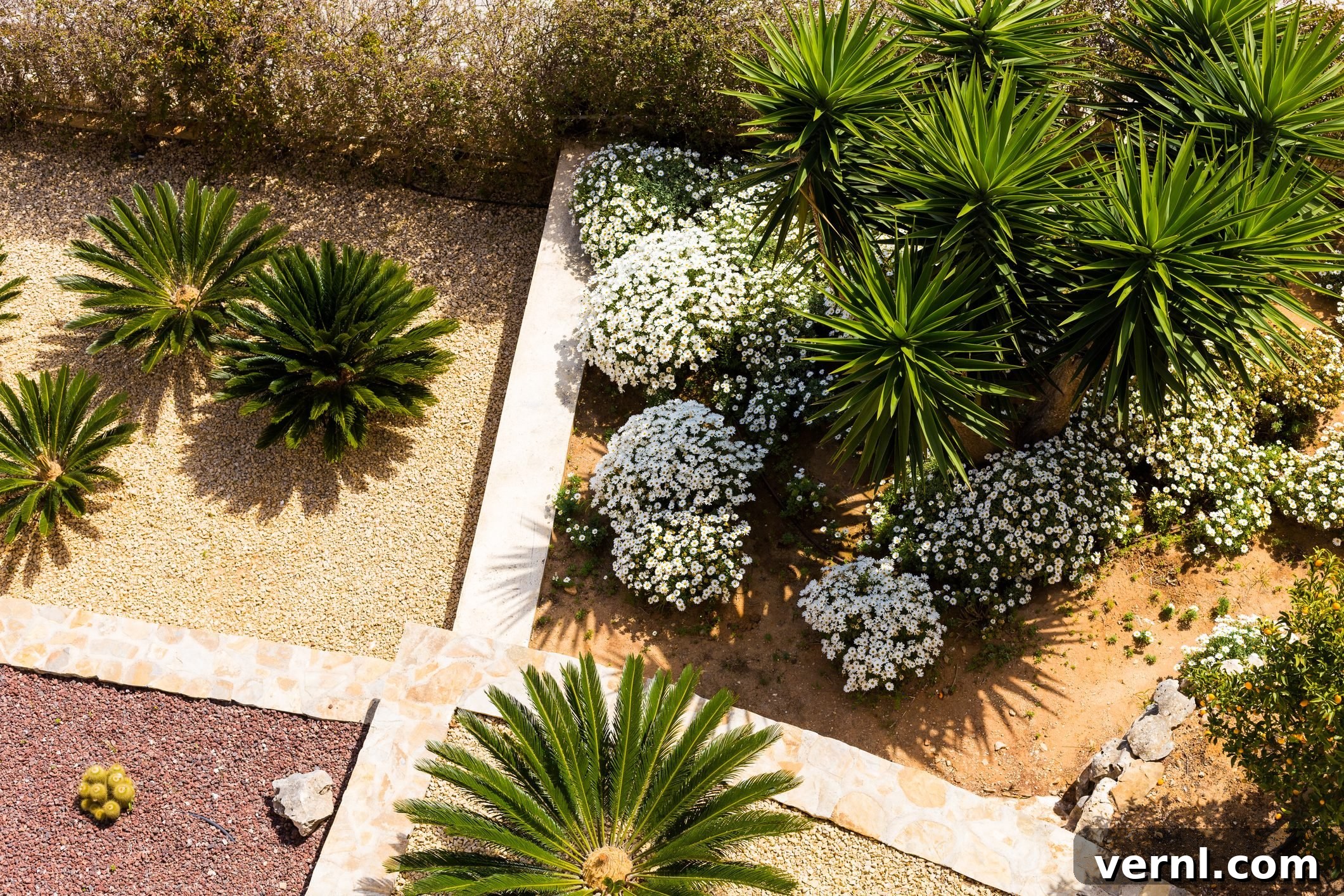
Instead, gravel’s smooth, organic appearance lends itself perfectly to aesthetic purposes, particularly in various landscaping designs. It creates a softer, more inviting look that complements natural surroundings. While most gravel is naturally formed, there are also instances of “artificial gravel.” This material is produced from certain types of crushed rock that undergo a mechanical tumbling process. This controlled tumbling mimics natural weathering, effectively rounding the sharp edges of the crushed stone to achieve a similar smooth finish. This makes these rocks suitable for a variety of decorative and functional landscaping elements like patios, picturesque walkways, and other garden projects where a softer aesthetic and comfortable underfoot feel are desired.
A crucial differentiator for true gravel, whether natural or artificially tumbled, is its composition. Unlike some varieties of crushed rock that may contain a significant amount of “fines” (rock dust or very small particles), gravel is typically free of these powdery elements. It consists solely of distinct pebbles and/or small rocks, ensuring better drainage and a cleaner appearance. The absence of dust means less mud and a more permeable surface, which is often desirable in landscape applications.
The color of gravel is remarkably diverse, reflecting its geological origins and the specific mineral composition of the rocks from which it formed. Colors can range from dominant grays, indicative of granite or basalt sources, to warm earth tones like beige and brown, often found in sedimentary deposits, and even pristine whites, typically derived from marble or quartz. To ensure consistency for specific projects, producers use various screening processes to separate batches of gravel into precise size categories. These classifications are vital for determining the suitability of gravel for different applications and include:
- Very fine gravel: Measuring approximately 0.08 to 0.16 inches (2-4 mm), often referred to as coarse sand or very fine pea gravel. Ideal for topdressing or very fine aesthetic touches.
- Fine gravel: Ranging from 0.17 to 0.32 inches (4.3-8.1 mm), commonly known as pea gravel. Popular for pathways, playgrounds, and decorative ground cover.
- Medium gravel: With sizes between 0.33 and 0.63 inches (8.4-16 mm), this versatile size works well for driveways, drainage, and larger decorative areas.
- Coarse gravel: From 0.64 to 1.25 inches (16.3-31.8 mm), useful for larger pathways, erosion control, and as a base layer for other materials.
- Very coarse gravel: Encompassing sizes from 1.26 to 2.52 inches (32-64 mm), often used for significant drainage projects, stream beds, or as large-scale decorative elements.
- Cobbles: Larger stones, typically from 2.53 to 8 inches (64.3-203 mm), frequently employed in decorative borders, dry river beds, and rustic paving.
- Boulders: Any rock larger than 8 inches (203 mm) in diameter, used as focal points, retaining elements, or naturalistic accents in grand landscape designs.
Exploring the Diverse Types of True Gravel
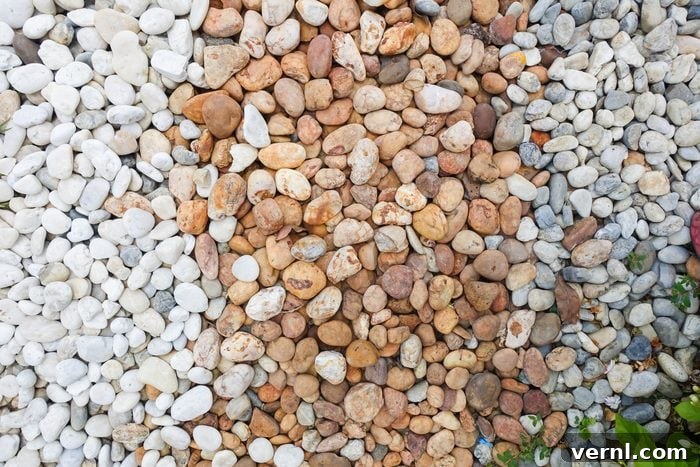
When seeking true gravel, it’s essential to filter out materials like road rock, drainage rock, base rock, and various other forms of crushed stone. These are distinct categories designed for structural purposes. Genuine gravel originates directly from natural deposits found in the ground or within waterways. While it may undergo processes like screening for size consistency, washing to remove impurities, colorization for specific aesthetic effects, or tumbling to achieve smoothness, it is fundamentally never fed through a rock crusher in its final form. The crucial distinction lies in its natural formation and inherent rounded characteristics.
Here are some of the most common and popular types of natural or tumbled gravel, each offering unique aesthetic and functional benefits for landscaping projects:
- Pea Gravel: As its name suggests, pea gravel consists of charmingly rounded pebbles, typically ranging from 1/8-inch to 3/8-inch in diameter – roughly the size of a common garden pea. This material perfectly embodies the “coarse sand” description from its French etymology. Each individual pebble boasts its own unique hue, but when viewed collectively, pea gravel usually presents a soft, harmonious palette of beige to light brown tones. A particularly sought-after variety, known as Jersey Shore gravel, is celebrated for its striking blend of tan and golden colors, adding warmth and vibrancy to any landscape. Its smooth texture makes it comfortable underfoot, ideal for pathways, patios, and play areas.
- River Rock: These individual stones are generally larger than pea gravel, with diameters ranging from one to several inches. True to their name, river rocks are harvested from riverbeds, where they have been meticulously smoothed and rounded by years of constant exposure to the erosive power of flowing water. Their coloration typically leans towards various shades of gray, but it’s not uncommon to find lighter, almost white specimens, as well as darker, more brooding tones. Their organic shapes and sizes make them perfect for creating natural-looking dry stream beds, borders, and water features, mimicking elements found in nature.
- Lava Rock: Born from volcanic activity, lava rock is essentially chunks of solidified lava. While naturally sharp initially, it is often tumbled to blunt its edges, making it suitable for landscaping. Its distinctive features include being remarkably lightweight, highly porous, and almost always exhibiting a deep, rich rusty-red or blackish-red hue. Its unique texture and color make it a striking choice for contemporary landscapes, rock gardens, and areas where excellent drainage and minimal compaction are desired.
- Marble Chips: These elegant pieces are fragments of marble, renowned for their pristine white color. This brilliant whiteness makes them an exceptionally popular choice for creating attractive, high-contrast features, especially in xeriscaping or modern garden designs where light reflection is desired. The individual marble pieces may have been naturally smoothed by long-term weathering, or if not, they are typically tumbled to achieve a refined, rounded finish, making them comfortable for walking and visually appealing.
- Crushed Granite (Tumbled): While granite is naturally an angular, hard-wearing stone, specific processing can transform it into a type of gravel. When crushed granite undergoes a tumbling process, its sharp edges are smoothed and rounded, making it suitable for applications where a gravel aesthetic is preferred. Its rich, deep, and often speckled dark color adds significant depth, sophistication, and visual weight to any landscape design, creating a luxurious and enduring surface.
Optimal Applications for Gravel in Your Landscape
The unique characteristics of various gravel types make them highly versatile for a multitude of landscaping applications, blending both aesthetic appeal and practical functionality. Understanding the best uses for each can significantly enhance your outdoor space.
For instance, lighter and smoother options like pea gravel, elegant marble chips, and refined tumbled crushed granite are exceptional choices for creating inviting gravel patios, comfortable walkways, and sustainable xeriscaping projects. These materials offer a much softer and more pleasant experience underfoot compared to the sharp, jagged edges of crushed stone. However, because their smooth, rounded forms do not naturally interlock, they require proper containment. Installing a well-defined border is essential to keep these materials in place and prevent migration. This necessity often works to a project’s advantage, as borders naturally help to delineate and separate different areas of the landscape, creating visually organized and intentional spaces.
River rocks, with their naturally smoothed and varied sizes, are incredibly versatile and can serve multiple purposes in outdoor settings. Their organic appearance makes them ideal for decorative accents, adding a natural, soothing element to garden beds or around water features. They are also excellent for constructing effective drainage pathways, guiding water away from structures or permeable areas, or for creating the illusion of a dry riverbed. Furthermore, their sturdy nature allows them to be used for building charming cobblestone-style patios and walkways, offering a rustic yet durable surface.
Lava rock stands out due to its distinctive properties. Its high porosity makes it an excellent substitute for traditional organic mulch in garden beds. This porosity not only helps retain soil moisture by reducing evaporation but also provides insulation, protecting plant roots from extreme temperatures. Furthermore, its striking deep red or blackish-red color makes it a powerful decorative feature, adding a dramatic and modern touch to any landscape design. Beyond its use as mulch, lava rock’s lightweight nature and aesthetic appeal also make it suitable for creating unique patios and walkways, particularly in areas where drainage is a priority or a lightweight fill is needed.
Gravel Landscape Maintenance Best Practices
While a gravel landscape demands considerably less intensive maintenance than a lush lawn or other types of vegetation, it’s not entirely maintenance-free. Proactive care ensures its beauty and functionality endure for years.
The most significant potential challenge is the inevitable growth of weeds. Even with a meticulously installed underlayment of high-quality landscape fabric designed to block weed emergence, vigilant monitoring is still crucial. Make it a habit to inspect your gravel areas for any new growth on a weekly basis, especially during warmer months. Promptly pull any weeds as soon as they appear. Addressing them early prevents their root systems from establishing deeply, making removal easier and significantly reducing the likelihood of widespread infestation. For persistent weeds, consider spot-treating with an appropriate herbicide or an eco-friendly alternative like horticultural vinegar, always following product instructions carefully.
When utilizing free-flowing gravel types such as pea gravel, marble chips, lava rock, or tumbled crushed granite, a secure border is not just recommended, it’s absolutely essential for containment. Despite best efforts, individual stones and pebbles possess an uncanny ability to “migrate” magically beyond their designated boundaries, finding their way onto adjacent sidewalks, lawns, or garden beds. While completely preventing this migration can be challenging, regular sweeping or raking of errant stones back into their designated areas is a simple and effective solution. Incorporating robust edging materials like metal, composite plastic, stone, or timber can significantly improve containment and reduce the frequency of sweeping.
Another aspect of gravel maintenance involves replenishment. Certain types of gravel, particularly those subjected to high traffic or the grinding effects of weather and use, such as crushed granite, will naturally wear down or become embedded in the soil over time. Regularly inspect your gravel paths and patios for thinning areas or depressions. When you notice signs of wear, periodic replenishment is necessary to maintain the desired depth, appearance, and functionality. Simply add a fresh layer of the same type of gravel, raking it evenly across the surface.
For routine cleaning and debris removal, a leaf blower set to a low power setting is an excellent tool for clearing leaves, small sticks, and other lightweight organic debris without disturbing the gravel itself. For larger debris or embedded dirt, a stiff-bristled broom or a rake designed for gravel can be effective. Occasionally, especially after heavy rains or if mud has splashed onto the surface, a gentle rinse with a garden hose can refresh the appearance of your gravel. With these relatively simple and consistent maintenance practices, your gravel landscape will continue to offer beauty and practical benefits for many years to come.