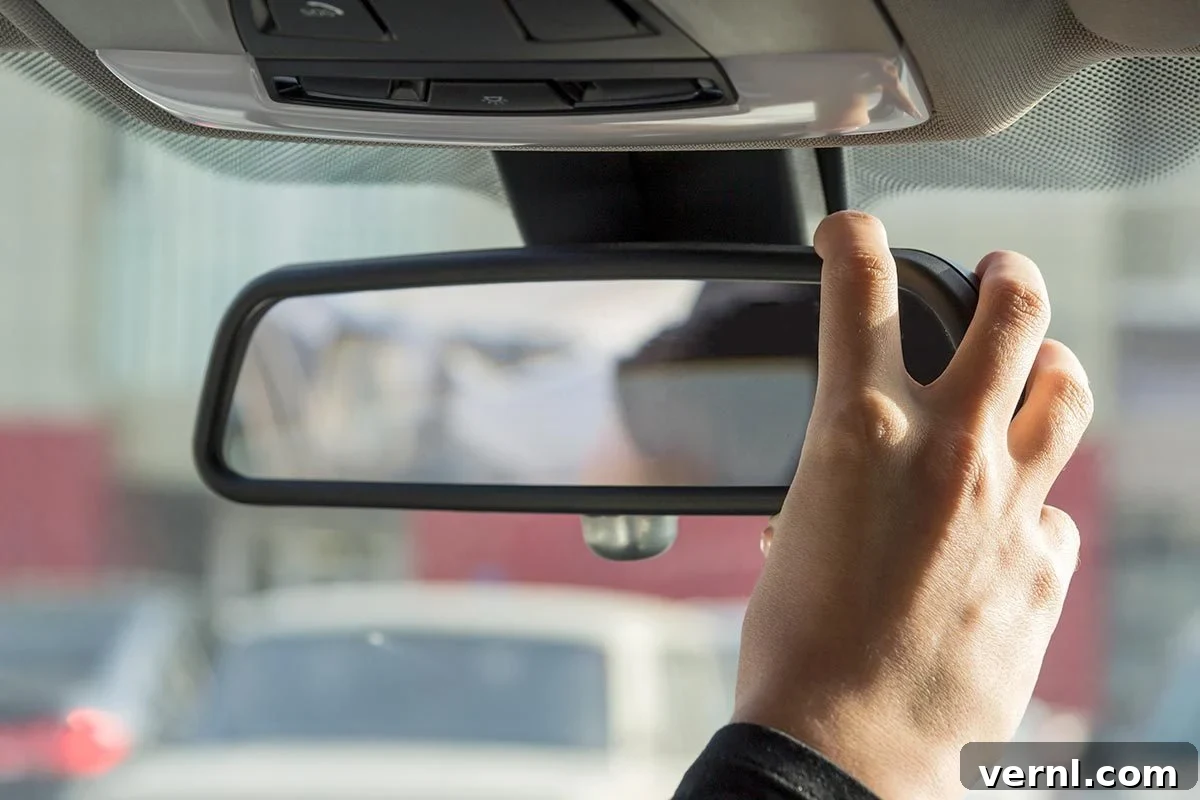
Mastering Mirror Adjustment: Eliminate Car Blind Spots for Safer Driving
Driving is a dynamic and demanding activity where visibility plays a paramount role in ensuring safety. The often-underestimated challenge of blind spots presents a significant hazard, contributing to countless lane-change collisions, turning accidents, and near-misses on roads worldwide. Personal experiences often highlight this common issue; for instance, as a driver who needs the seat in its forward-most position to comfortably reach the pedals, I frequently face the need to readjust mirrors. Conversely, my partner, being seven inches taller, prefers the seat as far back as possible. This daily discrepancy necessitates a crucial mirror recalibration every time one of us gets behind the wheel to prevent dangerous blind spots from compromising our view.
Lucas Waldenbäck, co-founder of Zutobi Drivers Ed, eloquently stresses the gravity of this issue: “Blind spots are one of the most underestimated dangers on the road, and a major factor in lane-change and turning collisions.” While many contemporary vehicles boast advanced blind-spot monitoring systems, it’s vital to recognize these technologies as supplementary aids, not infallible replacements for driver vigilance. The fundamental practice of manually checking your blind spots through correctly adjusted mirrors and diligent over-the-shoulder glances remains an indispensable cornerstone of defensive driving. This comprehensive guide will equip you with the knowledge and techniques to effectively adjust your mirrors, maximizing your field of vision and significantly enhancing the safety of yourself, your passengers, and all fellow road users.
Understanding Car Blind Spots: What Are They?
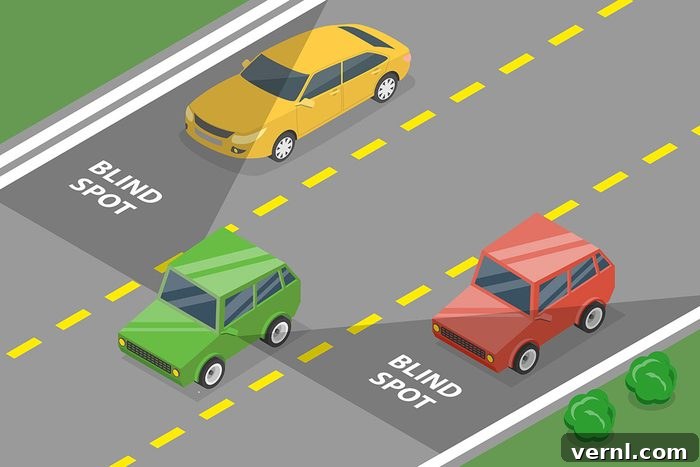
In essence, a car blind spot refers to any area surrounding your vehicle that remains invisible when you look into your side or rearview mirrors. These are critical zones where other vehicles, motorcyclists, cyclists, pedestrians, or even inanimate objects can disappear entirely from your line of sight, creating perilous situations that can escalate into severe accidents. Marin Cristian, CEO of Online Games, further clarifies this concept: “For many cars, they are usually found just behind, and to the left and right of the vehicle. These are the most common spots where another car can easily be invisible to you.” A thorough understanding of what blind spots entail and where they are located in your specific vehicle is the first step toward effective mitigation and safer driving.
Identifying the Eight Key Blind Spots While Driving
While many drivers are instinctively aware of one or two primary blind spots, the reality is that there are actually eight critical zones around your vehicle where visibility is inherently compromised. Recognizing and actively addressing each of these blind zones is crucial for a comprehensive approach to road safety.
- Directly in front of the hood: This area is particularly problematic for taller vehicles like SUVs and trucks. It obscures small children, pets, parking blocks, or low curbs immediately ahead, making maneuvers in tight spaces or parking lots especially risky.
- At the left and right crossbars (A-pillars): These robust structural components, essential for supporting the windshield and roof, can create surprisingly large blind zones. A pedestrian stepping into a crosswalk, a merging car, or a motorcycle can easily become hidden behind these pillars, especially during turns or when navigating intersections.
- Directly over your left and right shoulders: These are the most commonly acknowledged blind spots. They typically encompass the area adjacent to your vehicle, stretching slightly behind the rear side windows. This is the notorious zone where vehicles can “hide” just as you prepare to change lanes or merge into traffic.
- At the rear-left and rear-right pillars (C-pillars, and B-pillars in some vehicles): Similar to the A-pillars, these structural elements located at the rear of the passenger compartment can generate significant blind zones. This is particularly noticeable when reversing, parking, or attempting to ascertain the position of vehicles in adjacent lanes. Larger SUVs, vans, and sedans with thick C-pillars often have pronounced blind spots here.
- Directly behind the vehicle, especially low to the ground: This blind spot poses extreme danger, as it can completely conceal small children, pets, parking barriers, or low-lying objects when backing up. Even with a rearview mirror, the limited field of vision below the rear window means hazards can be completely missed.
These inherent blind zones are a direct consequence of fundamental vehicle design, stemming from structural obstructions like door pillars, the vehicle’s frame, and the natural limitations of a driver’s line of sight. As Waldenbäck explains, “For instance, when backing up, you won’t see a small child or pole below the rear windshield, even if you’re using your rearview mirror.” This underscores why a proactive, multi-faceted approach to surveying your surroundings, combining mirror use with direct observation, is not merely advisable but absolutely essential for preventing accidents.
Furthermore, different vehicle types inherently present varying degrees of blind spot challenges. Larger vehicles like commercial trucks, buses, and even many SUVs possess more expansive blind spots due to their sheer size and body structure. Conversely, smaller cars might have less pronounced blind zones, but these are no less dangerous. Environmental factors also play a critical role; heavy rain, dense fog, snow, or even direct sunlight and glare can severely exacerbate visibility issues, making meticulous mirror adjustment and frequent checks even more paramount for maintaining safety.
Optimal Adjustment Techniques for Your Side Mirrors
Properly setting your side mirrors is arguably the most impactful action you can take to minimize blind spots and significantly expand your peripheral vision. There are two primary methods for this adjustment, each offering distinct advantages and requiring a brief period of adaptation.
Method 1: The Standard Setting (Setting A)
- Description: This is the traditional mirror adjustment method widely taught in driving schools. To implement Setting A, you position your side mirrors so that the very tip of your vehicle’s rear door handle is just barely visible in the lower, inner corner of the mirror. This allows for a sliver of your own car to be seen.
- Benefits: According to Lucas Waldenbäck, “This gives a familiar visual reference for most drivers.” Many drivers find comfort in seeing a portion of their own vehicle, as it provides a clear physical reference point for gauging proximity to curbs, other cars, or obstacles during parking and maneuvering. It often feels intuitive, especially for new drivers.
- Considerations: While familiar and reassuring, this setting does not fully eliminate the blind spot directly adjacent to your vehicle. It still necessitates a more pronounced head turn (or “shoulder check”) to ensure that no vehicle is hidden in the remaining blind zone before initiating a lane change.
Method 2: The SAE Recommended Setting (Setting B – Blind Spot Elimination)
- Description: Endorsed by the Society of Automotive Engineers (SAE International), this advanced method aims to virtually eliminate traditional blind spots by pushing your side mirrors significantly further outward. The objective is to adjust each side mirror so that its field of view barely overlaps with that of your rearview mirror. In an ideally adjusted setup, as a vehicle begins to exit your rearview mirror’s view, it should immediately appear within the corresponding side mirror, creating a seamless and near-continuous panoramic view around your vehicle.
- Benefits: Waldenbäck highlights the key advantage: “This setting helps minimize blind spots and reduces the need to turn your head as far.” By effectively extending your peripheral vision, this method dramatically shrinks the size of the traditional blind spots, making lane changes considerably safer and reducing driver fatigue from constant head-turning. You gain a much broader and more comprehensive coverage of the lanes adjacent to and slightly behind your car.
- Considerations: “However, it may feel disorienting at first,” Waldenbäck cautions. Since you will no longer see any part of your own vehicle in the side mirrors, the initial experience can feel unusual and require some getting used to. Consistent practice is vital to become comfortable and confident with this highly effective, safety-enhancing method.
Regardless of the method you choose, always begin the adjustment process from your normal and comfortable driving position. Utilize the electronic controls or manual levers to meticulously fine-tune both the driver’s side and passenger’s side mirrors until you achieve the desired perspective. Remember, precision is paramount; even a slight misadjustment can reintroduce dangerous blind spots. It is also beneficial to check your mirrors from slightly different angles if you tend to shift in your seat during longer drives.
Precisely Adjusting Your Rearview Mirror
While side mirrors are crucial for detecting adjacent vehicles, your rearview mirror is indispensable for monitoring traffic directly behind you. Correct adjustment of this central mirror complements your side mirrors, working in conjunction to provide a comprehensive and integrated visual field around your entire vehicle.
- Establish Your Seating Position First: Before making any adjustments to your rearview mirror, ensure that your driver’s seat is set to your preferred and safe driving posture. All mirror adjustments must be made relative to this fixed, normal sitting position.
- Maximize Rear Window View: Gently tilt the rearview mirror so that it frames the largest possible expanse of your vehicle’s rear window. The goal is to see the entire width of the rear window, from one edge to the other, without needing to shift your head or upper body from your standard driving posture.
- Achieve Central Alignment: The center of the rearview mirror’s view should ideally align with the center of your rear window, providing a balanced perspective of the lane directly behind your vehicle. When this is properly combined with correctly set side mirrors, it creates an almost continuous field of vision, allowing you to seamlessly track vehicles as they approach from behind, transition into your side mirrors’ view, and eventually enter your peripheral vision.
For vehicles equipped with specialized wide-angle or panoramic rearview mirrors, the same fundamental principle applies: maximize the field of view of the rear window while ensuring minimal head movement is required to survey the scene directly behind you. Under no circumstances should you rely solely on a single mirror; always integrate the information from all three mirrors for a complete and accurate picture of your immediate surroundings.
Verifying Your Mirror Adjustments: The Crucial Test
After meticulously adjusting your mirrors, it is absolutely essential to test their effectiveness in a real-world driving scenario. This verification step ensures that your adjustments have indeed minimized or eliminated blind spots. The most reliable method involves observing a vehicle as it passes you on a multi-lane road.
- The Passing Vehicle Test: Find a safe opportunity on a highway or a multi-lane road with moderate traffic. Observe a vehicle that is slowly passing you from behind in an adjacent lane. Ideally, this vehicle should first appear clearly in your rearview mirror. As it begins to drift out of view from your rearview mirror, it should then seamlessly transition into the view of your side mirror on the corresponding side. Finally, as it moves out of your side mirror’s field of vision, it should immediately become visible in your peripheral vision, allowing you to see it directly by performing a slight head turn (the essential “shoulder check”).
- Identifying a Blind Spot: Lucas Waldenbäck provides a clear diagnostic: “If the vehicle disappears from all mirrors before appearing beside you, that’s a clear indicator of a blind spot and that your mirrors may need fine-tuning.” This uncomfortable gap in visibility is precisely the danger you are striving to eliminate through proper adjustment.
- Corrective Action Upon Failure: If you detect such a dangerous gap, safely pull over to a convenient and secure location. Make small, incremental adjustments to the side mirror in question, gently pushing it slightly further outward. Repeat the passing vehicle test until the transition of the passing vehicle is smooth, continuous, and uninterrupted across your mirrors and into your peripheral vision. It may require a few attempts to find the optimal sweet spot that maximizes your field of vision without causing disorientation.
An additional, informal test can be performed in a parking lot. With your car parked safely, ask a friend to walk slowly around your vehicle, maintaining a few feet of distance. Observe their movement in your mirrors and note if there are any points where they completely disappear from view before reappearing. This exercise can help identify blind spots at lower speeds and in less dynamic environments, offering another layer of verification.
Frequently Asked Questions About Mirror Adjustment
How often should I adjust my car mirrors?
Maintaining optimal mirror adjustment is not a one-time setup; it requires consistent attention to ensure ongoing safety. It’s a proactive habit that should be integrated into your pre-drive routine. You should make it a point to check and, if necessary, adjust your car’s rearview and side mirrors in several key situations:
- Whenever you adjust your seat: Even the slightest alteration to your seating position can significantly impact your line of sight and, consequently, the effective angle of your mirrors. As Waldenbäck emphasizes, “Even a slight change in your sitting position alters your field of vision.”
- Before long drives or freeway trips: High-speed driving demands maximum visibility and minimal distractions. A quick mirror check before embarking on a lengthy journey or entering a freeway can prevent potential hazards and reduce fatigue.
- Every time someone else has driven your car: Different drivers inevitably have different seating preferences and body types, which will almost certainly necessitate a shift in mirror angles. Always reset them to your personalized optimal position before you begin driving.
- After vehicle maintenance or washing: Mirrors can sometimes be inadvertently nudged or shifted during cleaning, maintenance, or parking. A quick verification before starting your journey is a prudent safety measure.
By making mirror checks a regular and integral part of your pre-drive checklist, you will significantly contribute to your overall road safety and enhance your situational awareness.
Do I still need to adjust my mirrors if my car has blind spot sensors?
Absolutely, yes. While modern blind spot monitoring systems (BSM) are highly valuable and sophisticated safety features, they are unequivocally designed to serve as a supplement to, rather than a full replacement for, properly adjusted mirrors and diligent driver habits. Relying solely on these technological aids can foster a false sense of security and potentially lead to dangerous driving situations.
- Understanding Sensor Limitations: Blind spot sensors typically employ radar, ultrasonic, or camera technologies to detect objects within your blind zones. However, these systems have inherent limitations. They may struggle to detect fast-approaching vehicles, particularly smaller vehicles like motorcycles, or fail to register very small objects. Adverse weather conditions (such as heavy rain, dense fog, or accumulated snow/ice), dirt buildup on the sensors, or even temporary system malfunctions can significantly impair their accuracy and effectiveness.
- The Irreplaceable Human Element: As Lucas Waldenbäck wisely states, “They may miss fast-approaching vehicles, motorcycles or fail altogether. Good habits like mirror checks and shoulder glances are irreplaceable.” While technology can provide invaluable assistance, human observation, critical judgment, and quick reflexes remain paramount in preventing accidents. The human brain’s ability to interpret complex, dynamic visual information and react is still unmatched.
- The Indispensable Shoulder Check: Even with meticulously adjusted mirrors and fully functioning blind spot sensors, a quick and deliberate over-the-shoulder glance (often referred to as a “head check” or “shoulder check”) is always strongly recommended before initiating any lane change, merge, or turn. This direct visual confirmation provides an unobstructed view of the area that might still be missed by mirrors or sensors, offering an invaluable final layer of verification and peace of mind.
It is best to view blind spot sensors as an additional layer of protection, much like how airbags augment the safety provided by seatbelts. They function optimally when integrated into and combined with foundational safety practices, rather than being relied upon in isolation. Your active engagement and awareness are the ultimate safeguards.
Beyond Mirrors: Comprehensive Blind Spot Awareness Tips for Proactive Driving
While mastering correct mirror adjustment is foundational for mitigating blind spots, a truly holistic approach to blind spot awareness involves incorporating several other proactive driving habits into your daily routine. These practices collectively enhance your situational awareness and significantly bolster your overall road safety.
- Always Perform a Shoulder Check: Before making any lane change, merging onto a road, or executing a turn, make it an ingrained habit to perform a quick, deliberate over-the-shoulder glance in the direction you intend to move. This direct visual confirmation is the ultimate safeguard against unseen vehicles or obstacles that might evade even perfectly adjusted mirrors and advanced sensors.
- Signal Your Intentions Early: Activating your turn signal well in advance of your maneuver provides other drivers with critical information about your planned actions. This foresight gives them ample time to react, adjust their speed or position, and move out of your potential blind spot, thereby reducing the risk of a collision.
- Maintain Safe Following Distances: Keeping adequate space between your vehicle and the one ahead not only improves your reaction time to sudden stops but also provides a clearer, wider view of traffic patterns around you. This increased visibility helps you spot vehicles that might otherwise appear unexpectedly in your blind spot.
- Be Cognizant of Large Vehicle “No-Zones”: Drivers of large commercial trucks, buses, and RVs operate with significantly larger and more numerous blind spots, often referred to as “No-Zones,” on all sides of their vehicles. Avoid lingering in these areas. A good rule of thumb: if you cannot clearly see the truck driver’s mirrors, they almost certainly cannot see your vehicle. Pass quickly and efficiently, or maintain a safe distance behind or far ahead.
- Stay Vigilant in All Driving Conditions: Adverse weather conditions such as heavy rain, dense fog, snow, or even challenging night driving significantly reduce overall visibility for all drivers. In these compromised conditions, it is imperative to redouble your efforts to check mirrors frequently and perform more diligent shoulder checks. Adjust your speed to match the reduced visibility.
- Adjust for Cargo and Passengers: If your vehicle is heavily loaded with cargo, has rear passengers, or features headrests that obstruct the rear window, the effectiveness of your rearview mirror will naturally be compromised. In such scenarios, compensate by relying more heavily on your side mirrors and ensuring extra diligent shoulder checks before any maneuver.
- Be Mindful of Motorcycles and Bicycles: Due to their smaller size, motorcycles and bicycles are inherently more difficult to spot and can easily disappear into even minimal blind spots. Always double-check for them, especially before turning or changing lanes.
By consciously incorporating these comprehensive practices into your daily driving routine, you will significantly elevate your situational awareness, dramatically reduce the risks associated with blind spots, and ultimately become a safer, more confident, and more responsible driver for yourself and everyone else sharing the road.
About the Experts
- Lucas Waldenbäck is Co-Founder of Zutobi Drivers Ed, a prominent driver’s education application dedicated to helping students become safe, knowledgeable, and confident drivers through interactive learning.
- Marin Cristian is CEO of Online Games. With a robust background in creating simulations for cars and driving mechanics, Marin has extensively studied the fundamental principles of road safety and vehicle dynamics.
Related Resources for Enhanced Driving Safety
- Do You Know What That Little Button on Your Seat Belt Is For?
- What Those Lines on Your Backup Camera Really Tell You
- Here’s What The Small Panel On Your Car’s Front Bumper Is For