
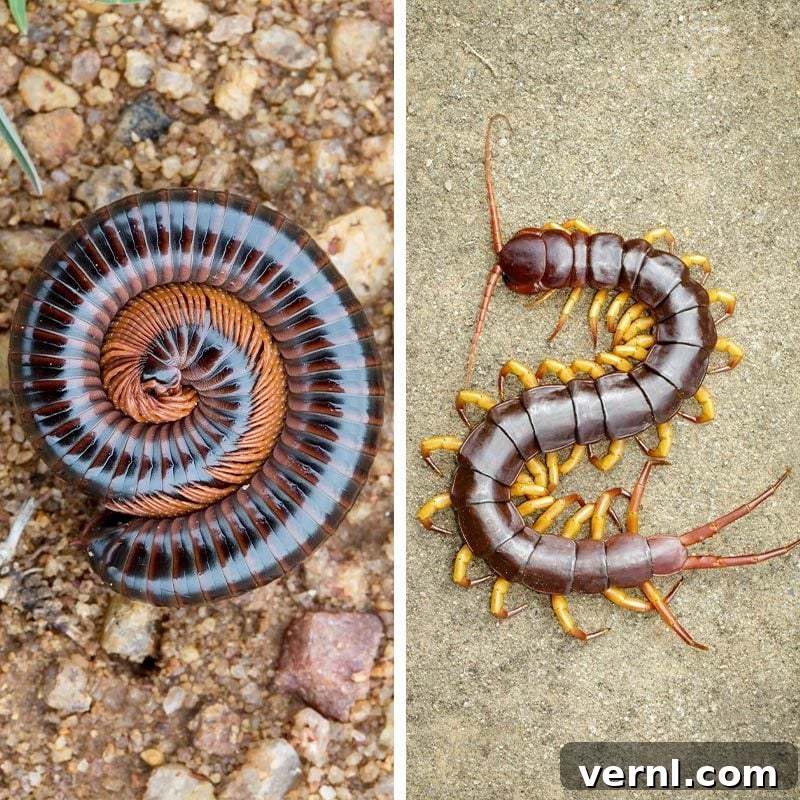
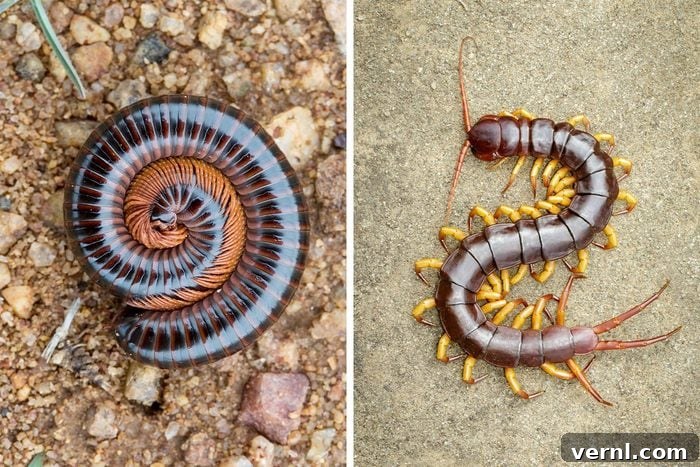
For many, the distinction between centipedes and millipedes often boils down to a childhood misconception: one has 100 legs, the other an overwhelming 1,000. While these numbers are largely mythical, the reality is that centipedes and millipedes are distinct arthropods with unique characteristics in appearance, behavior, and diet. Yet, their shared preference for damp, dark environments—especially those found in and around our homes—frequently leads to them being grouped together as unwelcome “creepy-crawlies.” This guide aims to demystify these fascinating, multi-legged creatures, offering clarity on their differences and, more importantly, actionable strategies to keep them out of your living space.
While neither centipedes nor millipedes are known to transmit diseases or cause structural damage to your home, their presence can certainly be unsettling. Understanding their habits and habitats is the first step toward effective prevention. We’ve consulted with Danielle Restuccia, Division Technical Services Manager for Orkin’s Northeast Division, to bring you expert insights on how to identify, deter, and manage these common household invaders, ensuring they remain where they belong—outdoors.
Centipedes vs. Millipedes: A Detailed Comparison
Though often confused, centipedes and millipedes belong to different classes within the subphylum Myriapoda. Understanding their fundamental differences is key to identifying which creature you’re dealing with.
The Centipede: Swift Hunter of the Dark
Centipedes are predatory arthropods, renowned for their speed and carnivorous diet. They exhibit a remarkable range in size, with some species measuring as small as 1/4 inch, while others, like the formidable giant desert centipede, can grow up to eight inches in length. Their bodies are flattened and segmented, with each segment typically bearing a single pair of legs. This characteristic allows for their distinctive, undulating gait as they swiftly scurry across surfaces.
A defining feature of centipedes is their first pair of legs, modified into venomous claws called forcipules. These “poison claws” are used to inject venom into prey, quickly paralyzing small insects, spiders, and earthworms. Common centipede colors include shades of dark brown, yellowish, or reddish-brown, often blending with their preferred habitats. Centipedes thrive in dark, moist environments such as under rocks, logs, and leaf litter outdoors. Indoors, they frequently seek refuge in damp basements, crawl spaces, and bathrooms, particularly when outdoor conditions become too dry or too wet. Recognizing the various types of centipedes that might appear in your home can aid in identification.
Their active hunting style means centipedes are constantly seeking out other pests. This makes species like the house centipede (Scutigera coleoptrata) a natural predator of many common household pests, including cockroaches, spiders, silverfish, and termites. While their appearance can be unsettling, their role in natural pest control is often overlooked, leading some experts to suggest that not killing house centipedes might be beneficial.
The Millipede: Gentle Decomposer of the Soil
In stark contrast to their carnivorous cousins, millipedes are primarily detritivores, feeding on decaying organic matter, though some may occasionally nibble on young plants. They are generally smaller than many centipede species, typically ranging up to 1-1/2 inches long, though some tropical species can be much larger. Millipedes possess a more cylindrical, often hardened body, and are characterized by having two pairs of legs on most of their body segments. This gives them a slow, graceful, wave-like movement, distinct from the centipede’s rapid scurry.
Millipedes typically exhibit colors from brown to black, often blending seamlessly with their habitat. Their diet consists mainly of decomposing leaves, wood, and other plant matter, making them beneficial decomposers in garden ecosystems. However, in large numbers, they might turn to healthy plant roots or seedlings if other food sources are scarce. Like centipedes, millipedes are drawn to moist environments. Outdoors, they are commonly found under mulch, leaf litter, rotting logs, and garden debris. Indoors, they are frequent visitors to damp basements, bathrooms, and crawl spaces, often seeking shelter from extreme weather conditions, such as heavy rain or prolonged drought. When disturbed, millipedes often curl into a tight coil, a defensive mechanism that protects their softer undersides.
Key Differences at a Glance
- Legs Per Segment: Centipedes have one pair of legs per body segment; Millipedes have two pairs of legs per body segment.
- Body Shape: Centipedes have flattened bodies; Millipedes have more rounded, cylindrical bodies.
- Movement: Centipedes are fast, with an undulating motion; Millipedes are slower, moving with a wave-like gait.
- Diet: Centipedes are carnivores, preying on insects; Millipedes are detritivores, feeding on decaying organic matter.
- Defense: Centipedes use venomous claws; Millipedes curl up and may excrete foul-smelling fluids.
Why Centipedes and Millipedes Invade Your Home
Despite their differences, centipedes and millipedes share a common reason for venturing indoors: they are seeking refuge from unsuitable outdoor conditions. Both require high humidity and moisture to survive, making your home’s damp areas particularly attractive. Danielle Restuccia from Orkin explains, “Homeowners who notice more centipedes and millipedes in the home should take the time to check for entry points like cracks, gaps, and holes in the foundation, as well as poorly sealed windows and doors.”
Their indoor excursions are often triggered by changes in weather. During periods of heavy rain, outdoor habitats can become waterlogged, forcing them to seek higher, drier ground—often inside your home. Conversely, prolonged dry spells can lead them indoors in search of desperately needed moisture. “Millipedes can become more active indoors after heavy rain,” Restuccia notes, highlighting a common trigger for their appearance.
Beyond moisture, centipedes might also be drawn indoors by the presence of other pests, which serve as their food source. If your home has a problem with spiders, silverfish, or small insects, centipedes might be moving in to capitalize on this readily available meal. Millipedes, on the other hand, might be attracted to any decaying organic matter present, such as damp cardboard or old newspapers in a wet basement.
Effective Strategies to Keep Centipedes and Millipedes Away
The good news is that preventing these multi-legged guests from entering your home largely involves practical, common-sense measures focused on moisture control and exclusion. By addressing the factors that attract them, you can significantly reduce their presence.
1. Control Moisture Levels
Since both centipedes and millipedes thrive in moist environments, tackling excess humidity is paramount. This includes:
- Fix Leaks: Promptly repair any leaky pipes, faucets, or roof leaks that contribute to dampness in basements, bathrooms, and crawl spaces.
- Improve Ventilation: Ensure proper ventilation in bathrooms, kitchens, and basements. Use exhaust fans during and after showers, and consider installing dehumidifiers in particularly damp areas.
- Seal Gaps: Seal gaps around plumbing and utility lines that enter your home, especially in moist areas.
2. Seal Entry Points
Preventing access is a critical step. Inspect your home thoroughly for potential entry points:
- Inspect Foundation: Carefully examine your home’s foundation for cracks, gaps, and holes, and seal them with caulk or expanding foam.
- Check Windows and Doors: Ensure all windows and doors are properly sealed with weatherstripping and door sweeps. Repair or replace any damaged screens.
- Utility Penetrations: Pay attention to openings where pipes, wires, and cables enter the house, sealing any gaps around them.
3. Manage Outdoor Habitats
Your outdoor landscaping can create ideal breeding grounds and shelters for these pests. Minimize attractive habitats near your home:
- Clear Organic Debris: Remove leaf litter, wood piles, grass clippings, mulch, and other organic materials within a few feet of your home’s foundation. These provide food, moisture, and shelter.
- Store Firewood Away: Store firewood on an elevated rack and at least 20 feet away from your house to prevent it from becoming a breeding ground and entry point.
- Trim Vegetation: Keep shrubs, bushes, and other vegetation trimmed and away from your home’s siding, as they can create shaded, damp areas.
- Improve Drainage: Ensure rainwater drains away from your foundation. Regrade soil if necessary to prevent water from pooling near the house.
4. Indoor Management and Removal
If centipedes or millipedes have already made their way inside, there are simple ways to remove them:
- Vacuum or Sweep Them Up: The easiest and most humane way to remove individual pests is to vacuum them up or sweep them into a dustpan and release them outdoors.
- Sticky Traps: Place sticky traps in damp areas where you’ve seen activity, such as basements or laundry rooms.
- Consider Natural Predators (Centipedes): As mentioned earlier, house centipedes can be beneficial in controlling other common household pests in and around your home. If their appearance doesn’t overly bother you, they might be helping to keep your home pest-free.
5. When to Consider Insecticides
For persistent or large infestations, especially around the exterior perimeter, insecticides can be an option. Apply a residual insecticide around the foundation of your home, paying close attention to cracks and entry points. Always follow product label instructions carefully. For significant problems, professional pest control services can provide more targeted and effective treatments.
Are Centipedes and Millipedes Harmful? Dispelling Fears
One of the biggest concerns homeowners have about these creatures is their potential to cause harm. With their many legs and often intimidating appearance, it’s easy to assume they are dangerous. However, Danielle Restuccia offers reassurance: “While centipedes and millipedes look intimidating, they are rarely harmful to humans or pets. Overall, it is unlikely to have a dangerous encounter with these pests.”
Centipedes: While centipedes do possess venom, their bites are typically not medically significant for humans. A centipede bite usually feels similar to a bee sting, resulting in localized pain, redness, and swelling. Allergic reactions, though rare, can occur. For pets, smaller centipedes pose little threat, but a bite from a larger species could cause temporary discomfort. They are not aggressive and will only bite if provoked or handled.
Millipedes: Millipedes are not venomous and do not bite. Their primary defense mechanism is to curl into a tight coil. Some species may also excrete a foul-smelling, irritating fluid from glands along their bodies. This fluid can cause skin irritation in sensitive individuals and should be washed off immediately if contact occurs. It’s generally harmless to pets but might cause mild irritation if ingested.
Neither centipedes nor millipedes are known to carry diseases that affect humans or pets, nor do they typically cause structural damage to homes. Their main impact is often psychological, stemming from their “creepy” appearance and the surprise of finding them indoors.
Frequently Asked Questions About Centipedes and Millipedes
Are they helpful or harmful in the garden?
Both centipedes and millipedes can be quite beneficial in the garden. Centipedes prey on garden pests like slugs, snails, and insect larvae, helping to keep pest populations in check. Millipedes are vital decomposers, breaking down organic matter and returning nutrients to the soil, which improves soil health. However, if their populations become excessively large, millipedes might occasionally feed on healthy plant roots or young seedlings, especially if decaying organic matter is scarce. In such cases, managing their numbers might be necessary.
Which one is more common in homes?
The house centipede (Scutigera coleoptrata) is by far the species you are most likely to encounter inside your home, particularly in living spaces, basements, and bathrooms. Millipedes are also common indoor invaders but tend to stick to damp, dark areas closer to the foundation or in basements. House centipedes are more mobile and often seen scuttling across floors or walls.
What attracts centipedes and millipedes to a house?
The primary attractants are moisture and shelter. They seek out damp, humid environments to survive, often entering homes during periods of heavy rain or drought. Centipedes are also drawn to homes that have an abundance of other insects, which serve as their food source. Millipedes are attracted to decaying organic matter both inside and immediately outside the home.
How long do centipedes and millipedes live?
Centipedes can live for several years, with some species living up to 5-6 years. Millipedes also have a relatively long lifespan for arthropods, often living for 2-7 years depending on the species and environmental conditions.
About the Expert
- Danielle Restuccia is Division Technical Services Manager for Orkin’s Northeast Division, offering extensive expertise in pest management and entomology.