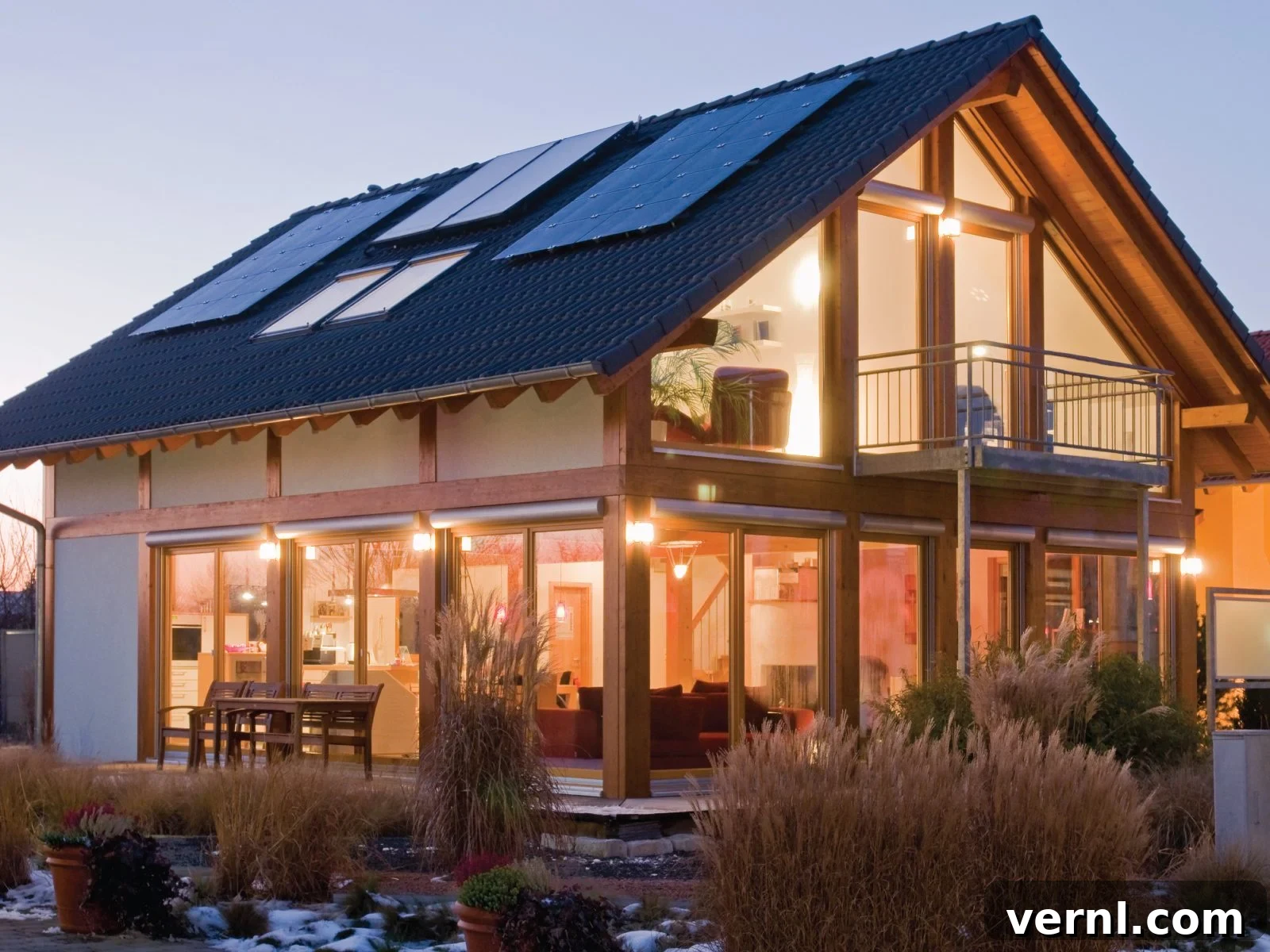
Mastering Passive Solar Design: Harnessing the Sun for Sustainable Living
Passive solar design isn’t a modern invention; its principles have guided human construction for millennia, long before the advent of electricity or advanced machinery. Crucially, it stands apart from modern solar panels and active solar systems. Instead, passive solar focuses on intelligently integrating a building with its natural environment to create comfortable living spaces by optimally utilizing the sun’s free and abundant energy.
As solar installer Ben Zook clarifies, “Any system that uses a mechanical pump, an inverter, or other electrical conversion device is not truly ‘passive.’ That means that the only remaining way to have a truly passive solar system is by using the greenhouse effect… the same as an actual greenhouse!” This fundamental concept – allowing solar radiation to naturally manage indoor climate – is the cornerstone of passive solar design.
While the greenhouse is a well-known example, passive solar principles extend far beyond glass structures. To gain a comprehensive understanding of what defines passive solar design and how to effectively implement it for enhanced comfort and significant energy savings, we’ve gathered insights from a panel of leading home efficiency experts.
What Exactly Is Passive Solar Design?
At its core, passive solar design is about leveraging natural sunlight to heat, cool, and illuminate your home without relying on mechanical devices like solar panels or complex electrical arrays. Environmentalist Aidan Charron explains, “Passive solar refers to the use of natural sunlight to heat and light your home without using solar panels or arrays or anything mechanical. Instead, you use natural sunlight and exposure to the sun itself to organically capture heat and light inside your home. It’s achieved through clever design features and pre-planning.”
This approach involves thoughtful architectural decisions that allow a building to collect, store, and distribute solar energy during cooler months, and reject unwanted solar heat during warmer periods. The goal is to minimize reliance on conventional heating, ventilation, and air conditioning (HVAC) systems, leading to substantial reductions in energy consumption and utility costs, all while fostering a more comfortable and sustainable indoor environment.
Essential Elements of Effective Passive Solar Design
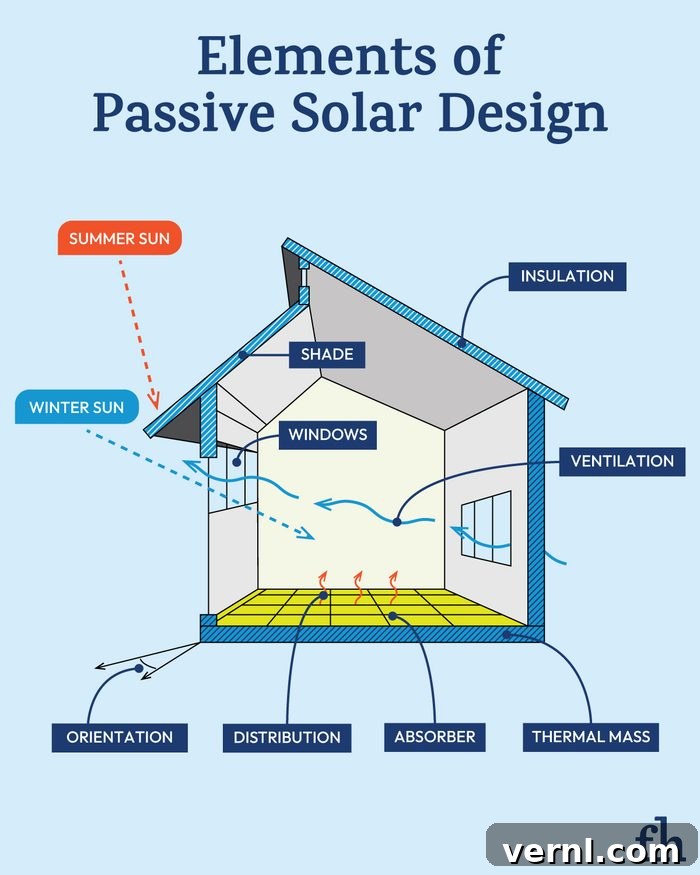
We are all, to some degree, already utilizing passive solar principles, even if unconsciously. As Ben Zook points out, “Imagine living without any sunlight, and you might understand how we ALL use sunlight. Most of it is passive, in one form or another.” However, to truly optimize the sun’s energy for climate control in building construction, designers and builders strategically employ five fundamental elements:
1. Building Orientation: Aligning with the Sun
The strategic placement of a building relative to the sun is paramount. For optimal solar gain, especially for heating purposes, the longest side or primary glazed facade of a building should ideally face the direction of the sun. In the Northern Hemisphere, this means a southerly orientation is preferred to maximize exposure to the low winter sun. This allows ample sunlight to penetrate and heat the interior. Conversely, careful consideration must be given to minimizing exposure to the intense high summer sun, often achieved through proper shading. Site analysis is also crucial; it’s important to identify and avoid natural or man-made obstructions like tall trees, adjacent buildings, or landforms that could block valuable sunlight access.
2. Thermal Mass: Storing and Releasing Heat
Thermal mass refers to materials within a building that have a high capacity to absorb, store, and slowly release heat. These materials act like natural heat batteries. Common examples include concrete slabs, brick walls, stone floors, and even water stored in large containers. During the day, when sunlight is abundant, these materials absorb a significant amount of heat. As temperatures drop in the evening, the stored heat is slowly radiated back into the living space, helping to maintain a stable and comfortable indoor temperature. Gordon Chalk, an underfloor heating expert, advises on its placement: “How well thermal mass works depends on its bulk, thickness, and where it is placed. For it to work best, it needs to be either connected to a warm place or put in full sunlight.” Proper integration of thermal mass helps moderate internal temperature fluctuations, reducing the need for active heating during the night.
3. Windows and Glazing: Controlled Solar Entry
Windows are the primary gateways for solar energy. South-facing windows are vital for maximizing solar heat gain during the colder months. However, the type of glazing chosen is equally important. High-performance windows featuring low-emissivity (low-E) coatings and inert gas fills (like argon or krypton) between panes significantly improve their insulating properties, helping to retain desired heat inside while minimizing heat loss. Gordon Chalk emphasizes careful selection: “Picking windows is important! For windows facing south, choose SHGC (Solar Heat Gain Coefficient) numbers that are high to get the most heat from the sun. To help keep your home cooler in the summer, think about lowering the SHGC of windows that face east and west.” A high SHGC allows more solar heat to pass through, beneficial for winter heating, while a low SHGC reduces heat gain, ideal for preventing summer overheating, especially on east and west facades which receive intense morning and afternoon sun.
4. Insulation: Preventing Heat Loss and Gain
Insulation is a fundamental component of any energy-efficient building, and it plays a critical role in passive solar design. Its purpose is twofold: to maximize the retention of solar heat gained during the day and to minimize heat loss during cooler periods, and equally important, to prevent unwanted heat gain during hot weather. Chalk highlights the importance of thorough application: “Focus on continuous insulation to cut down on thermal bridging, which are spots where heat can easily leave. Because they often have weak spots, pay extra attention to the areas around doors and windows.” Thermal bridging occurs when materials with lower insulating properties create pathways for heat to escape or enter. High-quality, continuous insulation across walls, roofs, and floors, along with meticulous sealing around windows and doors, ensures that the building’s thermal envelope is as efficient as possible, maintaining comfortable indoor temperatures with minimal energy input.
5. Shade and Ventilation: Mastering Summer Comfort
While passive solar is excellent for heating, effective shading and ventilation strategies are crucial for keeping a house cool and comfortable during the warmer summer months. Strategic shading can block direct sunlight from entering the building when it’s not wanted. Chalk suggests various solutions: “When curtains are pulled back in the winter, they let more light in. In the winter, deciduous trees lose their leaves, and in the summer, they provide shade, which lets the sun shine on the building.” Fixed elements like overhangs and awnings provide consistent shade, while adjustable solutions such as external blinds or carefully planned deciduous trees offer dynamic control – blocking summer sun while allowing winter sun. Beyond shading, efficient ventilation is key to cooling. This includes natural cross-ventilation, where prevailing breezes are channeled through strategically placed windows and vents, and the “stack effect,” where warm air rises and exits through high vents, drawing cooler air in through lower openings. Deploying ceiling or whole-house fans can further enhance air circulation, contributing significantly to thermal comfort and reducing the need for air conditioning.
Diverse Approaches to Passive Solar Design
Builders and architects can integrate passive solar principles into building design through several distinct approaches, each with its unique advantages and applications:
Direct Gain Systems
This is arguably the most common and straightforward passive solar technique. Direct gain systems involve allowing sunlight to directly enter the living space through south-facing windows, where it then strikes and heats up the interior thermal mass, such as concrete floors or masonry walls. These surfaces absorb the solar radiation, storing it during the day and releasing it slowly as radiant heat during the evening. While effective and visually appealing, direct gain requires careful management to prevent issues like excessive glare, overheating during intense sunlight, and potential fading of furnishings. Therefore, it must always be used in conjunction with appropriate shading solutions and sufficient thermal mass to temper temperature swings.
Indirect Gain Systems
Indirect gain systems separate the solar collection area from the occupied space by a thermal storage wall. The most prominent example is the Trombe wall. This system typically consists of a dark-colored, massive wall (usually 8 to 16 inches thick) placed directly behind a sheet of glass, with a small air gap (around 3/4 inch) between them. “The wall that gets hot from the sun moves the heat into the sitting area,” Gordon Chalk explains. During the day, sunlight heats the dark surface of the Trombe wall. The stored heat then slowly radiates inward through the wall into the living space, often with a time delay of several hours, providing gentle warmth well into the evening. Some designs also incorporate vents at the top and bottom of the wall to allow for convection, drawing warm air into the room. “The more controlled way that trombone walls let heat out is not possible with direct gain systems. On top of that, they protect against pretty big changes in temperature,” Chalk adds, highlighting their ability to provide stable, delayed heat.
Isolated Gain Systems
Isolated gain systems collect solar energy in a space that is physically separated from, but thermally connected to, the main living areas. Aidan Charron illustrates this: “Isolated gain is when the heat hits a sun room or even a greenhouse and then radiates into any adjoining rooms through vents or internal windows.” A sunroom or solarium, for instance, acts as a buffer zone, collecting solar heat during the day. This warmed air can then be circulated into the main house through vents, doors, or internal windows, often via natural convection or small fans. A significant advantage of isolated gain systems is their adaptability; they can often be added to existing structures that were not originally designed for passive solar optimization, offering a valuable retrofit solution for enhanced energy efficiency and comfort.
Roofing: A Vital Component for Thermal Regulation
While often overlooked in discussions of passive solar, the roof plays a crucial role in a building’s thermal performance. Roofer Brian Davis emphasizes this: “Roofing is a key element of passive solar design, playing a crucial role in regulating heat absorption and reflection… Lighter-colored roofs reflect sunlight, reducing heat absorption and keeping homes cooler, while darker roofs retain warmth to help with heating.” In hot climates, reflective “cool roofs” with light colors or specialized coatings can significantly reduce heat gain, lowering air conditioning demands. Conversely, in colder climates, darker, heat-absorbing roof materials can contribute to winter heating. Green roofs, covered with vegetation, offer another passive strategy by providing excellent insulation and evaporative cooling, further enhancing the building’s thermal envelope and sustainability.
Does Passive Solar Truly Save Money on Utilities?
Unequivocally, yes. The consensus among our panel of experts is clear: passive solar design delivers tangible financial benefits. Ben Zook affirms, “It can and usually does. Especially when done right, passive solar design will save you money on utilities.” By intelligently harnessing the sun’s energy for heating, cooling, and lighting, passive solar homes drastically reduce their reliance on conventional energy sources. This translates directly into lower electricity and fuel bills year-round. Brian Davis even notes that simply installing a new, energy-efficient roof can cut energy costs by 10 to 15 percent. Over the lifespan of a building, these cumulative savings can be substantial, making passive solar an excellent long-term investment in energy independence and financial stability.
Passive Solar: Advantages and Considerations
Like any design approach, passive solar comes with a distinct set of benefits and potential challenges that warrant careful consideration:
Advantages (Pros)
- Significant Energy Savings: By leveraging natural sunlight for heating, cooling, and daylighting, passive solar homes dramatically reduce dependence on mechanical systems, leading to lower utility bills and a smaller carbon footprint.
- Low Maintenance: Unlike active solar systems with moving parts or complex electronics, passive solar designs rely on static architectural elements. This inherent simplicity translates into minimal maintenance requirements and lower long-term operational costs.
- Eco-Friendly and Sustainable: Passive solar design is a cornerstone of green building. It reduces greenhouse gas emissions, conserves natural resources by minimizing energy consumption, and promotes a more sustainable lifestyle.
- Enhanced Indoor Comfort and Well-being: Homes designed with passive solar principles often feature more stable indoor temperatures, abundant natural light, and a stronger connection to the outdoor environment, contributing to a more comfortable, healthier, and appealing living space.
Considerations (Cons)
- Dependence on Climate and Site: The effectiveness of passive solar design is highly dependent on the local climate and specific site conditions. What works well in a sunny, temperate region may need significant adaptation for cloudy, cold, or intensely hot and humid climates.
- Potential for Temperature Fluctuations: If not meticulously designed and managed, passive solar homes can experience issues like overheating during peak sun hours or excessive cooling at night, leading to uncomfortable temperature swings that can be challenging to control.
- Design Complexity and Up-front Costs: Achieving optimal passive solar performance requires careful planning by experienced architects and designers. Integrating elements like orientation, thermal mass, and shading effectively can add to initial design and construction costs, although these are typically recouped through long-term energy savings.
- Often Requires Supplemental Heating: While passive solar significantly reduces heating demand, it rarely eliminates the need for an additional active heating system entirely, especially in colder climates or during extended periods of cloudy weather. It serves to minimize, not completely replace, backup heating.
Frequently Asked Questions (FAQ) About Passive Solar Design
What is the difference between passive and active solar energy?
The fundamental distinction lies in their approach to energy capture and use. Passive solar design relies on the inherent properties of building materials, placement, and surrounding landscape to naturally manage a building’s climate. It involves no mechanical or electrical components to convert or move energy. Active solar, by contrast, utilizes technology and mechanical devices to convert sunlight into usable energy, typically electricity (via solar panels) or heated fluid (via solar thermal collectors). Gordon Chalk summarizes it concisely: “Active solar is more about technology, while passive solar is more about how it is set up.” For example, solar panels collect sunlight passively, but because they then convert it to electricity and often require inverters, they are part of an active energy system.
Is passive solar heating efficient?
“It can be if you design your home to maximize sunlight capture and have a system to block the sunlight when it gets too warm,” confirms Aidan Charron. “It’s a smart way to naturally make our homes more energy smart.” All our experts agree that passive solar heating is highly efficient when properly designed and integrated. Its efficiency stems from directly utilizing the sun’s radiant energy without energy conversion losses. The key to its success lies in intelligent design that ensures effective collection, storage, and distribution of heat, coupled with strategies to prevent overheating and retain warmth. When executed correctly, it can significantly reduce, if not largely eliminate, the need for conventional heating during daylight hours and often well into the evening.
Is passive solar better for heating or cooling?
Passive solar principles are primarily known for their effectiveness in heating homes during colder months. However, when combined with intelligent shading and ventilation strategies, passive solar design can also be highly effective for cooling. For instance, well-designed overhangs, awnings, and deciduous trees can block unwanted summer sun. Furthermore, efficient ventilation strategies like cross-ventilation and the stack effect help dissipate internal heat. One particularly effective cooling technique, as advised by Gordon Chalk, is “night purging,” which involves opening windows at night to allow cooler outside air to flow through the house, actively cooling down the thermal mass stored within the building. This stored coolness then helps keep the interior comfortable throughout the following day, reducing or eliminating the need for air conditioning.
About the Experts
- Ben Zook is the owner and NABCEP Certified Master Electrician at Belmont Solar. He specializes in solar installation, including grid-tied, off-grid, and solar battery backup systems.
- Brian Davis is the AIA, LEED AP, GRP, and Technical Support Director at Brava Roof Tile.
- Gordon Chalk is the managing director at Next Level Underfloor Heating and Screed Solutions LTD, based in the UK.
- Aidan Charron is the Associate Director of Earthday.org and is a global leader of the Planet vs Plastics campaign.