Navigating the Plastic Predicament: A Comprehensive Guide to Smarter Recycling and Reduction
As a society, our efforts in recycling demonstrate varying levels of success across different material streams. We proudly process approximately two-thirds of our aluminum and paper, along with about one-third of our glass, transforming them back into valuable new products. These figures highlight effective systems in place for certain materials, underscoring the potential for a more circular economy.
However, the narrative shifts dramatically when we consider plastic waste. Each individual generates over 200 pounds of plastic waste annually, yet a mere 15 percent of this colossal amount finds its way into recycling bins. Even more concerning, a staggering five percent actually gets recycled. This stark reality reveals a profound disconnect between our intent to recycle plastic and the actual outcomes.
“Recycling of paper, cardboard, metal, and glass is unequivocally worth the effort,” affirms Judith Enck, president of Beyond Plastics and a former regional administrator for the Environmental Protection Agency (EPA). “But the plastics waste stream is incredibly complex and presents significant challenges to effective recycling.” This complexity is at the heart of our plastic problem.
Given these challenges, the most effective strategy when faced with packaging choices is often to opt away from plastic whenever possible. (Spoiler alert: Aluminum frequently emerges as the superior choice due to its high and infinite recyclability.) Yet, completely eliminating plastic from our lives is, for many, an impractical goal. This guide aims to empower you with the knowledge and strategies to make more informed choices about the plastic we do use, ultimately helping to increase its chances of being recycled and reduce its overall environmental footprint.
Why Is Household Plastic Recycling So Challenging? Unraveling the Complexities
The journey from your household recycling bin to a finished recycled plastic product is fraught with complexities, making it a far less straightforward process than many assume. This intricate system means numerous points where things can go awry, diverting plastic from reprocessing to landfills or incinerators.
Firstly, the sheer diversity of plastics is a major hurdle. There are thousands of types of plastics, each engineered with unique chemical additives, varying densities, and a spectrum of colors. “Consider the vast array of plastics present in your own home,” Enck illustrates. “You might have a rigid, bright-orange detergent bottle made from one type of plastic, juxtaposed with a clear, squeezable ketchup container made from another entirely different polymer.” These variations necessitate different processing methods, making universal recycling a logistical nightmare.
Even the universally recognized numbering system, the Resin Identification Codes (RICs) from 1 through 7, which many interpret as a direct indicator of recyclability, is not as clear-cut as it seems. These numbers were originally designed to help manufacturers identify plastic types, not necessarily for consumers to gauge recyclability. For instance, even #1 plastic, generally considered the easiest plastic to recycle, encompasses two distinct kinds: polyethylene terephthalate (PET) bottles and thermoform clamshells. Despite both bearing the #1 label, they possess different molecular structures and melting points, meaning they cannot be recycled together effectively.
Beyond the inherent material diversity, several other critical factors contribute to the low plastic recycling rates, often sending valuable resources to landfills or incinerators instead of recycling plants:
- Limited Processing Capabilities: The vast majority of recycling centers are only equipped to accept and process #1 and #2 plastics. Plastics #3 through #7, which include PVC, LDPE, PP, PS, and “other” plastics, often lack economically viable recycling markets or the necessary processing infrastructure, leading them to be discarded.
- Absence of Standardization: “Recycling rules vary dramatically from one municipality to another, creating widespread confusion among residents and discouraging the adoption of consistent recycling habits,” explains Mitch Ratcliffe, publisher of the sustainable living and recycling information site Earth911. This patchwork of regulations makes it difficult for consumers to understand what is accepted in their specific area.
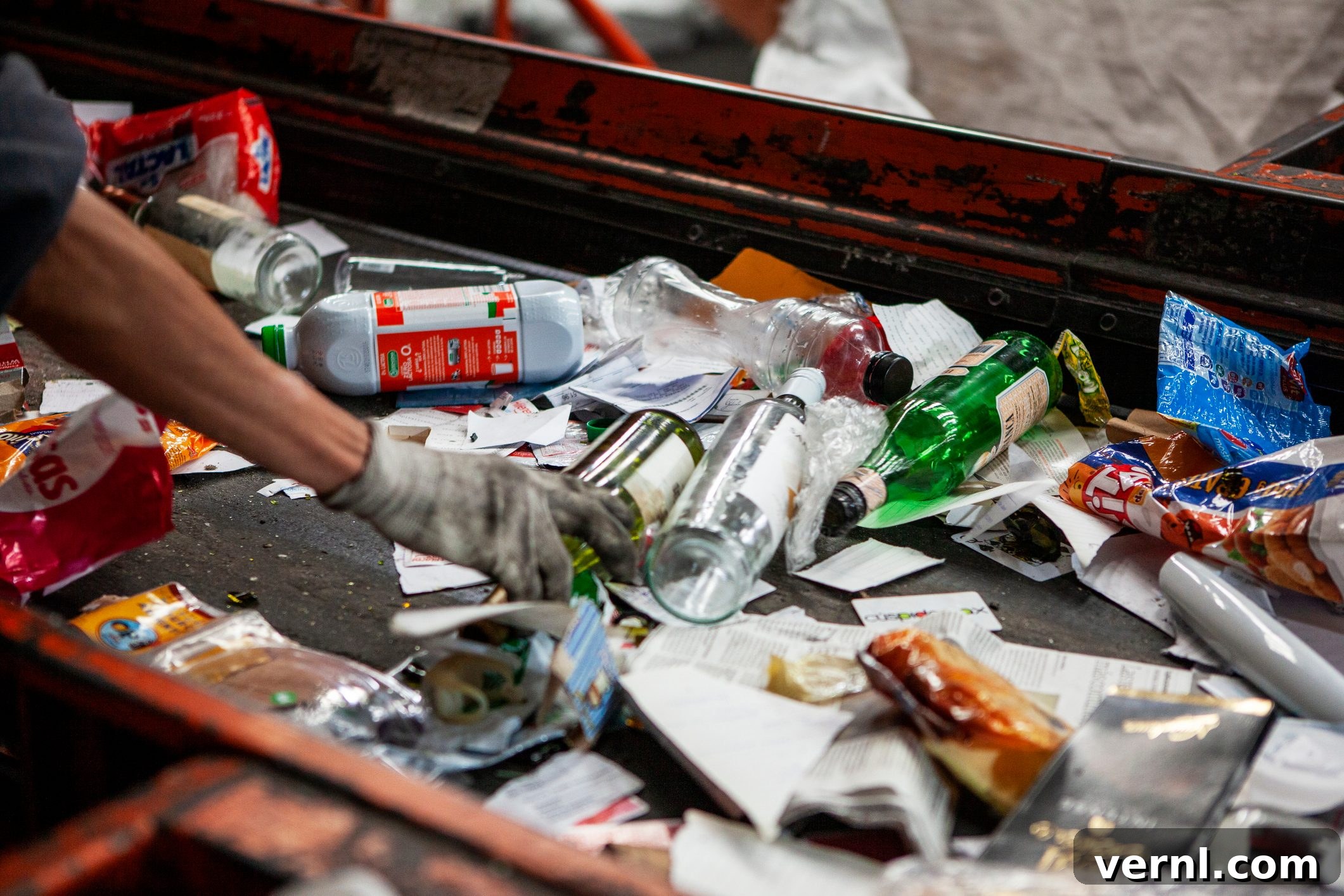
- Contamination from Non-Recyclable Items: One of the most common forms of contamination occurs when residents improperly bag their recyclables in plastic bags. Stephanie Miller, author and founder of Zero Waste DC, notes, “These bags are immediately pulled from the recycling stream because they notoriously gum up and damage sorting machinery, causing costly breakdowns and operational delays.”
- The Peril of Wishcycling: Another significant form of contamination is “wishcycling” – the act of placing non-recyclable items into recycling bins with the optimistic, albeit false, hope that they will somehow be processed. Common examples include umbrellas, yoga mats, Styrofoam cups, and dog-food bags. These items contaminate the entire batch, increasing sorting costs and often leading to the rejection of otherwise recyclable materials.
- Food Residue and Mixed Materials: Containers with significant food residue, such as yogurt cups with leftover yogurt or peanut butter jars that haven’t been rinsed, can contaminate entire loads. Similarly, broken glass mixed into single-stream recycling bins can pose safety hazards for workers and further contaminate other materials like paper and plastic, rendering them unrecyclable.
- Insufficient Market Demand: A few years ago, a critical shift occurred when most countries, including China, ceased accepting large quantities of U.S. recyclables. “China closed its doors to U.S. recyclables largely because our bins contained an excessive amount of non-recyclable items, making the shipments economically unfeasible to process,” Enck elaborates. Even before this policy change, our plastic recycling success rate was still less than 10 percent, highlighting an underlying systemic issue.
- Limited Access to Recycling Programs: A fundamental barrier remains the lack of widespread access to recycling. Only about 50 percent of Americans currently have residential recycling programs, meaning a large portion of the population doesn’t even have the opportunity to recycle from home.
- Disruption from Global Events: The COVID-19 pandemic also caused significant disruptions, leading to the stalling or suspension of many recycling collection points at grocery stores and other retail locations, further impacting plastic waste management.
- Economic Disadvantage of Recycled Plastic: Many companies continue to opt for virgin plastic over recycled alternatives primarily because it is often cheaper to produce. The fluctuating price of oil, the primary feedstock for virgin plastic, often undercuts the cost of collecting, sorting, cleaning, and processing recycled plastic.
- Outdated Infrastructure: “We are attempting to manage a complex waste stream with a system built on mid-20th-century infrastructure,” Ratcliffe observes. “This system has been profoundly disrupted by the pandemic, China’s decision to reject our waste, and the escalating volume and variety of plastic products.” However, he notes that this landscape is gradually evolving, with new investments in advanced recycling technologies and a growing demand for recycled materials. “It’s an ongoing situation that requires continuous attention and adaptation,” he adds.
Strategies for Sustainable Living: How to Significantly Reduce Plastic Use at Home
Our global consumption of plastics has quadrupled over the past three decades, a trend projected to intensify, potentially tripling by 2060. This escalating accumulation of plastic pollution is not merely an aesthetic concern for our oceans and landfills; it represents a major contributor to greenhouse gas emissions throughout its lifecycle—from extraction and production to disposal. Moreover, the pervasive presence of microplastics in our environment poses tangible risks to both ecological systems and personal health.
“Therefore, it is increasingly imperative to actively consider and implement actions that minimize our personal contribution to these pressing global problems,” states Miller, underscoring the urgency of adopting more sustainable practices.
- Mindful Consumption and Thoughtful Choices: The cornerstone of plastic reduction is to critically evaluate your purchasing habits. Prioritize cutting down on single-use plastics—items designed to be used once and then discarded. Whenever feasible, actively choose products packaged in aluminum or glass. Both of these materials boast an exceptional environmental profile: they can be infinitely recycled without degradation of quality. The energy savings are substantial; recycling aluminum, for example, conserves an impressive 95 percent of the energy required to produce a new can from raw materials.
- Embrace Progress Over Perfection: “Do not aim for an absolute 100 percent reduction in plastic use from the outset,” advises Miller. “Such an ambitious goal can quickly lead to frustration and burnout. Instead, focus on identifying and tackling the ‘low-hanging fruit’—the easiest and most impactful changes. By doing so, you can achieve an 80 percent difference, which is a monumental step forward.”
To effectively identify your ‘low-hanging fruit,’ Miller recommends conducting a straightforward “recycle bin audit.” This involves spreading out a week’s worth of your collected recyclables onto a clean towel or tarp. Observe which plastic items appear most frequently. This visual inventory will highlight your recurring plastic culprits. Once identified, research and explore more sustainable packaging alternatives. For instance, can your favorite beverages be purchased in aluminum cans or glass bottles instead of plastic? A simple shift in one recurring item can significantly reduce your plastic footprint.
Next, commit to implementing these changes. And perhaps most importantly, share your newfound enthusiasm and successes with others. “I genuinely believe that positive change is contagious,” Miller asserts. “As long as you maintain an optimistic and encouraging approach, your actions can inspire those around you.”
Some of the most common and impactful ways to enact meaningful change in your daily routine include:
- Switching from single-use plastic bags to durable, reusable shopping bags and produce bags for all your grocery needs.
- Consistently carrying a reusable water bottle, eliminating the need for disposable plastic bottles.
- Making a conscious choice to decline plastic straws, or opting for reusable alternatives made from stainless steel, bamboo, or glass.
- Buying bulk foods using your own containers, which often reduces packaging waste and can be more economical.
- Actively seeking alternatives to berries and other fresh produce commonly sold in plastic clamshells, perhaps by choosing loose produce or supporting local growers.
- Frequenting farmer’s markets, where it is generally much easier to find unpackaged produce and support local, sustainable agriculture.
- Investigating and understanding biodegradable and compostable plastics, learning how to properly dispose of them as they often require specific industrial composting facilities.
- Bringing your own reusable to-go containers and cutlery when dining out or ordering takeout, minimizing single-use disposables.
- Adopting the habit of using reusable coffee mugs or travel cups for your daily caffeine fix.
“While the last point—using reusable coffee mugs—can sometimes feel a bit awkward, as not all coffee shops are accustomed to or equipped for accepting customers’ personal mugs,” Miller acknowledges.
This insight precisely motivated Miller to establish DC Reduces, a pioneering grassroots program. Through this initiative, businesses ranging from bustling coffee shops to neighborhood dry cleaners can display a distinctive sticker in their window, signaling their willingness to accept customers’ reusable containers and practices. She ingeniously adapted this concept from a highly successful similar program operating in Toronto. Miller actively encourages anyone interested in replicating this model to reach out to her with questions about starting a local chapter in their own town or city, emphasizing the power of community-led environmental action.
Finally, when purchasing plastic items, aim to restrict your choices to plastics labeled #1 (commonly found in water and soda bottles) and #2 (typically used for milk jugs, shampoo bottles, and detergent containers). These specific types of plastics are the most widely accepted by recycling facilities and, therefore, have the highest probability of actually being recycled into new products.
Beyond individual actions, amplify your impact by engaging with the companies you patronize. Proactively ask them to adopt plastic-free packaging alternatives. Furthermore, if your community currently lacks a comprehensive recycling program, become an advocate. Engage with your local waste management office and government representatives, urging them to invest in and implement robust recycling infrastructure.
“Action inevitably translates into tangible results,” affirms Mitch Ratcliffe. “The cumulative pressure from consumers has already driven many food and beverage manufacturers, among other industries, to increasingly adopt post-consumer recycled materials in their products. This escalating demand for recycled feedstock will, in turn, stimulate further investment in recycling infrastructure and, over the long term, facilitate the development of a modern, efficient recycling system that performs far more effectively than the fragmented systems we have today.”
Embracing these strategies—from conscious consumption and personal reduction to active community engagement and advocacy—is crucial for transforming our relationship with plastic. By understanding the complexities of plastic waste and empowering ourselves with practical solutions, we can collectively pave the way for a more sustainable future, minimizing pollution and maximizing the lifecycle of valuable resources.