Experience Unrivaled Comfort: A Comprehensive Guide to Radiant Floor Heating
Imagine a home where warmth gently emanates from beneath your feet, enveloping every corner in consistent, soothing heat, free from the visual clutter of radiators or the draft of air vents. This wasn’t just a futuristic dream; legendary American architect Frank Lloyd Wright envisioned and implemented such a system way back in 1936, incorporating radiant floor heating into his innovative home designs. He championed its clean aesthetic and unparalleled comfort, setting a precedent for modern heating solutions.
Today, radiant floor heating continues to be celebrated for these very qualities, offering an invisible, efficient, and incredibly comfortable way to warm your living spaces. If you’re considering upgrading your home’s heating system or building a new one, understanding the nuances of radiant floor heating—its types, benefits, costs, and installation—is crucial. Dive in to explore everything you need to know about radiant floor heating costs and discover if this sophisticated heating method aligns with your home improvement goals and budget.
What Is Radiant Floor Heating: How It Works
At its core, radiant floor heating, often referred to as underfloor heating, is a system designed to warm a room by radiating heat from the floor surface upwards. Unlike forced-air systems that blow hot air, radiant systems heat objects and surfaces in a room directly, much like the sun warms the earth. This method creates a significantly more uniform and comfortable environment.
Radiant floor heating systems typically consist of either electric resistance cables or networks of water-filled pipes strategically installed beneath your floor covering. These elements, whether electric or hydronic, generate heat that rises naturally through the floor, warming the objects and occupants in the room. This process ensures that heat is distributed evenly from the ground up, eliminating cold spots, drafts, and the dry air often associated with traditional heating methods. The result is a consistent, comfortable warmth that is not only clean and quiet but also notably energy efficient.
One of the remarkable aspects of radiant heating is its versatility. It can be seamlessly integrated into both new construction projects and existing homes during renovations. Moreover, it is compatible with a wide array of popular floor coverings, including tile, engineered wood, laminate, and even carpet, making it a flexible choice for almost any interior design aesthetic.
Types of Radiant Floor Heating Systems
The two primary categories of radiant floor heating systems are electric and hydronic. Each offers distinct advantages and considerations regarding installation, operating costs, and ideal applications.
Electric Radiant Heating Systems
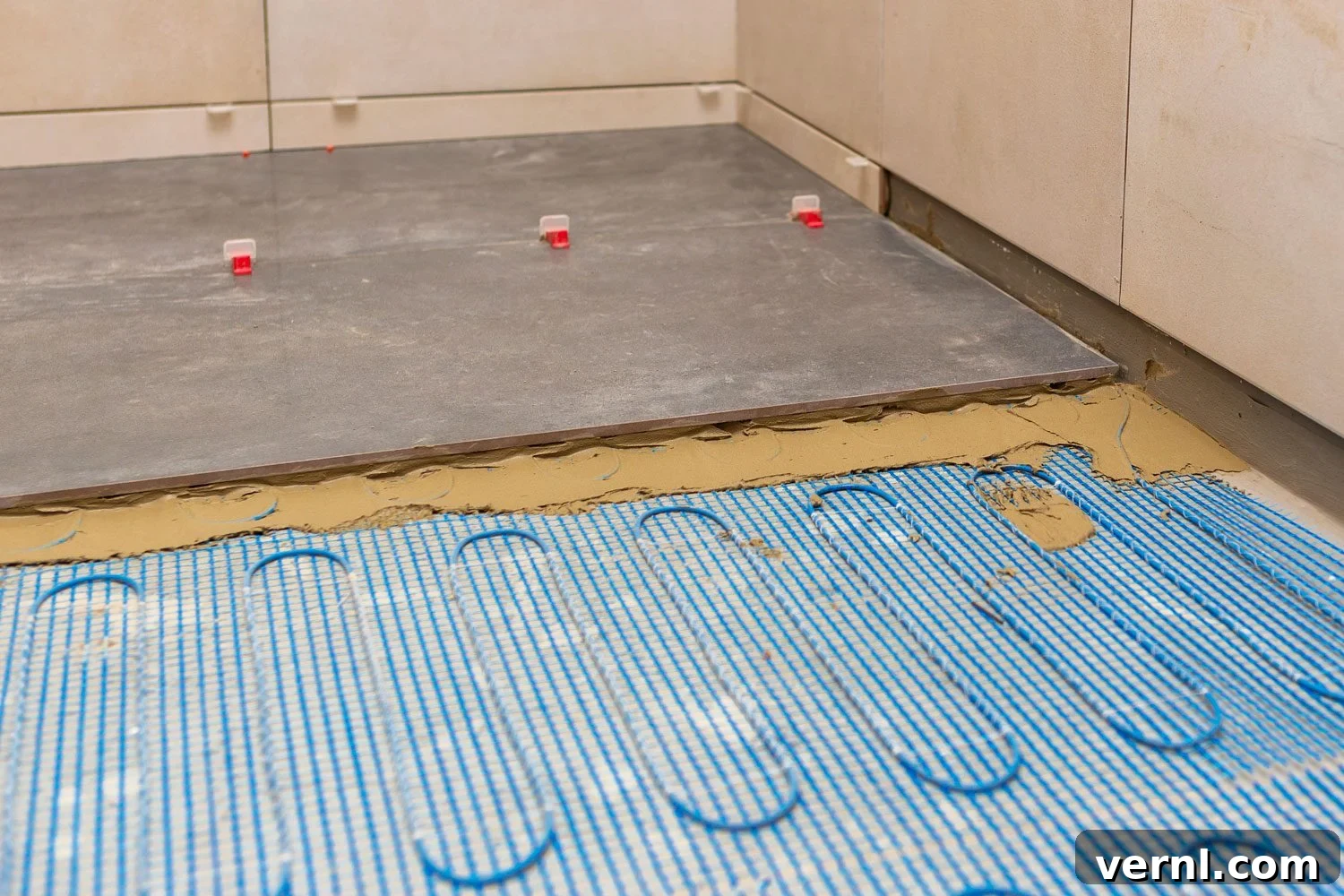
Electric radiant heating systems utilize a network of electric wires, cables, or mats installed directly beneath the floor surface. These elements rely on electrical resistance to generate heat, which then radiates upward to warm the floor and, subsequently, the room. The heating elements are typically embedded in a thin layer of self-leveling compound or thin-set mortar before the final flooring is laid.
- Components: The system comprises heating cables or mats, a floor sensor, and a programmable thermostat.
- Installation: Electric cables can be laid individually, offering flexibility for custom shapes, or in pre-formed mesh mats, which significantly simplify and speed up installation. Solid mats are also available for even faster setup.
- Operation: The electric elements connect to a dedicated thermostat or smart home temperature control system. Homeowners can program desired temperatures, and the system precisely regulates the electric current to maintain optimal warmth. The embedded floor sensor communicates with the thermostat to ensure accurate temperature readings at floor level.
- Ideal Applications: Due to the potentially higher operating costs of electricity compared to natural gas or other fuels, electric radiant heating is often most cost-effective for smaller, intermittent-use areas. These include bathrooms, kitchens, mudrooms, and entryways where targeted, quick heat is desired. They are also popular for warming specific zones or enhancing comfort in particular areas of a larger home.
Hydronic Radiant Heating Systems
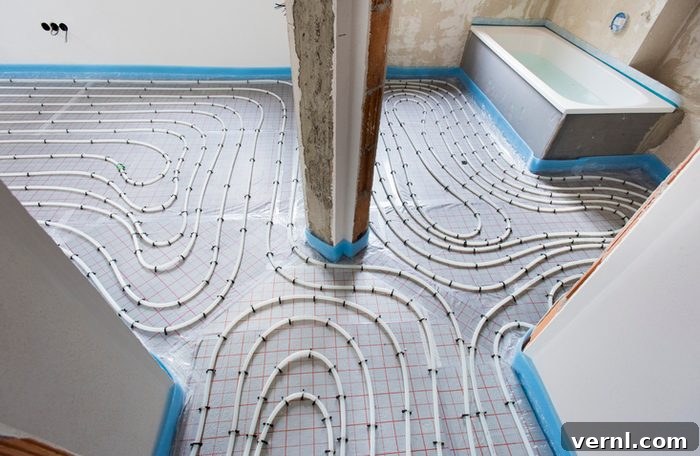
Hydronic radiant heating systems are the more traditional form, circulating heated water through a network of durable pipes or tubing installed beneath the floor. These systems are often referred to as “wet” systems due to the water circulation.
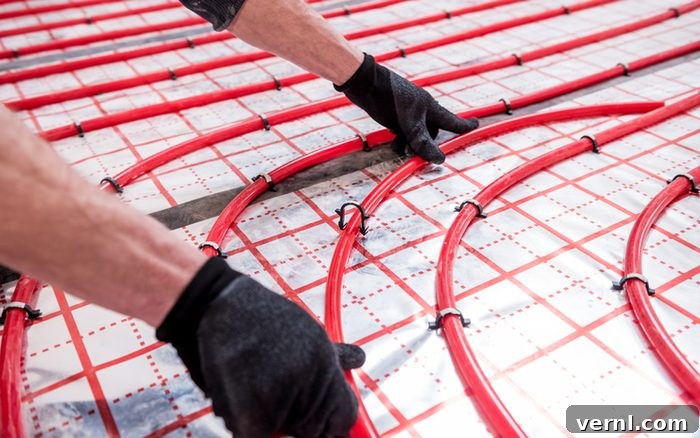
- Components: Key components include flexible tubing (typically PEX), a boiler or water heater, a circulation pump, a manifold (which distributes water to different zones), and thermostats for each zone.
- Installation: The tubing is usually embedded in a concrete slab (wet installation) or a thin layer of gypcrete. Alternatively, it can be installed between floor joists beneath the subfloor (dry installation), often with heat transfer plates to improve efficiency.
- Operation: A boiler or water heater warms water to a specified temperature. This heated water is then pumped through the tubing loops by a circulation pump. Manifolds control the flow to different heating zones, allowing for customized temperature control in various parts of the home. The water in the pipes has a high thermal mass, meaning it retains heat efficiently, leading to stable temperatures and reduced energy cycling.
- Ideal Applications: Hydronic systems boast lower operating costs, especially when natural gas or other efficient heat sources are used. This makes them ideal for whole-house heating solutions or warming large spaces where continuous operation is required. They are highly efficient and can be paired with various heat sources, including traditional boilers, tankless water heaters, solar thermal systems, and even geothermal heat pumps for maximum energy savings.
Benefits of Radiant Floor Heating: Why Choose It?
Beyond the aesthetic appeal that Frank Lloyd Wright admired, radiant floor heating offers a host of compelling advantages that contribute to a superior home environment:
- Unrivaled Comfort: Radiant heat warms objects and people directly, creating a gentle, all-encompassing warmth from the floor up. This eliminates cold spots, drafts, and the stratification of heat (where hot air rises to the ceiling) commonly found with forced-air systems.
- Enhanced Energy Efficiency: By directly heating surfaces, radiant systems can often operate at lower temperatures than forced-air systems while achieving the same level of comfort. This can lead to significant energy savings. Hydronic systems, in particular, are highly efficient due to the thermal mass of water and the potential to use diverse heat sources.
- Superior Indoor Air Quality: Unlike forced-air systems that circulate dust, allergens, and pet dander throughout the home, radiant heating operates silently and without air movement. This is a significant benefit for individuals with allergies, asthma, or other respiratory sensitivities.
- Silent Operation: Without noisy blowers, fans, or clanking pipes, radiant floor heating systems operate in near silence, contributing to a tranquil and peaceful home atmosphere.
- Design Freedom: The absence of visible registers, vents, or radiators means homeowners have complete freedom in furniture placement and interior design, creating a clean, minimalist aesthetic.
- Durability and Low Maintenance: Once installed, radiant heating systems are incredibly durable and require very little maintenance. The components are safely embedded within the floor, protected from damage and wear.
- Increased Home Value: Installing a modern, efficient, and comfortable heating system like radiant floor heating can significantly enhance the appeal and resale value of your home.
Potential Considerations and Drawbacks
While the benefits are numerous, it’s also important to consider potential drawbacks:
- Higher Upfront Costs: Radiant floor heating typically has a higher initial installation cost compared to traditional forced-air systems.
- Installation Complexity: Installation can be more involved, especially for hydronic systems, and may require specialized contractors. Retrofitting into existing homes can be more challenging and expensive.
- Slower Response Time: Because they heat the thermal mass of the floor, radiant systems can take longer to heat up from a cold start compared to forced-air systems. However, once up to temperature, they maintain warmth more consistently.
- Floor Covering Limitations: While compatible with many floor types, certain thick carpets or rugs can diminish the efficiency of radiant heating by acting as insulators.
- Repair Difficulty: In the rare event of a leak in a hydronic pipe or an electrical short in a cable embedded in concrete, repairs can be disruptive and costly, as they often require breaking through the floor.
How Much Does Radiant Floor Heating Cost?
The cost of installing radiant floor heating varies significantly based on the type of system (electric vs. hydronic), the size of the area to be heated, the complexity of the installation, and whether you opt for professional installation or a DIY approach.
Electric Radiant Flooring Costs
For electric radiant flooring, expect to pay, on average, anywhere from $6 to $12 per square foot for materials. This price point can fluctuate based on the specific product chosen. An electric system typically consists of three fundamental components: the heating cable or mat, a thermostat, and a floor sensor (which communicates with the thermostat to maintain the desired floor temperature).
- Heat Cable Types:
- Electric Cable: Generally the least expensive option per square foot for materials, but it can be more time-consuming and challenging for DIY installation, requiring careful spacing and securing.
- Mesh Mat: Mid-priced, these mats come with heating cables pre-attached to a mesh backing, making installation significantly easier and faster than loose cables.
- Solid Mat Systems: The most expensive per square foot for materials, but also the fastest and simplest to install, often just requiring rolling out the mat.
- Professional Installation: If you hire a professional, labor costs will add an estimated $8 to $15 per square foot to the total project cost.
- DIY Savings: For moderately experienced DIYers, installing electric radiant floor heating, especially with mesh or solid mat systems, is a manageable task. While it requires some basic wiring skills and potentially fishing wires through walls to connect to the thermostat, many find it a rewarding project that can significantly reduce labor costs.
- Additional Material Costs: Don’t forget to factor in the cost of embedding materials. If you’re setting your cable or mat into thin-set mortar or self-leveling compound, anticipate an additional $2 to $4 per square foot in materials to cover your floor with the necessary 1/2-inch layer for proper embedding and heat transfer. This may also include plastic lath to secure the cables.
Hydronic Radiant Flooring Costs
Hydronic radiant flooring systems, while offering lower operating costs in the long run, typically have a higher initial material and installation cost. Materials alone can range from $2 to $5 per square foot, though this is highly dependent on the project’s scope and the system’s complexity. Rick Martin of Radiant Company in Vermont highlights that adding zones significantly impacts the overall price: “Every time you add a zone to the system you add $400 to $700 to the cost.”
- Hydronic System Materials: The material cost encompasses the PEX pipes or tubing, water pumps, manifolds (critical for distributing water to different zones and balancing the system), a boiler or water heater, and zone-specific thermostats. It’s worth noting that the cost of hydronic system components has seen recent increases, with prices often rising by a few cents per part weekly, as Martin points out.
- Professional Installation: Professional installation for hydronic systems is considerably more involved and thus more expensive, typically ranging from $6 to $20 per square foot. This accounts for the specialized knowledge required for plumbing, boiler integration, and system design.
- DIY Potential: While designing and installing a hydronic system demands advanced DIY skills, homeowners can still achieve substantial savings by taking on the installation themselves. Several companies, including Martin’s, offer design services and ship custom systems ready for installation. “Ninety percent of our customers install it themselves,” Martin states, emphasizing that with proper guidance, even those new to radiant heat can manage the project if they have the time and some mechanical aptitude.
- Whole-House vs. Zoned Systems: For whole-house systems, the overall cost will be higher, but the per-square-foot cost might decrease with scale. Zoned systems offer greater control and energy efficiency but increase the complexity and cost due to additional manifolds, pumps, and thermostats.
Is Radiant Floor Heating Right for Your Home?
Deciding whether radiant floor heating is the ideal choice for your home involves weighing the upfront investment against the long-term benefits and operational savings. For those seeking ultimate comfort, silent operation, improved indoor air quality, and the aesthetic freedom of an invisible heating system, radiant floor heating presents a compelling option.
Consider your project scope: For small areas like a bathroom renovation, an electric system offers a simpler, more affordable entry point into the world of heated floors. For new constructions or major whole-house renovations, a hydronic system, with its lower operating costs and superior efficiency for larger spaces, often proves to be the more economically sound decision in the long run.
Ultimately, radiant floor heating transforms a house into a truly warm and inviting home, offering a modern comfort that harkens back to the visionary designs of architects like Frank Lloyd Wright, yet stands at the forefront of contemporary, energy-efficient heating technology.