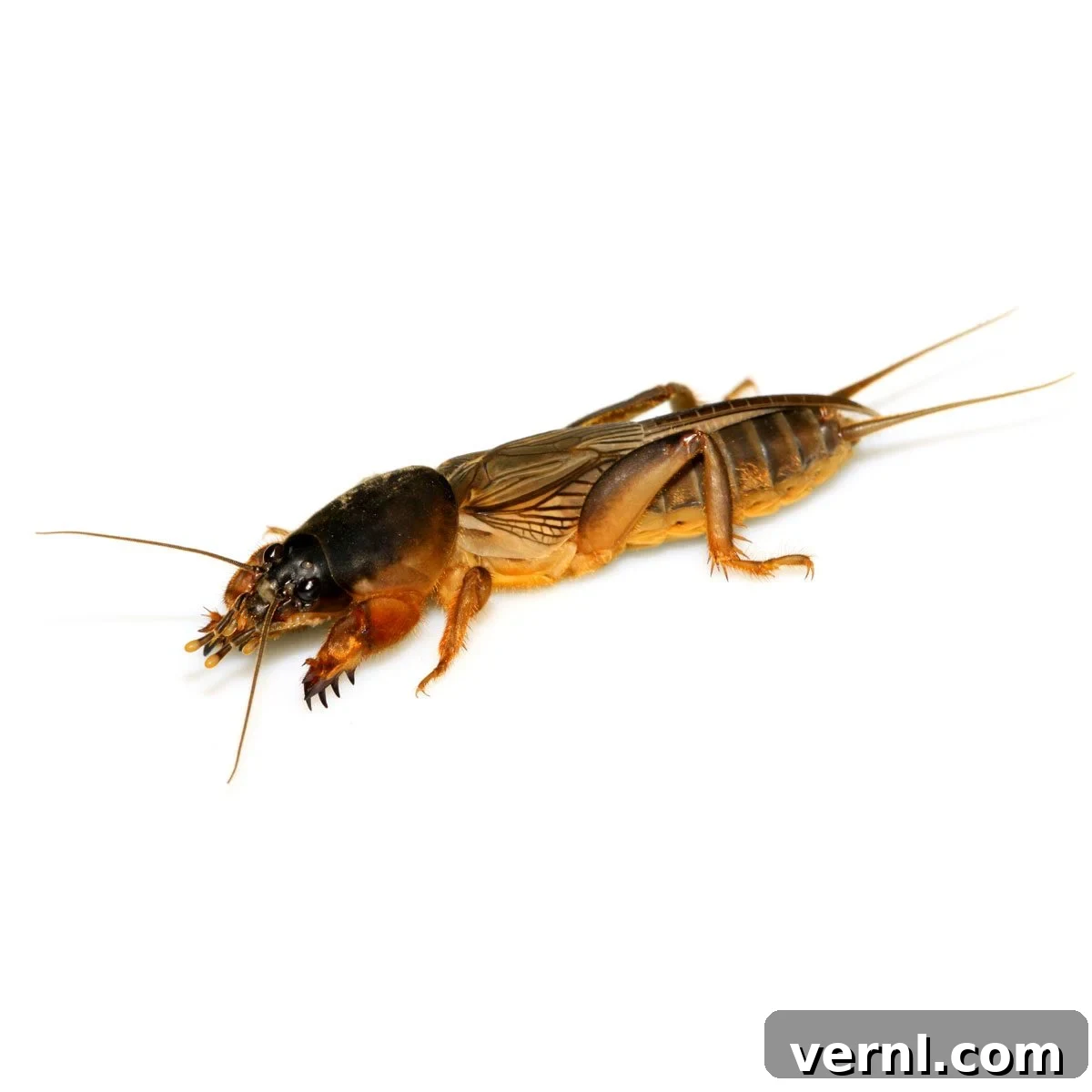
Across the southeastern United States, mole crickets emerge as formidable adversaries for pristine lawns each year. These subterranean pests harbor an insatiable appetite for tender grass roots and shoots, creating an intricate network of tunnels beneath the turf and leaving a trail of destruction in their wake. Homeowners often discover the initial signs of an infestation through the appearance of small, raised tunnels or a distinctively spongy feel to their lawn, signaling the silent damage unfolding beneath.
Drew Wagner, Chief Technical Officer for Sod Solutions, aptly describes the grim progression: “Small tunnels appearing near the surface of your soil or a spongy feel to your lawn may be symptoms of mole crickets. Eventually, the grass will turn brown and die in these affected areas, marring the beauty and health of your turf.”
While the first subtle indicators of mole cricket activity may surface in early spring, their most voracious and damaging period typically spans from late August through October. This seasonal pattern offers a crucial advantage for homeowners: it provides a window of opportunity to implement proactive monitoring and targeted intervention strategies. Early detection is paramount, especially when the pests are in their vulnerable nymph stage, making control efforts significantly more effective. By understanding the life cycle and habits of these elusive insects, you can strategically apply treatments and safeguard your lawn from extensive, costly damage. This comprehensive guide will equip you with the knowledge to identify, monitor, and effectively manage mole cricket infestations, ensuring your lawn remains a lush, green haven.
Understanding Mole Crickets: Anatomy, Life Cycle, and Behavior
Often misidentified or overlooked, mole crickets—also known by regional names such as cricket moles, lawn crickets, or flying moles—are a pervasive and destructive pest of turfgrass primarily found in the warm, humid climates of the southeastern U.S. These fascinating yet troublesome insects belong to the family Gryllotalpidae, distinguished by their unique adaptations for a subterranean lifestyle.
Adult mole crickets are robust insects, typically growing between one and two inches in length. Their coloration can vary from light to dark brown, often blending seamlessly with the soil they inhabit. The most striking anatomical feature, and indeed their namesake, are their powerful, shovel-like forelegs. These modified limbs are perfectly adapted for burrowing, allowing them to tunnel through soil with remarkable efficiency, much like a miniature mole. This unique morphology is a key identifier when attempting to distinguish them from other common lawn pests.
The Mole Cricket Life Cycle: A Seasonal Threat
The life cycle of mole crickets typically spans one generation per year across most of their range, although warmer climates in the southernmost states can occasionally support two generations. Understanding this cycle is critical for effective control:
- Overwintering Adults: Adult mole crickets spend the colder months overwintering deep within their underground tunnels, entering a period of reduced activity.
- Spring Emergence and Mating: As soil temperatures rise in early spring (typically April to May), adults emerge from their winter dormancy. Mating occurs near the surface, often evidenced by males attracting females with their characteristic chirping calls during the night. After mating, males typically die.
- Egg Laying: Female mole crickets then dig deeper into the soil to create specialized egg chambers, where they deposit clutches of up to 150 eggs. Each female can lay several batches of eggs before she, too, succumbs, usually within a few weeks of mating.
- Hatching and Nymph Development: Approximately three weeks after being laid, the eggs hatch into tiny nymphs. These young mole crickets resemble smaller versions of the adults but lack fully developed wings. By late spring and early summer (May to July), these developing nymphs begin their destructive tunneling and feeding activities, targeting the tender roots and shoots of turfgrass. It is during this vulnerable nymphal stage that mole crickets are most susceptible to control measures.
- Maturation: Nymphs undergo several molts throughout the summer, gradually increasing in size and developing their adult characteristics. By late summer to early fall, they mature into adults, ready to overwinter and restart the cycle the following spring.
Nocturnal Habits and Attraction to Light
While mole crickets spend the majority of their lives concealed within their subterranean burrows, adult mole crickets are capable of flight. They are primarily nocturnal creatures, meaning they are most active under the cover of darkness. This nocturnal behavior, coupled with their strong attraction to light, means you might occasionally spot an adult mole cricket near your outdoor lighting, especially during warm evenings in the spring and fall when they are most mobile.
Common Types of Destructive Mole Crickets
The Gryllotalpidae family encompasses a wide array of species, including many native and introduced variants across the U.S. However, within the context of turfgrass damage, a few specific species are predominantly responsible for the most significant destruction in the southeastern region:
- The northern or common mole cricket (Neocurtilla hexadactyla): While native, this species is less damaging than its introduced counterparts. It primarily feeds on organic matter and roots, creating burrows but often causing less severe turf destruction compared to the invasive species.
- The tawny mole cricket (Scapteriscus vicinus): This is arguably the most destructive species in the Southeast. Tawny mole crickets are voracious herbivores, feeding aggressively on grass roots and shoots. Their extensive tunneling and feeding habits lead to widespread turf death and significant lawn disruption.
- The short-winged mole cricket (Scapteriscus abbreviatus): As its name suggests, this species has underdeveloped wings and is flightless. While it also causes damage through feeding and tunneling, its inability to fly limits its dispersal, meaning infestations tend to be more localized compared to the tawny mole cricket.
- The southern mole cricket (Scapteriscus acletus): This species is an omnivore, feeding on both plant material and other insects. While still capable of causing significant lawn damage, its omnivorous diet can sometimes make it a beneficial predator of other small pests. However, its tunneling and root-feeding still classify it as a serious turf pest.
Understanding which species is prevalent in your area can sometimes inform more targeted control strategies, though general approaches often suffice for all destructive species.
How Mole Crickets Unleash Havoc on Your Lawn
A mole cricket infestation can manifest in two primary ways, both leading to unsightly brown, thinning, and ultimately dead patches across your once-vibrant lawn. These destructive activities can quickly degrade the aesthetic and health of your turf. Understanding these mechanisms is crucial for appreciating the urgency of intervention and for learning how to repair mole holes in your lawn effectively.
- Direct Feeding Damage: Mole crickets, particularly the nymphs and tawny mole crickets, are highly destructive herbivores. They weaken and kill turfgrass by feeding directly on the roots and shoots. This feeding activity is most pronounced during the late spring and early summer when the nymphs are rapidly growing and undergoing their molting stages. By consuming the root system, mole crickets severely impair the grass’s ability to absorb water and essential nutrients from the soil. This leads to drought stress, yellowing, and eventual death of the turf, creating large, irregular patches of dead grass that can be easily lifted from the soil due to the lack of an anchoring root system.
- Subsurface Tunneling and Soil Disturbance: Beyond their feeding habits, mole crickets cause significant damage through their extensive burrowing activities. As they tunnel just beneath the surface layer of the soil, they push the ground up, creating small, visible ridges and disrupting the soil structure. This tunneling action creates several detrimental effects:
- Increased Moisture Evaporation: The raised tunnels and disturbed soil surface expose more soil to the air, leading to accelerated surface moisture evaporation. This dries out the topsoil, further stressing the grass, especially in already dry conditions.
- Root Severing: The burrowing process physically severs and damages the delicate root systems of turfgrass. Even if roots are not directly eaten, their disruption impedes nutrient uptake and water absorption, leading to weakened plants.
- Germinating Seed Damage: For newly seeded lawns or areas with germinating seeds, mole cricket tunnels can be particularly devastating. The physical disturbance dislodges seeds and disrupts the delicate process of establishment, leading to poor germination rates and patchy growth.
- Spongy Turf: The network of tunnels creates air pockets beneath the turf, giving the lawn a “spongy” feel underfoot. This indicates a severely compromised root system and unstable soil structure.
The combination of direct feeding and extensive tunneling makes mole crickets one of the most challenging turf pests to manage, often requiring a multi-pronged approach for effective control and prevention.
Key Indicators: How to Spot Mole Cricket Activity
Vigilance is your strongest defense against a mole cricket invasion. Early identification of their presence is critical to preventing a full-blown population explosion that can devastate your lawn. According to Drew Wagner of Sod Solutions, three important visual signs signal that mole crickets have established residency in your yard, demanding immediate attention:
-
Distinct Tunnels and Ridges: The most characteristic sign of mole crickets is the presence of meandering, raised tunnels or ridges that push up the soil and grass. These tunnels are typically just beneath the surface, especially noticeable after rain or irrigation when the soil is moist. Unlike the larger, deeper tunnels of moles or voles, mole cricket tunnels are smaller in diameter (about 1 inch wide) and often appear closer to the surface, creating a “heaved” appearance in the turf.
-
Brown and Dying Grass Patches: As mole crickets feed on roots and disturb the soil, areas of your lawn will begin to show stress. This manifests as thinning, yellowing, and eventually large, irregular patches of brown, dying grass. These damaged areas often feel soft and spongy, and the grass can sometimes be easily pulled back, revealing the severed root system below.
-
Small Mounds of Soil with Openings: In the spring, particularly, you might observe small, volcano-like mounds of soil with a discernible opening. These are often indicators of where female mole crickets have dug down to lay their eggs. While less common than tunnels or brown patches, these mounds can confirm breeding activity and pinpoint potential hotspots for future nymph emergence.
The Simple “Soap Flush” Confirmation Test
If you suspect mole crickets but need definitive proof, Wagner suggests a remarkably simple yet effective technique to confirm their presence: the “soap flush” test. “Add one to two ounces of liquid dish soap to a gallon of water and saturate a suspected area of about one to two square feet,” he explains. “This solution acts as an irritant, causing both immature nymphs and adult mole crickets to quickly come to the surface within a few minutes, revealing their numbers.” This test is best performed in the late afternoon or early evening when mole crickets are more active near the surface.
Once you’ve confirmed these pests are present, swift action is paramount to prevent a devastating infestation. The goal is to eradicate the destructive nymphs as soon as possible, ideally before their damage becomes overtly evident to the naked eye. While identifying adult activity in early spring can help pinpoint areas where eggs may be laid, and treating your lawn for adults can reduce initial tunneling and egg-laying, the most critical control window is in late spring and early summer. This is when the newly hatched nymphs are small, actively feeding, and most vulnerable to treatments. Consistent follow-up treatments during this period are essential to prevent a resurgence later in the year, ensuring long-term lawn health.
Effective Strategies to Eliminate Mole Crickets
When facing a mole cricket infestation, homeowners have several options for control, ranging from biological and natural methods to chemical treatments. The most effective approach often integrates several strategies and hinges critically on proper timing.
Natural and Biological Methods
-
Nematodes (Biological Control): One of the most environmentally friendly approaches involves the use of beneficial nematodes, specifically the species Steinernema scapterisci. These microscopic, worm-like parasites are natural enemies of mole crickets. When applied to the soil, they actively seek out and infect mole crickets, releasing bacteria that kill the host within a few days. Wagner highlights the effectiveness of this type of nematode product, particularly when applied in the late summer and early fall. For optimal results, nematodes should be applied to moist soil, preferably in the evening or on a cloudy day, and followed by irrigation to help them penetrate the soil surface. This method is safe for humans, pets, and beneficial insects, making it an excellent choice for those seeking organic solutions.
-
Encouraging Natural Predators: While less direct, fostering a healthy ecosystem in your yard can encourage natural predators of mole crickets, such as birds (especially wading birds), armadillos, and even some predatory beetles. Creating a diverse landscape and reducing broad-spectrum pesticide use can help these predators thrive.
Chemical Treatments
-
Insecticides: Chemical insecticides offer a potent solution for heavy infestations, especially when applied correctly and at the right time. Both liquid and granular insecticides can be effective, provided the product permeates the soil to reach the pests. As Wagner advises, “Important active ingredients for mole cricket insecticides are bifenthrin, carbaryl, imidacloprid, gamma-cyhalothrin, deltamethrin, and permethrin.” These active ingredients work through various mechanisms, from contact killing to systemic action where the chemical is absorbed by the grass and ingested by the feeding mole crickets.
- Timing is Crucial: The effectiveness of chemical treatments is highly dependent on timing. “Fall is a critical time for applying insecticides to thin the population before they overwinter deep into the soil,” Wagner notes. This helps reduce the number of adults that will emerge and lay eggs the following spring. However, if an infestation is detected in the late spring or early summer (typically June and July), insecticides can also be highly effective against the young, vulnerable nymphs when adults are still active and before they cause extensive damage. Always read and follow product label instructions carefully, paying attention to application rates, watering requirements, and safety precautions.
- Application Methods: Granular products are spread with a broadcast spreader and typically require watering after application to release the active ingredient into the soil. Liquid formulations are applied using a sprayer and also usually benefit from irrigation to ensure soil penetration.
- Bait Products: In addition to granular and liquid insecticides, bait products are also available. These contain an attractant mixed with an insecticide, designed to be ingested by the mole crickets. Baits are generally most effective when applied in the evening to dry turf, as mole crickets will consume them overnight.
Regardless of the method chosen, consistency and adherence to product guidelines are key to successfully ridding your yard of mole crickets and restoring your lawn’s health.
Preventing Recurrence: Keeping Mole Crickets Away for Good
Eradicating an existing mole cricket infestation is only half the battle; ensuring they don’t return is the ultimate goal. The best strategy for long-term prevention involves an integrated pest management (IPM) approach that combines cultural practices, ongoing monitoring, and strategic use of preventative products. Vigilance and precise timing are the cornerstones of successful prevention.
Strategic Use of Preventative Products
The most reliable way to ensure mole crickets are gone for good is through regular treatments with a residual preventative product or mole cricket bait. Look for products containing active ingredients like imidacloprid or synthetic pyrethroids (such as bifenthrin, lambda-cyhalothrin, or permethrin) which offer longer-lasting control. These products create a protective barrier in the soil that targets newly hatched nymphs or foraging adults before they can cause significant damage.
Crucially, the timing of these preventative treatments is paramount. Apply them when mole crickets are at their most vulnerable stages. This generally means late spring to early summer to target newly hatched nymphs and again in late summer to early fall to reduce the overwintering adult population. Consistent application according to the product label will break the mole cricket life cycle and prevent populations from building up.
Managing Outdoor Lighting
Mole crickets, particularly adults, are strongly attracted to bright exterior lights during their nocturnal flights. This attraction can draw them from surrounding areas directly into your lawn, initiating new infestations or exacerbating existing ones. To minimize this risk:
- Turn Off Unnecessary Lights: Simply keeping your outdoor lights off when they are not needed can significantly reduce their attractiveness to flying mole crickets.
- Switch to Less Attractive Lighting: If you require outdoor lighting, consider switching to yellow “bug lights” or sodium vapor lamps. These types of lights emit a spectrum that is less attractive to many night-flying insects, including mole crickets, compared to traditional white or blue-spectrum lights.
- Use Motion Sensors: Install motion-activated lights that only illuminate when needed, reducing the continuous glow that draws pests.
Promoting a Healthy Lawn
A well-maintained, healthy lawn is inherently more resistant to pest damage and can recover more quickly from any minor infestations. Implement good cultural practices:
- Proper Watering: Ensure your lawn receives adequate water, but avoid overwatering, which can create excessively moist conditions favored by some mole cricket species.
- Appropriate Mowing Height: Maintain your grass at the recommended height for its species. Taller grass can shade the soil, keeping it cooler and less appealing for egg-laying.
- Balanced Fertilization: Provide your lawn with balanced nutrition to promote strong root development and overall vigor, making it more resilient to stress from pest activity.
- Thatch Management: Regularly dethatch your lawn to prevent the buildup of excessive thatch, which can provide a protective habitat for mole crickets and other pests.
By combining these preventative measures with diligent monitoring, you can create an environment that is far less hospitable to mole crickets, ensuring your lawn remains healthy and green season after season.
Frequently Asked Questions About Mole Crickets
Are mole crickets dangerous to humans or pets?
No, mole crickets do not pose any threat to humans or pets. They do not bite, sting, or transmit diseases. Their primary harm is purely to turfgrass and other plants.
What do mole crickets eat?
Mole crickets primarily feed on the roots and shoots of turfgrass. Some species, like the southern mole cricket, are omnivorous and may also consume other small insects and organic matter in the soil.
When is the best time to treat for mole crickets?
The optimal time for treatment is typically late spring to early summer (May to July) when the nymphs are small, active, and most vulnerable to insecticides and nematodes. A secondary, critical treatment window is in the fall (late August to October) to reduce overwintering adult populations and prevent egg-laying the following spring.
How can I distinguish mole cricket damage from grub damage?
While both pests can cause brown patches and allow turf to be pulled up, mole cricket damage is often accompanied by characteristic raised tunnels or ridges on the soil surface. Grub damage, which involves C-shaped larvae feeding directly on roots, typically does not feature these tunnels. A soap flush test can definitively confirm mole crickets, whereas digging up a small patch of turf will reveal grubs.
Can I prevent mole crickets from coming back?
Yes, prevention is possible through consistent vigilance and timely action. Regularly treat your lawn with a preventative product during key periods (late spring/early summer for nymphs and fall for adults). Additionally, manage outdoor lighting, promote a healthy lawn through good cultural practices, and maintain ongoing monitoring to catch any new activity early.
About the Expert
Drew Wagner is Chief Technical Officer for Sod Solutions, a leading provider of turfgrass solutions. His expertise is invaluable in understanding and combating common lawn pests like mole crickets.