
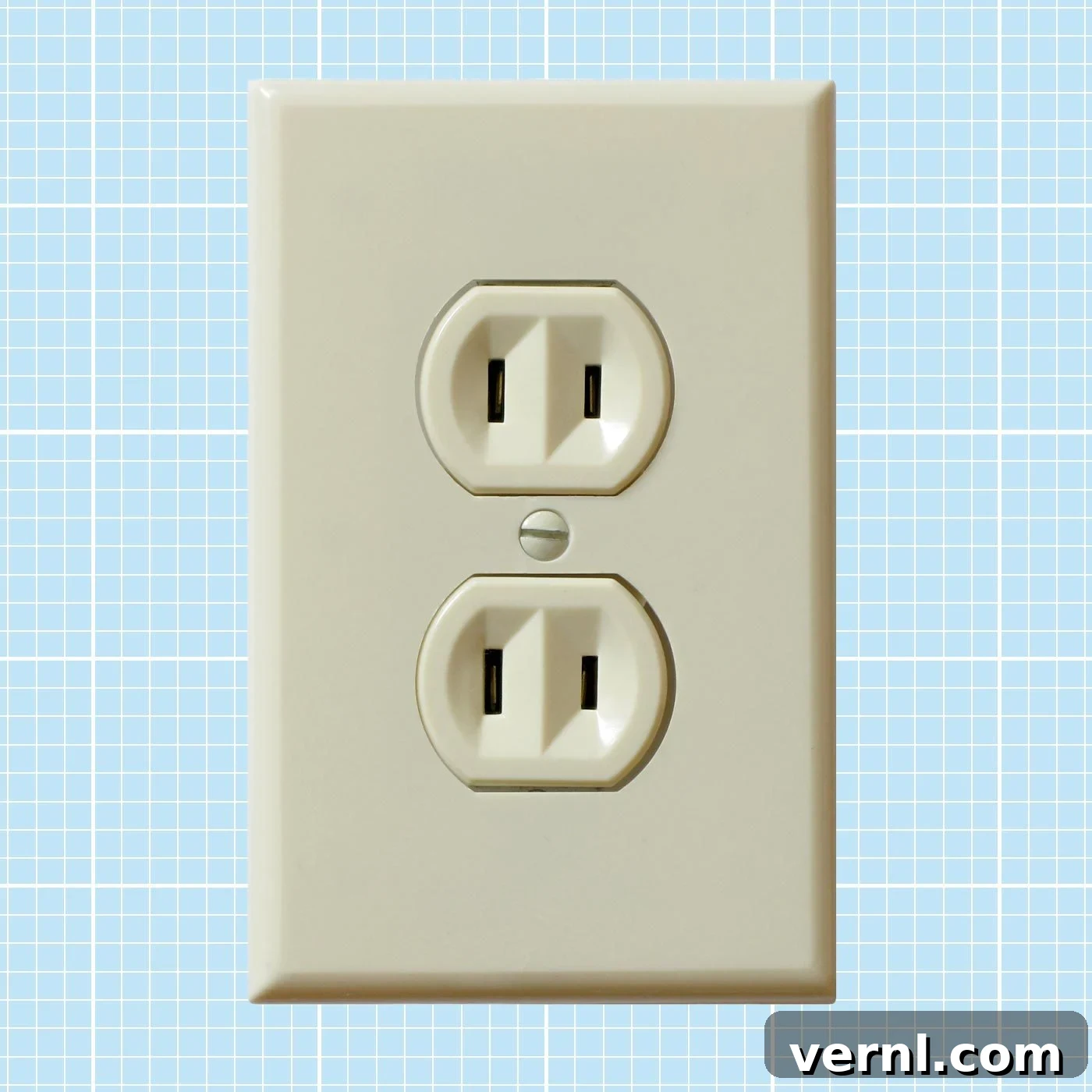
If your home predates the 1960s, you might still encounter an electrical relic: the two-prong ungrounded outlet. Properly known as a non-grounding-type receptacle, these older fixtures lack a critical safety feature found in modern electrical systems. Understanding their limitations and knowing how to safely replace them is paramount for ensuring the electrical integrity and safety of your home. This comprehensive guide will walk you through the options, code requirements, and best practices for upgrading your home’s electrical outlets.
Understanding Non-Grounding-Type Receptacles and Their Inherent Risks
Non-grounding-type receptacles are characterized by their two-slot design, notably missing the third, round hole that signifies a grounding connection. This third prong serves a vital function: it provides a dedicated path for electrical current to safely dissipate into the earth in the event of an electrical fault. Without this grounding path, a malfunctioning appliance or a wiring issue can become a serious electrical hazard, potentially leading to electric shock, equipment damage, or even fire.
The absence of a ground wire means that if an appliance develops an internal electrical short—for instance, if a hot wire accidentally touches the metal casing of a refrigerator—the current has no safe route to follow. Instead, the entire appliance chassis could become energized, waiting for an unsuspecting person to complete the circuit and receive a severe, potentially fatal, electric shock. Furthermore, many modern appliances and sensitive electronic devices are designed with three-prong plugs specifically to utilize this grounding feature, offering an added layer of protection for both the user and the device. Attempting to force a three-prong plug into a two-prong receptacle using adapters, especially if not installed correctly, creates a serious electrical hazard and can void the manufacturer’s warranty, leaving you unprotected against potential damage or injury.
The National Electrical Code (NEC) and Your Existing Wiring
The National Electrical Code (NEC), the authoritative standard for electrical safety in the United States, typically does not apply retroactively. This means that if your home was built to code standards at the time of construction, you are generally not legally obligated to replace your existing non-grounding-type receptacles simply because newer codes have been introduced. However, this leniency from a code perspective should not be mistaken for an endorsement of their safety. While you might not be compelled to upgrade, the moment you decide to replace an existing non-grounding-type receptacle, the new installation must conform to current NEC standards. This often necessitates providing proper grounding or incorporating specific safety devices as alternatives.
What once seemed like a straightforward task—swapping out an old outlet for a new one—has evolved with advancing safety standards. The good news for homeowners is that there are multiple viable, code-compliant options available today, allowing you to significantly enhance your home’s electrical safety without necessarily undertaking a complete rewire. Before diving into replacement options, you might also be interested in best practices for outlet installation, such as determining the correct orientation for electrical outlets: ground up or down.
Assessing Your Current Electrical Setup: Do You Have a Grounding Means?
The first crucial step in any receptacle replacement project, especially when dealing with older homes, is to determine whether a grounding means already exists within the receptacle box. A “grounding means” typically refers to either a grounded metal electrical box itself or a bare or green insulated copper equipment grounding wire present in the box. This assessment is paramount because it dictates which replacement options are available to you and what steps you’ll need to take to ensure code compliance and maximum safety.
With some basic electrical testing tools, such as a simple receptacle tester or a multimeter, you can generally determine if a grounding means exists. These affordable devices can quickly indicate if the outlet is properly grounded, ungrounded, or if there are other wiring faults. If you’re unsure or uncomfortable performing this test yourself, it’s always best to consult with a qualified electrician to avoid potential hazards and ensure accurate assessment.
Receptacle Replacement Options When a Grounding Means Exists
If your testing confirms the presence of a proper grounding means in the receptacle box, the path forward is clear and straightforward: you must install a three-prong grounding-type receptacle as a replacement. In this scenario, the green grounding terminal on the new receptacle must be securely connected to the grounding means available in the box. This connection establishes a complete and effective grounding path, providing the highest level of protection for your appliances and against potential electrical shocks.
Installing a modern, properly grounded grounding-type receptacle immediately brings that specific outlet up to contemporary safety standards, safeguarding both users and sensitive electronics. This is the ideal and most complete solution when an existing grounding infrastructure is already in place, offering robust protection by diverting fault currents safely away from users and equipment.
Options for Replacing Receptacles When NO Grounding Means Exists
When you discover that no grounding means exists in the receptacle box, you cannot simply install a standard three-prong grounding-type receptacle and call it a day, as this would create a dangerous false sense of security. The NEC offers specific, approved alternatives to ensure safety even in the absence of a dedicated ground wire. Here are your viable, code-compliant options:
1. Replace with Another Non-Grounding-Type Receptacle
- Non-grounding-type receptacles are still manufactured, albeit in limited quantities. This option allows you to replace a physically damaged or malfunctioning two-prong receptacle with a new one. While it fulfills the immediate need for a working outlet, it’s critical to understand that this replacement does NOT enhance electrical safety. It maintains the status quo, offering no additional protection against electric shock.
- This approach is generally considered a temporary fix or a last resort when other, safer options are not immediately feasible or economically viable. It’s imperative never to use three-prong adapters with two-prong plugs as a permanent solution. If not installed properly (which often requires connecting the adapter’s grounding tab to a grounded metal box or conduit, a step frequently overlooked), these adapters can create serious safety hazards, bypassing rather than establishing proper grounding.
2. Replace with a Ground-Fault Circuit-Interrupter (GFCI) Receptacle
- Installing a GFCI receptacle is a highly recommended and significant safety upgrade, even in the absence of an equipment ground. While it won’t provide a direct grounding path for your appliances, the GFCI offers superior shock protection by constantly monitoring the electrical current flowing through the circuit.
- If it detects even a minuscule imbalance in the current—indicating that electricity is diverting from its intended path, perhaps through a person or water—the GFCI will “trip” almost instantaneously (in milliseconds), stopping the flow of electricity before a dangerous shock can occur. This protection is incredibly effective regardless of whether a ground wire is present or not, making it a critical safety device for older wiring systems. Learning how to install GFCI outlets can empower you to make this important upgrade.
- When you select this option, the GFCI receptacle or its accompanying cover plate must be clearly labeled “No Equipment Ground.” These essential warning labels are always included in the packaging when you purchase a GFCI receptacle, ensuring that users are aware of the specific electrical configuration and understand that while shock protection is present, equipment grounding is not.
3. Install a GFCI Receptacle to Protect Downstream Standard Grounding-Type Receptacles
- For branch circuits that “daisy-chain” multiple receptacles from a single power source (a common wiring method in older homes), you can strategically install one GFCI receptacle at the very first receptacle box on that branch circuit. This single GFCI then provides ground-fault protection for all subsequent (downstream) standard grounding-type receptacles connected on that same circuit.
- For example, if a single branch circuit supplies four receptacles in one bedroom and then extends to supply four more in an adjacent bedroom, you only need to install one GFCI in the first receptacle box of the first bedroom. The remaining seven receptacles downstream can then be standard three-prong grounding-type receptacles, receiving their ground-fault protection from the upstream GFCI.
- In this configuration, the initial GFCI receptacle must be labeled “No Equipment Ground.” Additionally, all the downstream standard grounding-type receptacles (or their cover plates) that are protected by this GFCI must be labeled both “GFCI Protected” and “No Equipment Ground.” Manufacturers provide these specific labels with the GFCI receptacle, making compliance straightforward. This method offers a cost-effective way to extend advanced shock protection throughout an entire circuit without individually replacing every single outlet with a GFCI.
Beyond Basic Replacement: Critical Code Requirements for All Receptacle Replacements
In recent years, the NEC has introduced additional crucial rules for replacement receptacles. These modern requirements apply universally, regardless of whether you’re replacing a two-prong or three-prong existing outlet, and they are designed to significantly enhance safety for all occupants and property.
Ground-Fault Circuit-Interrupter (GFCI) Protection
GFCI technology is paramount for protecting individuals from potentially lethal electrical shocks. When you replace any existing receptacle, whether it’s two-prong or three-prong, at a location that would currently require GFCI protection under the latest NEC standards, you must provide that GFCI protection. Common areas requiring GFCI protection include, but are not limited to: bathrooms (within 6 feet of a sink), kitchens (for receptacles serving countertops), garages, unfinished basements, crawl spaces, outdoor areas, laundry areas, and within 6 feet of a wet bar sink. This ensures that vulnerable locations, where water and electricity could combine, are equipped with the highest level of shock prevention.
Arc-Fault Circuit-Interrupter (AFCI) Protection
AFCI technology is specifically designed to protect both people and property from the serious risk of electrical fires caused by arc faults. An arc fault occurs when damaged or deteriorated wiring creates an unintended electrical discharge, which can generate intense heat and ignite nearby combustible materials, even within wall cavities. If you replace an existing two- or three-prong receptacle in a location that currently mandates AFCI protection according to the NEC (such as bedrooms, family rooms, dining rooms, living rooms, hallways, dens, sunrooms, and similar habitable rooms), you are required to provide AFCI protection. The most effective way to implement this for an entire circuit is often by installing an AFCI circuit breaker at your main electrical panel. Alternatively, AFCI receptacles can be installed at the beginning of a circuit run to protect downstream outlets.
Tamper-Resistant (TR) Receptacles
For homes with young children, or in any environment where children might be present, tamper-resistant (TR) receptacles are an invaluable safety feature. These receptacles have built-in internal shutters that remain closed, preventing children from inserting foreign objects like hairpins, keys, or paper clips into the live slots. Only by applying equal pressure to both slots simultaneously (as with a standard two-prong plug) will the shutters open, allowing the plug to be inserted. When replacing any existing receptacle outlet, regardless of its original type or location, all new replacement receptacles must be tamper-resistant according to current NEC mandates. This is a non-negotiable requirement aimed at preventing accidental electrocution in children and providing essential peace of mind for parents and caregivers.
Weather-Resistant (WR) Receptacles
For outdoor and other damp locations, weather-resistant (WR) receptacles are essential. These specialized outlets feature internal components made from corrosion-resistant materials and are designed to withstand exposure to the elements. When properly installed within a weatherproof enclosure, WR receptacles offer enhanced durability and protection against the damaging effects of rain, snow, ice, and general moisture, which can otherwise compromise electrical safety and functionality, leading to shorts or corrosion.
If you are replacing an existing receptacle at a location that the current NEC designates as requiring weather-resistant outlets (e.g., patios, decks, porches, areas exposed to the elements, or damp indoor locations like carports), then the replacement receptacle must be a WR-rated type. For instance, if you’re swapping out an old outdoor GFCI receptacle, the new replacement GFCI receptacle needs to be explicitly marked as WR to comply with safety standards and ensure longevity in harsh conditions, maintaining its protective capabilities over time.
When to Call a Professional Electrician
While some basic electrical work can be a satisfying DIY project for the experienced homeowner, working with electricity carries inherent risks. If you are ever unsure about how to test for grounding, identify circuit configurations, interpret code requirements, or perform any of the replacement procedures correctly, it is always advisable to consult or hire a qualified and licensed electrician. This is especially true if you discover no grounding means and are considering complex solutions like installing new GFCI protection for downstream outlets, if your electrical panel is old and requires upgrades to accommodate AFCI breakers, or if you suspect deeper wiring issues. An electrician can ensure that all work is performed safely, efficiently, and in full compliance with local and national electrical codes, giving you complete peace of mind.
Conclusion: Prioritizing Home Electrical Safety
Upgrading your home’s electrical outlets, particularly those older two-prong, non-grounding-type receptacles, is more than just a renovation task—it’s a critical investment in the safety and modern functionality of your living space. By understanding the risks associated with ungrounded outlets and familiarizing yourself with the various code-compliant replacement options, you can significantly mitigate hazards like electric shock and fire, protecting your family and your property.
Whether you opt for GFCI protection in the absence of a ground, or ensure all new installations meet the latest NEC requirements for AFCI, TR, and WR features, each step you take moves your home towards a safer, more robust electrical system. Don’t overlook the importance of these upgrades. Prioritize safety, consult professionals when in doubt, and enjoy the peace of mind that comes with a well-protected home, ready for the demands of modern electrical devices and daily life.