
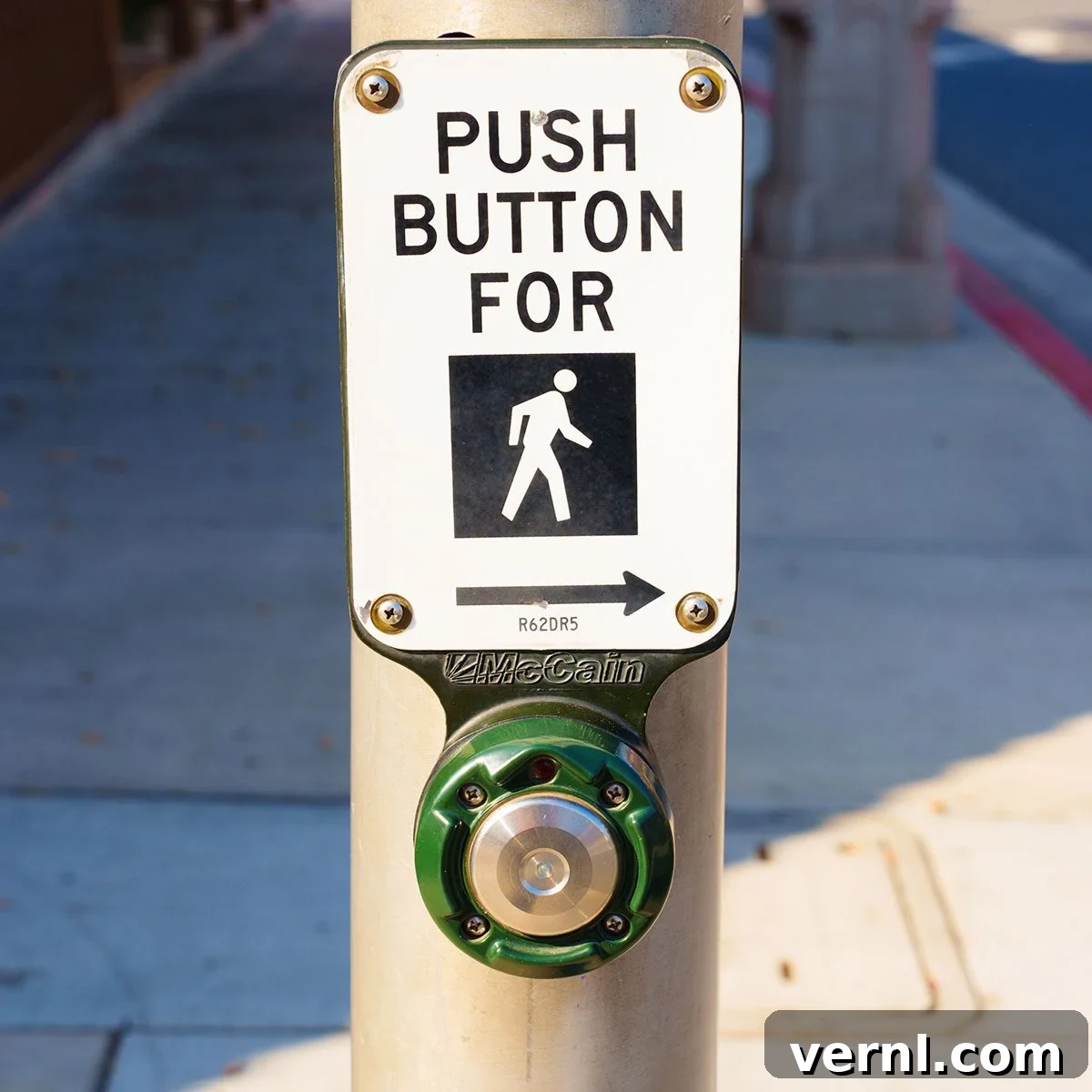
Do Crosswalk Buttons Really Work? Unveiling the Truth Behind Pedestrian Signals
Explore the functionality of crosswalk buttons and whether they actually influence traffic light timing.
Crosswalk buttons, ubiquitous at nearly every intersection with traffic lights, are a familiar sight. Children enjoy pressing them, and for most adults, it’s second nature to push them while awaiting the light change. A flurry of theories surrounds their purpose: Do they truly affect traffic light cycles, or are they just a way to occupy pedestrians?
We’ve all been there: impatiently tapping the button, hoping to expedite the process when we’re in a hurry. But what’s the real deal? Do these buttons have a tangible impact on how quickly a stoplight changes, or are they merely there to pacify pedestrians while they wait?
What Do Crosswalk Buttons Actually Do? Understanding Their Function
To address the question of their efficacy, we must first understand the fundamental role of crosswalk buttons. These seemingly simple devices play a crucial part in modern traffic management.
According to the City of Missoula, when a pedestrian presses the button, the system triggers a “walk” signal, which is synchronized with the corresponding green light for vehicles. This is analogous to the sensors embedded in the road, which inform traffic signals about waiting cars. In essence, these buttons signal the presence of pedestrians who wish to safely cross the street.
Modern crosswalk buttons also incorporate advanced features. Many now announce the direction they control and provide auditory cues regarding crossing safety. This is particularly beneficial for visually impaired pedestrians, providing an extra layer of safety at intersections.
Do Crosswalk Buttons Influence Traffic Light Cycles? The Real Answer
The answer to this question isn’t a simple yes or no; it depends on the location. In many cities and towns, pressing the crosswalk button does indeed influence the timing of the traffic light cycle.
As explained on the City of Missoula’s website, pressing the button sends a “call for service” to the signal controller. The controller then processes these requests in sequence. The walk signal activates when it’s that particular direction’s turn in the cycle. This means that pressing the button has an impact, but it doesn’t instantly change the light. Pedestrians, much like vehicles approaching from a side street, must still wait for the signal to cycle through its programmed sequence to receive the “walk” signal.
However, repeatedly pressing the button or doing so aggressively won’t speed up the process. The “call for service” is already slotted into the existing sequence and being processed as efficiently as possible. The button doesn’t override the signal’s programming; instead, it signals what needs to happen next in the established order.
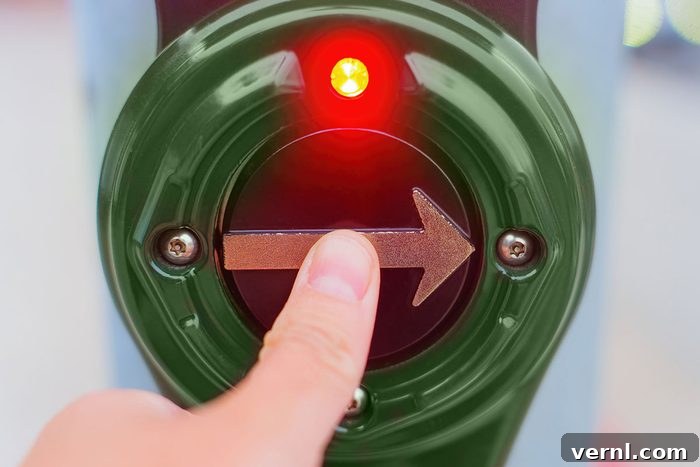
It’s important to note, though, that this isn’t universally true. In places like Washington D.C., as reported by American University Radio Washington D.C. (WAMU), a significant percentage of traffic signals are configured to provide the pedestrian signal automatically. In such areas, pressing the button is often unnecessary, as the “walk” signal appears at the same time regardless.
The Verdict: Crosswalk Buttons – Useful, But Not Always Instant
In conclusion, while crosswalk buttons typically play a role in requesting a pedestrian crossing, their effectiveness depends on the location and the specific traffic signal configuration. In many cases, they initiate the walk signal, but they don’t immediately change the light. The timing is determined by the signal’s cycle. Therefore, the common belief that these buttons instantly turn the light green for pedestrians is often a misconception. Always be patient and aware when crossing.
Next time you find yourself at an intersection, you’ll know the real story behind those buttons. They serve a purpose, but they’re not a magic switch for instant green lights.
Sources and Further Reading
- How do pedestrian buttons and walk signals work?, City of Missoula.
- You Pushed The Walk Button At An Intersection. So Why Don’t The Cars Stop?, American University Radio Washington D.C., 2019.
Related Articles
- Do You Know What That Little Button on Your Seat Belt Is For?
- What Those Lines on Your Backup Camera Really Tell You
- Here’s What The Small Panel On Your Car’s Front Bumper Is For