
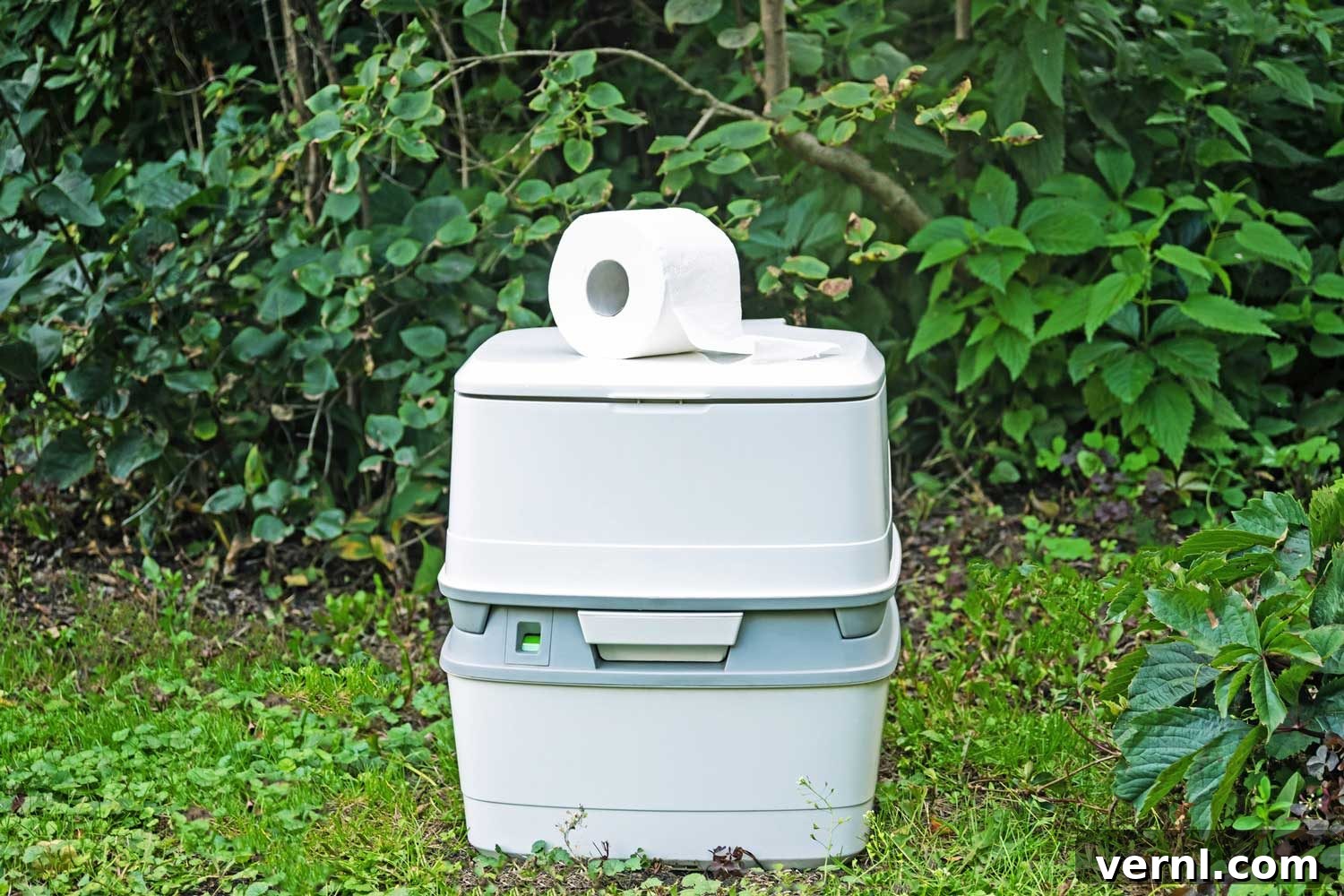
As someone deeply involved in sustainable practices and property maintenance, I’ve had firsthand experience with the evolving world of contracting and handyman work, particularly concerning composting toilets. I manage two such systems: one on my own property, which is actively in use, and another at a friend’s place, which unfortunately ceased operation about 15 years ago. The stark differences in their designs vividly illustrate how rapidly this eco-friendly technology has advanced over the years.
My friend’s older model featured a cumbersome sifter at the base of the bowl. The idea was to move it back and forth with a handle, depositing dried material into a removable tray. However, this mechanism proved highly problematic. Waste tended to dry unevenly, often from the top down, inevitably causing the sifter to clog. When this happened, the only viable (and rather unpleasant) method of emptying the toilet involved shoveling the contents directly from the top. It was far from an ideal or hygienic solution.
In contrast, the composting toilet on my property boasts a significantly more practical and user-friendly design. It features a single catchment bucket for solids and a completely separate drain for liquids. While this design is a vast improvement, my vision for an ideal system would incorporate distinct chambers – one for depositing fresh material and another dedicated to the composting process itself. Such an advanced design would maximize efficiency and hygiene, though its larger footprint typically makes it unsuitable for standard bathroom sizes, thus remaining a rare find.
Nevertheless, contemporary single-chamber composting toilets, when used strictly according to manufacturer guidelines, offer excellent performance. They are designed to prevent the messy and unhygienic issues that plagued older, now thankfully obsolete, models. These modern systems represent a significant leap forward in sustainable waste management, providing a cleaner, more efficient, and odor-free experience for users.
Understanding Composting Toilets: An Eco-Friendly Alternative
A composting toilet stands as a leading solution among waterless toilet options, alongside incinerating and chemical toilets. Unlike conventional flush toilets that rely heavily on water, composting models employ a natural biological process to break down human waste. When in use, solid waste drops into a specially designed, vented chamber containing a removable collection bucket. Crucially, liquid waste is diverted into a separate container or channeled outdoors into an appropriate cesspool or septic system, maintaining the optimal moisture balance within the composting chamber.
The efficiency of the composting process is greatly enhanced by effective ventilation. Most modern catchment chambers are equipped with fan-assisted venting, which accelerates the drying of solid waste. This controlled airflow is vital for aerobic decomposition, promoting the growth of beneficial microorganisms while inhibiting odors. Once the solid waste is sufficiently dry and transformed into nutrient-rich compost, it can be safely spread in flower gardens or buried, returning valuable organic matter to the soil. For larger residential or commercial applications, more extensive composting systems can be installed, featuring multiple toilets with waste pipes leading to a centralized collection area, often located in a basement or utility space.
The inherent waterless operation makes composting toilets an invaluable asset for individuals residing in remote locations without access to conventional plumbing systems, such as cabins, tiny homes, or off-grid dwellings. Beyond necessity, they also appeal to those committed to water conservation. Considering that a traditional toilet uses approximately 1.6 gallons per flush, switching to a composting toilet can drastically reduce household water consumption by an estimated two to five gallons per person per day. This significant saving contributes not only to lower utility bills but also to environmental sustainability, making composting toilets a practical choice for eco-conscious homeowners.
The Science Behind Composting Toilets: Aerobic Decomposition
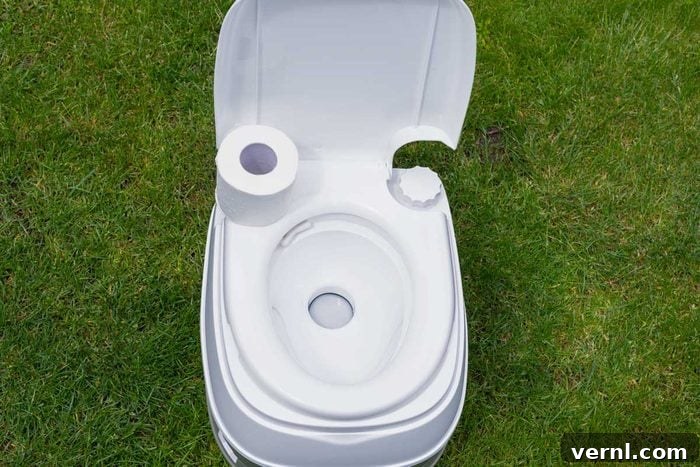
Composting toilets leverage a natural biological process known as aerobic decomposition. This process relies on the circulation of air through the composting chamber, which provides essential oxygen to beneficial bacteria, fungi, and other microorganisms. These microscopic decomposers actively break down solid waste, transforming it into nutrient-rich, safe-to-handle soil, often referred to as humanure. The aerobic environment ensures efficient decomposition and prevents the foul odors associated with anaerobic (oxygen-deprived) decomposition, which is common in septic tanks.
Modern composting toilets are meticulously designed to blend seamlessly into contemporary bathrooms, often resembling conventional flush toilets. They typically feature a lid, a comfortable seat, and an ingenious odor-blocking plastic flapper that creates a physical barrier between the bowl and the compost chamber. This spring-loaded flapper automatically retracts when you sit down, allowing waste to drop into the chamber, and then springs back into its closed position once you stand up. This mechanism, combined with a robust ventilation system, ensures that all potential odors are effectively drawn out through a vent pipe, usually directed outdoors and above the roofline, maintaining a fresh and odor-free bathroom environment.
Many advanced models, including the one I use, incorporate a separate drain specifically for liquids at the front of the bowl. This urine-diverting feature is critical for the success of aerobic composting, as it keeps the solid waste as dry as possible. An optimal moisture level is vital for microorganisms to thrive and decompose waste efficiently. Even with liquid diversion, it’s often necessary to periodically add carbon-rich bulking agents like sawdust, peat moss, or coconut coir to the compost bucket. These materials not only help absorb any excess moisture but also provide the necessary carbon-to-nitrogen ratio that is crucial for robust and efficient composting, further enhancing the transformation of waste into valuable soil amendment.
Key Benefits of Embracing a Composting Toilet System
Considering a composting toilet can offer a multitude of advantages, particularly if any of the following circumstances resonate with your lifestyle or property needs:
- Unrestricted by Water Availability: Composting toilets are inherently waterless, making them an ideal solution for locations without access to municipal water lines or where drilling a well is impractical. It’s considerably simpler and less costly to install a composting toilet than undertaking the complex process of bringing water to a remote dwelling. Even if you have a water supply, a composting toilet can dramatically reduce your household water consumption, potentially cutting usage by as much as 60%. This is a significant step towards water conservation, especially in drought-prone regions.
- Freedom from Waste Plumbing: One of the most compelling advantages of composting toilets is their independence from traditional waste plumbing. There’s no need for complex drainpipes, septic tanks, or sewer connections. This simplifies construction in new builds and offers incredible flexibility for installations in unconventional spaces like tiny homes, RVs, boats, workshops, or sheds where conventional plumbing would be a major undertaking or impossible.
- Simplified Installation, No Plumber Required: Unlike conventional toilets that necessitate professional plumbing installation, most composting toilets are remarkably easy to set up, often requiring only basic DIY skills. The typical installation involves simply placing the unit in your desired location, connecting a vent pipe that runs outdoors (which might entail drilling a small hole through a wall or ceiling), and plugging it into a standard electrical outlet if a fan is present. This ease of installation translates into significant cost savings by eliminating plumber fees.
- Producing Valuable Nutrient-Rich Compost: A remarkable byproduct of a well-maintained composting toilet is nutrient-rich compost. While regulations and safety considerations generally advise against using this “humanure” on edible plants, it serves as an exceptional fertilizer for ornamental gardens, flower beds, shrubs, and trees. This allows for a closed-loop system where human waste is responsibly returned to the earth, enriching soil health and fostering a thriving landscape without relying on synthetic fertilizers. It’s a truly sustainable approach to waste management and nutrient cycling.
Potential Drawbacks and Considerations for Composting Toilets
While composting toilets offer numerous benefits, it’s important to approach them with a clear understanding of their potential downsides. My personal experiences have highlighted several aspects to consider before making a purchase:
- Varied Design Quality: Not all composting toilet designs are created equal. Some older or poorly engineered models can be genuinely unworkable, leading to frustration and hygiene issues. It is absolutely crucial to conduct thorough research, focusing on user reviews, product specifications, and manufacturer reputation before investing in a unit. Prioritizing modern, well-regarded designs with proven track records will prevent many common problems.
- Specific Cleaning Protocols: Maintaining a composting toilet requires a slightly different cleaning approach compared to a traditional toilet. Due to the importance of keeping the compost dry, excessive water use around the unit must be avoided. This means that regular cleaning typically involves spraying surfaces with a minimal amount of water or a mild, eco-friendly cleaning solution, and then immediately wiping them dry. This method ensures hygiene without introducing unwanted moisture into the composting chamber.
- Outdoor Vent Odors: While the bathroom itself remains remarkably odor-free thanks to the effective ventilation system, the area immediately surrounding the outdoor vent can occasionally emit faint odors. Even if the vent outlet is strategically placed above the roofline, prevailing winds can sometimes carry these odors back down to ground level some distance away. Based on my experience, careful consideration of vent placement and direction relative to living spaces and prevailing winds is advisable to mitigate this potential issue.
- Higher Initial Cost: Composting toilets typically represent a more significant upfront investment than conventional toilets. The least expensive reliable models usually start just under $1,000, which can be seven to ten times more than the cost of a basic conventional toilet. However, it’s essential to view this as a long-term investment. The absence of water bills for flushing, reduced septic system pump-outs (if applicable), and the elimination of complex plumbing installations can lead to substantial savings over the lifespan of the unit, offering excellent value for money in the long run.
Top Composting Toilet Models for Modern Homes and Off-Grid Living
Choosing the right composting toilet involves considering factors like capacity, features, and overall design. Here are some of the best composting toilets currently available, renowned for their efficiency and user satisfaction:
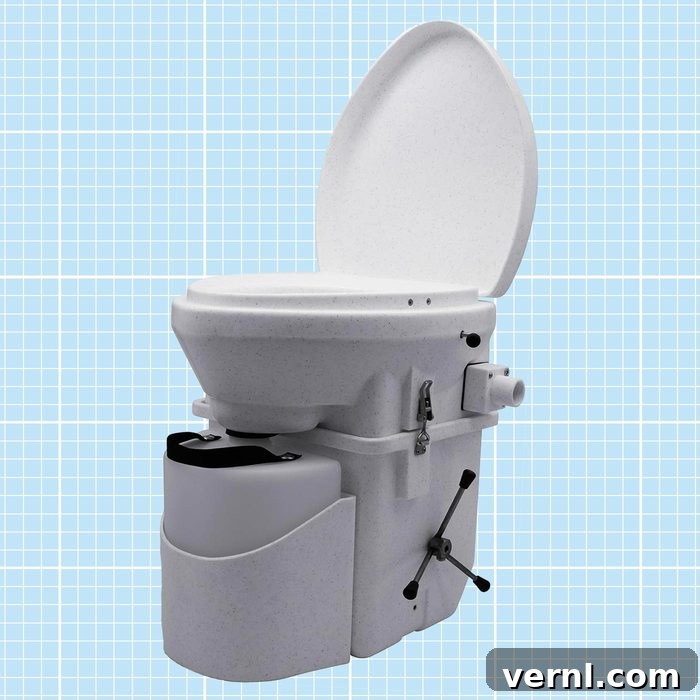
Nature’s Head Composting Toilet
The Nature’s Head Composting Toilet is celebrated for its highly compact and robust design, making it an excellent fit for almost any bathroom size, including those in RVs, boats, and tiny homes. Its key features include a convenient foot-operated agitator, which allows for easy turning of the compost material. This agitation significantly speeds up the decomposition process, ensuring quicker and more efficient waste breakdown. Furthermore, it features a dedicated, separate reservoir for liquids, which is crucial for maintaining the optimal dry conditions within the solid waste chamber and preventing odors. This model is a favorite for its durability and ease of maintenance.
Separett Villa Composting Toilet
The Separett Villa is a model I personally own and highly recommend. It comes equipped with a removable bucket for solids and an effective urine-diverting tube, though it does not include an integrated liquid reservoir; urine is typically routed to an external container or greywater system. In my experience, this unit has proven to be consistently odor-free and remarkably easy to service. Its straightforward design and reliable performance make it a popular choice. It stands out as one of the few high-quality composting toilets available for less than $1,000, which explains its focus on essential functionality rather than additional frills like an agitator or integrated liquid collection.
Sun-Mar Excel Composting Toilet
For families or settings with higher usage demands, the Sun-Mar Excel offers an impressive extra-large capacity. This makes it a robust choice for multiple users. It includes a built-in agitator to facilitate the composting process, ensuring thorough mixing and aeration of the waste. Unique to many composting toilets, the Sun-Mar Excel does not separate solids from liquids through diversion. Instead, it features an innovative built-in heater that effectively evaporates the liquids. This system consolidates waste management, transforming all effluent into compost and evaporated water vapor, simplifying its operation and reducing the need for separate liquid handling.