
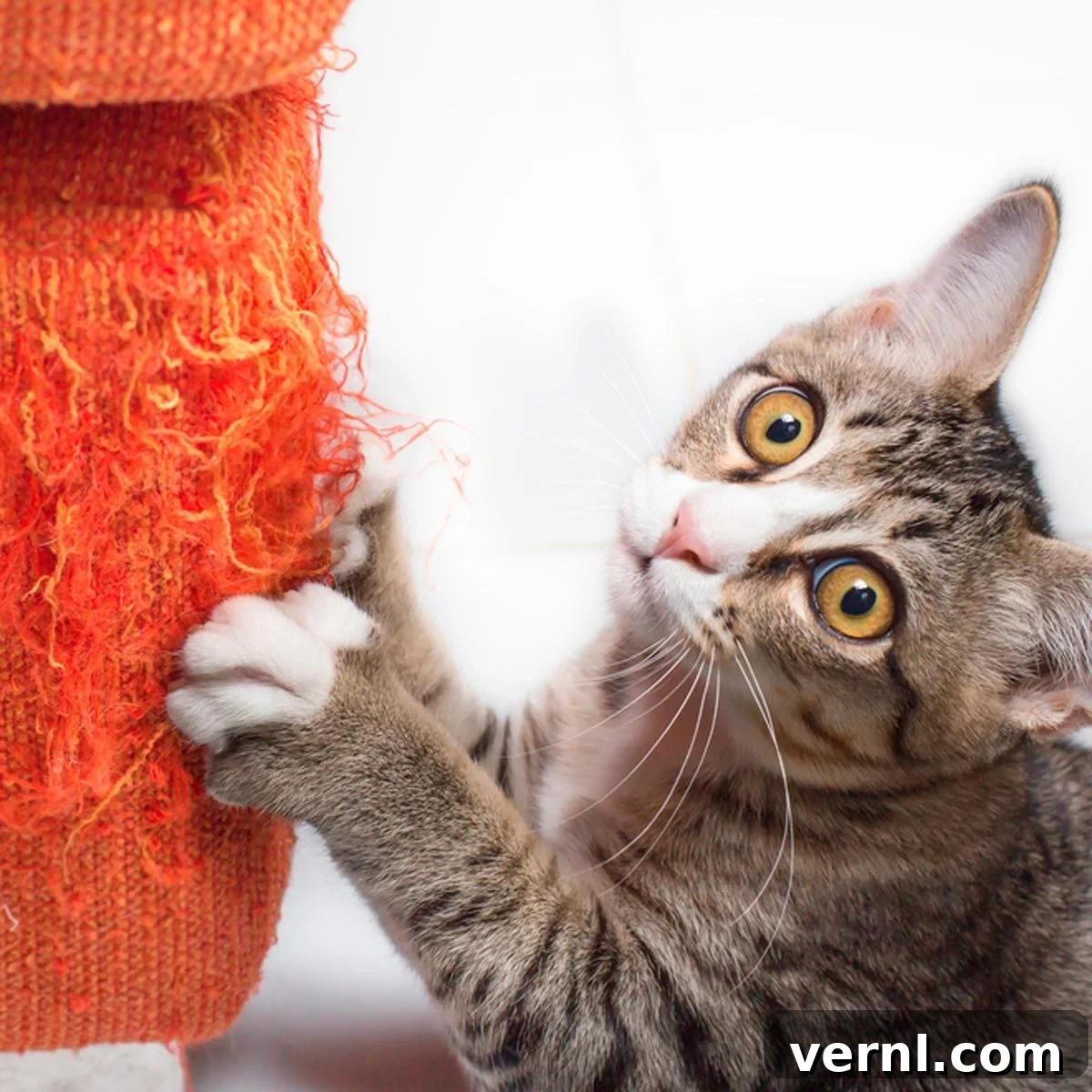
Remember Ted Nugent’s classic rock anthem, Cat Scratch Fever? While a great song, the reality of cat scratches on your beloved furniture is far less enjoyable. Many cat owners face the frustrating challenge of protecting their couches, chairs, and carpets from their feline companions’ natural instincts. The good news is that you don’t have to choose between your cat and your pristine home decor. This comprehensive guide will equip you with effective, humane strategies to deter your cat from scratching furniture, ensuring a harmonious living environment for both of you.
Understanding Cat Scratching: Why Your Feline Friend Scratches and How to Manage It
The Natural Instinct: Why Cats Scratch Furniture and Its Importance
For cat owners, understanding the fundamental reasons behind scratching is the first step toward finding a solution. Scratching is not an act of defiance; it’s a deeply ingrained, essential part of a cat’s biology and behavior. In the wild, and even in domestic settings, cats engage in this activity for several vital purposes:
- Claw Maintenance: Think of it as a natural manicure. Cats scratch to remove the dead outer layers of their claws, revealing the sharper, healthier claw underneath. This process is crucial for keeping their claws in optimal condition, whether for hunting or climbing.
- Territorial Marking: Cats have scent glands located between their paw pads. When they scratch, they deposit their unique scent onto the surface, effectively marking their territory. The visible scratch marks also serve as a visual signal to other cats that the area is occupied, much like a “No Trespassing” sign.
- Stretching and Exercise: A good stretch feels great for anyone, and cats are no exception. Scratching allows them to stretch their muscles, particularly in their backs and shoulders, helping to keep their bodies limber and agile. It’s a full-body workout that contributes to their physical well-being.
- Stress Relief: For some cats, scratching can also be a way to relieve stress, anxiety, or even excitement. It’s a self-soothing behavior that helps them cope with their environment.
Given these natural instincts, it’s clear that you cannot stop your cat from scratching altogether. Instead, the goal is to redirect this natural behavior to appropriate outlets, protecting your furniture while allowing your cat to thrive.
The Importance of Humane and Effective Solutions
When dealing with destructive scratching, it’s crucial to prioritize humane and cat-friendly approaches. Harsh punishments or extreme measures like declawing can lead to severe behavioral issues and cause unnecessary suffering. Our focus here is on positive reinforcement, environmental enrichment, and deterrents that encourage your cat to use appropriate scratching surfaces, ensuring both their happiness and your peace of mind.
Proven Strategies to Protect Your Furniture from Cat Scratches
1. Avoid Declawing Your Cat: Understanding the Risks
Before exploring any solutions, it’s vital to address declawing. While it might seem like a permanent fix for furniture scratching, declawing is a serious surgical procedure that involves the amputation of the last bone in each of your cat’s toes. It is far more invasive than a simple nail trim and is widely condemned by veterinary and animal welfare organizations due to the severe pain and potential for long-term complications. These complications can include chronic pain, limping, infection, and significant behavioral problems such as biting (as they’ve lost their primary defense mechanism) and litter box avoidance (due to paw pain). Choosing humane alternatives is always the best path for your cat’s health and well-being.
2. Provide Appealing Scratching Posts and Surfaces
One of the most effective ways to redirect scratching behavior is to offer attractive alternatives. Cats, even kittens as young as 8 weeks, will readily use scratching posts if they meet their specific preferences. The key is to provide a variety of options and place them strategically.
Choosing the Right Scratching Post: Vertical, Horizontal, and Materials
- Vertical Scratching Posts: These are ideal for cats who prefer to stretch upwards. Look for posts that are tall enough for your cat to stretch to their full height. Sisal rope is often a favorite material, as it provides excellent resistance and mimics the feel of tree bark.
- Horizontal Scratching Surfaces: Some cats prefer to scratch horizontally. Cardboard scratchers, often infused with catnip, are excellent and inexpensive options for these preferences. They come in various shapes and sizes, from flat mats to inclined ramps.
- Angled or Ramped Scratchers: These offer a compromise between vertical and horizontal, catering to cats who enjoy scratching at an incline.
- Material Matters: Experiment with different textures. Beyond sisal and cardboard, some cats might enjoy carpeted posts (though be cautious if they scratch your carpeted floors) or even wood. The ideal scratcher should be sturdy and not wobble when your cat uses it.
Strategic Placement is Key
Place scratching posts in prominent areas where your cat spends a lot of time, especially near their sleeping spots and, most importantly, right next to the furniture they currently scratch. Cats often scratch after waking up or to mark their territory in high-traffic areas. Having an appropriate scratcher readily available makes it easy for them to choose the right surface.
Training Your Cat to Use a Scratching Post
Encourage your cat to use new scratchers through positive reinforcement. Sprinkle catnip on the post, dangle toys near it to entice play, and gently guide their paws to demonstrate. When they use it, offer praise and treats. Never force or punish them for using the wrong surface; instead, always redirect to the appropriate scratcher.
3. Utilize Cat Scratch Deterrent Sprays
Deterrent sprays can be a valuable tool in discouraging unwanted scratching by making specific areas unappealing. These sprays work in two main ways: by emitting a scent cats dislike or by mimicking natural feline pheromones that signal an area is already marked or safe.
Commercial vs. Homemade Sprays
- Commercial Deterrents: Many pet stores offer anti-scratch sprays that contain bittering agents or unpleasant odors for cats. Others use synthetic feline facial pheromones, which can help calm your cat and reduce their need to mark territory by scratching.
- Homemade Solutions: You can create your own deterrents using common household items. Cats generally dislike citrus scents (lemon, orange), vinegar, and essential oils like peppermint or eucalyptus. Mix a small amount of diluted citrus juice or vinegar with water in a spray bottle. Always test a small, inconspicuous area of your furniture first to ensure it doesn’t cause staining or damage. Avoid applying essential oils directly to your cat, as they can be toxic.
Proper Application Techniques
Spray the chosen deterrent directly onto the areas of furniture your cat tends to scratch. Apply consistently, especially after cleaning, to maintain the repelling effect. The goal is to make the desired scratching surface unattractive, driving your cat to seek out their designated scratching posts instead.
4. Employ Cat Scratch Deterrent Tape
If you’re wondering how to stop cats from scratching specific surfaces like leather furniture, delicate fabrics, or even walls, cat scratch tape offers a simple and effective physical deterrent. Cats despise the sticky sensation on their paws, making these areas undesirable for scratching.
Types of Scratch Tape and Their Application
This double-sided adhesive tape is typically clear and comes in rolls or pre-cut sheets. It’s designed to adhere temporarily to various surfaces, including:
- Upholstered Furniture: Easily applied to fabric couches and chairs.
- Leather Furniture: An excellent solution for preventing damage to leather, which can be particularly vulnerable to claw marks.
- Hard Surfaces: Works well on wooden legs, doors, and even walls where cats might claw.
- Carpets: Can be placed on carpeted areas where your cat tends to dig or scratch.
The tape can be cut to size and applied directly to the problem areas. Most brands are designed to be removed cleanly without leaving residue or damaging surfaces, but it’s always wise to test a small area first. After a period of consistent use, your cat should learn to avoid these sticky spots, and you may be able to gradually remove the tape.
Advantages and Considerations
Cat scratch tape is a non-toxic and humane deterrent that offers immediate results. Its transparent nature means it’s often barely noticeable. However, it is a temporary solution and requires diligence in application and replacement. Ensure you simultaneously provide attractive scratching alternatives so your cat has an appropriate outlet for their natural behavior.
5. Consider Protective Nail Caps or Paw Mittens
For cats who persist in scratching despite other deterrents, or as an extra layer of protection, soft nail caps offer a gentle and effective solution. Cat socks, or mittens, are another option, though typically less practical for long-term use.
Soft Nail Caps: A Gentle Solution
These vinyl caps are glued onto each of your cat’s claws, effectively blunting them so they cannot cause damage. They are lightweight, comfortable, and usually fall off naturally as your cat’s nails grow, requiring replacement every 4-6 weeks. Nail caps are available in various sizes and colors. They allow your cat to extend and retract their claws normally, offering protection without discomfort or interfering with their natural movements. They are a humane alternative to declawing and can significantly reduce damage to furniture and even prevent accidental scratches to humans.
Cat Socks/Mittens: For Specific Situations
While less common for everyday wear, cat socks or mittens can be used for very specific situations, such as during travel or recovery from an injury, to temporarily prevent scratching. However, most cats find them restrictive and will try to remove them, making them unsuitable for continuous use.
6. Install Clear Vinyl Furniture Protectors
For persistent scratchers or highly vulnerable furniture pieces, clear vinyl panels offer a durable and almost invisible physical barrier. These protectors create a shield over the corners or sides of your furniture that your cat targets, making it impossible for them to sink their claws in.
How Vinyl Guards Work
These flexible, transparent panels are typically made from durable vinyl and come in various sizes and shapes to fit different furniture styles. They are often secured with small, twist-in screw pins or strong adhesives that hold them firmly in place. The smooth, impenetrable surface of the vinyl prevents claws from gripping, thereby deterring scratching. Because they are clear, they blend seamlessly with your furniture, maintaining its aesthetic appeal.
Benefits for Long-term Furniture Protection
Vinyl guards are an excellent long-term solution, particularly for expensive or delicate furniture. They are easy to install, durable, and provide a continuous defense against scratching, allowing your cat to explore without causing damage. They also serve as a visual deterrent, as your cat will quickly learn that these areas are no longer satisfying to scratch.
7. Implement Regular Nail Trimming
Even with the best deterrents and scratching posts, occasional “misdirected” scratches might occur. Keeping your cat’s nails regularly trimmed significantly reduces the potential for damage. Shorter, blunter claws are less likely to snag fabric or leave deep gouges.
Techniques for Safe Trimming
Start trimming your cat’s nails when they are young to get them accustomed to the process. Use sharp, good-quality cat nail clippers. Gently press on your cat’s paw pad to extend the nail and trim only the sharp tip, being careful to avoid the “quick” (the pink part containing blood vessels and nerves). If you’re unsure, ask your vet or a professional groomer for a demonstration. Make the experience positive with treats and praise.
8. Redirect Play and Energy with Interactive Sessions
A bored or under-stimulated cat is more likely to engage in destructive behaviors, including scratching. Providing ample opportunities for play and mental stimulation can greatly reduce the impulse to scratch furniture.
Engage your cat in interactive play sessions daily using wand toys, laser pointers, or feather teasers. This helps them expend energy, satisfies their predatory instincts, and can distract them from furniture. Puzzle toys and food dispensers can also provide mental enrichment, keeping them occupied and less likely to seek out inappropriate scratching surfaces.
9. Practice Positive Reinforcement and Patience
Consistency and positive reinforcement are paramount when modifying any cat behavior. Never punish your cat for scratching inappropriate surfaces, as this can lead to fear, anxiety, and other behavioral problems. Instead, redirect them to a scratching post, praise them when they use it, and offer treats.
Creating an environment rich with appropriate scratching opportunities and consistently applying deterrents will yield the best results over time. Patience is key; it may take a while for your cat to fully adapt to new habits, but with persistence, you can protect your furniture while fostering a happy and healthy relationship with your feline companion.
Conclusion: Creating a Scratch-Free and Happy Home
Stopping cats from scratching furniture is a common challenge for many pet owners, but it’s a manageable one. By understanding the natural instincts that drive this behavior and implementing a combination of humane and effective strategies, you can successfully protect your home without compromising your cat’s well-being. From providing appealing scratching posts and using deterrent sprays to employing physical barriers like tape and vinyl guards, a multi-faceted approach offers the best chance for success. Regular nail care, interactive play, and consistent positive reinforcement further support these efforts. Embrace these solutions with patience and love, and you’ll foster a harmonious environment where both your beloved feline and your furniture can thrive, free from the woes of Cat Scratch Fever.