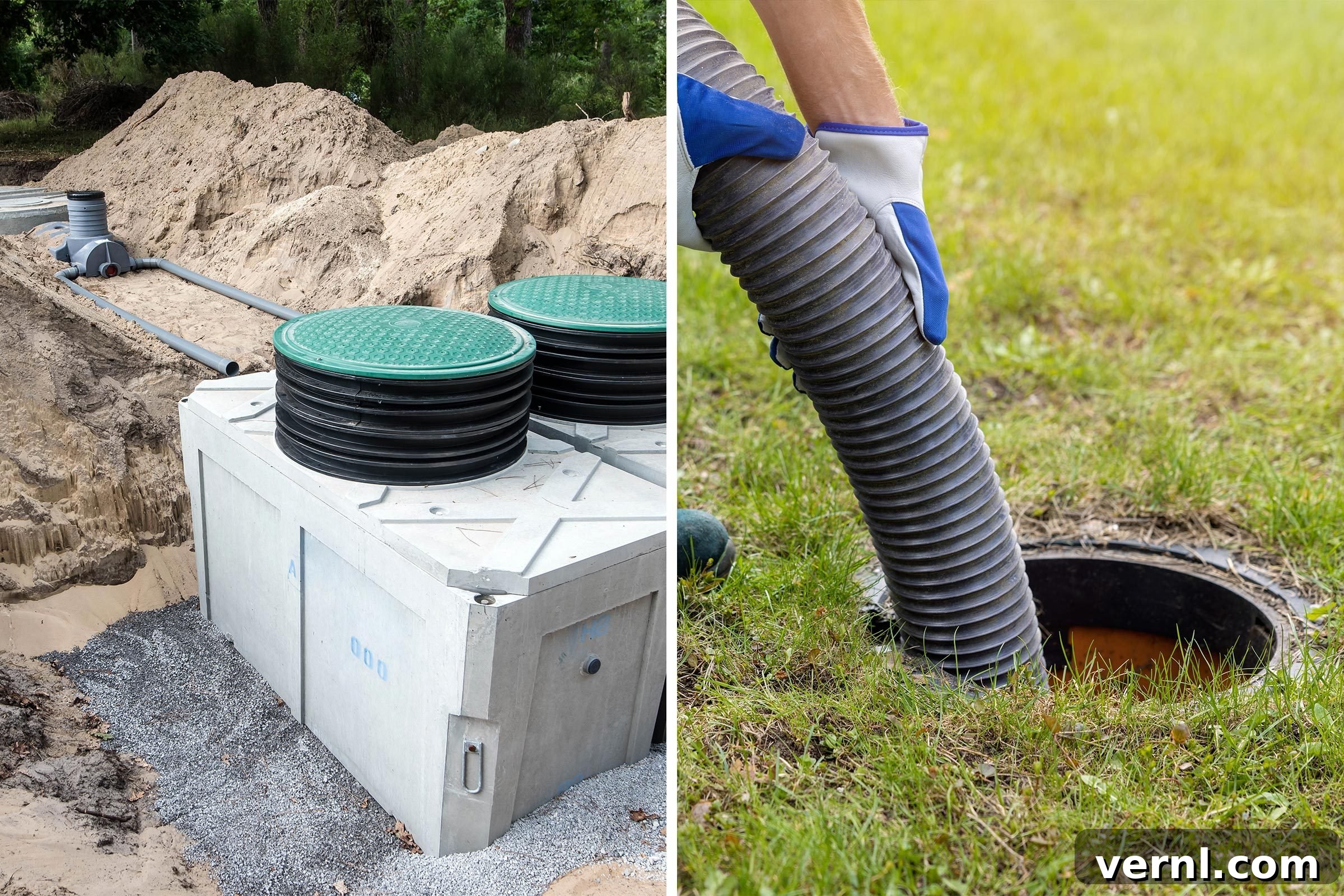
Septic Tank vs. Holding Tank: Choosing the Right Sewage Solution for Your Rural Home
The dream of owning a rural home or a serene cabin often comes with a unique set of considerations that differ significantly from urban living. Foremost among these is the critical decision of how to effectively manage household sewage and wastewater. Without access to municipal sewer lines, rural properties necessitate independent waste disposal systems. Among the most prevalent and widely considered options are the comprehensive septic tank system and the more straightforward sewage holding tank.
Navigating the choice between these two distinct approaches is paramount for any rural homeowner or cabin owner. It demands a clear understanding of their operational mechanisms, installation requirements, routine maintenance, and long-term implications for both your lifestyle and your property. Having personally managed a septic system for many years and observed the experiences of others who chose the holding tank route, I can attest to the profound impact this decision has on daily living and overall property management. This comprehensive guide aims to demystify both solutions, offering a detailed comparison of how each approach works, alongside their respective advantages and disadvantages, to empower you in making an informed decision tailored to your specific needs and circumstances for sustainable rural living.
What Is a Septic Tank and How Does It Function?
Septic tanks are the cornerstone of an independent, on-site wastewater treatment system, primarily utilized in rural and suburban areas lacking centralized municipal sewer infrastructure. These robust, watertight underground containers are specifically engineered to receive and partially treat all household sewage and wastewater from your home. Commonly constructed from durable materials such as reinforced concrete, fiberglass, or high-density polyethylene plastic, septic tanks vary significantly in capacity, typically ranging from 1,000 to over 4,000 gallons, a size determined by the number of bedrooms in the house, anticipated water usage, and local regulatory requirements.
The operational principle of a septic tank is a marvel of natural biological engineering. All wastewater from your home—including toilet waste, shower and bath water, and laundry water—flows through a single, large-diameter sewer pipe directly into the septic tank. Inside the tank, the wastewater undergoes a crucial initial separation process. Solids, being heavier, settle to the bottom, forming a layer of “sludge.” Lighter materials, such as oils, greases, and soaps, float to the top, creating a layer of “scum.” The clarified liquid, known as “effluent,” occupies the middle layer. Internal baffles within the tank are critical, preventing the sludge and scum from exiting the tank prematurely and ensuring that only the partially treated effluent moves to the next stage of purification.
During its retention period in the tank, an anaerobic (oxygen-free) environment allows naturally occurring bacteria to begin breaking down the organic matter within the sludge. While this provides essential primary treatment, it is not a complete purification process. The effluent, though much clearer, still contains dissolved pollutants, pathogens, and nutrients that require further processing. This partially treated liquid then flows out of the septic tank into the crucial component known as the drain field (also referred to as a leach field or absorption field). The drain field consists of a network of perforated pipes buried in gravel-filled trenches. As the effluent slowly seeps from these pipes into the surrounding soil, it undergoes secondary, natural purification. The soil acts as a biological filter, and its complex microbial ecosystem further breaks down and removes remaining contaminants, harmful bacteria, and viruses before the water eventually percolates into the groundwater, completing an environmentally sound cycle of wastewater disposal.
To ensure the long-term efficiency, reliability, and health of a septic system, regular and diligent maintenance is absolutely paramount. The primary maintenance task involves having the accumulated solid waste (sludge and scum) pumped out of the septic tank every few years by a qualified septic contractor using a specialized vacuum truck. The exact frequency of pump-outs is influenced by household size, overall water usage, and the tank’s capacity. Beyond pumping, homeowners must exercise caution regarding what enters their drains, avoiding harsh chemicals, excessive cooking grease, and non-biodegradable items that can disrupt the delicate bacterial ecosystem within the tank or clog the sensitive drain field. Regular inspections and prompt attention to any potential issues are also critical for maximizing the system’s lifespan and preventing costly failures, allowing it to provide reliable wastewater management for many decades.
What Is a Sewage Holding Tank?
In stark contrast to the multi-stage treatment process of a septic tank system, a sewage holding tank serves a much simpler, yet equally vital, function: it is designed exclusively to collect and store all household sewage and wastewater without any form of on-site treatment, purification, or distribution into the environment. As its name explicitly suggests, it acts purely as a reservoir, holding the entirety of a home’s waste until it can be professionally removed and transported for off-site treatment. Similar in construction to septic tanks, holding tanks are robustly built from durable materials such as plastic, fiberglass, or concrete, and are available in a comparable range of sizes and capacities to accommodate diverse household needs.
A large-diameter pipe efficiently connects the holding tank directly to the household plumbing system, funneling all wastewater into the tank. However, this is where the operational similarities with septic systems end. Unlike a septic system that relies on a drain field for effluent dispersal and natural purification, a holding tank is a sealed unit; it possesses no outlet for distributing waste into the soil and lacks any internal mechanisms for biological waste breakdown. Every single drop of wastewater generated by the household—from toilet flushes and shower drainage to dishwashing and laundry cycles—accumulates within the tank until it reaches its maximum storage capacity.
Once a holding tank reaches its capacity, which it will inevitably do, it requires immediate emptying. This necessitates scheduling a service call with a septic contractor who will dispatch a specialized vacuum truck to pump out the accumulated sewage. This waste is then transported to an approved, off-site municipal wastewater treatment facility for proper disposal and treatment. The frequency of these essential pump-outs is directly proportional to the household’s water usage and the holding tank’s volume. For full-time residences, pump-outs can be remarkably frequent, often ranging from every few weeks to once a month, presenting a significant logistical and financial commitment that stands in sharp contrast to the multi-year intervals typically associated with septic tank pumping.
Holding tanks are primarily employed in specific and challenging scenarios where the installation of a conventional septic system is either impractical, environmentally unfeasible, or explicitly prohibited by local regulations. Common applications include properties with unsuitable soil conditions (such as dense clay, bedrock near the surface, or consistently high water tables) that prevent adequate drain field percolation, extremely small lot sizes where there isn’t sufficient space for a drain field, or environmentally sensitive areas where any effluent discharge is strictly forbidden. They also serve as a pragmatic temporary solution, for example, allowing homeowners to legally occupy a new dwelling while awaiting the complex installation or repair of a permanent septic system, or for seasonal cabins or recreational properties with infrequent use where the extensive infrastructure of a full septic system might be deemed overkill or cost-prohibitive.
Septic Tank Systems: Advantages and Disadvantages
Drawing from decades of personal experience living with and maintaining a septic system, I can offer considerable insight into its many attributes and occasional challenges. When meticulously designed, expertly installed, and diligently maintained, a septic system stands as a highly effective, environmentally responsible, and sustainable method for managing household wastewater. Nevertheless, it is crucial for prospective homeowners to be fully aware of its potential drawbacks.
The Benefits of a Septic System
- Unrivaled Convenience and Modern Amenities: A well-functioning septic system offers unparalleled convenience for rural living, granting full access to modern indoor plumbing and high water-use appliances without any reliance on municipal services. Homeowners can enjoy the freedom of long showers, frequent laundry cycles, and dishwashing without the constant anxiety of rapidly filling tanks or immediate pump-out needs. This system seamlessly supports a fully modern and comfortable lifestyle, even in the most remote or off-grid locations.
- Long-Term Reliability and Longevity: With appropriate initial installation and consistent, diligent maintenance, a septic system is designed for remarkable durability. It can reliably serve a household for 20 to 40 years, or even considerably longer, before requiring any major overhaul or complete replacement. Its robust design, coupled with its reliance on natural biological processes for treatment, contributes significantly to its impressive lifespan, establishing it as a sound and valuable long-term investment for property owners.
- Environmental Friendliness: Septic systems are inherently an environmentally responsible choice for on-site wastewater treatment. The multi-stage process of natural purification, occurring both within the tank and especially in the drain field, effectively removes harmful pathogens, nitrates, and other pollutants from the wastewater before it safely re-enters the groundwater supply. This localized, natural treatment minimizes the environmental footprint of household waste, actively contributing to healthier local ecosystems and preserving precious water resources.
- Independence and Enhanced Property Value: Operating an independent septic system grants homeowners a significant degree of self-sufficiency, liberating them from reliance on public utilities for sewage disposal. This independence is particularly attractive for remote properties or those aspiring to an off-grid lifestyle. Furthermore, a properly installed, well-maintained, and fully functional septic system is widely recognized as a valuable asset, demonstrably enhancing the resale value of a rural property by providing a complete, compliant, and reliable wastewater management solution.
Potential Drawbacks of Septic Systems
- Significant Upfront Costs: The initial investment required for a new septic system can be substantial, often ranking as one of the most significant expenses in rural home construction or major renovation. Costs can easily range from $15,000 to upwards of $40,000, or even more, depending on a multitude of factors such as the specific soil type, the topography of the property, the complexity of the system design (e.g., conventional gravity-fed vs. advanced aerobic treatment units or mound systems), and the potential need for extensive earthwork or the importation of suitable soil. This is unequivocally not a DIY project, necessitating professional site assessment, expert design, stringent permitting, and specialized installation by licensed contractors.
- Ongoing Maintenance Requirements: While less frequent than the demands of holding tanks, septic systems do require consistent, albeit periodic, maintenance. The septic tank itself requires pumping out by a professional vacuum truck every 2 to 5 years, with frequency depending on household size and water usage. These essential pump-outs can range in cost from $300 to $600 or more per visit. Beyond pumping, homeowners must be acutely mindful of what is introduced into their drains, rigorously avoiding harsh chemical cleaners, excessive cooking grease, and non-biodegradable items that can severely disrupt the delicate bacterial ecosystem within the tank or clog the sensitive absorption area of the drain field. Regular professional inspections and prompt attention to any emerging issues are also critical for preventing major failures.
- Risk of System Failure: Despite meticulous care, no system is entirely infallible. Over decades of continuous use, or if subjected to prolonged neglect or abuse, a septic system can eventually fail. Common indicators of failure include persistently slow drains, unpleasant sewage backups within the home, foul odors emanating from the drain field, or visible standing water in the yard over the absorption area. Repairing a failed drain field can be an incredibly expensive and profoundly disruptive undertaking, often necessitating extensive excavation and complete replacement, potentially costing tens of thousands of dollars. Such failures also pose significant environmental and public health risks due to the release of untreated wastewater.
- Site-Specific Limitations: Septic systems are not suitable for all properties, as they require very specific site conditions to function optimally. An adequate land area is essential for the drain field, and the soil must possess suitable permeability for proper effluent absorption. Properties characterized by consistently high water tables, bedrock situated close to the surface, or exceptionally dense clay soils may necessitate the installation of more complex, and consequently far more expensive, alternative septic systems (such as mound systems, sand filter systems, or aerobic treatment units), or in some cases, may even render a septic system completely unfeasible, forcing alternative solutions.
Sewage Holding Tanks: Advantages and Disadvantages
While I haven’t personally lived with a sewage holding tank, discussions with friends and acquaintances who have chosen this solution offer invaluable insights into its practicalities and implications. Holding tanks, by their fundamental design, present a distinct set of pros and cons that make them an appropriate choice for certain specific situations but decidedly less ideal for others.
The Upsides of Holding Tanks
- Lower Initial Installation Cost: One of the most compelling advantages of a holding tank is its comparatively lower upfront installation expense. Unlike septic systems, which demand comprehensive site analysis, intricate drain field construction, and significant earth movement, holding tanks are structurally much simpler to install. The process primarily involves excavating a suitable hole for the tank and making a direct connection to the home’s main drain pipe. This inherent simplicity translates directly into reduced labor and material costs, making them a considerably more budget-friendly option initially. For homeowners with the necessary skills and local permits, simply having the tank delivered and making the final plumbing connections themselves can further reduce initial outlays.
- Simplicity in Design and Operation: Holding tanks are inherently simple in their fundamental design—essentially a large, robust, and sealed container with a single inlet pipe. This absence of complex internal components, baffles, or an expansive drain field means there are significantly fewer elements that can malfunction or break down. If installed correctly and maintained with consistent, timely pump-outs, operational issues or component failures are exceedingly rare. This profound simplicity can offer a degree of peace of mind from the intricate system failures that can sometimes afflict septic systems.
- Quick Deployment for Specific Needs: For situations demanding a rapid wastewater solution, such as temporary housing arrangements, construction sites, or as an interim measure while a permanent septic system is being meticulously planned, permitted, or repaired, holding tanks can be deployed much faster than the elaborate installation of a full septic system. Their quick installation time makes them an ideal and highly practical option for immediate occupancy or short-term projects where speed is of the essence.
The Downsides of Holding Tanks
- High and Frequent Operating Expenses: The most significant and often prohibitive drawback of a holding tank is the substantial and persistent ongoing cost associated with frequent pump-outs. While a septic tank typically requires pumping only every few years, a holding tank serving a full-time residence usually necessitates emptying every few weeks, or even more frequently, directly dependent on water consumption and tank size. With each vacuum truck visit potentially costing several hundred dollars (e.g., $300 to $600 or more per pump-out), these expenses accumulate rapidly and substantially, often far exceeding the initial installation savings over the long run. This constant and significant financial outlay can become a major and unpredictable burden on household budgets.
- Regulatory Hurdles and Restrictions: Despite their operational simplicity, holding tanks often face stringent regulatory scrutiny and limitations in many jurisdictions. Local authorities frequently have strict rules governing their installation, permissible use, and, in some cases, outright prohibit them for permanent residences. Concerns about environmental risk—specifically the potential for leaks, overflows, or illegal dumping of raw sewage—lead to complex and demanding permitting processes and, quite often, complete bans. Homeowners considering a holding tank must conduct thorough research into local ordinances and diligently obtain all necessary permits, a process that can be challenging, time-consuming, and potentially lead to rejection.
- Limitations on Water Usage: Living with a holding tank imposes a direct and often significant limitation on daily household water consumption. Every flush, every shower, every load of laundry, and every dish washed directly contributes to how quickly the tank fills, thereby dictating the frequency and, crucially, the cost of pump-outs. This often necessitates a less convenient lifestyle, requiring careful and constant monitoring of water use, shorter showers, and a mandatory reliance on water-saving appliances. Such restrictions might not align with everyone’s vision of comfortable, modern rural living.
- Environmental Risks: The primary environmental concern associated with holding tanks stems from the inherent risk of system failure or improper management. Should a tank leak due to structural damage or integrity issues, or overflow due to neglected pump-outs, untreated raw sewage can contaminate the surrounding soil and groundwater. This poses severe public health risks, introduces pathogens and pollutants into the environment, and can lead to significant ecological damage, necessitating expensive and complex cleanup and remediation efforts. This potential for localized pollution is a major underlying reason for the strict regulations and outright bans on holding tanks in certain environmentally sensitive areas.
Key Factors to Consider When Making Your Choice
The decision between installing a septic tank system and opting for a sewage holding tank is a multifaceted one that demands careful consideration of various site-specific, financial, lifestyle, and regulatory factors. There is no universally applicable “best” solution; what proves ideal for one property may be entirely unsuitable or impractical for another. An informed decision requires a holistic assessment of your unique circumstances.
- Site Conditions and Soil Type: This is frequently the most critical determinant. Septic systems fundamentally rely on permeable soil for the drain field to function correctly. Properties characterized by dense clay, bedrock situated close to the surface, persistently high water tables, or areas prone to flooding may not be suitable for conventional septic systems. In such cases, a holding tank might become the only feasible alternative, or necessitate an exceptionally expensive and complex advanced septic system design. A professional site assessment, including comprehensive soil percolation tests, is an absolutely indispensable first step.
- Local Regulations and Permitting: Before committing to any wastewater disposal solution, it is paramount to thoroughly investigate and understand all applicable local and state regulations. Some regions strictly prohibit holding tanks for permanent residences, while others may impose highly specific and stringent requirements for septic system design, installation, and ongoing maintenance. The permitting processes can be complex and vary significantly from one jurisdiction to another, directly impacting and potentially limiting your available options.
- Budgetary Constraints (Installation vs. Long-Term Costs): A comprehensive financial evaluation must encompass both the initial installation costs and the projected long-term operational expenses. While holding tanks typically boast lower upfront installation costs, their frequent and mandatory pump-out needs translate into substantial ongoing expenses that, over time, can rapidly eclipse the initial savings. Septic systems, conversely, demand a higher initial financial outlay but offer significantly lower recurring operational costs throughout their extensive lifespan. A detailed cost-benefit analysis projected over a 10- to 20-year period is highly recommended.
- Household Water Usage Habits: Accurately assess your household’s typical water consumption patterns. If you anticipate high water usage—perhaps due to a large family, multiple bathrooms, frequent laundry cycles, or extensive guest use—a holding tank will fill rapidly, leading to exceptionally frequent and consequently very expensive pump-outs. A septic system is generally far better equipped to continuously handle higher volumes of wastewater without immediate operational constraints.
- Environmental Responsibility: For homeowners who prioritize minimizing their environmental footprint, a properly designed and diligently maintained septic system offers on-site wastewater treatment that returns relatively clean, treated water back to the local environment. Holding tanks, while preventing direct discharge on-site, require the transport of raw sewage to an off-site treatment facility and carry a distinct, higher risk of localized environmental contamination if poorly managed, neglected, or if a leak or overflow occurs.
- Long-Term Property Plans: Consider your overarching plans for the property. Is it intended as a permanent, year-round residence, a seasonal vacation cabin, or a temporary dwelling? For long-term permanent homes, the significant initial investment in a septic system almost invariably pays off in terms of convenience and lower operating costs over time. For short-term occupancy or properties with infrequent, seasonal use, a holding tank might represent a more practical and initially less costly option, provided all local regulations and permitting requirements are met.
Can a Holding Tank Be Converted into a Septic Tank?
Theoretically, it is indeed possible to adapt an existing sewage holding tank to function as the primary tank within a broader septic system. However, it is crucial to understand that this is far from a simple “plug-and-play” solution and comes with significant regulatory, technical, and design caveats. The ultimate feasibility and legality of such a conversion hinge entirely on local regulations and the specific design specifications mandated for septic systems in your particular area. Many jurisdictions may not permit such conversions, especially if the existing holding tank does not fully meet the structural integrity, material specifications (e.g., resistance to long-term effluent exposure), or internal design requirements (e.g., proper baffling for separation) required for a certified septic tank with a drain field.
Assuming local authorities grant approval for such a conversion, the process would typically involve several key and complex steps. Firstly, the existing holding tank would need to be thoroughly emptied, cleaned, and meticulously inspected by a professional to ensure its structural integrity and suitability for long-term use as a septic tank. Next, a proper outlet would need to be precisely installed on the opposite side of the original inlet pipe, and an internal baffle system would need to be designed and installed within the tank to facilitate the crucial separation of solids and liquids, preventing them from entering the drain field. Most importantly, you would then need to design and install a complete, compliant drain field (leach field) system connected to this new outlet. This phase involves extensive excavation, the precise installation of perforated pipes and gravel, and a thorough assessment to ensure adequate soil percolation and absorption capacity. The design and installation of the drain field are highly complex engineering tasks that demand strict adherence to environmental regulations and health codes.
It is absolutely imperative to consult with licensed septic system designers, experienced contractors, and your local health department or environmental authority before attempting any such conversion. Their specialized expertise can help you navigate the complexities of soil testing, permitting processes, and system design, ensuring that any conversion is compliant, safe, environmentally sound, and ultimately effective. Attempting a DIY conversion without proper professional consultation, design, and the necessary permits can lead to severe system failure, significant environmental contamination, costly legal penalties, and potentially negate your property’s habitability.
Conclusion: Making the Right Decision for Your Rural Property
The choice between implementing a septic tank system and opting for a sewage holding tank stands as one of the most significant and impactful decisions for any rural property owner. This decision directly influences your daily comfort, long-term financial outlays, and crucial environmental responsibility. Both options offer viable solutions for effective wastewater management in the absence of municipal services, but they operate on fundamentally different principles and come with distinct sets of advantages and disadvantages that warrant careful consideration.
A septic system represents a substantial, long-term investment in on-site wastewater treatment. It delivers continuous convenience and substantial environmental benefits through the natural purification processes that occur within its drain field. While it demands a higher initial financial outlay and requires diligent, periodic maintenance, its impressive longevity and self-sufficient independence make it an exceptional choice for permanent rural residences seeking to maintain a modern lifestyle without reliance on public utility connections. Conversely, a sewage holding tank offers a simpler, less expensive upfront installation, making it a potentially suitable option for temporary solutions or for properties where conventional septic systems are deemed impractical or unfeasible due to challenging site constraints. However, its significant and recurring operating costs, coupled with its reliance on frequent external services, necessitate a trade-off in terms of long-term expense and daily water usage flexibility.
Ultimately, the optimal choice for your rural home or cabin will materialize from a careful, comprehensive evaluation of your specific property conditions, the prevailing local regulatory landscape, your budgetary constraints, personal lifestyle preferences, and your long-term goals for the property. Do not underestimate the profound value of professional advice; consulting with licensed septic contractors, experienced engineers, and local health authorities is absolutely crucial. Their specialized expertise can meticulously guide you through soil testing, complex permitting processes, and appropriate system design, ensuring that you select and install a wastewater management solution that is not only fully compliant with all regulations but also perfectly suited to enhance and sustain your unique rural living experience for decades to come.